Iran may yet endure this war, but the Islamic Republic as we have known it cannot survive unchanged | Sanam Vakil

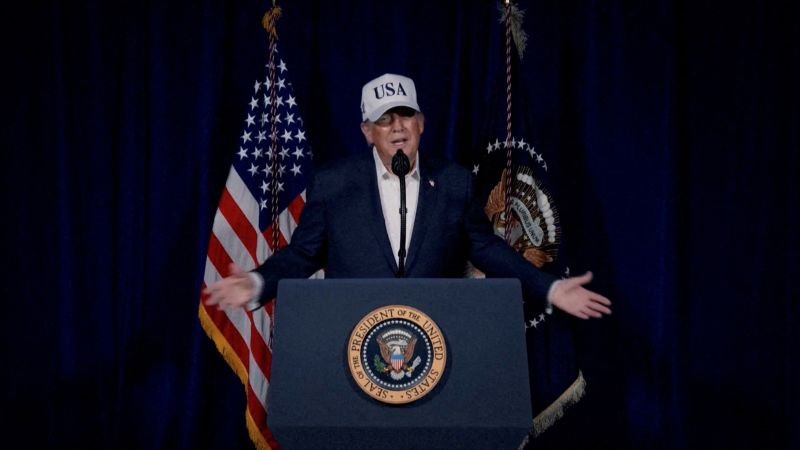
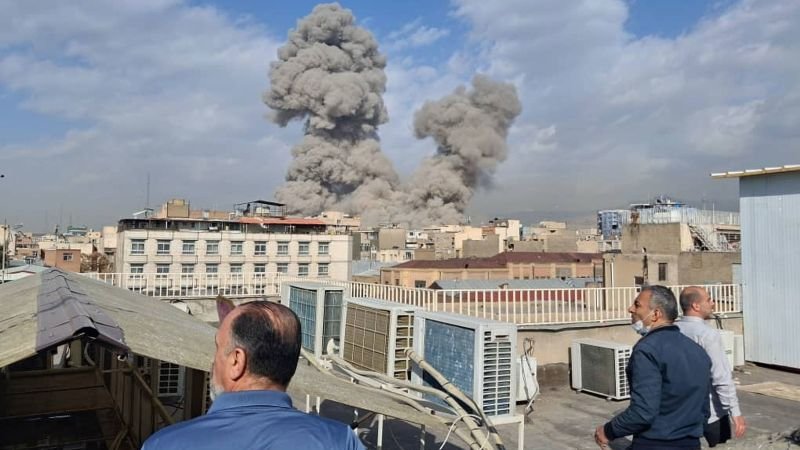
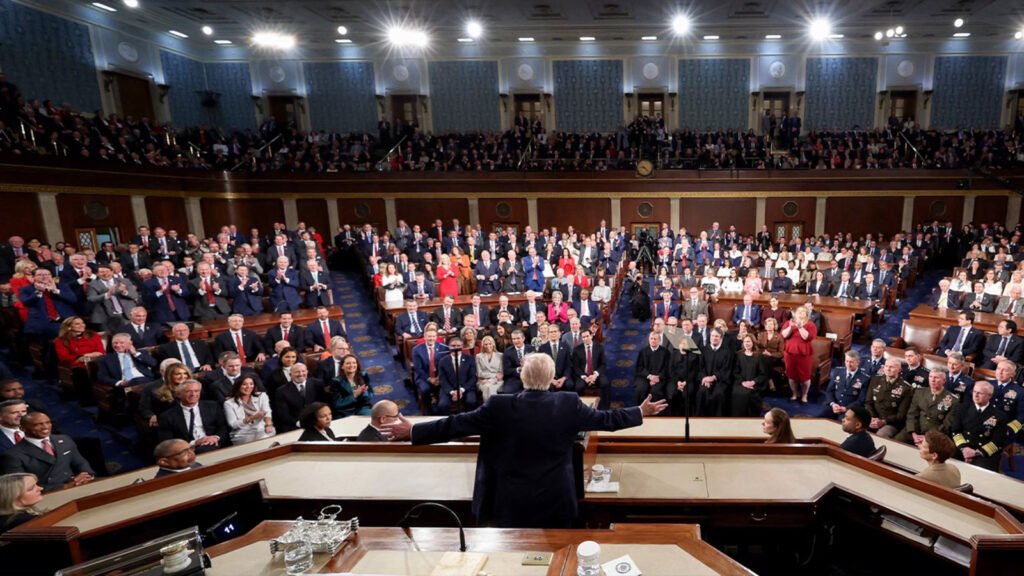
The coordinated strikes on Iran launched by the United States and Israel in the early hours of Saturday morning formally reignited a conflict that had been simmering since last summer’s 12-day war. They targeted key command structures and killed senior figures, most notably Iran’s supreme leader Ali Khamenei, who had been in power since 1989. Donald Trump marked his demise with a post saying “one of the most evil people in history” was dead, adding: “This is not only justice for the people of Iran, but for all Great Americans.”

Israel has also published reports claiming that Mohammad Pakpour, commander of the Islamic Revolutionary Guard Corps (IRGC), defence minister Aziz Nasirzadeh and Admiral Ali Shamkhani, head of the defence council, have also been killed. In response, Iranian forces have fired missiles and drones at Israel, at US bases in the Gulf, Iraq and Jordan, and at some civilian targets across the Gulf. Events are moving quickly, but far from predictably.

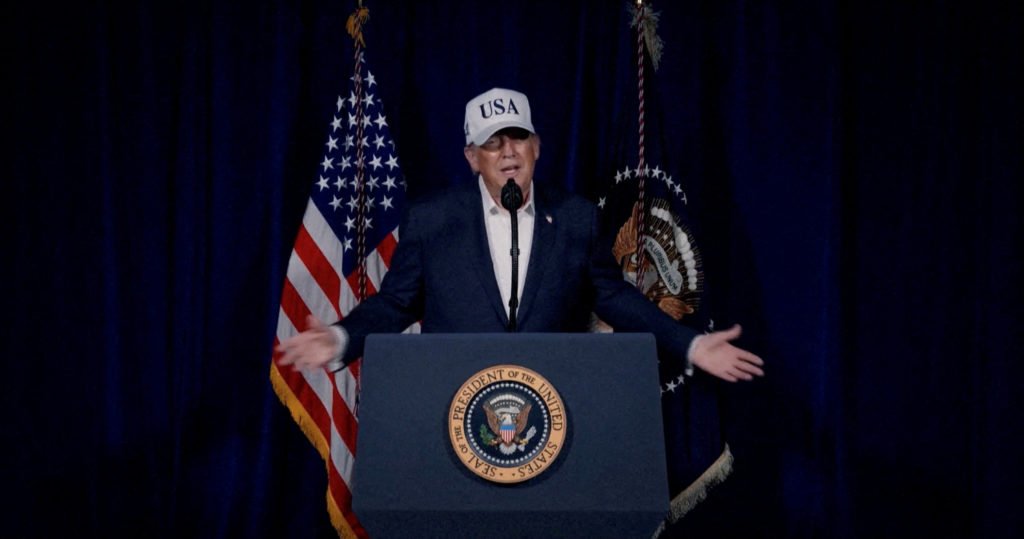
An ebullient Trump embarked on this attack casting it not as a limited action, but as a decisive campaign to eliminate what he called a longstanding threat to the US, one that he argued previous US presidents had been unwilling to confront directly.

It followed rounds of regionally supported diplomacy aimed at a preliminary nuclear deal. But instead of allowing those efforts to mature Trump, perhaps swayed by Israeli prime minister Benjamin Netanyahu and conservative hawks in his administration, chose to strike now, at what is widely seen as a moment of Iranian weakness. He immediately suggested that the Iranian people should now determine their own future, making it clear that Washington supports internal regime change and reiterating that as he announced Khamenei’s death on Saturday night. “This is the single greatest chance for the Iranian people to take back their country,” he posted on Truth Social.

Some context is useful in terms of timing, because this weekend’s escalation was not a sudden rupture but the culmination of two years of widening confrontation. Since 7 October 2023, Israel has conducted sustained military campaigns not only against Hamas in Gaza, Hezbollah along Israel’s northern border and Houthi targets tied to Red Sea attacks, but indirectly against Tehran itself. These operations steadily eroded Iran’s forward defence strategy and weakened its core military capabilities. What remained comparatively intact until now was Iran’s territory, its missile programme and, crucially, the regime leadership.

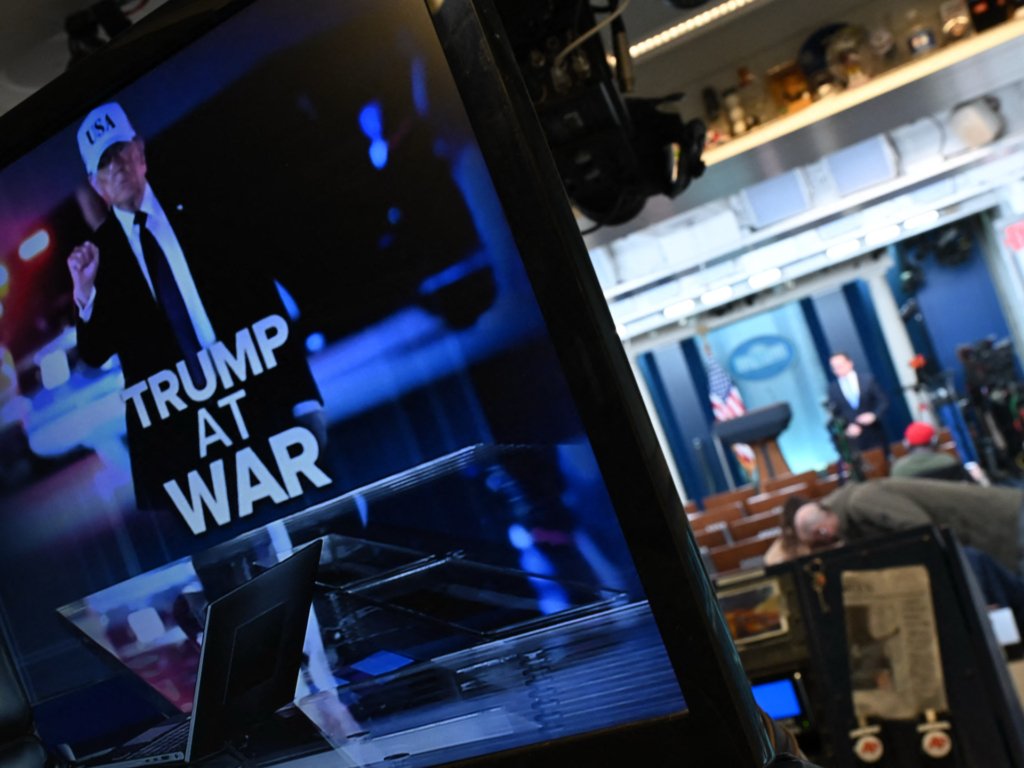
A monitor in the press briefing room at the White House showing Donald Trump’s announcement after strikes on Iran, 28 February 2026. Photograph: Jonathan Ernst/Reuters

The strikes have yielded immediate results. Yet wars rarely unfold according to initial design. While Iran can by no means match US conventional capabilities, it retains asymmetric tools. Its only viable option has been to widen the theatre, distributing the costs of conflict and increasing regional risk. The immediate retaliation against Israeli territory and US installations across the Gulf signals precisely that strategy. This has been a dangerous gamble, particularly for Tehran’s fragile ties with neighbouring states in the Gulf, but it sees sustained escalation as the only means to secure an eventual ceasefire.

It is important to note that the three principal actors enter this confrontation with distinct objectives. For the Islamic Republic, the priority is survival: achieved by absorbing the shock, maintaining sufficient military and political cohesion, and continuing its military response. Iran is not fighting to win in conventional terms, but the regime is fighting to endure.

Trump, in contrast, appears to be seeking a decisive outcome that shows he has neutralised a longtime US adversary. On Saturday night he promised that the bombing “will continue, uninterrupted throughout the week or, as long as necessary to achieve our objective” and his strategy rests on the assumption that overwhelming force targeting infrastructure, strategic assets and senior leadership can dismantle Iran’s strategic posture and compel either capitulation or internal rupture.

Israel’s objectives broadly align with Washington’s, though its focus is narrower. While Netanyahu continues to call on Iranians to rise up and respond to a historic opportunity to change the regime, Israel is really focused on ensuring that Iran remains internally preoccupied and strategically, if not permanently, weakened.

After the first few days of bombing and Khamenei’s death, several interconnected pathways now lie ahead. In the coming few days, the White House could halt operations having inflicted substantial damage – and test whether coercion produces concessions and de-escalation measures conducted under duress. What remains of Tehran’s leadership would then face a stark calculation whether preserving some semblance of the regime justifies submission to Washington’s demands.

With Khamenei removed from the scene, the system does not automatically collapse. The constitutional mechanism for succession would likely be activated, with the assembly of experts formally appointing a new supreme leader. In practice, however, the decisive influence would rest with the revolutionary guard and the security establishment, which would seek to manage the transition tightly and prevent fragmentation of the elite. A collective leadership arrangement, even if temporary, could emerge to stabilise the system – but here it would be vulnerable to military pressure, if not further US and Israeli pressure.

Alternatively, prolonged military pressure could expose fractures within Iran’s political elite. Economic strain, military losses and internal rivalries might weaken central authority and create openings for internal contestation that might be supported by opposition groups.

The most destabilising scenario would be uncontrolled fragmentation. Libya offers a cautionary parallel. The fall of Muammar Gaddafi did not produce an orderly transition, but institutional collapse, competition between militias and external intervention layered on to domestic rivalry. Iran is a far more complex state, with stronger institutions and a deeper bureaucratic tradition, but decapitation of the regime without a managed political transition could still empower armed factions and invite proxy competition on its territory.

What is already clear is that the region will not revert to its pre-war equilibrium. Gulf states that cautiously pursued de-escalation with Tehran now face renewed exposure. Energy markets and maritime security, particularly around critical chokepoints, will remain sensitive to further escalation. Regional actors will reassess alliances and defence postures considering the risks revealed by direct US and Israeli action.

Iran may endure this war, but the Islamic Republic as we have known it will not survive unchanged. The decisive phase of this conflict will not be the opening strikes, but the emergence of a political order from sustained military pressure. The US may achieve its immediate objectives. The more consequential question is whether it is prepared for the Iranian and regional landscape that follows.

Visited 1 times, 1 visit(s) today

Related Article

Women’s Hockey Olympic Gold Medalists Stick It to Donald Trump

Olympic gold medal winners from the U.S. men’s and women’s hockey teams crashed Connor Storrie‘s SNL monologue on Saturday, with the two on the women’s team taking a shot at Donald Trump for his dismissive comment about them. Storrie, who stars in the hockey-themed Canadian television series Heated Rivalry, was talking about learning about how

Who benefits from Trump’s war in Iran? The answer is disturbingly clear

This is an adapted excerpt from MS Now’s Feb. 28 special coverage. Early Saturday morning, the United States started a war with Iran for some reason. Your guess is as good as anyone’s as to why the president of the United States did this. In terms of pure rational deduction about what he’s doing here,

“Putin’s Poisons” Used In UK Attacks Portend Chemical War On NATO

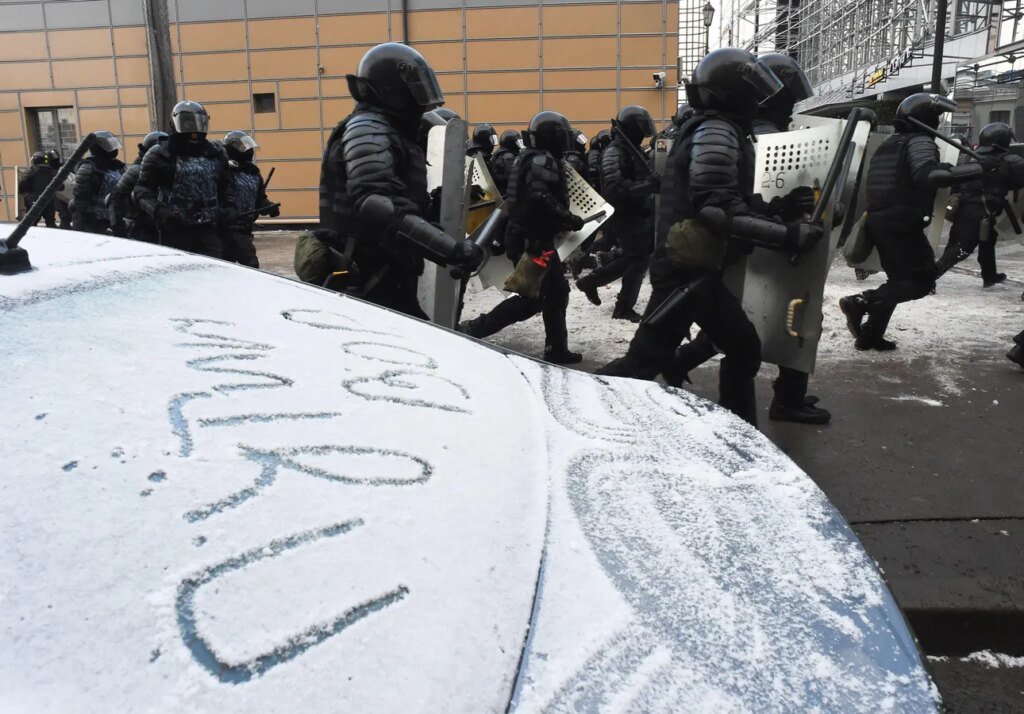
Russian riot police lead a charge on demonstrators protesting the arrest of Alexei Navalny – hero of the democracy movement – following his return from Germany, after his first poisoning with the banned chemical Novichok in 2021. (Photo by Olga MALTSEVA / AFP) (Photo by OLGA MALTSEVA/AFP via Getty Images) AFP via Getty Images Russia’s

Warren Buffett’s Final $373 Billion Warning Sent Shockwaves Through Wall Street

For more than half a century, billionaire Warren Buffett manned the wheel at Berkshire Hathaway (BRKA +0.55%)(BRKB +0.45%), ultimately turning his conglomerate into a trillion-dollar business. During his tenure as CEO, the Oracle of Omaha oversaw a greater than 6,000,000% cumulative return in his company’s Class A shares (BRK.A), which absolutely crushes the returns of

Bernie Sanders Targets Elon Musk, Jeff Bezos, Mark Zuckerberg In Senate Speech, Proposes Ban On New AI Data Centers: ‘Long Overdue’

On Wednesday, Sen. Bernie Sanders (I-Vt.) warned that artificial intelligence could trigger mass unemployment and deepen inequality and pose existential risks. AI Job Loss Warning: Nearly 100 Million Jobs At Risk Speaking on the Senate floor, Sanders called AI and robotics “the most profound technological revolution in world history,” arguing Congress is “way, way behind”

What countries has Trump attacked since returning to office? | Donald Trump News

Despite a second-term pledge to end US involvement in costly and destructive foreign wars, President Donald Trump has initiated a full-scale offensive to topple the Iranian government just more than a year after returning to office. The attacks on Iran, considered a violation of international law, mark the most aggressive escalation yet of Trump’s embrace

Donald Trump’s Iran attacks speech, annotated

President Donald Trump claimed Iran posed an “imminent” threat to the US and its allies as he joined Israel in launching an operation to topple the Iranian regime. Trump said Saturday that Iranian Supreme Leader Ayatollah Ali Khamenei was killed, although Tehran said he was alive and that its government continued to function. Iran responded

Buffett’s Final Quarter and Abel’s Cash Strategy Might Change The Case For Investing In Berkshire Hathaway (BRK.A)

Berkshire Hathaway has released its final quarterly results under Warren Buffett, reporting a nearly 30% drop in operating earnings, while new CEO Greg Abel issued his first, longer shareholder letter affirming continuity in culture and capital discipline. Abel’s emphasis on retaining earnings over dividends and his reassurance that Berkshire’s very large cash pile is not

Donald Trump Launches a War of “Epic Fury” on Iran

Alan Eyre, a longtime Iran watcher at the State Department, now at the Middle East Institute in Washington, told me that Trump’s “stated objective for these attacks—imminent threat—is not believable, and his real objective—regime incapacitation if not regime change—is unlikely.” Operation Epic Fury, he went on, may not be able to destroy by air “the

Musk’s robotaxi ambitions stalled

Feb. 28, 2026, 1:34 p.m. ET Los Angeles – For more than a year, Elon Musk has repeatedly said Tesla is months away from launching a driverless robotaxi service in California – once state regulators give their blessing. Tesla did nothing to secure that approval in 2025, according to previously unreported state Department of Motor

Lionel Messi, Inter Miami to visit Trump White House after MLS title

Feb. 28, 2026, 1:18 p.m. ET MLS champion Inter Miami will visit President Donald Trump and the White House to celebrate its 2025 championship before an match upcoming against D.C. United, a club source confirmed to USA TODAY Sports. The person spoke on the condition of anonymity because the team hadn’t yet announced the plans.

Trump launches the regime-change effort in Iran that he pledged to avoid

It’s no secret that President Donald Trump’s foreign policy in his second term has been more militaristic. Trump has floated claiming the Panama Canal, Canada and Greenland for the United States. He launched strikes on seven different countries in 2025 and even resurrected the US policy of deposing Latin American leaders with the operation in

Read Trump’s full statement on Iran attacks

President Donald Trump said in an 8-minute video posted on his Truth Social that the U.S. has begun “major combat operations in Iran.” He claimed Iran has continued to develop its nuclear program and plans to develop missiles to reach U.S. and appealed to the Iranian people to “take over your government.” A short time

Congress divides over vote to authorize Trump military strikes on Iran

Updated Feb. 28, 2026, 10:27 a.m. ET WASHINGTON – Congress divided largely along party lines in its reaction to the U.S. military strikes on Iran, with Republicans supporting President Donald Trump and Democrats calling it “a war of choice” that should have required approval by lawmakers under the Constitution. House Speaker Mike Johnson, R-Louisiana, said

Berkshire CEO Greg Abel vows to keep Buffett’s culture of disciplined investing in first annual letter

Greg Abel speaks during the Berkshire Hathaway Annual Shareholders Meeting in Omaha, Nebraska on May 3, 2025. CNBC Berkshire Hathaway‘s Greg Abel used his first annual shareholder letter as chief executive to reassure investors that the conglomerate’s culture of financial conservatism and disciplined investing established under Warren Buffett will continue “into perpetuity.” “I am honored

‘Serious moment’: Reactions pour in from Congress after Trump strikes Iran

In the wake of the “massive” strikes on Iran by the U.S. and Israel Saturday, members of Congress have begun weighing in on the situation — with Democrats demanding answers. Republicans have so far praised President Donald Trump’s decision to undertake “massive combat operations” against Iran, with an eye towards liberating the Iranian people. Sen.

0
Would love your thoughts, please comment.x
()
x