How the Houthis built their war machine

ALI AL-WAZIR is no ordinary businessman. The 47-year-old Yemeni, who is known as “Prince”, plies his trade in Guangzhou in southern China. The bustling port is about 7,000km (4,500 miles) from Yemen. But distance has not prevented Mr Wazir from playing a part in his country’s long civil war. In 2024 he was accused of supplying the Houthis, the Iran-backed rebels that rule much of Yemen, with materials to help them build weapons. America’s Treasury placed him under sanctions. Last year it blacklisted several more Houthi-linked traders for doing the same.
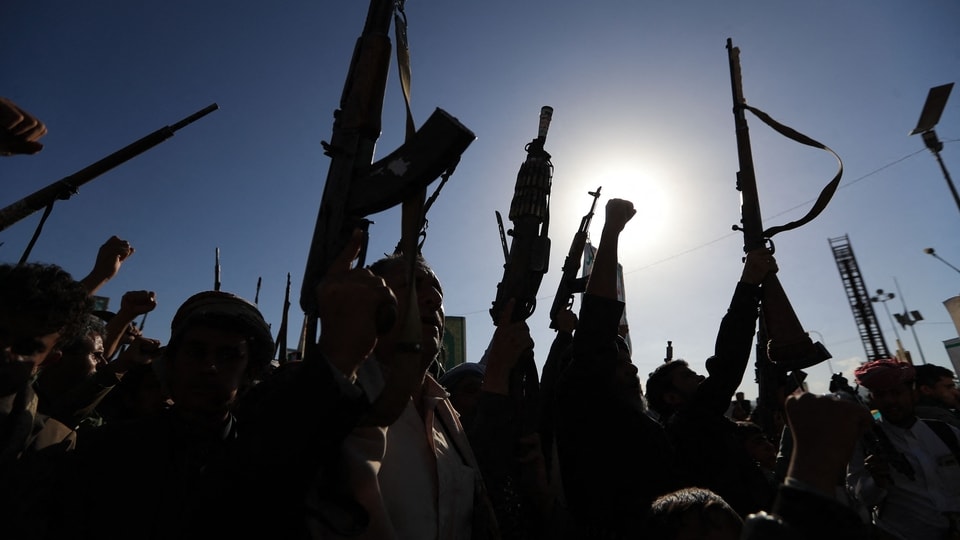
Supporters of the Houthi authorities brandish their weapons during a protest against Saudi intervention in Yemen, in Sanaa, on October 9, 2026. The Houthis, who are fighting the Saudi-backed, internationally recognised government, seized the coastline alongside crucial trade route during a lightning offensive last month, extending their control over all of Yemen's Red Sea coast. Yemeni government forces have been attempting for several days to retake coastal territory captured by the pro-Iranian fighters. (AFP FILE)
Supporters of the Houthi authorities brandish their weapons during a protest against Saudi intervention in Yemen, in Sanaa, on October 9, 2026. The Houthis, who are fighting the Saudi-backed, internationally recognised government, seized the coastline alongside crucial trade route during a lightning offensive last month, extending their control over all of Yemen’s Red Sea coast. Yemeni government forces have been attempting for several days to retake coastal territory captured by the pro-Iranian fighters. (AFP FILE)

Once dismissed as ragtag insurgents—rebels in flipflops—the Houthis are now one of the most dangerous militias in the Middle East. Since they took control of northern Yemen more than a decade ago, they have built up a formidable arsenal of drones and missiles—aided, in part, by the likes of Mr Wazir. The Houthis’ smuggling networks stretch from the Horn of Africa to China. In recent weeks they have hit Saudi Arabia, which supports Yemen’s internationally recognised government, with one strike after another. At a summit in Tehran last week Saudi Arabia put pressure on Iran to rein in the Houthis but the region is preparing for more war.

The Houthis first got their hands on serious kit in 2014 after they seized Sana’a, Yemen’s capital. A short-lived alliance with Ali Abdullah Saleh, a former president, and his loyalists in the army gave them access to Soviet-style Scud and Tochka missiles. At the same time Iran, which was cultivating the Houthis (also Shia) as part of its “axis of resistance”, increased its support. When Saudi forces intervened in Yemen in 2015, Iran supplied the rebels with ballistic missiles, drones and other heavy weapons. Iranian advisers and operatives from Hizbullah, a militia in Lebanon, taught them how to use them.

Today the Houthis are developing a war machine of their own. On September 21st Abdul-Malik al-Houthi, their leader, boasted that they now build their weapons “from scratch”. That may be bluster but analysts are increasingly convinced that much of the rebels’ arsenal is built inside Yemen. “The speed and ambition of the Houthis’ military production has surprised a lot of observers,” says Fabian Hinz of Conflict Armaments Research (CAR), which tracks the illicit arms trade. While most of the group’s weapons are still based on Iranian designs, some—such as medium-range drones—can be built largely without Iranian parts.

Production mostly happens out of sight, in caves in the Yemeni highlands, making it hard to monitor. Data from The Century Foundation, a think-tank in New York, nevertheless point to a shift in their activities (see chart). During the 2010s most of the shipments that were seized going into Houthi territory contained ready-to-use weapons, such as guns and rockets. Iran was by far the biggest supplier in the mid-2010s. Now most of these consignments contain parts to build weapons, such as motors, wiring and propellers. China has overtaken Iran as the biggest source of such goods.

Lots of these items are “dual-use”, meaning they plausibly have civilian as well as military applications. Houthi smugglers sometimes try to outfox Yemeni authorities by slapping innocuous labels such as “industrial equipment” on drone kits. Other goods seem purpose-made for the arms industry. In October CAR suggested that parts for an Iranian-designed ballistic missile, seized in the government-held port of Aden, were made to order by a Chinese company. Saudi officials have complained to China, to little avail. “China is happy to turn a blind eye to its citizens participating in trade that supports the Houthis’ weapons industry,” says a Western diplomat.

Breaking this supply chain will be hard. American sanctions have achieved little: Houthi businessmen continue to operate in China. The rebels have been under a United Nations’ arms embargo for more than a decade. But the mission that inspects cargo ships sailing to Houthi-held ports is feeble. It reports dodgy vessels to the Saudis and their allies, but has no powers to stop them itself.

Even if it could, much would slip through. Some goods travel overland through the United Arab Emirates and Oman. Others are smuggled via Djibouti and Somalia. Tim Lenderking, America’s envoy for Yemen from 2021 to 2025, says the Houthis move contraband “from big boats, onto small boats, onto tiny boats, onto pack animals and onto people’s backs”. Smugglers hide ammunition in lorries carrying fruit and vegetables. Yemen’s government—a patchwork of squabbling groups—struggles to co-ordinate enforcement. “Different operation rooms are controlled by different factions,” says Baraa Shiban of the Royal United Services Institute, a think-tank in London. “It’s a nightmare.”

Making their own arms helps the Houthis keep fighting when supplies from Iran are disrupted. But the Islamic Republic also benefits from their self-reliance. Under its doctrine of “mosaic defence”, Iran’s regime has tried to make different parts of its armed forces capable of fighting independently. A similar idea underpins its axis of resistance. “Iran has made efforts to enable its allies to produce locally,” says Mr Hinz. Hizbullah has built drones and tried to convert rockets into precision-guided missiles by itself. But the militia has been weakened by Israeli attacks and disruption to its smuggling routes through Syria since the fall of Bashar al-Assad.

The Houthis are in a better position. While the rebels still get plenty of weapons and intelligence from Iran, they are outgrowing their dependence on the regime. That may explain why the Houthis are unbowed even as the war launched by America and Israel has weakened their patron. The rebels see themselves as more than a mere Iranian proxy but as the real rulers of Yemen. They have sought support from Russia and are fostering connections with armed groups in Africa. The Houthis want to be a “little Iran in their own little neighbourhood,” says Barbara Leaf, a former American diplomat. Their ambition, as well as their firepower, is growing.

Source link

Visited 1 times, 1 visit(s) today

Related Article

Canada police officers in Ontario, Canada (Photography for representative purpose only) (REUTERS)

Over 4,500 Indians removed from Canada this year: CBSA

Toronto: Over 4,500 Indian nationals have been removed from Canada already this year, marking a historic high. Canada police officers in Ontario, Canada (Photography for representative purpose only) (REUTERS) According to data published by the Canada Border Services Agency (CBSA), 4,526 Indians were removed from the country will September 30 this year, a record. They

Former Poland's Prime Minister and leader of the Law and Justice (Prawo i Sprawiedliwosc) right-wing opposition party Jaroslaw Kaczynski speaks as anti-government protesters attend a demonstration in front of the Constitutional Court, Poland's highest court, in Warsaw on October 14, 2026. Right-wing protestors clashed with police in front of Poland's highest court on October 14, attempting to block its judges from entering the building and defending its overhaul by the previous government. (AFP)

Poland’s fight over its constitutional court gets physical

POLAND’S Constitutional Tribunal is supposed to embody democratic stability, but has spent the past decade as a battleground for fights between populists and liberals. The latest conflict looks like a full-blown constitutional crisis. On the evening of October 30th a group of judges picked by parliament this year, but whom the country’s president has refused

Sarah Friar, OpenAI’s finance chief, says she thinks cyber-security will become a “huge business” for her firm over the next two years. (REUTERS)

Hackers are running riot with AI. Its makers want to cash in

There has never been a better time to be a North Korean hacker. Last year the country’s cyber-thieves stole $2bn-worth of cryptocurrency, triple the level two years before, according to Chainalysis, a research firm. This year’s haul is set to be much bigger. On October 29th $6.3bn was swiped from Binance, the world’s largest crypto

Binance posted a net outflow of $3.6 billion in cryptoassets after restoring customer withdrawals on Sunday. (Representative Image/Reuters)

As Binance crisis unfolded, 7-month-pregnant co-CEO took 3 am calls, led 100-person war room to tackle heist

Seven months pregnant, Binance co-CEO He Yi worked through the night to oversee the cryptocurrency exchange’s response after hackers stole over $6 billion in virtual assets, as the company scrambled to restore services, The New York Times reported. Binance posted a net outflow of $3.6 billion in cryptoassets after restoring customer withdrawals on Sunday. (Representative

Ukraine's Ministry for Digital Transformation later said in a post on X that the nationwide alert system was functioning normally. (Representative image/ Unsplash)

Fake nuclear, chemical threat alerts flash as Russia, Ukraine report cyberattacks on emergency apps

Russia and Ukraine have both reported cyberattacks targeting their emergency alert apps, with hackers sending fake warnings of nuclear, chemical and radiation threats to mobile phone users. Ukraine’s Ministry for Digital Transformation later said in a post on X that the nationwide alert system was functioning normally. (Representative image/ Unsplash) While Ukraine’s air raid alert

Rather than talking about petrol prices or deep-sea trawling in the closing days of the campaign, she is being forced to defend the ethics of her staff. (REUTERS)

An unfolding disaster in Alaska could cost Democrats the Senate

DEMOCRATS NEED a net gain of four Senate seats to take control of the upper chamber of Congress. Now, with election day looming on November 3rd, a state crucial to that effort is descending into chaos. Republicans have asserted for months that Dan J. Sullivan, a retired teacher living in a small fishing village, launched

Today, China has three aircraft carriers, with a fourth on its way that Western experts believe will be nuclear-powered.

The U.S. Once Dominated the World’s Oceans. China’s Xi is Changing That.

SINGAPORE—In 1998, a shadowy entertainment company based in the gambling hub of Macau made an unusual purchase: an aircraft carrier. Called the Varyag, it was originally ordered for the Soviet Union, but was left to rust unfinished in a Ukrainian shipyard. Its Chinese buyers said they wanted to turn their $20 million acquisition into a

Prime Minister Andy Burnham during a visit to Devon in August

Why protecting trusted local news titles like The Herald matters

“My government will work to ensure trusted local journalism remains at the heart of communities” Prime Minister Andy Burnham 00:01, 02 Nov 2026 Prime Minister Andy Burnham during a visit to Devon in August(Image: Finnbarr Webster/PA Wire) Too much power in this country has flowed one way: towards Westminster and away from the places where

Iran has warned of a longer war if the US launches fresh attacks. (REUTERS)

‘Next war could last longer’: Iran warns US as Trump hints at fresh strikes

Iran warned on Sunday that any renewed war with the United States could last longer than the previous round of fighting, after President Donald Trump said he still had to “take care” of more targets. Iran has warned of a longer war if the US launches fresh attacks. (REUTERS) Diplomatic efforts to end the Middle

The report also highlighted the risks to mountain glaciers, including those in the Hindu Kush Himalaya (HKH). (Representative file photo)

Even 1.5°C warming could wipe out over half of world’s glaciers, studies show

Over half of the world’s glaciers, by number, could disappear, while melting polar ice sheets push the global sea higher even if global warming is restricted to 1.5°C, findings of two new reports released on Monday have revealed. The report also highlighted the risks to mountain glaciers, including those in the Hindu Kush Himalaya (HKH).

United Arab Emirates says military solutions offer no quick off-ramps to crisis with Iran

United Arab Emirates says military solutions offer no quick off-ramps to crisis with Iran

MANAMA, Bahrain — The United Arab Emirates’ presidential adviser said Sunday that his country hopes a diplomatic breakthrough in Qatar-led mediations is possible to avert a new round of confrontation between the U.S. and Iran. United Arab Emirates says military solutions offer no quick off-ramps to crisis with Iran The Iran war, which began on

Latest and Breaking News on NDTV

‘Truly Evil, A Real-Life Bond Villain’: An Ex-PM Stephen Harper Describes Vladimir Putin

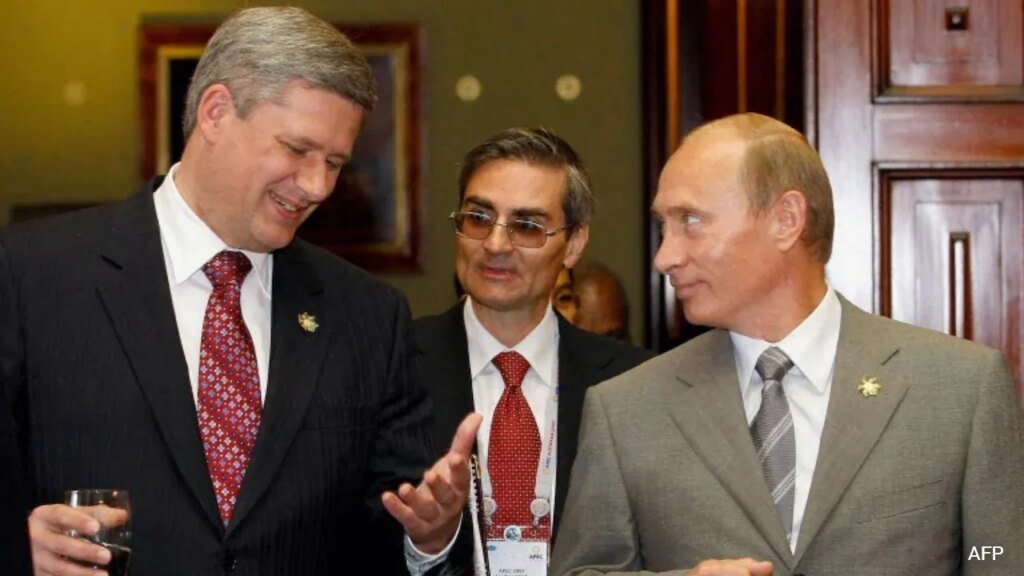
Formidable, impressive, intelligent, extraordinarily disciplined, very manipulative, truly evil, and a real-life Bond villain: these are the words that former Canadian Prime Minister Stephen Harper used to describe Russian President Vladimir Putin. In an opinion piece written for the Canadian news organisation The Globe and Mail, Harper recalled his days as Canada’s leader and his

Binance resumes Bitcoin and Ether withdrawals after a $6.3 billion cryptocurrency hack. (REUTERS/Dado Ruvic/Illustration) (REUTERS)

Binance resumes Bitcoin, Ether withdrawals after $6.3 billion crypto hack linked to North Korea

Binance, the world’s largest cryptocurrency exchange, resumed withdrawals of Bitcoin, Ether and some stablecoins on Sunday. The decision came after hackers stole cryptocurrency worth around $6.3 billion from the platform. Binance resumes Bitcoin and Ether withdrawals after a $6.3 billion cryptocurrency hack. (REUTERS/Dado Ruvic/Illustration) (REUTERS) Binance said it had covered around 95% of the stolen

Despite the move, thousands of workers continued demonstrations in industrial areas around Dhaka on Sunday. (Reuters)

Bangladesh forms wage board amid garment workers protests

Bangladesh formed a new board on Sunday to review the minimum wage for garment workers, as authorities sought to quell protests that have disrupted key industrial hubs around Dhaka. Despite the move, thousands of workers continued demonstrations in industrial areas around Dhaka on Sunday. (Reuters) Despite the move, thousands of workers continued demonstrations in industrial

Previous US and Iranian negotiations, mediated by other countries, have been marred by distrust (AP/ Handout via Reuters)

Trump says remaining Iran nuke sites can be hit in ‘10 minutes’ as Mojtaba warns of attacks without ‘geographic limits’

United States President Donald Trump has claimed that the US had “knocked out” Iran’s nuclear sites, adding that the remaining ones can be struck within “10 minutes.” Previous US and Iranian negotiations, mediated by other countries, have been marred by distrust (AP/ Handout via Reuters) Speaking to reporters while attending a Halloween party at Mar-a-Lago,

Quebec Premier Paul St-Pierre Plamondon. (Jacques Boissinot/The Canadian P)

Canada: Quebec govt to ban turbans, niqabs from elementary schools

The new government in the Canadian province of Quebec will prohibit all religious coverings, including turbans and niqabs, from elementary schools, in a move that adds restrictions to those already in existence. The impact will mostly be on young Sikh, Muslim and Jewish children. Quebec Premier Paul St-Pierre Plamondon. (Jacques Boissinot/The Canadian P) The separatist

0
Would love your thoughts, please comment.x
()
x