Executive Summary
This report assesses the geopolitical ramifications of the 28 February 2026 joint US-Israeli military strikes on the Islamic Republic of Iran, specifically regarding the degradation of Iranian strategic depth.
It evaluates how this escalation might jeopardise the long-term economic and infrastructural interests of the Russian Federation and the People’s Republic of China (PRC) within the Middle Eastern theatre.
It frames the conflict not merely as a regional strike, but as a potentially disruptive event for the emerging multipolar commercial architecture of Eurasia. Moreover, it addresses Moscow and Beijing’s shadow help to Tehran, not with direct engagement but with technology delivery.
Key Findings
- The strikes on Iranian infrastructure, particularly the port of Bandar Abbas, threaten to collapse the International North-South Transport Corridor (INSTC) and the Belt and Road Initiative (BRI), which Russia and China rely on to bypass Western-controlled maritime routes.
- Moscow and Beijing have transitioned from diplomatic allies to “technological anchors” by providing Iran with advanced S-400 air defences, Su-35 fighters, and BeiDou-3 navigation to negate Western stealth and jamming capabilities.
- If Russia and China fail to move beyond technology transfers to active deterrence, they risk a “credibility deficit” that could signal the failure of the multipolar world order and alienate potential partners in the Global South.
Facts
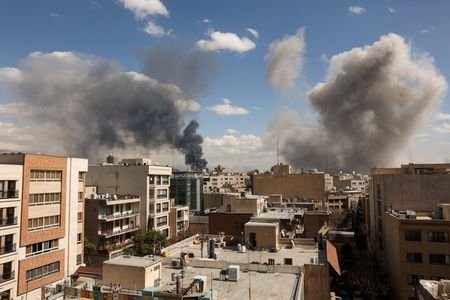
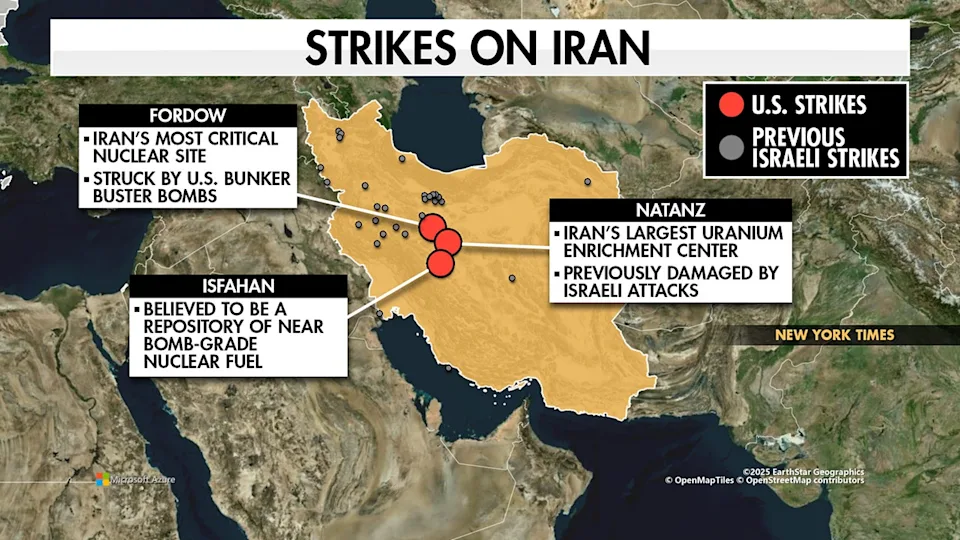
On the morning of 28 February 2026, the United States and Israel launched “Operation Epic Fury”, a massive joint air campaign targeting Iranian nuclear facilities, ballistic missile infrastructure, and senior leadership compounds in Tehran and major provincial hubs.
Tehran has started low-level retaliatory drone strikes against US assets and regional partners. While Iran initially adopted a “strategic patience” approach—absorbing strikes and leveraging diplomacy to pressure neighbours for a ceasefire—this restraint also aimed to preserve its primary missile arsenal. However, following the death of the Supreme Leader and a mass-casualty strike on a school which killed 108 children, Iran’s strategy is expected to pivot toward a significant, direct escalation.
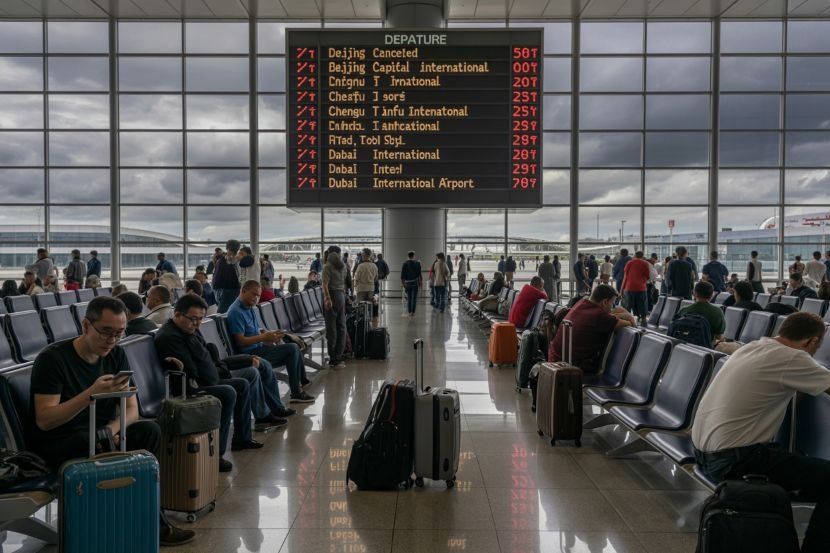
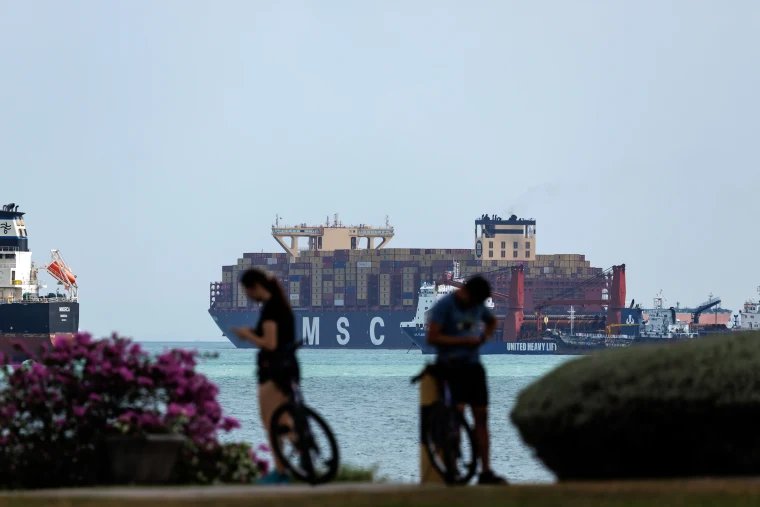
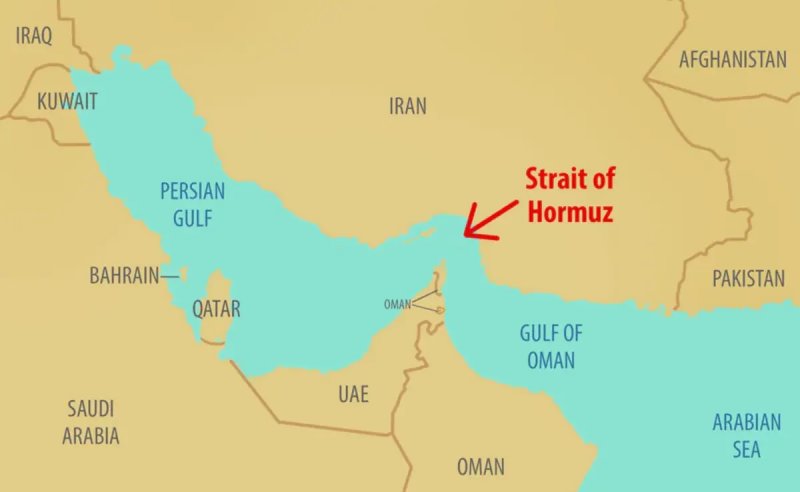
When trading resumes Sunday night, oil prices are also expected to jump sharply, particularly following the closure of the Strait of Hormuz.
Moscow has condemned the “unprovoked aggression,” while Beijing expressed “grave concern”, calling for an immediate cessation of hostilities to safeguard “territorial integrity.” Both Eurasian powers have requested an emergency session of the UN Security Council to address the escalating crisis.
In late 2025 and early 2026, Iran intensified its “Look East” policy, finalising a 20-year Comprehensive Strategic Partnership Treaty with Russia and accelerating the 25-year Cooperation Program with China.
Analysis
The current kinetic environment directly threatens the strategic “look east” policy of the Iranian government, impacting the two primary stakeholders as follows:
The People’s Republic of China (PRC): Energy Security and the Maritime Bypass
China’s primary interest in Iran is the secured flow of discounted crude oil, which currently bypasses the US-monitored banking system via “teapot” refineries.
Having recently faced supply constraints from Venezuela, Beijing is highly sensitive to Iranian instability. While China diversifies through the Gulf Cooperation Council (GCC) states, the collateral risk of a wider regional war threatens its entire energy architecture.
Iran serves as a crucial node in the Belt and Road Initiative (BRI), offering a land-based alternative to the “Malacca Dilemma”, a geostrategic buffer. Kinetic strikes on Iranian coastal assets at Asaluyeh or Bandar Abbas effectively dismantle Chinese-funded logistics designed to secure international waters access independent of Western-controlled choke points.
The Russian Federation: The INSTC and Multipolarity
For Moscow, Iran is the indispensable gateway for the International North-South Transport Corridor (INSTC). The INSTC saw record traffic in January 2026, with the first regular container trains successfully linking the Moscow region to the Iranian port of Bandar Abbas.
The INSTC connects Russia to Indian markets via the Caspian Sea and Iranian rail and ports. With Western sanctions isolating Russian northern routes, the loss of Iranian stability might collapse investment in infrastructure and connectivity. Israel and the US, for instance, targeted the Bandar Abbas Iranian strategic port in the Persian Gulf.
Following the degradation of Russian influence in the South Caucasus (for example in Armenia and Azerbaijan) and the Levant (Syria), Iran is one of Moscow’s last “fortresses” against Western hegemony in Eurasia. A pro-Western regime change or a failed-state scenario in Iran would represent a terminal blow to the “multipolar” world order Eurasian major powers have sought to build.
Assets delivered from China and Russia to Iran
Russia and China have increasingly acted as Iran’s “eyes” by providing high-tech strategic assets that range from orbital surveillance to advanced missile guidance. This cooperation sped up significantly following the regional escalations in 2025 (often referred to as the “12-Day War”).
- Assets from Russia: Strategic Deterrence. Russia’s contributions focus on heavy military hardware and dedicated orbital reconnaissance.
- Khayyam Spy Satellite: Launched in 2022, this is a Russian-built Kanopus-V satellite. It provides Iran with 1.2-meter high-resolution imagery, allowing Tehran to task the satellite to monitor specific US and Israeli bases.
- Su-35 “Flanker-E” Fighter Jets: As of early 2026, Russia has begun delivery of a 48-unit order (approx. $6.5 billion). These jets are equipped with Khibiny-M electronic warfare pods and Irbis-E radars, which are specifically designed to detect low-observable (stealth) aircraft like the F-35.
- S-400 Air Defence Systems: Multiple intelligence reports confirm that Russia has delivered S-400 components to Iran to create a “layered” defence against Western air strikes.
- Rezonans-NE Radar: A sophisticated over-the-horizon radar system provided by Russia that is capable of tracking stealth targets and ballistic missiles at long ranges.
- Assets from China: “Intelligence & Guidance”. China’s support is more “silent” but arguably more critical for Tehran’s precision strike capabilities.
- BeiDou-3 Navigation System: Iran has officially transitioned its military architecture from US GPS to China’s BeiDou. Unlike GPS, BeiDou includes a short-message service that allows Iranian command nodes to communicate even if local networks are down.
- The Edge: Iran has access to encrypted, high-precision military signals (centimetre-level accuracy) that are resistant to Western jamming.
- Real-Time Intelligence Sharing: China utilises its fleet of 500+ satellites to provide Iran with constant SIGINT (Signals Intelligence) and terrain mapping. This support helps Iran track US naval movements in the Persian Gulf in real-time.
- CM-302 Supersonic Missiles: Tehran is currently finalising a deal for the CM-302 (the export version of the YJ-12). These are considered “carrier killers” due to their supersonic speed and 290km range, significantly boosting Iran’s ability to close the Strait of Hormuz.
- Anti-Stealth Radar (YLC-8B): China has supplied advanced UHF-band radars like the YLC-8B, which uses low-frequency waves to negate the radar-absorbent coatings used by US stealth bombers and fighters.
Perception Risk
By providing the “connective tissue” for Iran’s defence—specifically high-resolution imagery and jam-resistant targeting—these allies have ensured that Iran does not fight in a vacuum. Ultimately, the survival of the Iranian revolutionary government is tied to the viability of the INSTC and Belt and Road energy corridors. The true measure of this conflict is whether this quiet infusion of strategic technology can preserve Russia and China’s vital bridgehead against Western kinetic pressure.
Still, in the world of high-stakes geopolitics, perception is often as potent as kinetic force. If Moscow and Beijing allow a key node like Tehran to be dismantled without a visible escalation of support, they risk a “credibility deficit” that could alienate other potential partners in the Global South.
There exists a critical tipping point where technological anchoring ceases to be sufficient. For the Kremlin and the Zhongnanhai, the conflict has reached a stage where passive support risks being misread as strategic paralysis. If the Western-led coalition succeeds in degrading Iran’s core infrastructure despite these technological injections, the narrative of a “multipolar alternative” collapses.
No regional power will pivot toward a security architecture that fails its primary test. If Russia and China do not move beyond the supplier role into more assertive forms of deterrence—be it through offensive electronic warfare deployments or overt naval posturing—they risk being perceived as unreliable guarantors.
While the US-China dynamic is currently throttled by tariff wars and raw material bottlenecks, and Russia remains tethered to the Ukrainian theatre, neither can afford to let Tehran fall. An Iranian collapse would represent a definitive Checkmate against the Eurasian land bridge.
Consequently, we are approaching a “credibility floor”. To maintain their status as viable counterweights to the West, Moscow and Beijing must eventually bridge the gap between enabling Iranian resistance and actively safeguarding it. Failing to take this “extra step” would not only cede the Middle East to Western hegemony but would signal to the rest of the world that the Russo-Chinese security umbrella is purely transactional and lacks the spine for a direct confrontation.
Conclusion
The 2026 strikes on Iran mark more than a regional escalation; they threaten the foundational architecture of a multipolar Eurasia.
While some analysts interpret the lack of direct Russian or Chinese military intervention as abandonment, this overlooks a deeper strategic reality. Moscow and Beijing have transitioned from diplomatic partners to “technological anchors”. Nevertheless, the theatre has reached a critical juncture where continued passive support risks being misinterpreted as strategic paralysis.
Consequently, Moscow and Beijing must move beyond mere risk-aversion and rigorously calibrate their next phase of escalation to avoid a total collapse of their regional credibility.