How Ozempic brought a Napster moment to big pharma
Napster forever changed the music industry even though its business model was ultimately deemed illegal. Could a similar change be sweeping through America’s drug market?
The Hims & Hers strategy of undercutting patented drugs arguably went too far.
The Trump administration this month took a hard-line stance against telehealth company Hims & Hers Health, with its health agency referring the telehealth firm to the Justice Department for potential federal violations. The rampant compounding of GLP-1 drugs—where pharmacies essentially sell knockoffs of the same active ingredients—isn’t going away quickly, but doing it on a massive scale now feels far more precarious. Novo Nordisk is suing Hims & Hers, alleging violations of the patents covering Ozempic and Wegovy.
Wall Street is taking notice: Hims & Hers shares have fallen nearly 30% since the Trump administration’s move. The bigger question now is how the market will evolve and what ripple effects this shift will have beyond GLP-1s.
The music industry offers a useful parallel. For decades, record labels reigned despite the occasional bootleg tape. Then Napster arrived with online file sharing. Suddenly, it felt as though all the world’s music was permanently free to anyone with an internet connection.
That model didn’t last. Lawsuits eventually drove Napster into bankruptcy, and the era of totally free music came to an end. But the genie was out of the bottle. Once consumers experienced instant, frictionless access to music, there was no going back. The result was a new generation of applications—first iTunes, then Spotify—where the content was paid for but the convenience remained.
Pharma now faces a similar transformation. An aggressive FDA crackdown may finally rein in mass GLP-1 compounding, but history suggests this is only a bridge to a different kind of disruption.
Drug companies sell most of their medicines through a web of middlemen—wholesalers, pharmacy-benefit managers, and insurers—that use inflated list prices and rebate schemes. The system is so opaque that even employers and the government struggle to see how prices are actually set. Over time, these middlemen have built vertically integrated structures designed to extract value from America’s uniquely convoluted drug-distribution model.
That system is being challenged, and the direct-to-consumer model for weight-loss drugs offers a glimpse of what could come next. GLP-1s are a special case: Patients are willing to pay cash and bypass insurance altogether. But the broader movement toward price transparency and patient empowerment is accelerating in different corners of healthcare. Examples include Mark Cuban’s Cost Plus Drugs, which offers drug prices at a transparent low price, and Thatch, which helps employees navigate insurance to choose better plans. Together, these sort of startups shift power back to consumers.
The Hims & Hers strategy of undercutting patented drugs arguably went too far and always seemed like a mirage, as far as strategy goes. Mass compounding was allowed only because of a drug shortage that was bound to be resolved—as it was last year. “We’re told this isn’t really mass compounding,” says Mike Doustdar, chief executive of Novo Nordisk, in an interview this past week. “I say: You have a Super Bowl ad; this is crazy. At some point, they have to ask themselves: Do they want to be Napster or Spotify?”
Ro, a competitor to Hims, points to a different path. Rather than leaning on legally murky, high-margin compounded drugs, Ro acts as a telehealth gateway for branded medications. Ro also sold compounded GLP-1s during the shortages, but both Eli Lilly and Novo Nordisk now sell their drugs on the platform. As CEO Zach Reitano explains: “Too many problems in our healthcare system exist because the patient does not control the flow of money at the point of purchase,” he says. “When they do, the system rewires itself.”
For now, much of this change is still confined to GLP-1s, not the drugs most people buy with insurance. Even TrumpRx, an online drug portal launched just as regulators were cracking down on Hims & Hers, offers only a narrow set of medications at prices few people can realistically pay in cash. The bulk of the system still flows through large drug distributors and dominant pharmacy-benefit managers.
But that system is under pressure. Just this month, two major policy changes, long in the making, happened rather quietly: The Federal Trade Commission attempted to dismantle key pillars of the PBM rebate model in a recent settlement with Cigna’s Express Scripts, while Congress enacted legislation, as part of the recent government funding bill, that should reduce the relationship between drug prices and what PBMs earn. PBMs have long feared these moves and have thus been changing the way patients pay for drugs. The FTC settlement even forces Express Scripts to give members access to TrumpRx pricing.
Much more disruption is yet to come to healthcare, both from governments and businesses. As Reitano puts it, GLP-1s reveal what happens when the patient is also the customer.
Imagine if the rest of healthcare had to operate under the same rules.
Western automakers, from the Big Three to EV pure plays, are delivering the same stark warning: Chinese automakers pose a threat to their survival if domestic production isn’t protected. “China poses a clear and present threat to the auto industry in the U.S.,” wrote the Alliance for Automotive Innovation (AAI), a trade group that reps
The post Boys Intervene as Python Attacks Dog in Viral Video appeared first on A-Z Animals. Watch the Video Click here to watch on YouTube Quick Take Young rescuers successfully confront a massive python to prevent a fatal predation event. The 11 species of pythons present unique hunting behaviors that threaten domestic animals. Contrary to
The final deadline for the seven states in the Colorado River Basin to negotiate a new 20-year agreement for how to manage the water supply for years to come is here. The states, once again, have not reached a deal, and after two extensions in November and December, the federal government is done resetting the
Louisiana Attorney General Liz Murrill arrived at the Supreme Court shortly before 10 a.m. on January 9 and took a seat in the spectator section of the columned courtroom. When US Solicitor General John Sauer, the Trump administration’s top courtroom lawyer, entered a few minutes later, he cut across the room to warmly greet her.
Aldi’s famously low price tags can’t exist without its signature store-brand products. Producing private-label stock lets Aldi avoid operational fees from working with other companies, so it can afford to sell items at bargain prices. While most shoppers are happy about this, it might make you wonder where these products actually come from, especially things
Turning around its business in China is important to General Motors and its investors, and there’s a little good news in that area. If you only started following or investing in the automotive industry in the past few years, it’s probably difficult to believe that General Motors (GM +1.28%) once sold more vehicles in China
On The Ground newsletter: Get a weekly dispatch from our international correspondents Get a weekly dispatch from our international correspondents Get a weekly international news dispatch Putin arch-rival Alexei Navalny died after being poisoned with a lethal toxin and Russia is to blame for the attack, the UK and its allies have said. The UK,
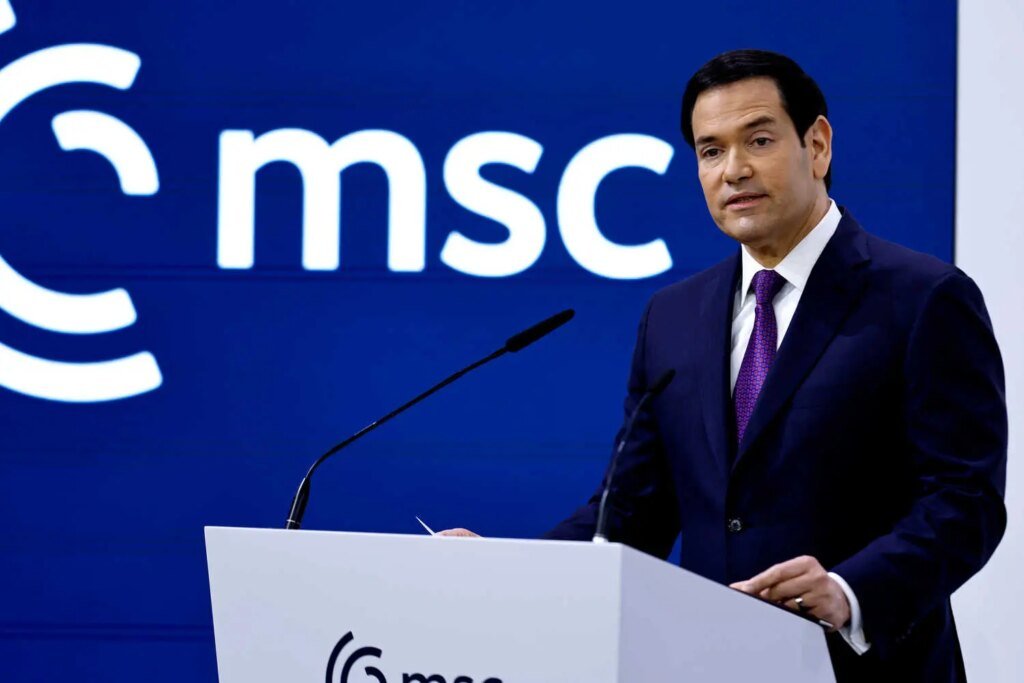
new video loaded: Marco Rubio Calls a World Without Borders a ‘Foolish Idea’ transcript Back transcript Marco Rubio Calls a World Without Borders a ‘Foolish Idea’ Speaking at the Munich Security Conference, Secretary of State Marco Rubio denounced the idea of a united, global citizenship but also said the United States and Europe “belong together”
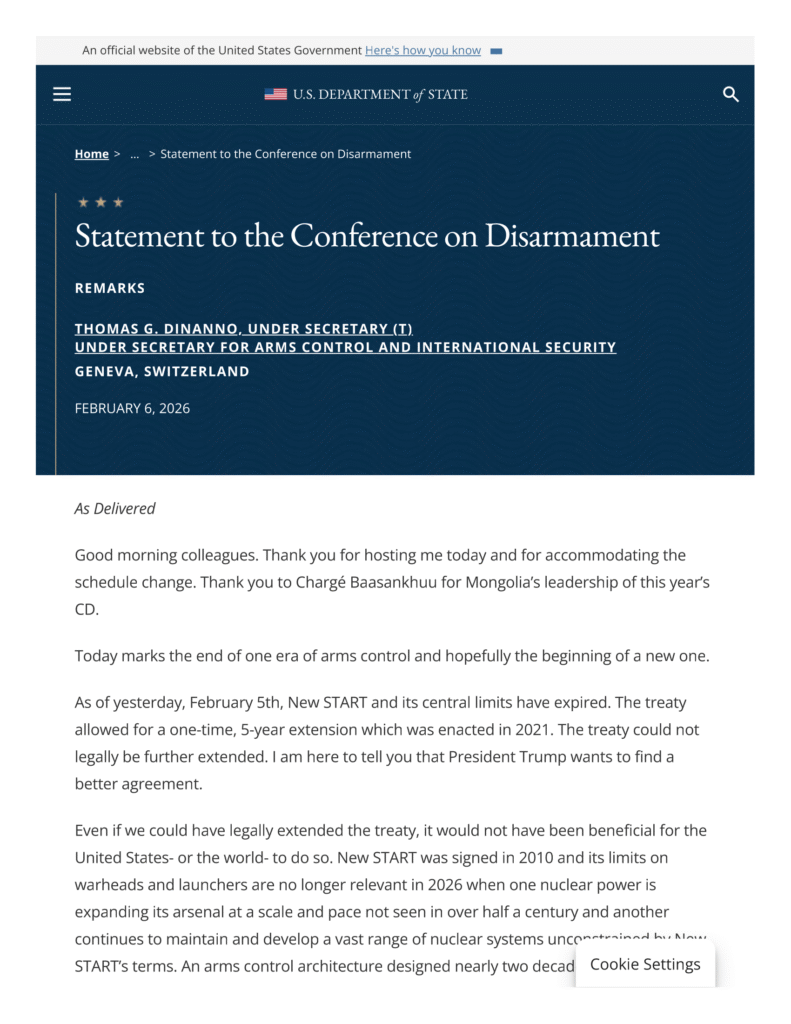
Within hours of the expiration last week of the final arms control treaty between Moscow and Washington, the State Department sent its top arms diplomat, Thomas G. DiNanno, to Geneva to lay out Washington’s vision for the future. His public address envisioned a future filled with waves of nuclear arms buildups and test detonations. The
A judge sentenced 18-year-old Austin Thompson to life in prison without the possibility of parole Friday for the October 2022 shooting deaths of five people in a Raleigh neighborhood. Thompson, who was 15 at the time of the attack, was charged and sentenced as an adult. The sentencing follows Thompson’s decision to plead guilty in
US President Donald Trump boasted Friday about a secret “discombobulator” weapon that can block Russian and Chinese defence systems, as he met the elite troops, who captured Venezuelan leader Nicolas Maduro, at Fort Bragg. US President Donald Trump visited the base in Fort Bragg, North Carolina, to honour special forces involved in the military operation
Bell Hall at the University of North Carolina’s Kenan-Flagler Business School. University of North Carolina has formalized a policy allowing administrators to record classes without notice under certain circumstances. The University of North Carolina at Chapel Hill has adopted a new policy explicitly allowing administrators to record classes without notifying instructors, a practice that first
Rankings spark debates like pineapple on pizza. But here’s the thing: when you’re dropping serious cash on four wheels, you want data—not just YouTube hype. These reliability scores come straight from J.D. Power’s Vehicle Dependability Study and Consumer Reports, cutting through the marketing noise to show which brands actually deliver. Some earn their reputation every
Over the past week, North Kordofan state recorded more than a dozen attacks in and around the towns of El Obeid, Bara, Rahad and Um Rawaba. In South Kordofan, suspected drone strikes hit health facilities in the state capital, Kadugli, and in Kuweik town, reportedly killing four medical workers, injuring more than 20 people. Concerns over the conflict continue to deepen after a report today
new video loaded: Tarique Rahman Set to be New Prime Minister of Bangladesh transcript Back transcript Tarique Rahman Set to be New Prime Minister of Bangladesh The Bangladesh National Party, led by Tarique Rahman, won the first elections in the country since a student-led movement toppled the government in 2024. “I really hope he is
Minnesota is seeing the largest outbreak of sexually transmitted ringworm in the U.S., with infections disproportionately affecting men who have sex with men. More than 30 confirmed or suspected cases of the fungal infection have been reported in the state since last July, according to the Minnesota Department of Health, and all were within the
Chinese automakers seek the site for overseas capacity as US tariffs disrupt Mexico trade. Credit: Gorodenkoff / Shutterstock.com Chinese carmakers BYD and Geely and Vietnam’s VinFast are finalists to acquire a Nissan-Mercedes-Benz vehicle plant in Aguascalientes, Mexico. The three companies advanced from nine bidders, which also included Chinese manufacturers Chery and Great Wall Motor, according
New proposals have listed 13 locations across the UK to become designated bathing spots Two locations across the North West are set to become outdoor swimming sites(Image: Colin Lane/Liverpool Echo) A number of areas across the country have been proposed to become outdoor swimming spots in new plans set out by the government. More than
These AI stocks have big potential over the next three years. While the market is still trading near all-time highs, it’s increasingly becoming a stock picker’s market, an investment environment where individual stock returns vary significantly. Active investors can potentially outperform the market by selecting specific, high-performing securities and holding them. Let’s look at three
As Valentine’s Day approaches at Stanford, some students may be gearing up for first dates — not with people they met on Tinder or Hinge, but with matches from a service called Date Drop, designed by Stanford graduate student Henry Weng. Date Drop pairs students with potential dates once per week based on their responses