How much will America’s oilmen benefit from the Iran war?
“MARKETS DO what markets do.” So Chris Wright enlightened a Houston ballroom full of oilmen on March 23rd. America’s energy secretary was the opening speaker at CERAWeek, an industry jamboree, where he set an upbeat tone. War may be raging and oil markets gyrating; but in America’s shale capital, good times were to be had.
(Representational file image). An oil drilling pump site is seen in McKenzie County outside of Williston, North Dakota. (Shannon Stapleton/Reuters)
After all, in Texas $100 oil is usually cause to pop champagne. Rystad, a consultancy, estimates that if prices average that level over the year, American oil firms will enjoy a windfall of over $60bn. Pedlars of liquefied natural gas (LNG) also stand to benefit handsomely, as the shutdown at Qatar’s national energy company renders nearly a fifth of the world’s supply unavailable, possibly for months. The share price of Venture Global, an American LNG firm, has doubled in the past month. The mood at its CERAWeek party was ebullient.
For Mr Wright, a former shale boss, it seemed there was little not to like about the war. “Prices have not risen high enough yet to drive meaningful demand destruction,” he insisted, but are up sufficiently for producers to start cranking out more supply. There is, however, cause for sobriety, on three counts.
First is the war’s uncertain duration. President Donald Trump appears to be looking for a way out of the conflict, though it could well last for months, especially if Iran keeps the Strait of Hormuz choked off. At CERAWeek Jim Mattis, a retired general who served as secretary of defence during Mr Trump’s first term, described in detail how Iran could maintain its grip over the shipping route. “I can’t identify a lot of good options,” he concluded. Even so, Mike Wirth, boss of Chevron, cautioned that markets are trading on “scant information”.
The uncertainty may keep America’s drillers from ramping up supply—a second reason to temper the enthusiasm. Shale executives at CERAWeek made it clear that they intend to stick to capital discipline; their investors, who lost some $300bn in the previous shale bust, have not forgotten it. Raoul LeBlanc of S&P Global argues that there will need to be at least two quarters of $100 oil and a futures curve soaring upwards to persuade them to expand capital expenditure.
Matthew Bernstein of Rystad adds that low prices and investment cuts last year have run down the working inventory of wells that can quickly be brought online. And even if drillers were to start investing immediately, it would take “three to nine months to show up in volumes”, according to Fraser McKay of Wood Mackenzie, another consultancy.
The natural-gas market in America may prove even less responsive. It is largely insulated from global gyrations: low prices continue to prevail at the Henry Hub, the domestic benchmark, even as they soar elsewhere. Enrique Gonzalez of BloombergNEF, a research group, argues that this makes it “unlikely for the Iran conflict to drive US natural-gas production growth in the short to medium term”.
The lack of a supply response will keep global prices—and profit margins—high. But in the long term it will also add fuel to a third problem: demand destruction. There is already evidence of this in Asia, the region most reliant on Middle Eastern energy. Even before the conflict, some predicted that global demand was set to peak within a few years, thanks to the policy threat from climate legislation and the innovation threat from cheap renewable power and electric vehicles. For now, America’s oilmen are celebrating. When they reconvene next year, the mood may be less buoyant.
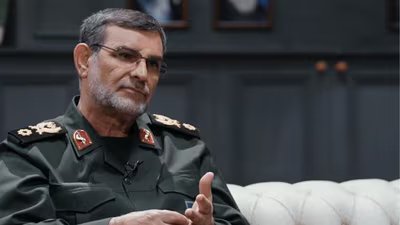
As the war in West Asia rages on, Israel has stated on Thursday that Iran’s Naval Commander Alireza Tangsiri has been killed. Citing a statement from Israeli Defence Minister Israel Katz, Israeli media stated that the IRGC Commander is dead. IRGC Naval Commander Alireza Tangsiri has reportedly been killed in strikes (Tehran Times ) “The
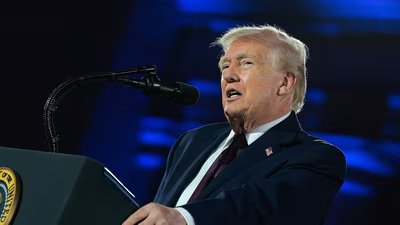
US President Donald Trump on Wednesday said that the people of Iran had asked him to become the Supreme Leader and added that he is not interested. While speaking at a fundraiser event, Trump said Iranians asked him, “We’d like to make you the next Supreme Leader,” and shared his reply to the prospect: “No,
An additional person is now serving a prison sentence in connection to the 2021 drive-by fatal shooting of a five-year-old child in Jasper County, the 14th Circuit Solicitors Office said March 19. Mittie Scott, of Beaufort, who was 30 years old when she was arrested last April, pled guilty to accessory before the fact to
WASHINGTON—President Trump has told associates in recent days that he wants to avoid a protracted war in Iran and that he hopes to bring the conflict to an end in the coming weeks. WASHINGTON, DC – MARCH 25: U.S. President Donald Trump attends the National Republican Congressional Committee’s annual fundraising dinner at Union Station on
Donald Trump explained at the National Republican Congressional Committee’s (NRCC) annual fundraising dinner Wednesday, March 25, why he avoids using the word “war” to describe the Iran conflict. Trump says he won’t call Iran conflict ‘war’ because he doesn’t have ‘approval,’ triggers outrage (Photo by CHIP SOMODEVILLA / GETTY IMAGES NORTH AMERICA / Getty Images
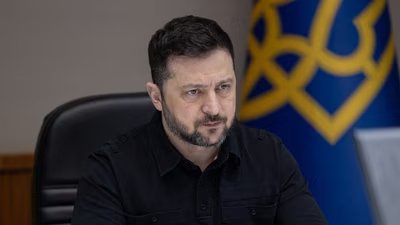
Russia sought to blackmail the United States by offering to stop sharing military intelligence with Iran if, in return, Washington would cut off Ukraine from its intelligence data, President Volodymyr Zelensky said on Wednesday. Zelensky said he had seen the data but provided no further details. (AFP) Zelensky, who said on Monday that Ukraine’s military
VAUX-DE-CERNAY, France, March 26 (Reuters) – Foreign ministers from the world’s leading Western democracies meet in France this week against the backdrop of wars in Iranand Ukraine, economic uncertainty, and mounting unease over an increasingly unpredictable U.S. foreign policy. The two-day gathering at the restored 12th-century Abbaye des Vaux-de-Cernay, about 40 km (25 miles) southwest
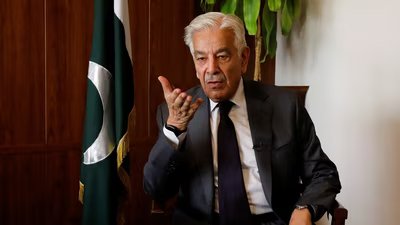
Pakistan defence minister Khawaja Asif on Wednesday seemed to mock the US’s aim to resume operations at the Strait of Hormuz, a key waterway facing disruptions since the start of the US-Iran war a few weeks back. “The goal of the war seems to have shifted to opening the Strait of Hormuz, which was open
The Iran war has deflected global attention from Russia’s all-out invasion of its neighbor Ukraine as Europe’s biggest conflict since World War II enters its fifth year and an emboldened Kremlin undertakes a spring offensive. The past week showed that neither side is easing up. Russia on Tuesday fired almost 1,000 drones and 34 missiles
TAIPEI, March 26 (Reuters) – Taiwan Defence Minister Wellington Koo on Thursday indicated the next arms sale package from the United States is on track after the government received a letter of guarantee from Washington, even as the U.S. and Chinese leaders prepare to meet in May. A major U.S. arms package for Taiwan worth
HAVANA (AP) — Former Cuban President Raúl Castro is involved in talks between the island and the United States, and they’re still in the early stages, Cuban President Miguel Díaz-Canel said Wednesday. The talks come amid increasing tensions between the two nations, with Cuba plagued by nationwide blackouts resulting from a crumbling power grid and
By Humeyra Pamuk and Jonathan Landay WASHINGTON, March 25 (Reuters) – U.S. Vice President JD Vance is scheduled to visit Hungary on April 7-8, two sources familiar with the plan said on Wednesday, ahead of what could be right-wing Prime Minister Viktor Orban’s toughest election since taking power in a 2010 landslide. Orban has been
Nigel Farage is set to officially launch Reform UK’s local election campaign, promising “a breath of fresh air in English councils up and down the UK”. The party leader will formally kick off the campaign for the May 7 polls at an event in Sunderland on Thursday, following a series of rallies across the country
If taxes disappeared tomorrow, would workers actually see more money—or would companies just keep the difference? Billionaire entrepreneur and Cost Plus Drugs co-founder Mark Cuban says that question misses the bigger point. In a 2019 GQ video where he answered fan questions, Cuban focused on something else entirely: who owns the company before the money
SEOUL, March 26 (Reuters) – North Korean leader Kim Jong Un welcomed Belarusian President Alexander Lukashenko to Pyongyang on Wednesday, North Korean state media KCNA said on Thursday, touting ties between the two close allies of Russia’s Vladimir Putin. When Lukashenko visited Pyongyang’s Kumsusan mausoleum to pay respects to former North Korean leaders, he laid
Police have filed charges against a man they say attacked another man outside of a business in Butler County, causing injuries so severe that the victim had to be flown to a hospital. Charges were filed against Joshua Sean Young, 39, of Butler on Wednesday. According to court documents, police and medics were called to
A Russian company is openly teasing what it describes as a domestic alternative to the Tesla Cybertruck, announcing plans for an all-electric delivery vehicle with stainless steel bodywork and sharply angular styling. The project comes from a company based in Perm that says it is reviving the historic Russo-Balt name. The vehicle is currently presented
A British court has sentenced a driver to nearly 12 years in prison after a fatal high-speed crash that followed hours of heavy drinking, in a case that underscores the deadly consequences of reckless driving and impaired judgment. According to a report by the Daily Mail, 35-year-old Ross Neville spent around five hours drinking heavily
Because of its central role in AI development, Nvidia (NASDAQ: NVDA) has been one of the best-performing stocks of the last decade. Its share price grew by over 20,000% during that time, and it’s now the largest public company by market cap. It’s natural to wonder if there’s any meat left on the bone at
For years, Strathmere’s lifeguards began their day at their quarters on Williams Ave., huddling to discuss their plans on keeping thousands of beachgoers safe. This summer, beach patrol operations will operate from a temporary site after relentless erosion forced Upper Township to order the demolition of its headquarters. The aging building is now so threatened