Seven suspects were taken into custody for allegedly publishing seditious materials linked to the crackdown, with the aim of inciting hatred of the local and central governments. One remains in remand in Tai Lam Centre for Women, while six others were earlier released on bail.
“I would like to say something that conveys sadness and hope, coexisting in the life-sapping event that took place 35 years ago in the capital city,” Chow wrote, saying the June 4 crackdown continued to disturb many even as others wanted it “to be settled”.
The incident “left a deep wound in parts of our psyche, though it has been buried and scarred over. Yet it remains a sore spot that requires proper attention for healing”.
The cardinal said his own feelings about the military crackdown on the protests “remain alive”, but his faith prompted him to “forgive whoever and whatever” had caused harm.
He urged different parties to “move beyond finger-pointing and the painful ‘I will never forgive’ mindset,” stressing that it was through forgiveness that reconciliation and healing stood “a better chance of becoming a reality”.
In the spring of 1989, students in Beijing led demonstrations against the central authorities and occupied Tiananmen Square, calling for greater freedoms and for the government to rid itself of corruption.
In the early hours of June 4, the army moved in to clear the protesters and an unconfirmed number of unarmed civilians were killed in the crackdown.
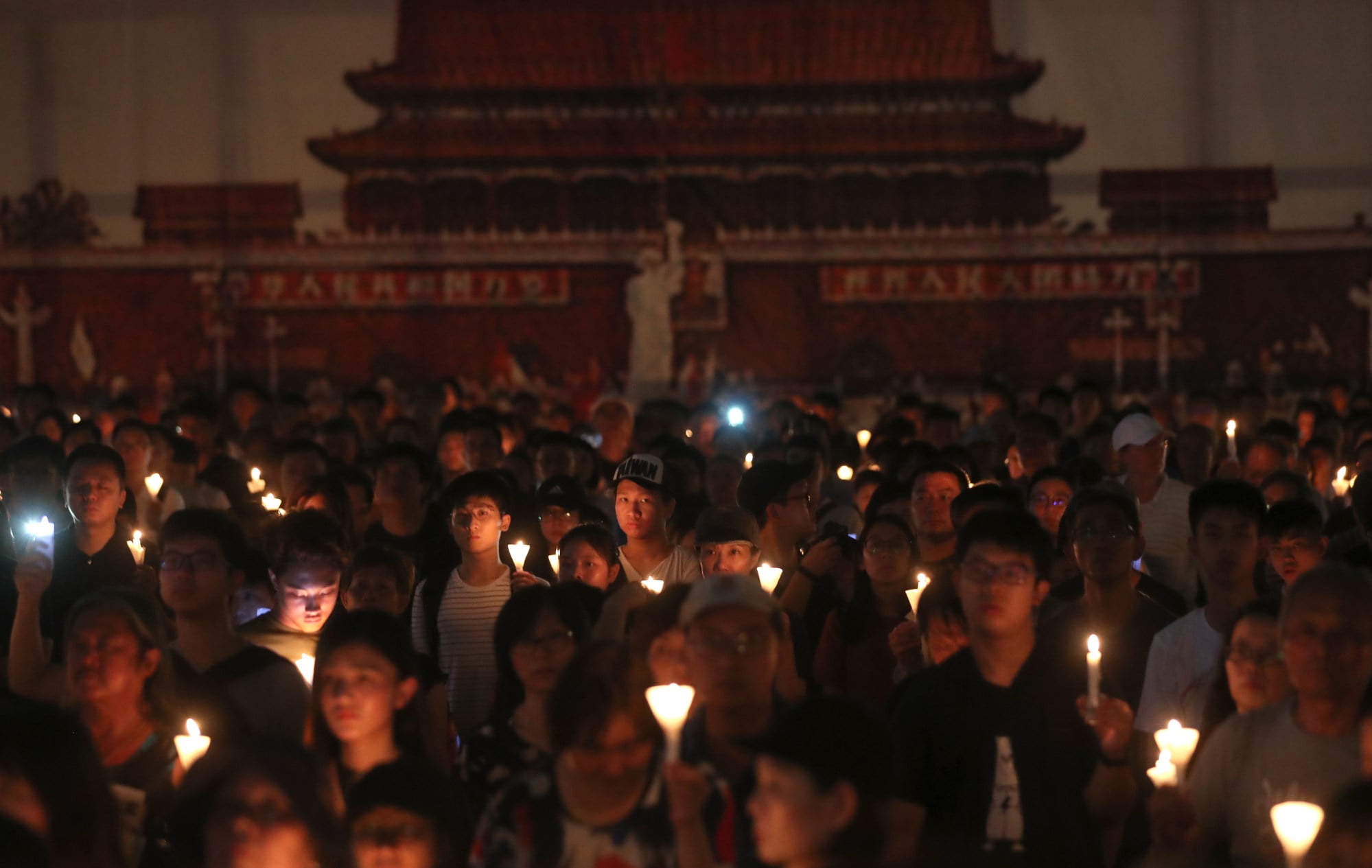
In the decades after, Hongkongers gathered annually on June 4 for a candlelight vigil to mourn those killed. The event at Victoria Park in Causeway Bay was organised by the Hong Kong Alliance in Support of Patriotic Democratic Movements of China and regularly attracted tens of thousands of residents.
But city authorities refused to grant permission for the event in 2020 and 2021, citing health risks amid the Covid-19 pandemic, and the alliance disbanded in 2021. No organisation hosted the vigil in 2022 and 2023.
Earlier this week, officers of Hong Kong’s National Security Department arrested seven people, including Chow Hang-tung who was vice-chairwoman of the alliance, for allegedly publishing seditious materials related to the 1989 crackdown and stoking hatred of the local and central governments.
Chow Hang-tung is currently in remand pending a national security trial for allegedly inciting subversion through her work with the alliance.
National security police had said a woman, with the help of others, was alleged to have used a social media platform from April “to exploit an upcoming sensitive date” and was repeatedly publishing posts to “provoke hatred” towards central authorities, the city government and the judiciary.
The arrests were the first since the Safeguarding National Security Ordinance was enacted in March, although the sedition offence had been part of the city’s criminal laws before being incorporated into the new legislation.
The ordinance states that it is an offence for a person to utter words that carry seditious intent, including to bring a person in Hong Kong into hatred, contempt or disaffection against the executive or judicial powers of the city or to incite any other person to commit an act against the law.
Those convicted face a maximum punishment of seven years in prison.