The falling number of babies born in Hong Kong has hit enrolments, with worse expected.
The number of births fell from 52,900 in 2019 to 43,000 in 2020, 37,000 in 2021 and a low of 32,500 last year.
The council represents 422 primary schools, and So said he feared that the number who might face the axe would be “not too few”.
Primary One enrolment has fallen to a record low in 14 years with only 42,277 children registered for public schools for the next academic year, a drop of about 10,000 from 2019.
Hong Kong Catholic secondary school to close a year earlier than first planned
Hong Kong Catholic secondary school to close a year earlier than first planned
Public primary schools with fewer than 16 children enrolling are not allowed to start Primary One classes, leading to their eventual closure. But those who come up with a survival plan and get approval for it can carry on.
This year, five schools had too few children enrolling. A school in Wong Tai Sin has been told it will close after three years, while the other four managed to get their survival plans approved.
So’s council urged the government to allow more children from the Greater Bay Area to enrol in Hong Kong schools, by opening up to more than those with the right to study in the city.
“Why can’t we open our quality primary and secondary schools [to more students] when the government is allowing the universities to double their quota of non-local students,” So asked.
Hong Kong primary schools hardest hit in education sector by UK emigration wave
Hong Kong primary schools hardest hit in education sector by UK emigration wave
Hong Kong, Macau and nine cities in Guangdong form the bay area, which Beijing aims to turn into an economic powerhouse.
So said mainland parents were impressed by the city’s public schools, and not only the elite ones.
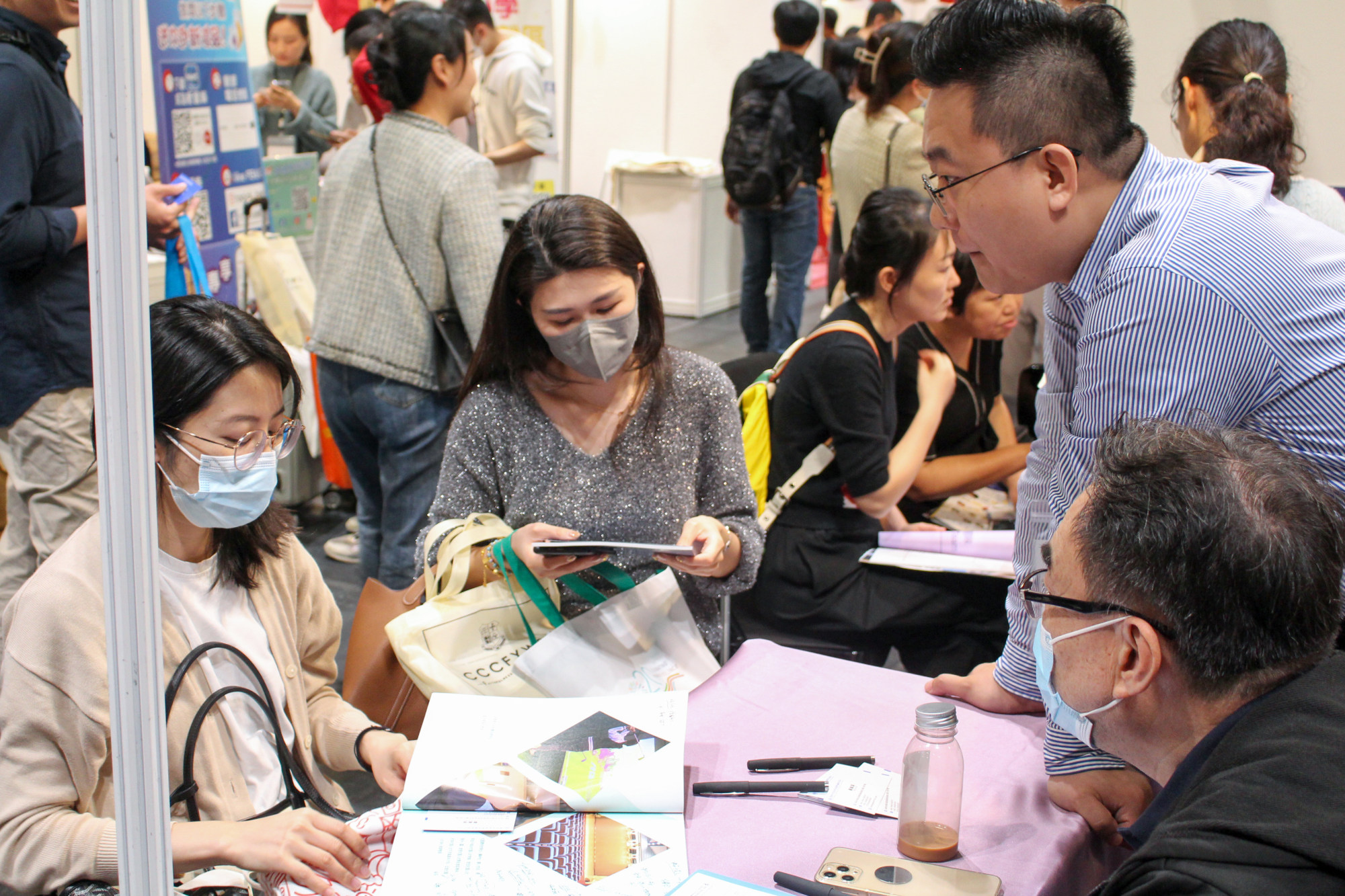
A three-day education expo earlier this month, targeting mainlanders whose children were entitled to study in Hong Kong, attracted more than 10,000 parents and pupils.
So said people from the mainland who moved to the city to work under various talent schemes did not only choose top or popular schools for their children, but also some “average schools”.
“Their reasons for choosing such schools may be the parents’ work location or the proximity of the border,” he said.
He urged the authorities to fully implement small class sizes in primary schools and to count every child with special needs as 1.5 or 2 pupils.
From the next school year, 90 per cent of public primary schools will have smaller classes of about 25 pupils, down from 30 previously.
So also voiced concerns about a new subject being introduced in schools and the mental health of children.
The government announced in October that the core general studies subject would be broken into two others, science and humanities, from September 2025.
The humanities subject aims to boost students’ patriotism and awareness of national identity, with Primary One children taught to love the nation and learn that “without a country, there is no family”, according to the bureau.
So said it was too rushed to introduce a new subject in less than two years, with no prior consultation.
Half of Hong Kong pupils secure spot at preferred primary school in 16-year high
Half of Hong Kong pupils secure spot at preferred primary school in 16-year high
“Teachers will be busy preparing the new subject, such as choosing textbooks and planning lessons,” he said. “In the end, pupils will suffer from the lack of preparation. I am worried there will be a revision soon after its launch.”
The state of mental health among Hong Kong students has been in the spotlight with 31 suicides among primary and secondary pupils in the first 11 months of the year, the highest number since 2018.
So said the long period of class suspensions during the Covid-19 pandemic could be one of the main causes of mental health problems among the city’s youngsters.
“Did we underestimate students’ needs?” he said. “The impact of the full resumption of classes after such a long period of suspension is greater than we anticipated.”
After three years of disruptions and home-based learning, everyone was suddenly back in school and So recalled that some people were in a hurry to make up for lost time.
“But students are not machines, we cannot press a button and get back all that we lost,” he said, adding that the return to campus should have been more gradual.
New science subject to help Hong Kong pupils ‘appreciate national achievements’
New science subject to help Hong Kong pupils ‘appreciate national achievements’
The Education Bureau responded to the spike in suicides by announcing in November that every school would receive HK$60,000 (US$7,680) to hold activities to boost mental health that month.
So said teachers felt that it was more important for them to have the time to get to know their students, identify those at risk and either counsel those at risk or seek emergency support when necessary.
“But teachers in Hong Kong are too busy to counsel students,” said So, urging the bureau to ease educators’ heavy workload, especially the need to submit reports on key performance indicators.
“When schools are given HK$60,000 to hold activities, teachers are again asked to spend time asking different parties to submit quotations and vet different organisations,” he said with a sigh. “With the money comes tonnes more work for teachers.
“We advise schools to strengthen existing or planned activities to boost mental health, but not devise a brand new activity just to put on a show because of the new money from the government.”