Hong Kong is accelerating high-end marina developments, yacht berthing capacity and cross-border sailing schemes in a bid to reposition itself as a luxury maritime gateway at the centre of the Guangdong-Hong Kong-Macao Greater Bay Area.
Get the latest news straight to your inbox!
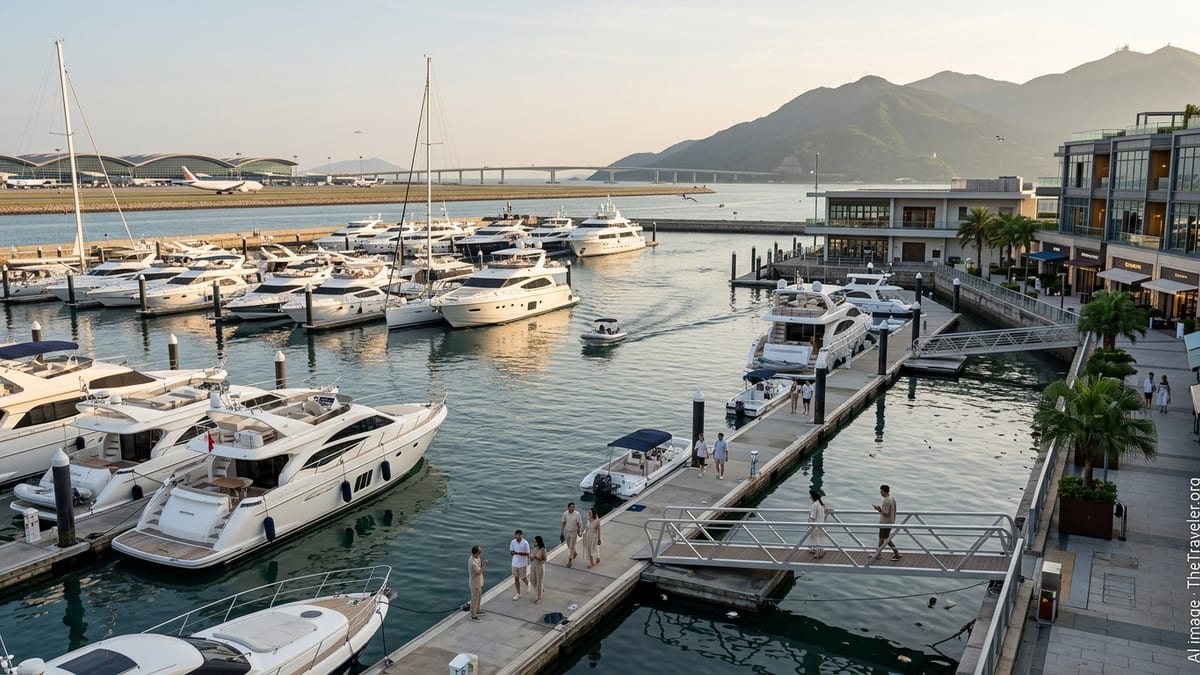
Strategic Push to Capture the Luxury Yacht Market
Policy documents and recent public statements indicate that Hong Kong is moving decisively to build a so-called yacht economy, targeting high-net-worth visitors and regional boat owners. The 2025 policy blueprint for tourism places yacht tourism alongside cruise and cultural travel as a growth priority, highlighting the city’s deep-water harbour, island-dotted coastline and proximity to mainland markets as core advantages.
Publicly available information shows that the government plans to add about 1,100 yacht berths across Hong Kong, including expansions at existing typhoon shelters and new marinas integrated into major redevelopment zones. Industry analysts argue that this marks a shift from ad hoc mooring solutions toward a coordinated luxury maritime network offering concierge-level services, customs and immigration facilities, and direct links to hotels, shopping and entertainment.
Regional projections from yachting and investment bodies suggest that the Greater Bay Area could account for a significant share of global luxury yacht demand by 2030, with Hong Kong expected to act as a showcase port for international brands and charter operators. The city is seeking to convert its legacy as a commercial shipping hub into a high-value leisure waterfront, in line with broader efforts to diversify its tourism base.
Airport Bay Marina and Skytopia Anchor an Air-Sea Luxury Hub
One of the most closely watched projects is Airport Bay Marina, part of the multibillion-dollar Skytopia development spearheaded by the Airport Authority on and around the artificial island of Hong Kong International Airport. Sector briefings describe plans for a 500 to 600-berth marina, designed to accommodate a spectrum of vessels from mid-size leisure boats to larger superyachts, alongside a broad mix of hospitality, retail and entertainment offerings.
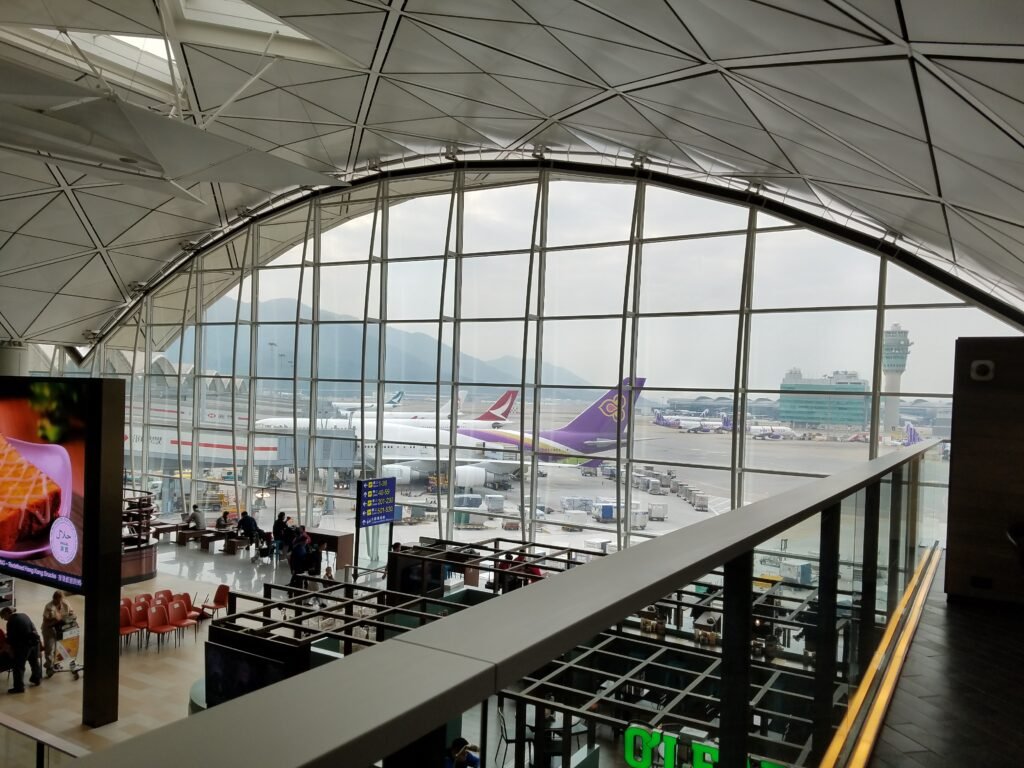
Planning documents and promotional material portray Skytopia as an integrated air-sea lifestyle cluster, combining private jet facilities, high-end hotels, a marine resort, art and luxury retail with direct yacht access. Observers note that this concept draws on the airport’s role as a major international gateway, aiming to enable affluent travellers to connect from long-haul flights directly to yachts for cruises through Hong Kong waters and the wider Greater Bay Area.
By situating a major marina at the western edge of the territory, linked by the Hong Kong-Zhuhai-Macao Bridge to mainland cities, planners are effectively positioning Airport Bay as a maritime portal for cross-border itineraries. Industry commentary suggests that, once operational, the complex could also host international boat shows and regattas, reinforcing Hong Kong’s profile in the global superyacht calendar.
Waterfront Reinvention from Hung Hom to Aberdeen
Beyond the airport island, multiple urban waterfronts are being reimagined with luxury marinas at their core. In Hung Hom, preliminary proposals reported in local media outline a HK$10 billion to HK$20 billion project to transform the area around the Hong Kong Coliseum into a landmark mixed-use precinct, including a yacht marina and a signature high-rise tower with entertainment facilities. The plan is framed as a way to draw yacht-borne visitors directly into Kowloon’s cultural and retail heart.
Harbourfront advisers and community voices have nevertheless raised questions over the viability of the Hung Hom marina, pointing to aging nearby facilities and the need for extensive revitalisation to meet world-class standards. Analysts suggest that the debate highlights broader tensions in Hong Kong’s waterfront planning, where the desire for iconic luxury developments must be balanced against public access, environmental considerations and long-term financial sustainability.
On the south side of Hong Kong Island, expansion of the Aberdeen Typhoon Shelter and redevelopment of adjacent areas are expected to deliver additional berths and upgraded marina infrastructure. Planning documents describe a two-part approach that combines improvements to public moorings with the creation of a new private marina offering full-service facilities. Together with a separate project at the former Lamma Quarry site, this southern corridor is being positioned as a leisure boating cluster oriented toward both local owners and visiting yachts.
Cross-Border Yacht Travel and the Greater Bay Area Vision
Parallel to bricks-and-mortar projects, Hong Kong is engaging mainland counterparts on regulatory changes intended to make cross-border yachting more seamless. According to published coverage of recent tourism policy discussions, the city is exploring an individual yacht travel scheme with Guangzhou and other Greater Bay Area cities. The objective is to simplify customs, immigration and navigation procedures so that private vessels can sail more easily between Hong Kong, neighbouring Guangdong ports and Macau.
Guangdong’s 2024 to 2027 action plan for the yacht industry, as reported by regional business outlets, calls for the Greater Bay Area to become a global centre for yacht manufacturing, tourism and services. The plan envisions expanded navigable waters, harmonised standards and joint tourism products built around multi-port itineraries. Hong Kong’s role in this framework is expected to focus on premium services, international marketing and acting as an entry point for foreign-flagged vessels.
Policy papers also indicate moves to authorise mainland organisations to provide training and examinations leading to skipper qualifications recognised in Hong Kong waters. Observers note that such steps are intended to cultivate a larger base of qualified yacht operators within the Greater Bay Area, lowering barriers to private ownership and chartering while embedding Hong Kong in a shared regulatory ecosystem.
Superyacht Signals and High-End Visitor Strategy
While long-term infrastructure and regulatory reforms take shape, Hong Kong is already leveraging high-profile vessels to signal its ambitions in the luxury maritime market. Recent seasons have seen a growing number of superyachts and boutique cruise yachts calling at the city, including ultra-luxury vessels marketed as floating resorts targeting affluent international travellers. Press releases from tourism authorities describe these calls as part of a broader push to elevate Hong Kong’s image as a premium port of call in Asia.
Industry reports highlight that luxury visitors arriving by sea tend to spend heavily on hotels, fine dining, shopping and exclusive experiences, aligning with the city’s high-end tourism strategy. Integrated yacht, cruise and marina offerings are seen as a way to differentiate Hong Kong from regional competitors, especially as destinations around the South China Sea and wider Indo-Pacific region accelerate their own port and resort developments.
Analysts caution that sustained success will depend on more than iconic projects and superyacht visits. Factors such as environmental management in crowded anchorages, fair access to waterfront spaces, the resilience of marine ecosystems and the capacity of supporting services will all shape the long-term appeal of Hong Kong’s waters. For now, however, the scale of announced investments and policy shifts suggests that the city is intent on turning its natural harbour into the focal point of a new era of high-end maritime tourism within the Greater Bay Area.