The worst part of any long-haul flight is the departure time. It’s almost always at some ungodly hour—2 a.m., say—but that, too, has its advantages. Exhaustion makes it easy to fall asleep once you’re in the air.
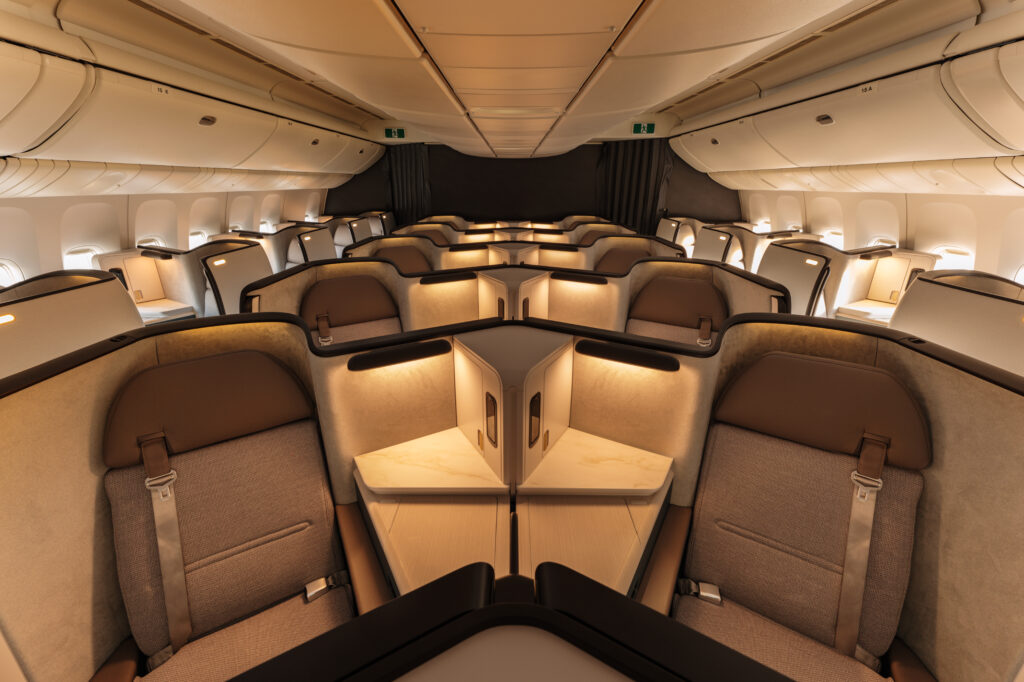
My flight to Hong Kong left New York at 1:55 a.m., but I was flying Cathay Pacific. The real dilemma wasn’t the hour; it was how to stay awake long enough to enjoy the service. I managed a glass of champagne and a bowl of curried cauliflower soup from the late-night menu—part of a dining program with a serious wine menu that currently includes the first Chinese wine series—before falling into six uninterrupted hours of sleep.
Fifteen hours later, I was gliding through early-morning light in a Peninsula-green Rolls-Royce Phantom, crossing the Tsing Yi Bridge as dawn broke over Victoria Harbor. The sleepless departure from New York felt like another lifetime. A typhoon hovered somewhere off the coast, but the city ahead was glittering in the morning light.
It was 6 a.m. when I arrived at The Peninsula Hong Kong, and my room was already waiting—roses on the table, a view of the harbor, and a quiet hum that signaled everything was in order. The hotel opened in 1928 and has managed to remain both timeless and modern through war, reconstruction, and reinvention.
The rooms are an elegant study in tone: cream, champagne, and rose set against dark wood and polished metal. Cherry blossom motifs trace the walls. Technology is discreet—lighting and temperature panels at your bedside, Chromecast-enabled televisions, Wi-Fi fast enough for streaming, and a well-stocked minibar with a Nespresso machine and an ornate tea set.
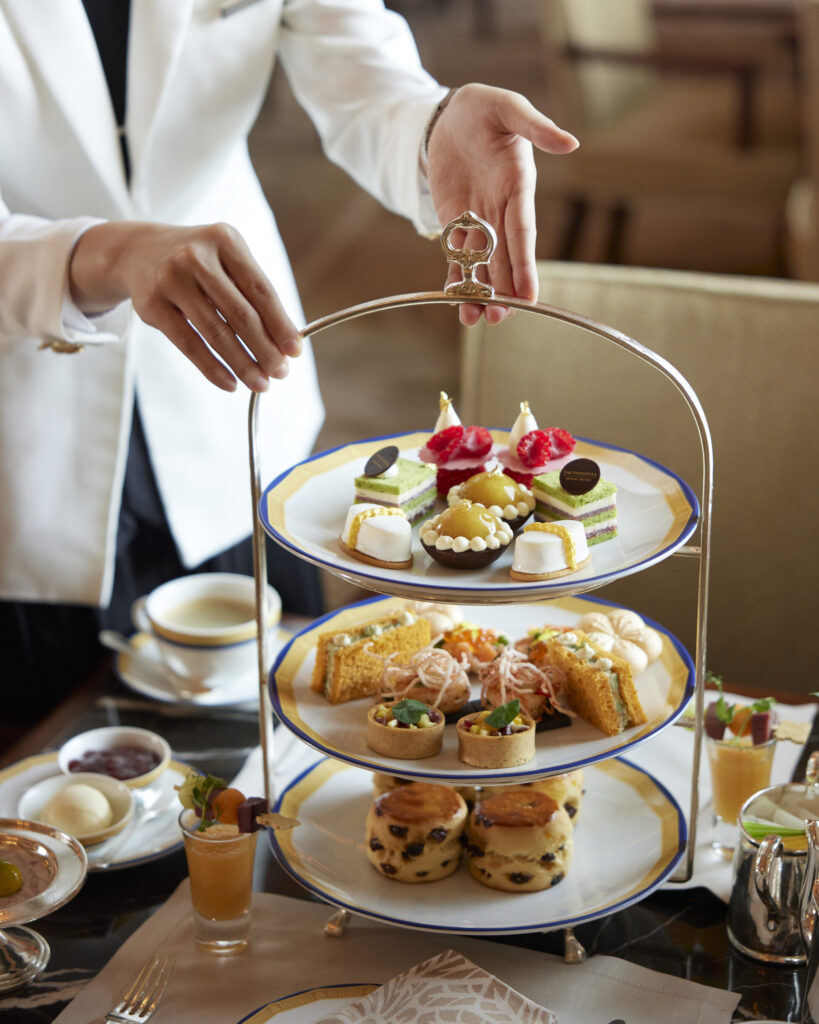
Tea, in fact, is central to The Peninsula’s story. Its afternoon service has been a Hong Kong institution for more than 80 years. The lobby buzzes at all hours, but never more so than when guests and locals gather for raisin scones and finger sandwiches stacked high on silver tiers, a pot of tea at the center, and the sound of live strings drifting through the neoclassical hall. Add a glass of champagne and you’ll understand why it remains one of the city’s most beloved rituals.
The hotel’s sense of heritage extends far beyond the scones. It was here, in the 1980s, that XO Sauce was first created—the now-iconic condiment of dried scallops, Yunnan ham, and Chinese spices. The recipe remains secret, but the flavor—rich, smoky, and distinctly Hong Kong—has become a culinary benchmark across Asia.
Much of The Peninsula’s grace comes from its people. The hotel employs some of the city’s longest-serving staff: 36 employees have worked here for over 30 years, and more than 100 for over two decades. It’s that continuity—knowledge passed from one generation of hoteliers to the next—that gives the place its ease and warmth. From the moment you step out of your car (likely a Rolls-Royce Phantom, of which the hotel owns 14, along with a lovingly maintained 1934 Phantom II), the service is effortless and precise.
Those gleaming green Phantoms, setting a record for the largest single order in Rolls-Royce history, are more than transport—they’re an extension of the hotel’s philosophy of hospitality as an art form.
With nine restaurants, the hotel makes a convincing case for staying in. Spring Moon, the Michelin-starred Cantonese restaurant, is the place for refined dim sum and barbecued duck lacquered to perfection. Imasa handles Japanese precision, while Chesa, the Swiss chalet tucked into a corner of the property since 1965, remains a nostalgic favorite. Gaddi’s, another Michelin-starred classic, has hosted Hong Kong’s elite for more than 6 decades, serving French haute cuisine in a room that embodies old-world glamour.
For something more contemporary, Felix, designed by Philippe Starck, serves modern European dishes in a groovy, mirrored space overlooking the skyline. Finish with a nightcap at The Bar, where the martinis are strong, the vibe is private-club, and the lighting is low and sexy.
Still, it would be a mistake not to step outside. Hong Kong unfolds in layers—modern, historic, and everything between—impossible to summarize.
Start in SoHo (south of Hollywood Road), a walkable neighborhood where colonial facades give way to cafés, art galleries, and restaurants that feel as international as they do local. The mix is lively but unpretentious: espresso bars, antique shops, Indian and Peruvian kitchens, and the steady hum of music from upstairs wine bars. Stop at the Man Mo Temple, built in 1847 and dedicated to the gods of literature and war. Beneath the spiraling incense coils, worshippers make food offerings—fruit, cakes, roast meats—to invite wisdom and protection. It’s one of the few places in the city where time still feels suspended.
A short taxi ride away, PMQ (formerly the Police Married Quarters) has been reimagined as a design hub housing more than a hundred studios and boutiques. You’ll find locally made jewelry, custom mahjong sets, modern ceramics, and a curated mix of art and lifestyle goods. The creative energy is palpable—designers at work in open studios, cafés filled with students and collectors, and a sense that Hong Kong’s creative scene is constantly rewriting itself.
Among PMQ’s highlights is Louise, a one-Michelin-star restaurant from French chef Julien Royer and Yenn Wong. Set in a two-story colonial house surrounded by greenery, it feels more like dining in a friend’s elegant home than in a fine-dining room. The signature roasted chicken for two is a must. (Cathay Pacific also partners with Louise on select flights, bringing Royer’s refined French dishes—from Provençal beef cheeks to Guanaja dark chocolate desserts—to the skies.)
Hong Kong’s art scene is as layered as its skyline—a blend of the traditional and the avant-garde, shaped by its shifting cultural identity. The West Kowloon Cultural District has become its creative core, anchored by two museums that embody that balance.
M+, with its angular Herzog & de Meuron design facing Victoria Harbour, rivals MoMA or the Tate in scope. Its exhibitions span design, architecture, photography, and moving image, exploring both Hong Kong’s visual culture and global contemporary art. Current shows include Canton Modern, which traces a century of southern Chinese visual expression, and Dream Rooms, a major survey of women artists who have created immersive environments from the 1950s to today.
Next door, the Hong Kong Palace Museum connects the city to its dynastic past. As a satellite of Beijing’s Palace Museum, it displays treasures—jade, bronze, ceramics, lacquer—that have rarely been seen outside the Forbidden City. Visiting with a guide brings the experience to life, revealing how centuries of artistry still resonate in this hypermodern city.
The Peninsula’s concierge can arrange private museum tours, art previews, or even a helicopter ride from the hotel’s rooftop helipad, complete with access to the aviation-themed China Clipper Lounge. It’s a touch of cinematic indulgence—the kind of “superlative luxury transport” that has defined the hotel since its earliest days.
After three days of walking, eating, and absorbing the city’s contrasts—temples and towers, tea houses and neon—I ended my stay where I began: in a place of calm. The Peninsula’s spa offers a ritual of recovery before the return flight. Boost your vitality with a guided Tai Chi session or a swim in the glass-walled pool overlooking the harbor before heading to the airport.
At Hong Kong International Airport, Cathay Pacific’s lounges are destinations in and of themselves. The Pier and The Wing combine fine dining, spa treatments, and quiet spaces designed for rest. The Noodle Bar serves delicate wonton soup, the perfect punctuation to the journey.
From here, Southeast Asia is at your doorstep—Singapore, Bangkok, Tokyo—all within reach. But few places capture the interplay of heritage and velocity quite like Hong Kong.