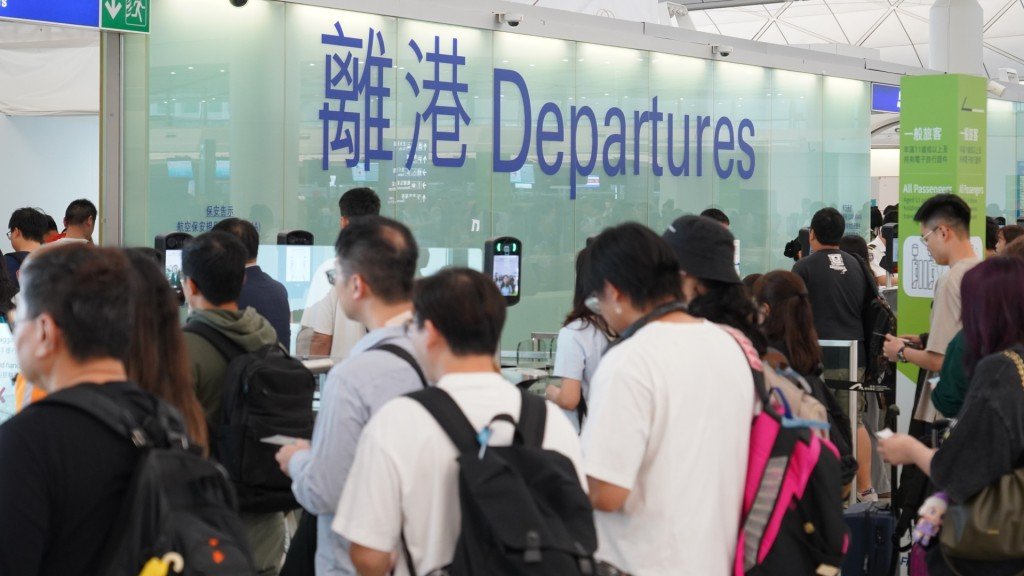
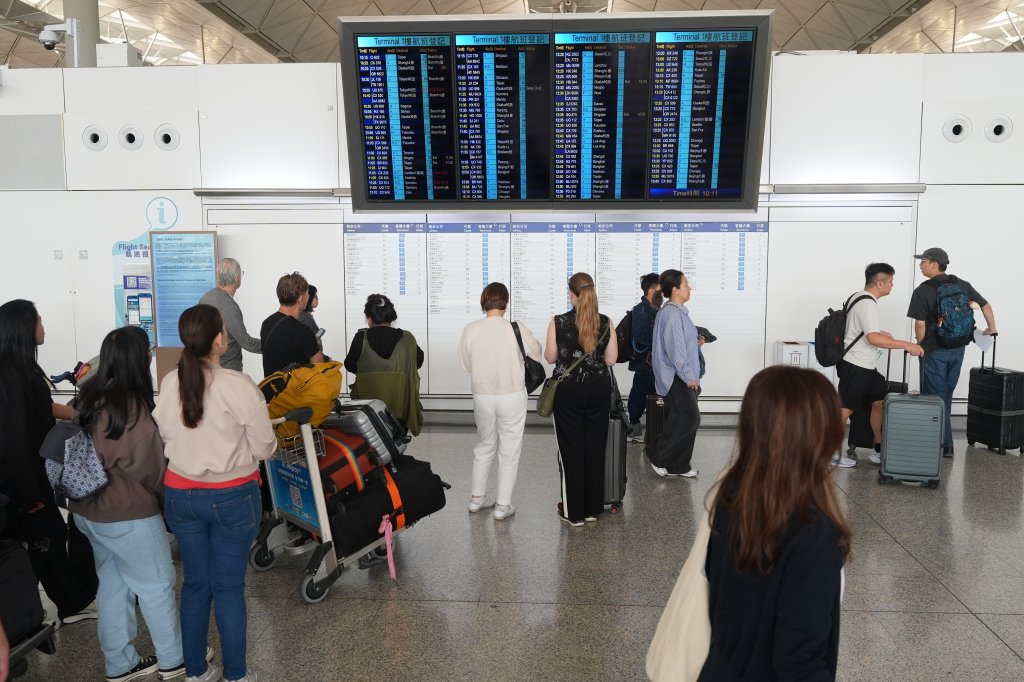
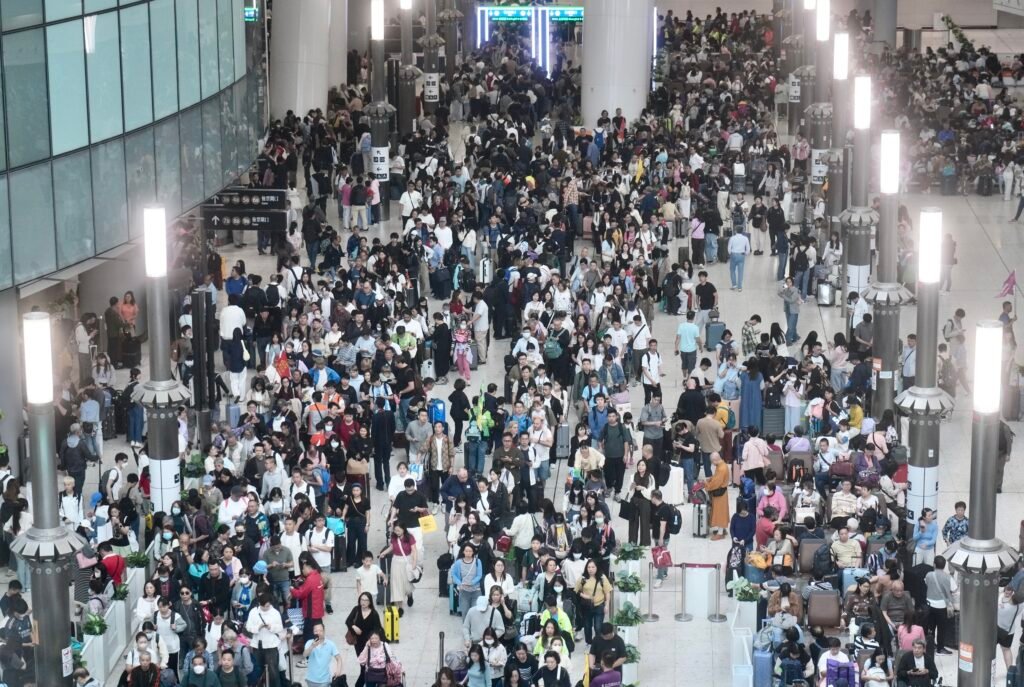
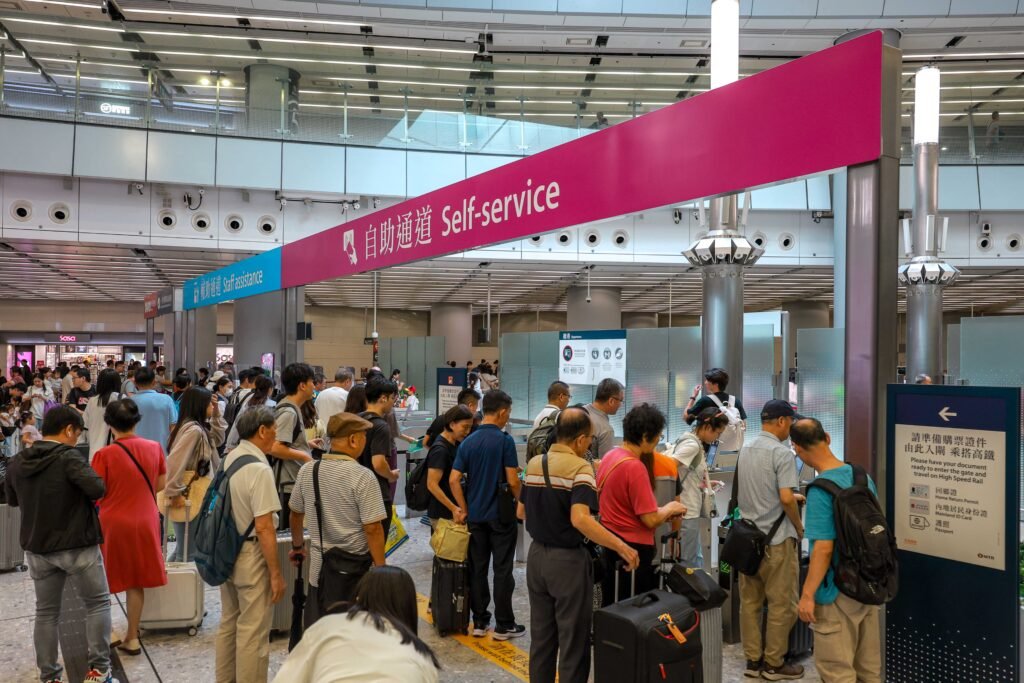
The Guangzhou-Shenzhen-Hong Kong Express Rail Link handled 86,000 passenger trips from the Hong Kong Special Administrative Region to the Chinese mainland on Friday, setting a new single-day record amid a surge of northbound travel during the Qingming Festival holiday, according to the China Railway Guangzhou Group.
The railway operated 239 passenger trains that day, carrying a total of 119,000 passengers.
The railway line is expected to transport more than 600,000 passengers from Friday to Tuesday, marking a year-on-year increase of 10.6 percent and highlighting the strong momentum of mobility.
The strong passenger flow reflects robust enthusiasm among Hong Kong residents for tomb-sweeping, sightseeing and shopping during the Qingming Festival holiday, with the high-speed rail emerging as their preferred mode of travel.
Popular destinations for Hong Kong travelers have expanded beyond Shenzhen, Guangzhou and Chaoshan to inland cities such as Chongqing and Guilin.
From morning tea in Shenzhen to concerts in Guangzhou and culinary tours in Chaozhou, the Shenzhen-Hong Kong “one-hour living circle” has evolved from simple shopping trips into a comprehensive experience encompassing catering, accommodation, culture, sports and entertainment, accelerating economic integration between the two regions.
To cope with surging passenger flows, Shenzhen railway authorities have implemented a “daily-adjusted train diagram” scheduling mechanism, operating an average of more than 230 cross-border passenger trains daily to maximize capacity and meet travel demand.
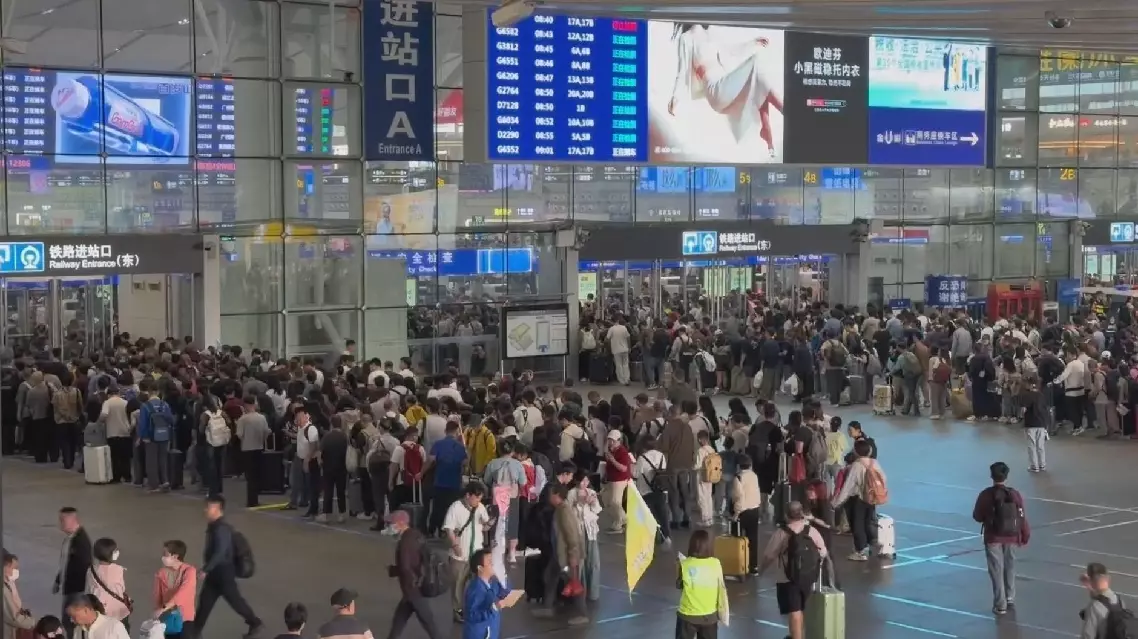
Guangzhou-Shenzhen-Hong Kong railway sees record travel surge during Qingming holiday
More than 1,000 coal mines in China have adopted intelligent systems, as their application expands from pilot projects to large-scale deployment, the China National Coal Association said recently.
Statistics show that by the end of 2025, a total of 1,066 coal mines nationwide have introduced smart systems, with such technologies now supporting more than 65 percent of the country’s coal production capacity. The number of autonomous mining trucks in operation surpassed 4,000 units, roughly doubling on an annual basis.
The rapid adoption of smart mining is driven by robust domestic capabilities in intelligent equipment and technology. In Beijing, a newly deployed underground Internet of Things (IoT) precision positioning and management system links workers, positioning cards and operating zones, while also enabling health monitoring. Its core technologies and components are fully domestically developed and have been applied in coal mines and coal preparation plants. “This underground positioning system we’ve developed has a positioning deviation of less than 20 centimeters when a person or device is stationary. Even when a person or device is moving at high speeds, the margin of error remains minimal. A single device can cover a radius of 800 meters,” said Wu Fengdong, general manager of China Coal Beijing Coal Mining Machinery Co., Ltd., a subsidiary of the state-owned China National Coal Group Corporation.
Since the start of the 14th Five-Year Plan period (2021–2025), cumulative investment in smart mining has exceeded 107.1 billion yuan (about 15.6 billion U.S. dollars), with intelligent technologies now widely applied, accelerating the shift from traditional mining to modern, technology-driven extraction.
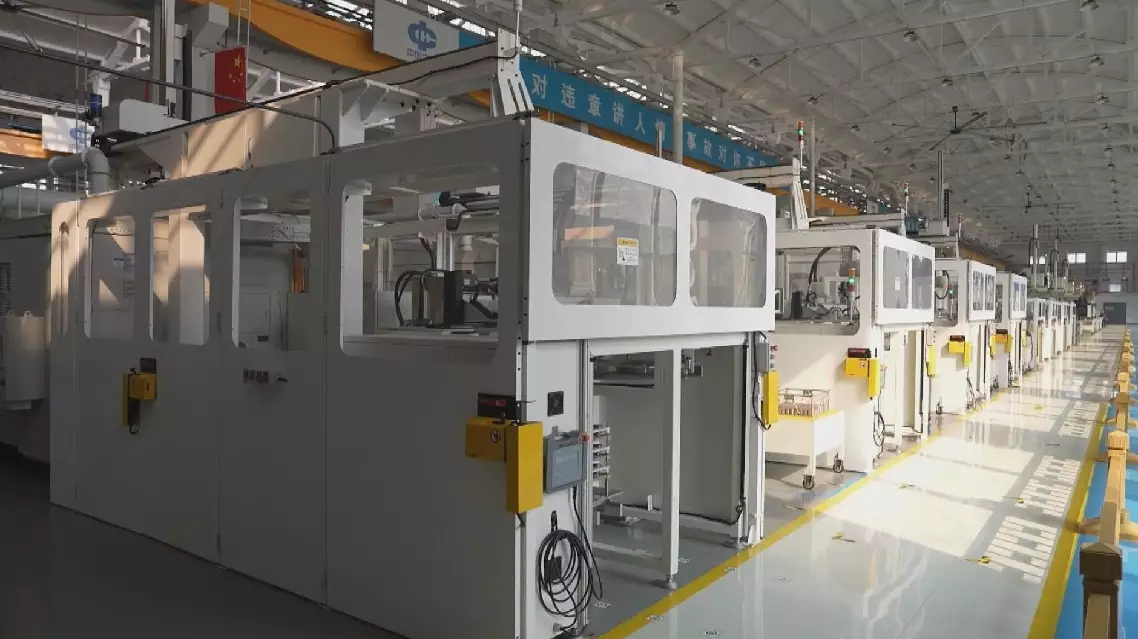
Over 60 pct of China’s coal production capacity uses smart technology by end of 2025