The measure builds on a law passed last year that prohibited student access to personal electronic devices “bell to bell” in kindergarten through eighth grade.
ATLANTA — Gov. Brian Kemp signed legislation on Tuesday expanding Georgia’s ban on cell phones in public schools — extending restrictions to include high school students.
The measure, known as House Bill 1009, builds on a law passed last year that prohibited student access to personal electronic devices “bell to bell” in kindergarten through eighth grade. The new law expands that ban through 12th grade, creating what lawmakers describe as a “distraction-free education” environment across all K-12 public schools in the state.
The bill received unanimous approval in the Georgia Senate, passing 52-0, and had strong backing from educators and many lawmakers who argued cell phones have become a major classroom disruption.
Supporters pointed to research and classroom data suggesting limiting phone access can improve academic performance and student behavior. State Rep. Scott Hilton, who sponsored the bill, cited studies from Emory University and Georgia Southern University showing measurable benefits.
“The results are this: Grades are up, fights are down, test scores are up, and kids are interacting,” Hilton said during debate on the measure. “This is truly life-changing work.”
Educators across the state also expressed strong support for expanding the ban. Margaret Ciccarelli of the Professional Association of Georgia Educators said roughly 90% of teachers surveyed favored extending restrictions to high school classrooms.
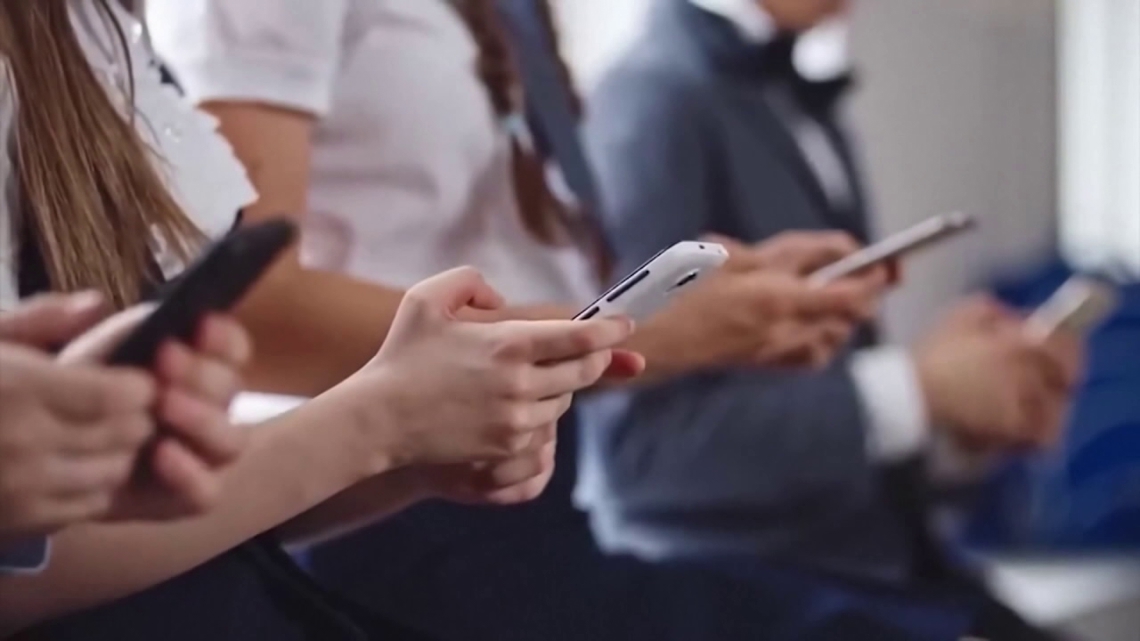
Backers argue that the law will help teachers better manage classrooms by removing a constant source of distraction while also improving student focus and mental health.
Under the legislation, local school systems will have flexibility in how the policy is enforced, including whether phones are collected, stored or simply restricted during the school day. Some advocates have suggested solutions such as signal-blocking pouches, which allow students to keep their devices while preventing use during class hours.
Despite that, the measure has drawn criticism from some students and safety advocates who worry it could limit communication during emergencies.
Layla Renee Contreras, a student organizer who became active in school safety advocacy after the deadly 2024 shooting at Apalachee High School, said access to phones can be critical in crisis situations.
“We’ve seen time and time again that access to authorities is important and vital to the response that happens after a tragedy,” Contreras said.
Others have questioned whether restricting phones addresses deeper issues in education, arguing schools should focus more on safety infrastructure and student engagement rather than limiting technology.
Supporters have maintained the policy is about restoring balance in classrooms and encouraging face-to-face interaction among students.
The expanded ban is set to take effect ahead of the 2027-2028 school year, giving school districts time to implement policies and procedures.