| Updated:
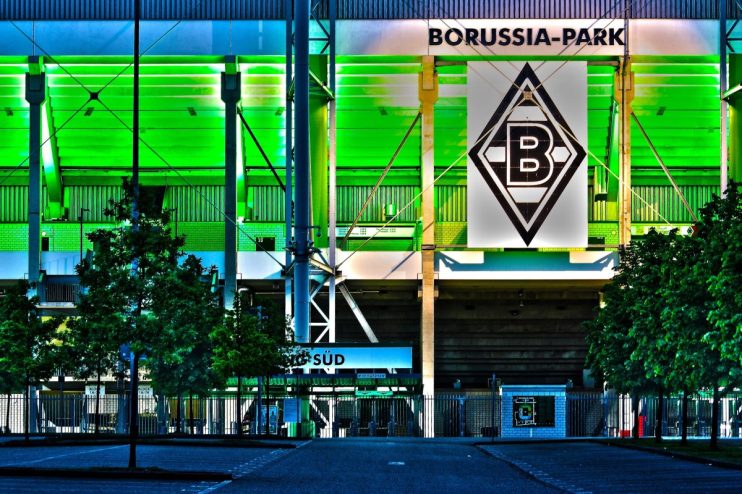
Borussia Moenchengladbach are planning to become one of the first European football clubs to use biometric access technology in place of tickets.
An increasing number of US sports venues now offer facial recognition or palm vein scanning as a way of speeding up entry and even buying food and drink or merchandise.
In the few instances it has been used in Europe, the technology has mostly been deployed as a counter-hooligan measure and a means of preventing access to blacklisted fans.
But Bundesliga giants Moenchengladbach intend to roll it out to eliminate queues at their 54,000-capacity Borussia-Park after installing the fastest enterprise-grade wi-fi available.
It is part of a deal with US firm Extreme Networks, whose AI-powered cloud networking products are used across the NFL and Major League Baseball.
“To support thousands of fans at every home match – and an expanding ecosystem of connected system – we need a network we can rely on without compromise,” said Moenchengladbach tech chief Frank Fleissgarten.
“Extreme delivers fast, resilient connectivity across Borussia-Park, keeping operations seamless on matchday and beyond.
“From payment terminals and VIP hospitality to access control, we can power every critical service while staying flexible enough to scale, innovate, and introduce new experiences as the club continues to evolve.”
Rise of biometric and facial recognition tech
Biometric technology is a growing presence in the consumer sector, from the pick-up-and-go design of Amazon Fresh stores to sports stadia, although its implementation in Europe has been restricted by data protection laws.
Some Scandinavian clubs have used to identify troublemakers and Italy is said to want to follow suit. Spanish side Osasuna is thought to be the only team in a major European league to deploy it to streamline fan entry, as Moenchengladbach plan to.
Among the most cutting-edge uses is at the Intuit Dome, home of the NBA’s LA Clippers, where facial authentication can be used for parking, venue access and buying anything from hot dogs and beers to hoodies and apparel.
“As Borussia Monchengladbach transforms its stadium and facilities into a true multi-purpose destination, always-on, high-performance connectivity is critical,” said Extreme Networks sports and venues boss for EMEA Thomas Mehrfort.
“With Extreme’s next-generation Wi-Fi, advanced switching, and centralized management, the club now operates on a network built for scale, streamlining operations, delivering immersive fan experiences throughout the venue, and establishing a future-ready digital backbone that positions Borussia among Europe’s most technologically advanced football destinations.”