WASHINGTON—As the US-Israeli war with Iran continues, some commentators have speculated about why China and Russia appear to be keeping their distance from the conflict. Neither appears eager to intervene militarily to support Iran. Moreover, China is reportedly hesitant to send arms to Iran, while Russia is benefiting from the global oil supply shock caused by the conflict. Some rhetorical support aside, many commentators predict that Russian President Vladimir Putin and Chinese President Xi Jinping will not get meaningfully involved in Iran.
But such conjecture misunderstands the economic relationships and motivations behind the “Axis of Evasion,” the network of US adversaries that coalesce to circumvent Western economic restrictions. Specifically, it misunderstands how Beijing and Moscow enable Tehran to continue its violence across the Middle East through supply chains.
The war with Iran is not solely a challenge posed by Iran. To bring about an end to the war and prevent Iran from rebuilding its military capacity, US President Donald Trump will need to confront Xi and Putin about their support for the Iranian regime and their schemes to evade sanctions and export controls.
How the Axis of Evasion works
China enables Russia and Iran by importing their sanctioned oil and selling them sophisticated dual-use technology. Over the past few years, we in the Atlantic Council’s GeoEconomics Center have proposed the term “Axis of Evasion” to describe the complex networks these countries use to evade and bypass Western sanctions. Our research has focused, for example, on Russia’s shadow fleet of oil tankers, as well as on alternative payment systems, money laundering schemes, and the barter trade. The current war with Iran has brought attention to yet another system or tactic of this Axis: integrated supply chains.
Trade and technology transfer between China, Russia, and Iran—and the associated supply chains—are the result of geography as well as significant Western economic pressure. Due to restrictive export controls and sanctions, these states cannot easily access Western technology and components directly from the United States and other Western countries. Because trade among the Axis of Evasion occurs outside of the Western financial system and, therefore, the reach of Western economic restrictions, these integrated supply chains are more resistant to sanctions and export controls enforcement.
Iran has been subject to extensive and comprehensive US sanctions and Western restrictive economic measures for decades. In October 2021, the United States announced the first export controls specifically targeting unmanned aerial vehicle (UAV) production. Since then, the Department of Commerce, Department of State, and the Treasury have also restricted third-party countries from exporting US-origin technologies to Iran. Despite the intensity of these restrictions, Western components continue to feature in Iranian drone designs. Often, these components come from China.
China has supplied Iran with drones, anti-ship cruise missiles, surface-to-air missiles, and the components thereof, to aid in its aerial and maritime defense capabilities. In other instances, China directly supplies Iran with Western or Chinese technology components that are found in Iranian drones used against US military installations and economic interests in the Gulf, as well as on Russia’s battlefield in Ukraine. Treasury and Commerce actions targeting Iranian sanctions evasion schemes frequently identify and designate Chinese individuals, entities, and addresses that are used as shell or front companies and transshipment hubs. This cooperation extends beyond trading goods, but helps partners to develop and improve their own technological capabilities.
Drones
Iran’s drone program offers the clearest example of how the Axis of Evasion uses localized supply chains to circumvent restrictive economic measures and enhance military production. Iranian UAVs, such as the Shahed series, rely on an ecosystem of imported electronics, engines, navigation components, batteries, and semiconductors. While many of these parts originate in the United States, Europe, and Japan, procurement networks frequently route them through Chinese distributors or trading companies before they reach Iranian manufacturers. Chinese dual-use exports to Iran spiked in January 2024 when the two states formalized a strategic partnership emphasizing defense and security cooperation. Likewise, Chinese exports rose after Trump signed a memorandum restoring maximum pressure on Iran and again in June 2025 after the US attack on Iranian nuclear facilities.
Russia further reinforces this system through wartime cooperation with Iran. Since 2022, Moscow and Tehran have exchanged drone technology and production know-how, allowing both countries to expand manufacturing capacity. In February 2023, Russia established a drone production facility supported by Iranian technology and expertise at the Alabuga Special Economic Zone in Russia. As part of a deal, Iran transferred 600 disassembled Shahed-16 drones, components for 1,300 drones, training, and technical expertise to Russia to assist in its war in Ukraine. By 2025, Moscow had moved roughly 90 percent of Shahed assembly to Russia. Meanwhile, Russia developed the Garpiya-3, a modified and improved version of the Shahed, with the help of Chinese specialists and a reported Russian drone factory in China.
This partnership now appears to be coming full circle. Recent comments by Ukrainian President Volodymyr Zelenskyy reveal that Russia is now supplying Iran with Russian-made Shahed drones to use in attacks against the United States and Israel. What began as a sanctions-driven workaround has evolved into a self-reinforcing production network, fueled by Western components, Chinese procurement channels, and Russian manufacturing capacity.
Navigation systems
In another example of these integrated supply chain networks, China facilitates the transfer of both Chinese- and Western-made navigation technology to Iran. Meanwhile, Russia is reportedly sharing satellite imagery and modified Shahed drone technology to improve navigation and targeting based on Russia’s experience of using drones in Ukraine.
Chinese electronics markets and distributors play a critical role in this process. Components originally manufactured for civilian applications—such as inertial sensors or satellite navigation modules—can be purchased through Chinese intermediaries and integrated into Iranian weapons systems. Russia’s experience adapting commercial electronics also feeds into this innovation ecosystem.
Some experts believe that Iranian drones and missiles incorporate Chinese satellite navigation systems to target US and Israeli military assets. In February 2025, the US Treasury Department sanctioned Chinese front companies that were supplying gyro navigation devices to enhance Iranian-made UAVs. In November 2025, a separate network connected to Iran’s Aircraft Manufacturing Industrial Company was accused of using shell firms to acquire Chinese sensors and navigation equipment.
In 2021, China gave Iran access to BeiDou, the global positioning satellite system owned and operated by the China National Space Administration. Since the start of the war with the United States and Israel, Iran has used BeiDou to produce decoy signals to confuse threat analysis and conceal actual Iranian military movements.
Chemical precursors
Iran’s ability to sustain missile and explosives production depends on access to chemical precursors and industrial materials. Although these substances are subject to Western export controls, and the US Treasury has sanctioned individuals and entities in Iran and China for procuring ballistic missile propellant ingredients, enforcement is more difficult when production is distributed across multiple jurisdictions. Chinese chemical companies—many of which operate in sprawling industrial clusters—have repeatedly been linked to shipments of dual-use materials to Iran as well as Russia. Another recent report suggests that Iranian shadow fleet vessels sailing from China contain precursors for rocket fuel.
For Iran, these imports provide critical inputs for solid rocket fuels, propellants, and explosives used in missile systems and other weapons systems. By purchasing precursor materials through intermediaries or reexport hubs, Iranian procurement networks obscure the destination of shipments and exploit gaps in global export-control and sanctions enforcement. The scale and diversity of China’s chemical industry make it particularly difficult for regulators to monitor the end use of every exported compound.
What to do now
China, Russia, and Iran continue to work together to circumvent and evade Western sanctions and export controls. Meanwhile, the United States has been inconsistent in implementing economic restrictions. After the last Trump-Xi summit in October 2025, Washington suspended the Bureau of Industry and Security Affiliate Rule in exchange for China’s lifting of export controls on critical minerals, effectively revealing how much leverage Beijing retains through its dominance in rare-earth supply chains. Additionally, Washington is easing oil sanctions on Moscow and Tehran in response to rising energy prices and the crisis in the Strait of Hormuz, exposing the precise issues on which the US is willing to compromise.
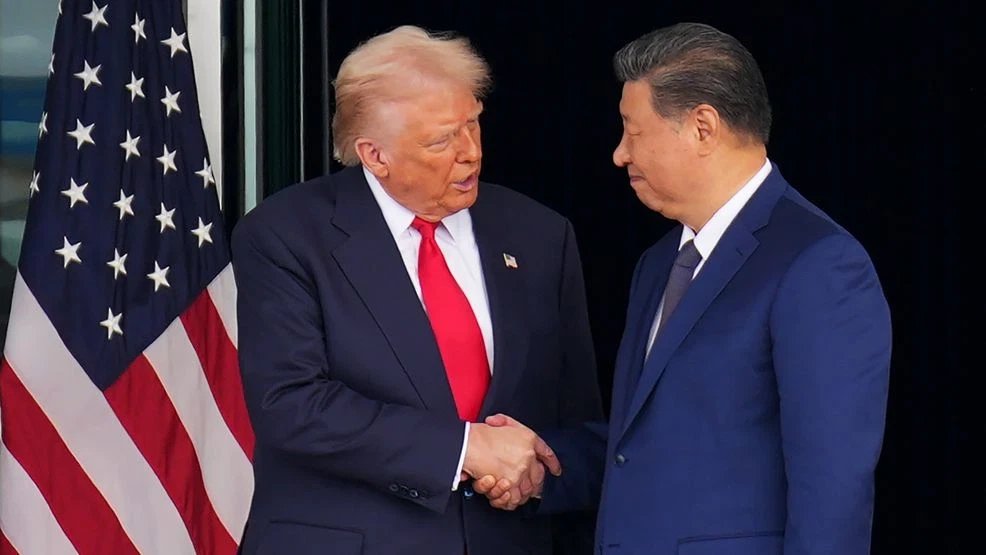
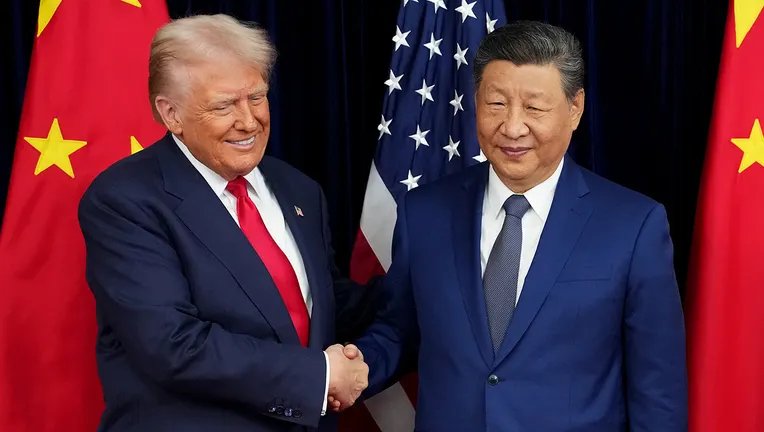
As the White House diverts its attention toward the Middle East, the Trump-Xi summit, originally scheduled for next week, was postponed until May. However, a productive push on China could also advance the US position in the Iran conflict. In his meeting with Xi—if not sooner—Trump should confront China’s role in enabling these supply chains, tightening scrutiny of Chinese exports and intermediaries that facilitate sanctions evasion. The White House must make stronger export control enforcement, expanded entity listings, and greater transparency requirements for Chinese distributors involved in dual-use trade central to the agenda.
But pressure on China alone is not enough. Iran’s procurement networks depend on a web of transshipment hubs and trading companies that move controlled technologies across jurisdictions before they reach their destination in Iran. These networks often rely on distributors and logistics firms in third countries to obscure the origin and destination of sensitive components.
The United States should therefore expand its focus beyond direct exporters and identify the intermediaries and transshipment hubs that repeatedly appear in Iranian procurement chains. With targeted sanctions, enhanced export control enforcement cooperation, and intelligence sharing with partner governments, the United States can help disrupt the flow of dual-use goods before they reach Iran’s defense sector.
This increased enforcement should be paired with incentives. Many countries that serve as transshipment hubs are not politically aligned with Iran but lack the regulatory capacity or economic incentives to fully enforce export controls. Such third countries have also been hit hard by US tariffs, pushing them toward US adversaries purely due to economic incentives. In deploying incentives to encourage stronger compliance, the United States can cooperate with countries willing to strengthen export-control enforcement. In addition to incentives, capacity building programs, including customs modernization, export-control training, and industrial diversification could also enable firms in these jurisdictions to comply with Western restrictive economic measures.
Despite the severity and consistency of US sanctions and export controls targeting Iran’s drone acquisition, Iran maintains the technical knowledge, mature production lines, and continued access to dual-use components necessary to rebuild its drone stockpiles. Cooperation with adversarial states—predominantly China and Russia—further reinforces these capabilities by distributing supply chains and insulating production from Western pressure.