Forget Tariffs! Earnings Quality Is a Far More Sinister Worry for Wall Street.

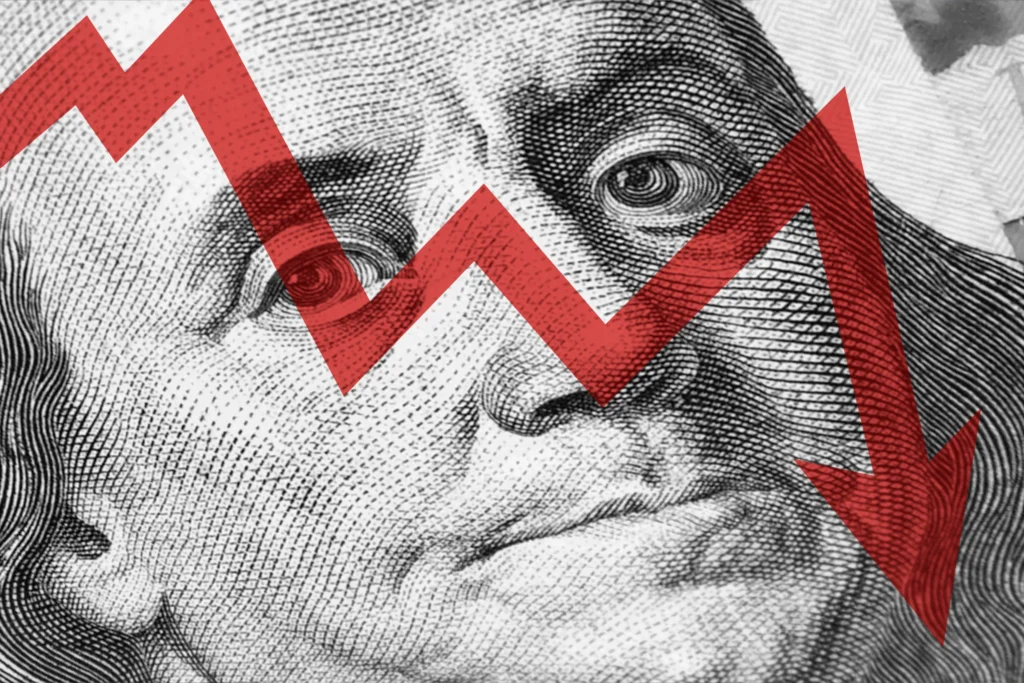
Though President Donald Trump’s tariff and trade policy may garner the headlines, something more fundamental is at risk of derailing this high-flying stock market.

The third year of Wall Street’s bull market rally didn’t disappoint. When the curtain closed last year, the S&P 500 (^GSPC +0.05%) had risen 16%, marking its third consecutive year of gains totaling at least 16%. Meanwhile, the Dow Jones Industrial Average (^DJI +0.10%) and Nasdaq Composite (^IXIC 0.22%) both rallied by double digits and leaped to several record-closing highs.

Though catalysts have been bountiful for stocks — looking at you, artificial intelligence (AI) — this historically pricey market is also rife with potential red flags. Stock market corrections are the price of admission to the greatest wealth creator on the planet, and several headwinds are mounting that threaten to pull the rug out from beneath Wall Street.

A lot of attention is currently being paid to President Donald Trump’s tariff and trade policy and its effect on corporate America. While historic stock market volatility stemming from Trump’s tariff unveiling in early April underscores the uncertainty surrounding this issue, there’s a far more sinister worry for Wall Street and investors: earnings quality.

President Trump conducting an interview. Image source: Official White House Photo by Joyce N. Boghosian.

Trump’s tariffs are having a modest inflationary impact

In the two days following the reveal of the president’s tariff and trade policy on April 2, the benchmark S&P 500 lost 10.5% of its value. This marked its fifth-steepest two-day decline since 1950.

Initially, Trump introduced a 10% global tariff rate, as well as higher “reciprocal tariffs” on dozens of countries that were deemed to have adverse trade imbalances with the U.S.

Since introducing this tariff and trade policy over 10 months ago, several changes have been made to the original reciprocal tariff rates due to dealmaking and/or implementation pauses. However, the threat of President Trump imposing new or higher tariffs on select countries has persisted since April 2025.

Aside from the uncertainty about when tariffs may be implemented, there’s concern about how these import taxes can impact American businesses and jobs. For this, I’ll turn to an analysis (“Do Import Tariffs Protect U.S. Firms?”) from four New York Federal Reserve economists, writing for Liberty Street Economics.

According to the contributing authors, Trump’s China tariffs in 2018-2019 had a lasting impact on public companies long after their initial implementation. U.S. companies affected by these tariffs, on average, saw their labor productivity, employment, sales, and profits decline from 2019 to 2021. That’s clearly not good news for corporate earnings if history were to repeat with the latest round of Trump tariffs.

Additionally, the inflation rate has moved modestly higher since the president’s tariffs began affecting the U.S. economy. Input tariffs (duties placed on imported goods used to complete the manufacture of a product domestically) have increased production costs for select businesses, leading to higher prices for consumers. A higher inflation rate makes it less likely that the Federal Reserve will lower interest rates.

While Donald Trump’s tariffs have certainly made waves on Wall Street, they’re of far less concern to the stock market than earnings quality.

A pen and a calculator set atop income statements and balance sheets from publicly traded companies.

Image source: Getty Images.

Wall Street has an undeniable earnings quality issue

To preface the following discussion, valuing stocks and the broader market is a subjective task. There isn’t a one-size-fits-all blueprint that investors use to evaluate businesses or major stock indexes, meaning there’s always going to be some degree of unpredictability to short-term stock movements.

Nonetheless, we entered 2026 with the second-priciest stock market in history, according to data from the S&P 500’s Shiller Price-to-Earnings (P/E) Ratio, also known as the Cyclically Adjusted P/E Ratio (CAPE Ratio). This valuation tool, which has averaged 17.34 when back-tested over 155 years, has been vacillating between 39 and 41 for months. Only the dot-com era was pricier than the rise of AI.

Earnings quality is paramount to maintaining this valuation premium. By “earnings quality,” I simply mean that fast-growing businesses are generating their profits from their operations and not relying on less desirable means to effectively “pad their stats.” While some market leaders are absolutely delivering for their shareholders, others are clear examples of Wall Street’s earnings-quality issue in action.

Tesla Stock Quote

Today’s Change

(0.06%) $0.25

Current Price

$417.32

For instance, “Magnificent Seven” member Tesla (TSLA +0.06%) is trading at an estimated 202 times forecast earnings per share (EPS) in 2026. For a triple-digit forward P/E, we’d expect jaw-dropping growth and the company’s operations to be doing the heavy lifting. What investors are actually getting is projected sales growth of less than 9% this year and a significant reliance on unsustainable income sources.

These unsustainable income sources consist of automotive regulatory credits the company receives for free from governments around the world and net interest income earned on its cash. In 2025, Tesla generated $1.99 billion from regulatory credits and approximately $1.34 billion in interest income (after interest expenses). These unsustained and non-innovative income sources accounted for a whopping 63% of its pre-tax income!

But Tesla isn’t the only Magnificent Seven stock whose earnings quality should be called into question. While Apple (AAPL 2.20%) is still generating boatloads of operating cash flow, it’s been relying on a share buyback smoke-and-mirrors show to obfuscate its lack of real earnings growth.

Apple Stock Quote

Today’s Change

(-2.20%) $-5.75

Current Price

$255.98

Since initiating its share repurchase program in 2013, Apple has bought back $841 billion of its common stock and lowered its outstanding share count by more than 44%. Buybacks of this magnitude have had a decisively positive impact on its EPS.

In Apple’s fiscal 2022 (Sept. 24, 2022), it generated $99.8 billion in net income and produced $6.15 in full-year EPS. By fiscal 2025 (ended Sept. 27, 2025), it generated $112 billion in net income and $7.49 in EPS. Net income only rose 12.2% over three years, but EPS jumped nearly 22%. Apple has been masking subpar sales and profit growth with its market-leading share-repurchase program.

To be clear, what Tesla and Apple are doing is perfectly legal and smart from a business standpoint. But amid a historically pricey stock market, this isn’t what you, as an investor, should want to see from market leaders. Wall Street’s influential businesses should lead with innovation, not share buybacks, interest income, automotive regulatory credits, and other non-innovative sources of revenue/income.

Wall Street has an earnings quality problem, and it may come back to bite investors.

Source link

Visited 1 times, 1 visit(s) today

Related Article

The 1 Stock I’d Buy Before Interactive Brokers Group Right Now

Key Points Robinhood doubled its revenue amid new product offerings, strong demand for existing options, and more customers joining the platform. This winning combination is supported by soaring profit margins, demonstrating sustainable growth. Prediction markets are a hot segment for Robinhood that can become a sizable part of the business in a few years. Global

Is the stock market open on Presidents Day? See 2026 holiday schedule.

Feb. 15, 2026, 3:00 p.m. ET U.S. stock markets will be closed on Monday, Feb. 16, in observance of Presidents Day. Presidents Day has been a federal holiday since 1879. It originally served to commemorate George Washington’s birthday but has since expanded to be a tribute to all presidents. Though the holiday is more commonly

Is Wall Street Wrong About Amazon Stock?

Shares of the technology giant have dipped after a massive spending push related to artificial intelligence. Investors know Amazon (AMZN 0.41%) as one of the best-performing stocks of the 21st century. However, the trillion-dollar technology giant has actually severely underperformed the stock market indexes in recent years. Amazon stock is up just 22% cumulatively in

Here’s Why JFrog Ltd (FROG) Price Target Was Raised To $78 by Baird

JFrog Ltd. (NASDAQ:FROG) is one of the 12 best mid cap AI stocks to buy according to hedge funds. On February 8, Robert W. Baird analyst Shrenik Kothari reaffirmed a Buy rating on JFrog Ltd. (NASDAQ:FROG) while increasing the firm’s price target on the stock from $70 to $78. He cited the company’s strong growth

If a Stock Market Crash Is Coming, This 1 Investing Move Is Critical Right Now

Here’s exactly how to protect your portfolio against market volatility. Stock prices have been stumbling in recent weeks, and investors have mixed feelings about the future of the market. While 38.5% of investors feel optimistic about the next six months, according to the most recent weekly survey from the American Association of Individual Investors, 38.1% worry

1 Powerhouse Growth Stock I’d Happily Hold Through Any Market Crash

Given the importance of the AI buildout, Broadcom’s semiconductor chips make the stock a top pick under any economic conditions. Stock market crashes rattle most investors, as they are the ultimate tests of patience and willpower. Some people abandon high-quality companies if they drop by 10%, only to regret that decision when those same corporations

3 Tech Stocks With More Potential Than Any Cryptocurrency

These stocks have a lot of upside — and much less downside risk than the crypto market. The problem (or the opportunity, depending on your point of view) with cryptocurrencies is their massive volatility. Because most cryptocurrencies lack a fundamental valuation floor or metrics like stocks — price-to-earnings ratio or cash flow, for instance —

This Growth Stock Continues to Crush the Market

Palantir stock has been on a huge run the past few years. Growth stocks helped lead the market higher for much of the past two decades. One of the hottest growth stocks of the past few years has been Palantir Technologies (PLTR +1.77%). The stock more than doubled for three straight years from 2023 through

2 Unstoppable Dividend Stocks to Buy If There’s a Stock Market Sell-Off

These two stocks have historically zigged when the market has zagged. A survey last fall by Natixis Investment Managers found that 74% of institutional money managers expect a market correction in 2026. They cited various reasons, from the tech bubble bursting to geopolitics and macroeconomic factors. Currently, the Nasdaq Composite is hovering around even year

IBM Expands AI Focused Hiring As Shares Trade Below Valuation Estimates

Make better investment decisions with Simply Wall St’s easy, visual tools that give you a competitive edge. IBM (NYSE:IBM) is tripling entry level hiring in the US, with a focus on AI fluency and durable skills. The company is redesigning entry level roles to emphasize customer engagement and work that is less exposed to automation

Where Will Nvidia Be in 3 Years?

Don’t expect the same share price returns of the past three years, but more good times could still be ahead for Nvidia. The past three years have been phenomenal for Nvidia (NVDA 2.21%) shareholders. The company’s stock gained 791% as tech giants invested hundreds of billions of dollars in building data centers for artificial intelligence

The Catch-22 Behind Amazon’s Big AI Spending Plans

Most investors aren’t fans of the plan, but they’d dislike the outcome of the alternative even more. Given the stock’s sizable price drop immediately following the announcement, it’s clear that most investors aren’t big fans of Amazon‘s (AMZN 0.41%) 2026 spending plans. The e-commerce giant said it plans to earmark $200 billion for capital expenditures,

Down 22% in 6 Months, Is Microsoft Stock a Buy?

Don’t count the tech giant out yet. After performing well for the first six months or so of 2025, shares of Microsoft (MSFT 0.13%) started moving in the wrong direction in the second half of the year. And the company has shown no signs of a rebound so far in 2026. Microsoft’s shares are down by

Market Crash: 3 Stocks I’d Buy Without Hesitation

Market crashes happen, but when they do they should be seen as an opportunity to buy some great stocks at a discount. In the immortal words of Warren Buffett: “Be fearful when others are greedy and greedy when others are fearful.” Put more succinctly, buy the dip. Over the long term, the American stock market

I Predicted That Oracle and Netflix Would Join Nvidia, Alphabet, Apple, Microsoft, Amazon, Broadcom, Meta Platforms, and Tesla in the $1 Trillion Club by 2030. Here’s Why That Forecast Is Being Tested in 2026.

The sell-off in Oracle and Netflix is making aspirations to join the $1 trillion club increasingly distant. In August, I predicted that Netflix (NFLX +1.28%) and Oracle (ORCL +2.38%) would reach at least $1 trillion in market capitalization by 2030. But Netflix is down 38.6% from its 52-week high at the time of this writing,

Will the Stock Market Crash in Year 2 of Donald Trump’s Second Term? Several Historically Correlated Events Offer a Clear Answer.

When things seem too perfect on Wall Street, they often are. From a statistical standpoint, the stock market has thrived with Donald Trump in the Oval Office. During his first term (Jan. 20, 2017 – Jan. 20, 2021), the widely followed Dow Jones Industrial Average (^DJI +0.10%), broad-based S&P 500 (^GSPC +0.05%), and innovation-inspired Nasdaq

2 Dirt Cheap Stocks to Buy With $1,000 Right Now

Nvidia and Micron Technology are real bargains right now. The market is trading near its all-time highs, but there are still some very inexpensive stocks out there for consideration by long-term investors. Here are two that investors can dip their toes into with a $1,000 investment. Nvidia Nvidia (NVDA 2.21%) has gone from a stock

Prediction: Sandisk’s Stock Price Will Hit This Level by the End of 2026

Sandisk’s red-hot stock market rally seems here to stay thanks to the favorable dynamics of the flash storage market. Sandisk (SNDK 0.72%) has set the stock market on fire in 2026, rising an incredible 166% as of this writing, thanks to red-hot demand for the company’s flash memory storage solutions used in a variety of

Got $500? 2 Pharma Stocks to Buy and Hold Forever.

Healthcare industry stocks are traditionally good hedges against technology and other growth stocks, because they tend to perform well when the larger stock markets do not. But it depends on which industry. In the pharmaceutical or biotech industries, for example, some stocks tend to behave more like growth stocks. A nice feature of investing in

0
Would love your thoughts, please comment.x
()
x