The Russian-speaking widow was born in Latvia 63 years ago, when it was still a part of the Soviet Union, got married there and raised a family. She has never lived anywhere else.
So it came as a nasty surprise this fall when she received a curt official letter saying she had lost her rights to residency, a state pension and medical care. “You must leave the territory of the Republic of Latvia by Nov. 30, 2023,” she was informed.
With nowhere to go, the widow, Nina Marcinkevica, who has heart and lung problems and high blood pressure, said she collapsed from shock and spent the next three days in bed weeping.
Ms. Marcinkevica’s home in the mostly Russian-speaking city of Daugavpils, in eastern Latvia, is more than 600 miles from the front line in Ukraine and entirely peaceful.
Janis Dombrava is a nationalist member of Latvia’s Parliament who has seized on the Ukraine war to whip up hostility toward Russian speakers and push through legislation targeting them. In an interview in Riga, the capital, he said Russia’s actions in Ukraine had exposed the risks of harboring a “fifth column” that does not speak the national language, gets its information from Russian news media and often tilts to Moscow’s view of the world.
“We can keep those who want to integrate but not those who are waiting for the return of the Soviet Union. They should leave,” said Mr. Dombrava, a leader of the National Alliance, a grouping of nationalist parties, and a chairman of Parliament’s national security committee.
Many ethnic Latvians speak Russian as well as their own language, particularly those educated under Soviet rule, and often suspect Russian speakers who never bothered to learn Latvian of harboring disloyal “imperial” ambitions.
In response to the war in Ukraine, Latvia has banned Russian state television, dismantled monuments celebrating Soviet soldiers during World War II and ordered that thousands of Russian citizens who have lived in the country for decades be screened for their loyalty and ability to speak at least rudimentary Latvian if they want to stay.
The screening process was mandated by an amendment to an immigration law sponsored by Mr. Dombrava and his allies shortly before an election in October last year. As a result, around half of the roughly 50,000 Russian citizens living in Latvia have to pass a language test and undergo security checks if they want to stay.
Officials insist that this will not lead to mass expulsions and that only 3,500 Russian citizens registered as residents have failed to submit the necessary paperwork. It is unclear how many still live in Latvia.
“We are not rushing to expel anyone,” said Ilze Briede, the head of Latvia’s migration department, the agency responsible for carrying out the new rules, which are being challenged in Latvia’s Constitutional Court. Nobody, Ms. Briede added, has been deported or is likely to be anytime soon. The deadline for compliance has been extended until 2025.
But a wave of panic among Latvians holding Russian passports — that has been fanned by Russian state media — has turned what began as a pre-election stunt into a political, bureaucratic and public relations nightmare for Latvia. It has also been a propaganda bonanza for the Kremlin, which has for years portrayed Baltic States as hotbeds of chauvinist ethnic nationalism.
“For Russian propaganda, this has been a gift, absolutely,” said Igors Rajevs, an independent legislator who is working with the Interior Ministry on how to put the new rules in place.
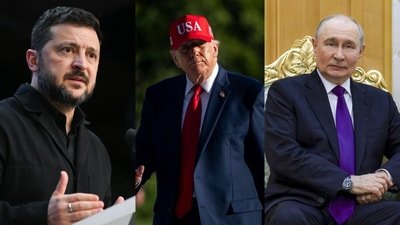
Mr. Putin this month accused Latvia of treating Russian speakers “like pigs” and preparing to dump them on Russia’s border “in wheelchairs.” This, he warned, would only lead “to clashes within their own country.”
Mr. Putin’s remarks carried ominous echoes of warnings that he delivered to Ukraine in 2014, when Moscow, claiming that Russian speakers in eastern Ukraine faced persecution by Ukrainian nationalists, engineered an armed revolt, marking the start of a Russian military intervention that last year escalated into full-scale war.
Virtually nobody expects Russia to invade Latvia, a member of NATO, but the country, mindful of its past subjugation by both the Russian Empire and the Soviet Union, is still on edge amid a barrage of anti-Latvian fury from Moscow.
Sergey Kalinin, a Latvian-born ethnic Russian who works for “Russian Voice for Latvia,” a liberal nonprofit promoting better relations between Russian and Latvian speakers, said the war in Ukraine had “radicalized” both sides of Latvia’s ethnic and linguistic divide. He said he had been mugged recently by ethnic Latvian youths angered by his Russian-accented Latvian. Russian speakers, he added, had also become more aggressive, with a few even yearning for a Russian invasion to protect their interests.
Channel One, Russia’s main state television station, devoted an hour on prime time to denouncing Latvia as a fascist-led country of Russophobes intent on creating a mono-ethnic state, claiming that its female prime minister had performed in pornographic films, a lie initially spread by her domestic rivals.
When Communism collapsed in 1991, 14 new states emerged alongside the Russian Federation, each eager to reassert its own language and culture against millions of Soviet-era immigrants, many of them ethnic Russians, and their offspring.
The Ukraine war, however, has added a sharp new edge to decades-old tensions, particularly in countries like Latvia, where ethnic Russians and other Soviet-era transplants in 1991 accounted for nearly half of the total population and a majority in Riga.
Death and emigration have since reduced their numbers significantly, but the country’s east is still heavily Russian in language and mentality. More than 80 percent of the population in Daugavpils speaks Russian and few share Latvia’s enthusiasm for helping Ukraine.
On a visit this month to Daugavpils to rally locals to Ukraine’s side, Viktoriia Obruch, a refugee from the eastern Ukrainian city of Kharkiv, spoke of the horror visited on her largely Russian-speaking hometown by Mr. Putin’s war.
“If you like Russia so much, just go there — it is very close,” she said, describing Latvia’s giant neighbor — whose border is only 15 miles east of the city — as “dirty, drunken and crude.”
Oleg Vinogradov, an amateur historian in Daugavpils who manages a private museum that displays Soviet-era memorabilia, predicted that “of course Russia will win” against Ukraine and blamed the war on U.S. meddling.
In an interview, he recalled that he rejoiced when the Soviet Union collapsed, but that his joy curdled when newly independent Latvia denied full citizenship to many Russia speakers because they could not pass a Latvian language test. They were issued “noncitizen” passports, a status that allowed them to travel and guaranteed residency and full access to health care and social benefits. But it shut them out from many government jobs and national politics.
Angry at what many Russian speakers see as their second-class status and tempted by an offer of Russian pensions, tens of thousands of “noncitizens” applied for and received Russian citizenship, including Ms. Marcinkevica, the widow who was ordered out.
An ethnic Roma, she said she took the Russian citizenship test only because it gave her access to a pension from Russia, which has a lower retirement age than Latvia.
After passing a Latvian language test, she has been assured that she will not be deported and that her residence permit will be restored.
An opinion survey published this year by the Friedrich-Ebert-Stiftung foundation, a German research group, found wide gaps between the two communities on the need for sanctions against Russia, on Latvia’s NATO membership and on many other issues.
But, according to the survey, 53 percent of Russian speakers in Latvia view Mr. Putin negatively, twice the proportion with a positive view. Ninety-four percent of Latvian speakers view him negatively.
Tatiana Matveeva, 68, another noncitizen in Daugavpils, also took out Russian citizenship in order to get an early pension. She also received a letter ordering her to leave. Desperate to avoid expulsion, she sought help from Olga Petkevica, a Russian- and Latvian-speaking journalist and activist in Daugavpils who is helping older Russian speakers navigate a maze of bureaucracy.
This includes answering a questionnaire. Among the questions: “do you condemn Russia’s military invasion of Ukraine?” and “do you support Russia’s annexation of Crimea or any other part of Ukraine?”
Ms. Matveeva took a Latvian language test twice but failed both times. Born in Russia in Soviet times, she has lived in Latvia since 1980, working in a Soviet factory that collapsed with Communism in the early 1990s and then as a janitor in a Daugavpils hospital.
“Nobody ever asked me to speak Latvian before,” she said. “If I were 20, I could learn, but my memory is shot.”