Emerging Markets Emerge (again)! | Texarkana Today

For starters, let’s define what we mean by “emerging markets”.  Emerging markets are developing economies (e.g., China, India, Brazil) as opposed to developed economies (e.g., Canada, Japan, the UK).  Emerging markets are known for having cheap labor and producing products much less expensive than what they would cost if built in the U.S.   When you walk into Walmart to buy a manufactured product, odds are it was produced in an emerging market country.

Most mutual fund companies offer funds that specialize in emerging market companies.  If you’ve been invested in an emerging markets stock fund the last decade or so, you’ve probably been disappointed.  Returns for the 10-year period ending in December, 2024 averaged just under four percent. Meanwhile, over that same 10-year period, the U.S stock market averaged better than 12 percent a year! 

That’s enough to make you want to cut and run on emerging companies.  But hopefully you didn’t bail out.  U.S. stock markets had a good year last year, with a return around 17 percent. But emerging markets did even better, returning a little over 30 percent!  That 2025 stellar return doesn’t make up for a decade of underperformance for sure.  But it does put a dent in it.  And it’s not the first time that’s happened.

Let’s roll back to the first decade of the 21st century.  Suppose you invested $1,000 in the S&P 500 index on January 1, 2000. It’s your first time ever investing in stocks.  You’ve heard stocks average a 10 percent return annually.  You leave it alone for the next 10 years.  Finally, on December 31, 2009, you look at your account.  At a 10 percent rate, you’re expecting to see a balance of around $2,600.  In fact, the balance is barely over $900!  What happened?  Well, that decade opened with the dotcom bubble, where technology stocks crashed by around 75 percent! The decade ended recovering from the 2008 Great Recession, where stock values in the U.S. had been cut in half. The period 2000-2009 is often referred to as the Lost Decade.  And it certainly was a lost decade for U.S large cap stocks. 

So, did any areas make money during that decade? Yes, in fact, several sectors did, including bonds at 6 percent, real estate trusts (REITs) at 10 percent, U.S. small cap stocks at 8 percent, and emerging markets at 13 percent!  All figures stated in annualized returns. The “lost decade” was not lost at all for a globally diversified portfolio. 

You’ve heard the phrase “don‘t put all your eggs in one basket”.   Given the randomness of market returns, a corollary to that would be: Put a few eggs in ALL the baskets! And be patient!  One more thing: let’s go back to that first time investor in 2000 who lost money for that decade. If he stayed put the next decade, the S&P averaged 13.6 percent per year! Patience rewarded!            
Source link

Visited 1 times, 1 visit(s) today

Related Article

Goldman Sachs and Morgan Stanley’s 2027 stock market outlook

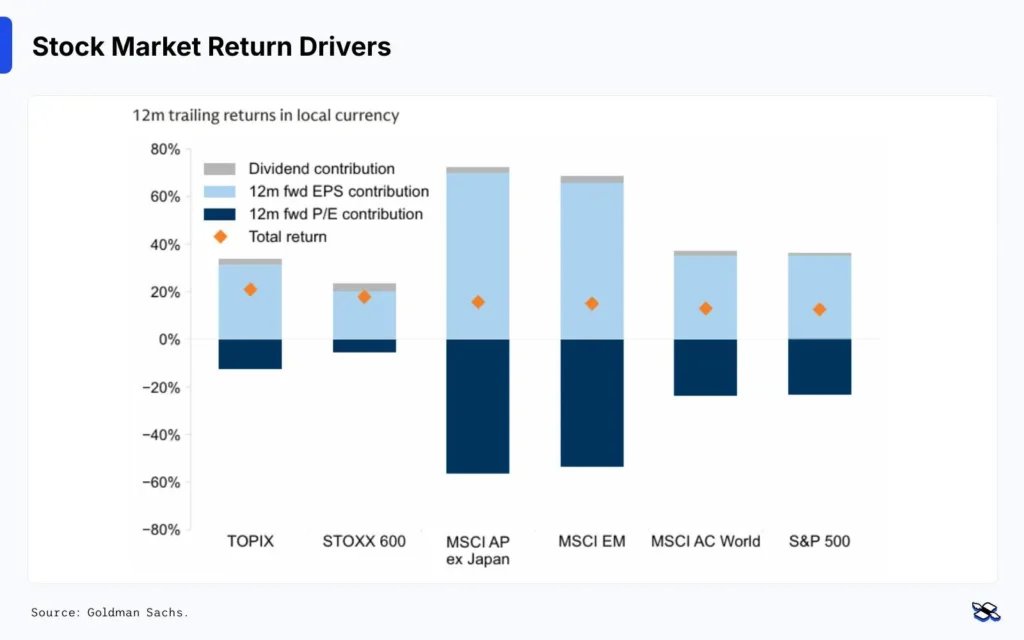
Most stock markets have generated similar returns in the past 12 months. Source: Goldman Sachs. Tech companies have been the real standout, along with energy producers and industrial businesses. Asian stocks outside Japan have been especially peppy, thanks mostly to AI-linked heavyweights TSMC, Samsung, and SK Hynix. But even though stock prices have risen, valuations

If a Stock Market Crash Is Coming, Warren Buffett Says This Is the Best Move Investors Should Make

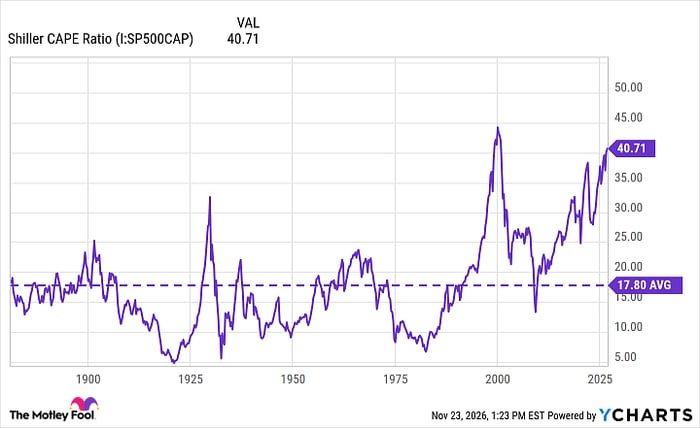
Key Points Euphoria for artificial intelligence (AI) stocks has pushed stock market valuations to historically elevated levels. History shows that major indexes always recover from stock market crashes. Warren Buffett’s investment strategy emphasizes patience, diversification, and staying invested through volatility. Despite stubborn inflation, rising interest rates, geopolitical conflicts, and considerable economic uncertainty, the S&P 500

Jensen Huang Is Back and Nvidia Soared. Is the Problem Really Solved?

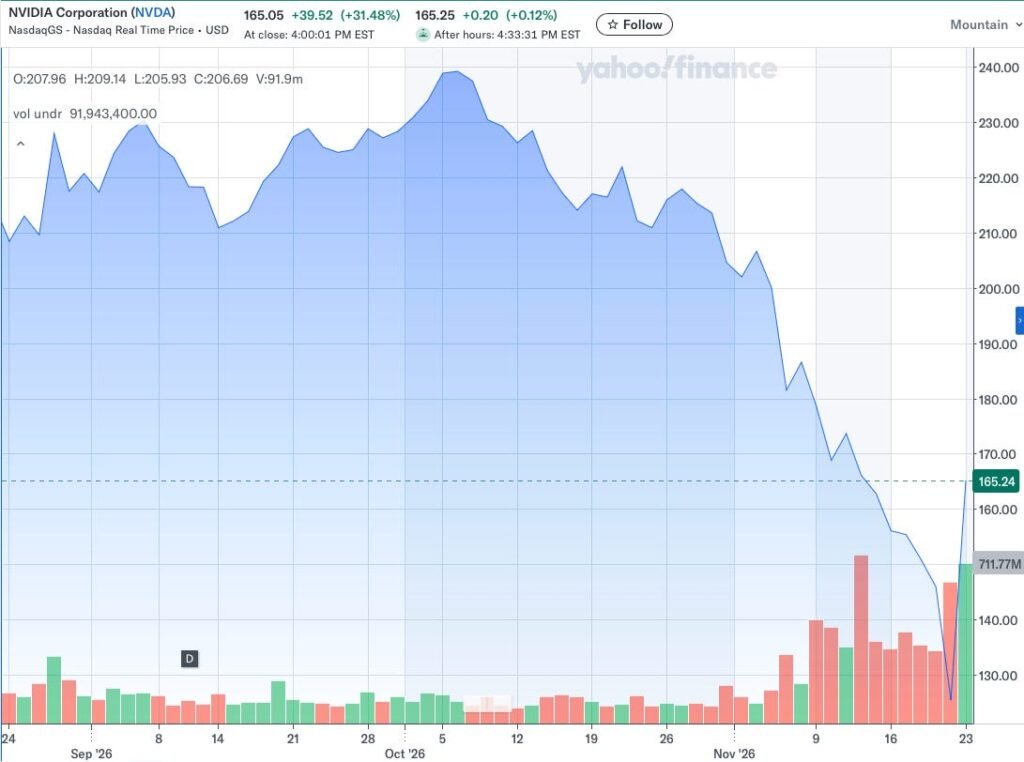
Stock markets surged as Jensen Huang returned to Nvidia, but the rally stalled at a familiar barrier and Fed rate hike bets idled. Is this the post-election bounce all over again? Nvidia shares jumped about 32% as Jensen Huang returned as CEO, lifting the broader market The S&P 500 and Nasdaq 100 stalled at the

Pop! Goes the Bubble – Paul Krugman

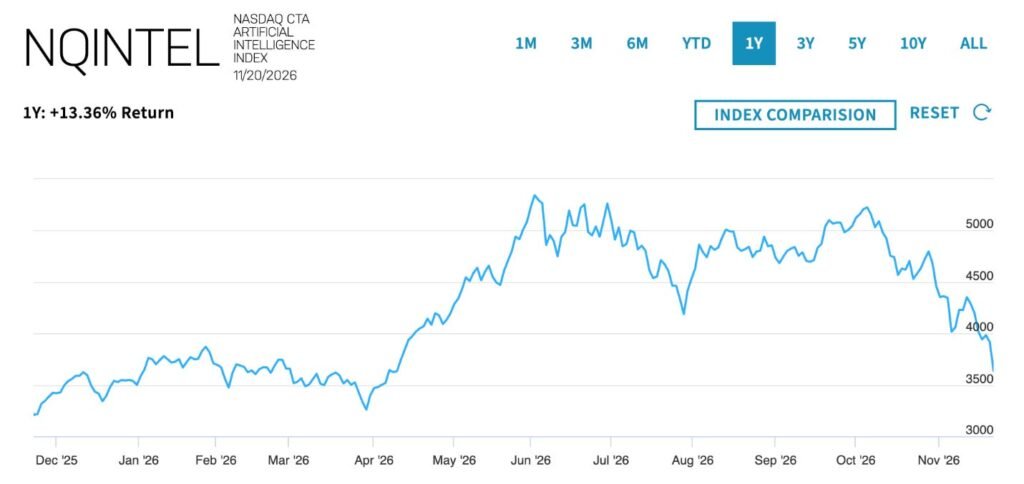
The NASDAQ index of AI stocks Marketing note: I have a new ebook, Navigating the Chaos: Chronicles of Economic and Political Madness, which uses material from this Substack to construct a thematic narrative of the past two years and the issues that Democrats must now address to build an enduring progressive movement. Available from Amazon,

Why stocks had their best Monday since 2020

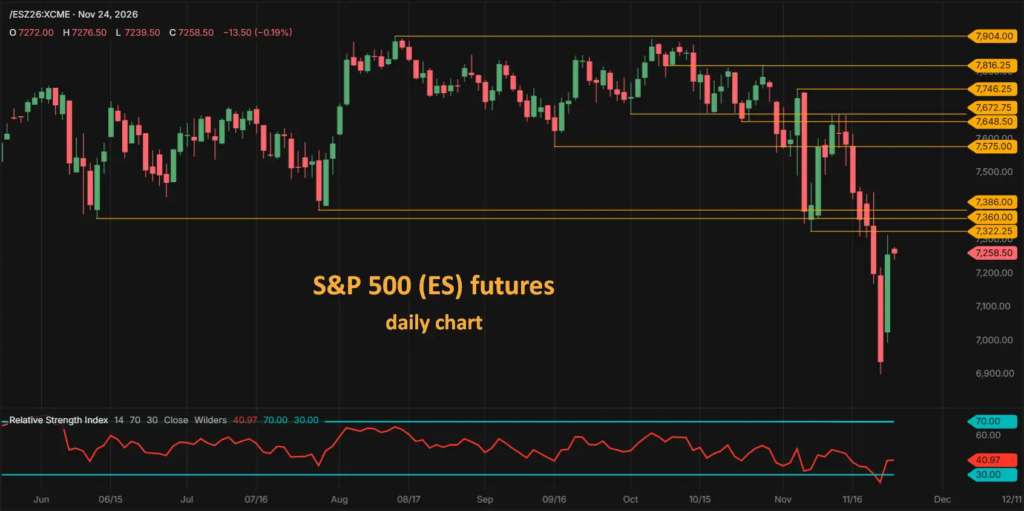
Wall Street spent last week dumping anything tied to AI. It spent Monday buying it back. The Invesco QQQ Trust (QQQ), the fund that tracks the tech-heavy Nasdaq-100 (^NDX), opened almost 8% higher, its biggest jump at the open since it launched in 1999. Its closest rivals for largest jumps came in 2000 and 2001

Why ASML Stock Popped Today

The AI sector soared as Jensen Huang returned to Nvidia. By Jeremy Bowman – Nov 23, 2026 at 5:16PM EST Key Points The return of Jensen Huang set off a relief rally in the market. ASML has a unique position in the AI sector as the only maker of EUV lithography equipment. Increased demand for

Daily Market Price Updates and Commentary 23rd November 2026

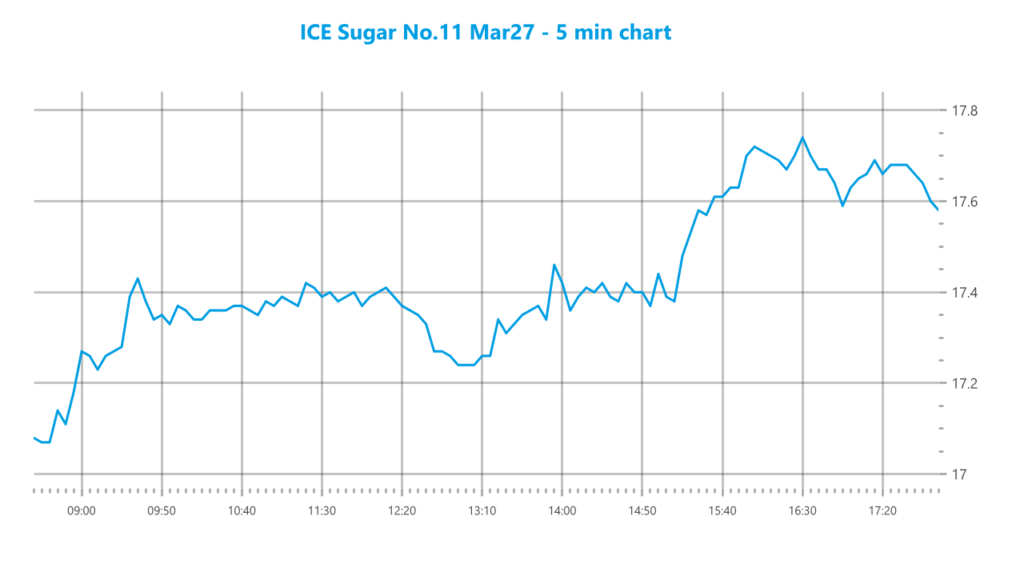
  ICE Futures U.S. Sugar No.11 Contract Settlement (cUS$/lb) Open High Low Last Volume O/I Life High Life Low Mar27 17.61 0.58 ▲ 17.16 17.76 17.05 17.58 86,142 505,778 21.29 14.42 May27 16.99 0.62 ▲ 16.48 17.14 16.40 16.95 48,219 212,687 20.40 14.29 Jul27 16.62 0.58 ▲ 16.13 16.75 16.07 16.56 28,205 144,896 19.81 14.27

Is AMD’s Stock in Trouble After a Concerning Short-Seller Report?

A recent short-seller report called into question AMD’s high exposure to China. By David Jagielski, CPA – Nov 23, 2026 at 3:36PM EST Key Points Hunterbrook Media claims AMD has too much exposure to China and that it may not be any safer than Nvidia. It states that AMD’s firmware has been showing up at

What Sent Cameco Stock Lower Again?

Today’s big story: Reported SEC Probe: Could Nvidia Stock Fall To $92? Cameco (CCJ) stock fell 5.6% on Friday, November 20, 2026, while the S&P 500 lost 3.7%. There was no announcement, earnings report, or filing from the company around the move. The drop came as a sell-off in AI stocks deepened on Wall Street,

Safe Haven Assets in a Crash: Gold, Bonds, Franc (Nov 2026)

Safe haven assets in a stock market crash: the short answer In the week to 20 November 2026, US Treasuries were the only classic safe haven that clearly held up. Gold and silver fell with stocks. The yen and the Swiss franc gave little protection against a strong dollar. The type of shock explains most

General Electric Co Stock (GE) Moved Up by 3.93% on Nov 23: What Signal Does It Send?

GE Aerospace advanced firmly during the session, driven by robust institutional accumulation following reinforcing signals across commercial aviation aftermarket demand and elevated capital return visibility. As commercial airlines continue to extend the service lives of existing fleets amid broader airframer delivery delays, utilization rates for legacy engine platforms remain exceptionally high. This dynamic directly benefits

Why stocks are having their wildest Monday morning since 2008

Wall Street spent last week dumping anything tied to AI. It’s spending Monday buying it back. The Invesco QQQ Trust (QQQ), the fund that tracks the tech-heavy Nasdaq-100 (^NDX), opened almost 8% higher, its biggest jump at the open since it launched in 1999. Its closest rivals for largest jumps came in 2000 and 2001

0
Would love your thoughts, please comment.x
()
x