Elon Musk says he’ll pay ‘over $500B in taxes’ over his lifetime. What the math says and how to lower your tax bill
Kevin Dietsch / Getty Images
Moneywise and Yahoo Finance LLC may earn commission or revenue through links in the content below.
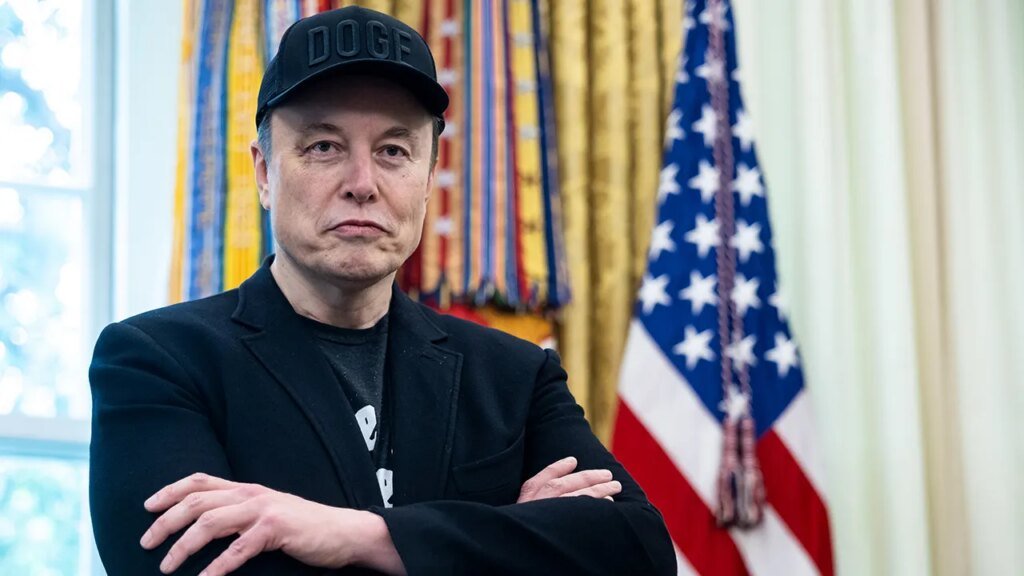
Last year, Elon Musk became the first person in history to surpass a net worth of $500 billion. Now, the Tesla and SpaceX CEO says he expects to pay roughly the same amount in taxes over his lifetime.
“I will probably end up paying over $500B in taxes, inclusive of death,” Musk wrote on X (1).
The claim is staggering. But is it realistic?
Musk’s claims come at a time when his compensation, particularly from Tesla, is once again in the spotlight. After a Delaware judge voided his 2018 pay package, Tesla shareholders voted to re-approve the deal, which is potentially worth tens of billions of dollars in stock options if performance targets are met (2). Those options, when exercised, would trigger massive tax bills tied to the value of the shares.
This also isn’t the first time Musk has publicly sparred over taxes. In 2021, he clashed with lawmakers over proposals for a billionaire “wealth tax” — arguing that taxing unrealized gains would discourage innovation (3). In the same year, he sold billions of dollars of Tesla stock and paid what he described as “the largest tax bill in history.”
But to understand whether a $500 billion tax bill is even plausible, you have to understand how billionaire wealth is taxed in the first place.
In 2021, Musk said he would pay about $11 billion in taxes, largely due to exercising Tesla stock options. At the same time, media outlets widely reported it as one of the largest single-year tax bills in American history (4).
That tax liability was triggered after Musk sold billions of dollars’ worth of Tesla shares and exercised stock options, which are taxed as income upon sale.
Long-term tax data, however, shows a different picture.
A ProPublica investigation into confidential IRS data revealed that between 2014 and 2018, Musk reported roughly $1.52 billion in income and paid about $455 million in federal income taxes (5). That rate is far lower than the growth of his overall wealth during that period.
The same report found that, based on IRS filings, Musk paid no federal income tax in 2018.
That’s because billionaire wealth often comes from unrealized gains. These are increases in stock value that go untaxed until shares are sold or options are exercised.
So if most of Musk’s wealth is tied up in unrealized gains, under what circumstances would a $500 billion tax bill actually materialize?
If Musk’s Tesla compensation package ultimately reaches $1 trillion in value over the next decade, the tax math starts to look less far-fetched.
That said, Musk’s pay package is largely made up of stock options — the right to buy Tesla shares at a set price if the company hits performance targets. Those options are not taxed when granted and are taxed only when exercised.
When Musk does exercise the options, the difference between the strike price and the market value of the shares is typically taxed as ordinary income. In Musk’s case, it’ll likely be taxed by the top federal rate of 37%.
At this rate, a fully taxable $1 trillion payout would generate $370 billion in taxes.
This number creeps even higher when accounting for surtaxes, such as long-term capital gains triggered by the sale of these options. At a net 23.8% tax rate, and assuming a 10% gain on that first trillion, Musk would be hit with a total of $393.8 billion in taxes.
When accounting for taxes paid in prior years, any future stock sales or potential estate taxes at death, Musk’s half-trillion dollar projection starts to look mathematically feasible on paper.
But that calculation assumes the entire amount is realized as fully taxable income, not to mention that Musk’s financial advisors aren’t doing any kind of strategic income planning.
In practice, ultra-wealthy individuals like Musk rarely trigger immediate taxation on the full value of stock-based compensation. Instead, they often defer taxable events or borrow against appreciated shares.
And they don’t do it alone.
A financial advisor can help crunch the numbers and build a plan that works.
But hiring an advisor can be a lifelong commitment, which might make or break your retirement. That’s why finding reliable help is crucial.
This is where Advisor.com can come in, which connects you with a financial expert near you for free.
Advisor.com does the heavy lifting for you, vetting advisors based on track record, client ratios, and regulatory background. Plus, their network comprises fiduciaries, who are legally required to act in your best interests.
Just enter a few details about your finances and goals, and Advisor.com’s AI-powered matching tool will connect you with a qualified expert suited for your needs based on your unique financial goals and preferences.
Finding the right advisor isn’t always easy — there’s no one-size-fits-all solution. That’s why Advisor.com lets you set up a free initial consultation with no obligation to hire to see if they’re the right fit for you.
Once you’ve got the right financial advisor in your corner, the next step is getting a clear picture of where your money’s actually going. That starts with the basics — budgeting and tracking your spending.
Even billionaires need to know where their money is going, often relying on teams of tax attorneys, CPAs, estate planners and investment advisors (often under a private “family office”) to manage everything from capital gains timing to charitable giving and generational wealth transfers.
Whether you’re managing billions or building a retirement nest egg, the lesson is the same: Tax strategy isn’t something you think about once a year. It’s something you build into your financial life over time.
It should be an everyday one.
High earners and financially savvy households have taxes on their minds all the time. Some good practices to incorporate could include:
Adjusting tax withholdings if you received a large refund
Timing investment sales strategically
Maximizing retirement contributions before year-end
Considering Roth conversions in lower-income years
This is where professional guidance can pay off. The ultra-wealthy don’t rely on guesswork when it comes to taxes, and while most Americans won’t need a private family office, having expert insight can make a meaningful difference.
That said, in lieu of professional assistance, there are still smart, legal strategies that can help lower what you owe.
Few Americans will ever face a billion-dollar tax bill, but tax season still adds stress to many households.
Fortunately, there are legal ways to lower what you owe, and it’s often simply by strategically structuring your savings and investments.
One of the simplest ways to reduce your taxable income is by contributing to a traditional 401(k).
Elective deferrals to a 401(k) are not included in gross income in the year they are made, meaning you are taxed on less income today (6). For 2026, contribution limits increased to as much as $24,500 for many workers, with additional catch-up contributions available for those 50 and older (7).
While maximizing a 401(k) can reduce taxable income, long-term investing outside of employer plans still plays an important role in building wealth.
The beauty of ETF investing is its accessibility — anyone, regardless of wealth, can participate. And even small amounts can grow over time with tools like Acorns, a popular app that automatically invests your spare change.
Signing up for Acorns takes just minutes: Link your cards, and Acorns will round up each purchase to the nearest dollar and invest the difference in a diversified portfolio.
Even better, when you sign up with a recurring deposit, Acorns will add a $20 bonus to help you begin your investment journey.
Meanwhile, for someone in the 24% federal tax bracket, maxing out a 401(k) could reduce the tax burden by thousands of dollars.
While traditional retirement accounts are often invested in stocks and bonds, some investors choose to diversify further within tax-advantaged structures.
Self-directed IRAs, for example, allow certain alternative assets to be held inside a retirement account. That means gains can grow tax-deferred (in a traditional IRA) or potentially tax-free (in a Roth IRA), depending on the account type.
Providers like Priority Gold focus on precious metals IRAs, positioning gold as a way to combine the tax advantages of retirement accounts with an asset class some investors view as a long-term store of value.
Gold IRAs allow investors to hold physical gold or gold-related assets within a retirement account, which combines the tax advantages of an IRA with the protective benefits of investing in gold, making it an attractive option for those looking to potentially hedge their retirement funds against economic uncertainties.
To learn more, you can get a free information guide that includes details on how to get up to $10,000 in free silver on qualifying purchases. Just keep in mind that gold is often best used as one part of an otherwise well-diversified portfolio.
How long you hold an investment significantly affects its tax treatment.
Assets held for more than one year qualify for long-term capital gains tax rates. These depend on income, with rates such as 0%, 15% or 20% (8). Short-term gains, by contrast, are taxed as ordinary income, resulting in a much higher tax rate.
That difference in treatment is one reason many investors emphasize patience over frequent trading. By reducing turnover and holding assets for longer, the savvy investor lowers their exposure to higher short-term tax rates and allows compounding to work with less “tax drag.”
Some asset classes are structurally aligned with long-term holding.
Real estate, for example, has historically offered built-in tax advantages, such as depreciation and tax deductions, that can offset income as properties appreciate over time.
Because these investments are typically structured around multi-year holding periods, they complement a long-term, tax-aware portfolio strategy.
Getting started is quick and easy. You can sign up for an account and then browse available properties. Once you verify your information with their team, you can invest like a mogul in just a few clicks.
Of course, these approaches won’t produce billionaire-scale tax math. But over time, prioritizing long-term capital gains and tax-efficient structures can meaningfully reduce your overall tax burden.
Join 250,000+ readers and get Moneywise’s best stories and exclusive interviews first — clear insights curated and delivered weekly. Subscribe now.
US ice hockey star Hilary Knight aimed a barb at Donald Trump during an appearance on this weekend’s Saturday Night Live. Knight led the US women to gold at last month’s Olympics, scoring the Americans’ first goal as they beat Canada in overtime. But after the US men’s team won gold Trump joked that he
President Donald Trump addresses the American people following strikes by the U.S. and Israel on Iran. The fallout of the joint U.S.-Israeli attack on Iran led to the highest-ever activity on X, the platform’s owner Elon Musk confirmed on Sunday. Musk made the statement in reply to Nikita Bier, the head of product at X.
Believe Trump? Seriously? John L. Evans’ letter in Friday’s Sentinel (“Take Trump seriously”), encourages us to listen to what Donald Trump says with a grain (or a block) of salt, while also taking him seriously. While this apparent conundrum is making my brain hurt, it also gives me hope. According to the letter-writer’s formula, now,
Elon Musk, the CEO of Tesla and a billionaire, on Sunday, March 1, declared that the X platform witnessed its record usage to date as the US and Israel launched joint airstrikes on Iran on February 28. Elon Musk stated that X experienced unprecedented usage amid US-Israel airstrikes on Iran. The platform’s traffic surged as
The coordinated strikes on Iran launched by the United States and Israel in the early hours of Saturday morning formally reignited a conflict that had been simmering since last summer’s 12-day war. They targeted key command structures and killed senior figures, most notably Iran’s supreme leader Ali Khamenei, who had been in power since 1989.
Donald Trump’s Republican allies in the United States have lined up to laud the strikes on Iran, as responses to the president’s war have largely split along partisan lines. Despite the rise of a noninterventionist wing within Trump’s Make America Great Again (MAGA) movement, Republican opposition to the war on Iran remains scant, underscoring the
Olympic gold medal winners from the U.S. men’s and women’s hockey teams crashed Connor Storrie‘s SNL monologue on Saturday, with the two on the women’s team taking a shot at Donald Trump for his dismissive comment about them. Storrie, who stars in the hockey-themed Canadian television series Heated Rivalry, was talking about learning about how
It seems the billionaire duo are trying to colonise the fashion sphere with Amazon’s sponsorship of the Met Gala – but have they gone too far? Lauren Sánchez and Jeff Bezos attend the Christian Dior Haute Couture Week Spring/Summer 2026 show as part of Paris Fashion Week in January. Photo: Getty Lauren Sánchez in a
This is an adapted excerpt from MS Now’s Feb. 28 special coverage. Early Saturday morning, the United States started a war with Iran for some reason. Your guess is as good as anyone’s as to why the president of the United States did this. In terms of pure rational deduction about what he’s doing here,
Russian riot police lead a charge on demonstrators protesting the arrest of Alexei Navalny – hero of the democracy movement – following his return from Germany, after his first poisoning with the banned chemical Novichok in 2021. (Photo by Olga MALTSEVA / AFP) (Photo by OLGA MALTSEVA/AFP via Getty Images) AFP via Getty Images Russia’s
For more than half a century, billionaire Warren Buffett manned the wheel at Berkshire Hathaway (BRKA +0.55%)(BRKB +0.45%), ultimately turning his conglomerate into a trillion-dollar business. During his tenure as CEO, the Oracle of Omaha oversaw a greater than 6,000,000% cumulative return in his company’s Class A shares (BRK.A), which absolutely crushes the returns of
On Wednesday, Sen. Bernie Sanders (I-Vt.) warned that artificial intelligence could trigger mass unemployment and deepen inequality and pose existential risks. AI Job Loss Warning: Nearly 100 Million Jobs At Risk Speaking on the Senate floor, Sanders called AI and robotics “the most profound technological revolution in world history,” arguing Congress is “way, way behind”
DFree/Shutterstock We may receive a commission on purchases made from links. Lauren Sanchez Bezos, wife to billionaire Jeff Bezos, has an uncanny appearance these days. While Sanchez Bezos has never explicitly confirmed that she’s had cosmetic work done, it is widely believed that she has had significant
Despite a second-term pledge to end US involvement in costly and destructive foreign wars, President Donald Trump has initiated a full-scale offensive to topple the Iranian government just more than a year after returning to office. The attacks on Iran, considered a violation of international law, mark the most aggressive escalation yet of Trump’s embrace
President Donald Trump claimed Iran posed an “imminent” threat to the US and its allies as he joined Israel in launching an operation to topple the Iranian regime. Trump said Saturday that Iranian Supreme Leader Ayatollah Ali Khamenei was killed, although Tehran said he was alive and that its government continued to function. Iran responded
Berkshire Hathaway has released its final quarterly results under Warren Buffett, reporting a nearly 30% drop in operating earnings, while new CEO Greg Abel issued his first, longer shareholder letter affirming continuity in culture and capital discipline. Abel’s emphasis on retaining earnings over dividends and his reassurance that Berkshire’s very large cash pile is not
Alan Eyre, a longtime Iran watcher at the State Department, now at the Middle East Institute in Washington, told me that Trump’s “stated objective for these attacks—imminent threat—is not believable, and his real objective—regime incapacitation if not regime change—is unlikely.” Operation Epic Fury, he went on, may not be able to destroy by air “the
Feb. 28, 2026, 1:34 p.m. ET Los Angeles – For more than a year, Elon Musk has repeatedly said Tesla is months away from launching a driverless robotaxi service in California – once state regulators give their blessing. Tesla did nothing to secure that approval in 2025, according to previously unreported state Department of Motor
Feb. 28, 2026, 1:18 p.m. ET MLS champion Inter Miami will visit President Donald Trump and the White House to celebrate its 2025 championship before an match upcoming against D.C. United, a club source confirmed to USA TODAY Sports. The person spoke on the condition of anonymity because the team hadn’t yet announced the plans.
It’s no secret that President Donald Trump’s foreign policy in his second term has been more militaristic. Trump has floated claiming the Panama Canal, Canada and Greenland for the United States. He launched strikes on seven different countries in 2025 and even resurrected the US policy of deposing Latin American leaders with the operation in