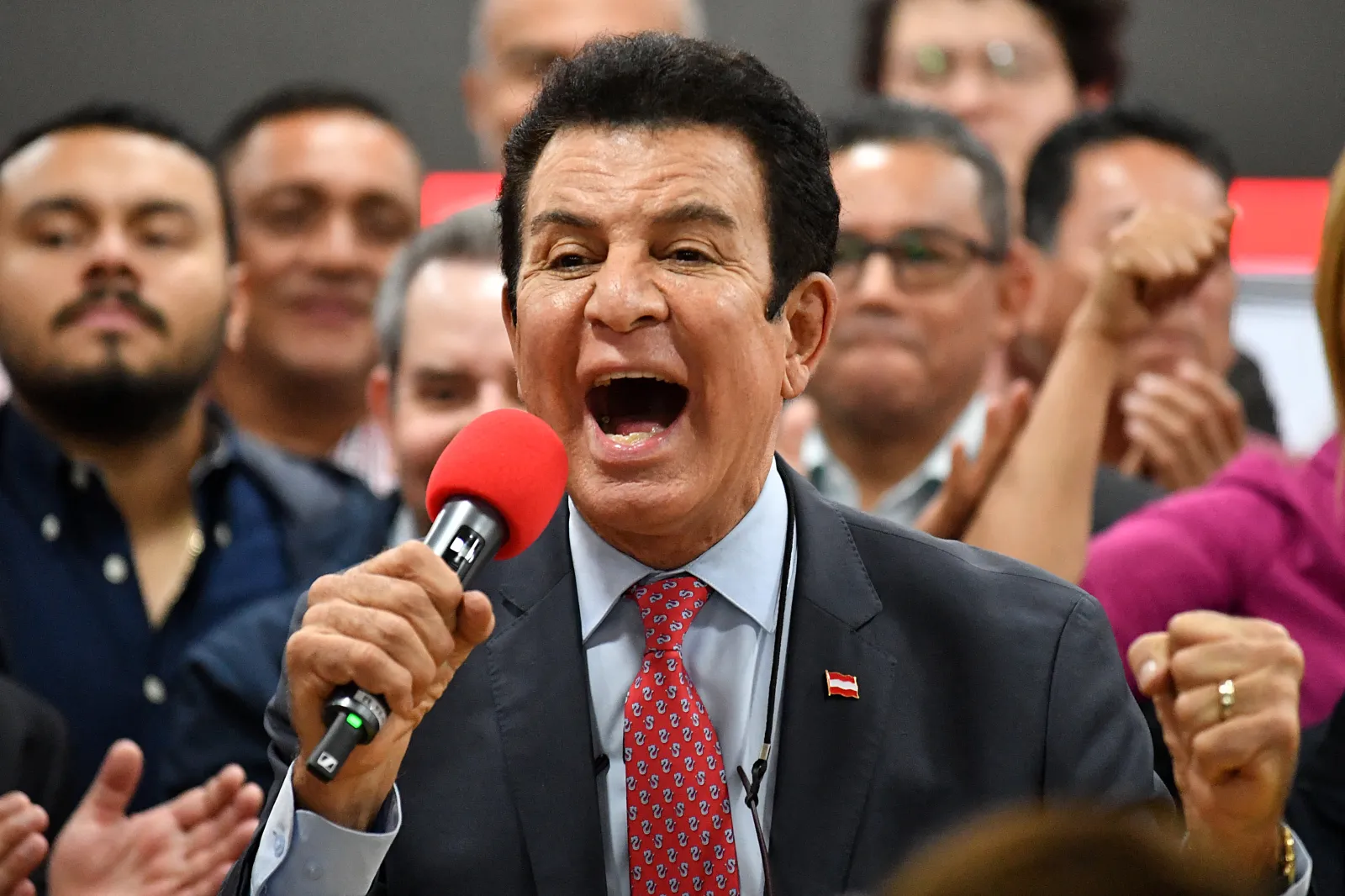
The centrist Liberal Party candidate Salvador Nasralla widened his narrow lead over the Trump-endorsed conservative candidate Nasry “Tito” Asfura in the Honduran presidential election, with a White House threat of “hell to pay” hanging over the ongoing count.
At the time of writing, Nasralla leads Asfura by 40.35 percent to 39.56 percent, with more than two-thirds of votes counted, according to the Honduras National Electoral Council, a gap of around 19,000 votes.
Asfura was initially in the lead on Monday by just a few hundred votes, a virtual tie. Election authorities have cited technical problems in the vote count.
U.S. President Donald Trump threatened to pull funding from Honduras if Asfura loses, saying before the vote that he “will not be throwing good money after bad, because a wrong leader can only bring catastrophic results to a country”. He sees Asfura as an important potential ally in his administration’s fight against the illegal drug trade and “narcocommunists”.
The U.S. military also has a presence at the Soto Cano Air Base in Honduras, and neighboring El Salvador is led by staunch Trump ally President Nayib Bukele.
Trump posted to Truth Social on Monday after the counting was stopped a day before: “Looks like Honduras is trying to change the results of their Presidential Election. If they do, there will be hell to pay!”
Trump’s Latin America Strategy
His funding threat to Honduras echoes the tactic he used to get behind his ally in Argentina, the libertarian President Javier Milei, who faced tough midterm elections and came out on top. And it forms part of a broader strategy to reshape the leadership across Latin America, with Venezuela’s socialist President Nicolas Maduro firmly in Trump’s sights.
Trump is “using U.S. resources to extend a partisan movement and intervene in local politics,” Christopher Sabatini, senior research fellow for Latin America, U.S. and North America Program at the Chatham House think tank, told Newsweek previously.
A close election result is likely to be disputed and threatens a re-run of 2017, when violence followed an election in which Juan Orlando Hernández claimed victory. Hernández was later sentenced to 45‑year U.S. jail term for drug trafficking—and on Tuesday he was released following a pardon by Trump. Asfura is from the same party as Hernández.
Hernández is a former U.S. ally whose conviction prosecutors said exposed the depth of cartel influence in Honduras. Trump defended the decision aboard Air Force One on Sunday, saying Hondurans believed Hernández had been “set up,” even as prosecutors argued he protected drug traffickers who moved hundreds of tons of cocaine through the country.
Trump Targets Caribbean Drug Traffickers
The pardon cuts against Trump’s aggressive counter-narcotics push that has triggered intense controversy across Latin America.
In recent months, U.S. forces have repeatedly struck vessels they say were ferrying drugs north, a series of lethal maritime attacks that the administration argues are lawful acts of war against drug cartels—and that critics say test the limits of international law and amount to a pressure campaign on Venezuela’s Maduro.
The Trump administration has carried out 21 known strikes on vessels accused of carrying drugs, killing at least 83 people. The administration has justified the attacks as a necessary escalation to stem the flow of drugs into the United States and asserted the U.S. is engaged in an “armed conflict” with drug cartels, similar to the war against al-Qaida following the 9/11 attacks.
This article includes reporting by The Associated Press.