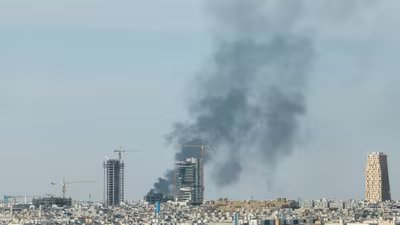
As the ever-escalating war between the US-Israel coalition and Iran entered its ninth day, reports emerged that the United Arab Emirates (UAE) had entered the war by hitting one of Tehran’s desalination plants on Sunday.

The report was first published by the Jerusalem Post, which cited sources within the UAE. It seemed like the UAE had finally lost its patience due to a continuous barrage of Iranian missile and drone attacks since the start of the war on February 28.
But did the UAE really attack Iran? Here is a deep dive into the truth.
Did the UAE attack Iran? Defence affairs chairman refutes reports
Ali Rashid Al Nuaimi, member of the UAE Federal National Council and Chairman of the Defence Affairs, Interior & Foreign Affairs Committee, on Sunday refuted reports of an attack on Iran’s desalination plant, emphasising that it will not treat the Iranian people the way the Iranian regime has acted over the past week.
In a post on X, Al Nuaimi slammed the reports as “fake news”, stating that the country has the “courage” to announce such actions if it had carried them out.
“This is fake news. When we do something, we’ve the courage to aThe war has dragged in global powers, upended the world’s energy and transport sectors, and brought chaos to even usually peaceful areas of the volatile region. (Photo by UGC / AFP) / RESTRICTED TO EDITORIAL USE – MANDATORY CREDIT AFP – SOURCE: UGC / UNKNOWN – DISTRIBUTED AS A SERVICE TO CLIENTS – NO RESALE -nnounce it,” Al Nuaimi said in a post.
In another post, he said that the UAE will never place the Iranian people in the same basket as the Iranian regime does.
“The Iranian people are the real victims of that regime and the ones who suffer the most from its policies. As neighbours, we recognise this reality, and we care about their well-being,” he further clarified.
The UAE ministry of foreign affairs said in a statement that the country is “in a state of defence in response to the brutal and unprovoked Iranian aggression”, which, it said, included the launch of more than 1,400 ballistic missiles and drones targeting infrastructure and civilian sites, resulting in civilian deaths and injuries.
“These attacks constitute a flagrant violation of international law and the UN Charter, an infringement of the UAE’s sovereignty and territorial integrity, and a direct threat to its security and stability. The UAE stresses that it does not seek to be drawn into conflicts or escalation. However, the UAE reaffirms its full right to take all necessary measures to safeguard its sovereignty, national security, and territorial integrity, and to ensure the safety of its citizens and residents, in accordance with international law and the UN Charter,” the statement added.
Earlier, it was reported by The Jerusalem Post that the United Arab Emirates had targeted an Iranian desalination plant on Sunday, which would have marked its first retaliatory strike in response to Iranian drone and missile attacks amid the ongoing conflict in the region.
Iran blames the US for attack on desalination plant
However, Iran’s Foreign Minister Seyed Abbas Araghchi on Saturday slammed the US for attacks on a freshwater desalination plant on Qeshm Island, stating it’s a “blatant and desperate crime” with grave consequences.
In a post on X, Araghchi emphasised that the US has set a dangerous precedent by targeting Iran’s infrastructure.
“The US committed a blatant and desperate crime by attacking a freshwater desalination plant on Qeshm Island. Water supply in 30 villages has been impacted. Attacking Iran’s infrastructure is a dangerous move with grave consequences. The US set this precedent, not Iran,” Araghchi posted on X.
The development comes amid escalated tensions in West Asia, following the death of the 86-year-old Supreme Leader of Iran, Ayatollah Ali Khamenei, who was killed in joint military strikes by the US and Israel on February 28. The strikes also killed several senior leaders of the Islamic Republic.
Tehran has since launched counter-strikes targeting American military bases and Israeli assets across the region in retaliation, including multiple Arab countries.
Israel, along with the US, continued its strikes on Tehran, with Tel Aviv widening the conflict to Lebanon, targeting Hezbollah and Iranian-backed militant groups.