Chinese Semiconductors & The Tech Rivalry Between the U.S. and China

Since 2020, semiconductor manufacturing has become a central front in the technology rivalry between the United States and China. Washington’s policy framework has been explicitly designed to slow China’s progress in advanced chip production, particularly at process nodes below 7 nanometres. The most consequential constraint lies in lithography equipment, where access to cutting-edge tools has been systematically restricted.

At the core of this bottleneck is ASML, the Dutch company that is the sole global supplier of extreme ultraviolet (EUV) lithography systems. These machines are indispensable for producing the most advanced chips used in AI, high-performance computing, and next-generation mobile devices. Because US technology is incorporated in ASML’s systems, Washington has barred the company from exporting EUV equipment to China. As a result, Chinese foundries such as SMIC and Hua Hong Semiconductor are unable to manufacture leading-edge chips at scale — in contrast to competitors such as TSMC (Taiwan Semiconductor Manufacturing Company).

This technological gap explains why revenue growth has not translated into comparable advances in capability. Chinese firms have been operating with older-generation equipment, limiting their ability to compete in the high-margin, advanced-node segments where the industry’s most significant profits are generated. Much of the recent expansion has been concentrated in mature-node production, where barriers to entry are lower but margins are structurally thinner.

US restrictions have not produced a purely negative outcome for China’s semiconductor sector. On the contrary, they have accelerated a broad-based industrial policy response centered on technological self-reliance. Beijing has elevated semiconductors to a national strategic priority — alongside aviation and biotechnology — embedding them into long-term planning frameworks, including the recently published 15th Five-Year Plan.

Chinese industry leaders are now calling for a coordinated effort to develop domestic lithography systems between 2026 and 2030. While China has achieved incremental progress in key subsystems — including EUV light sources, wafer stages, and optical components — integrating these elements into a fully operational platform remains a formidable engineering challenge. Progress at the component level does not automatically translate into system-level capability, and this gap highlights the deep complexity of the semiconductor value chain.

The feedback loop here is notable: tighter restrictions incentivize faster development of domestic alternatives, but with significant time lags and efficiency costs. Each round of US export controls has been followed by accelerated domestic capacity expansion and increased investment in local toolmakers.


The policy-driven expansion carries its own risks. A significant proportion of current revenue growth is linked to import substitution rather than genuine technological upgrading. This raises emerging concerns about overcapacity in mature-node chips, where Chinese firms are scaling production aggressively despite weaker long-term pricing power. So the central question for the sector is whether it can transition from volume-driven growth to value-driven innovation, particularly in advanced memory technologies and next-generation logic nodes.

At the same time, domestic alternatives have become increasingly available across several subsystems — though not yet across the entire supply chain. This substitution has reduced dependency in certain segments, even as the most critical manufacturing technologies remain out of reach.

Proposed US legislation — most notably the Multilateral Alignment of Technology Controls on Hardware Act (MATCH Act) — would extend restrictions to deep ultraviolet (DUV) lithography systems. These tools, also supplied by ASML, are less advanced than EUV but remain essential for producing a wide range of semiconductors currently manufactured in China. According to Bernstein Research, if enacted, such measures could significantly constrain China’s ability to expand even its existing production capacity, particularly in advanced logic and memory segments.

This evolving regulatory landscape is particularly relevant ahead of US-China discussions scheduled for May 14 and 15, 2025, where technology controls are expected to feature prominently. For market participants, these talks represent a potential inflection point: any escalation or easing of restrictions could have immediate implications for global semiconductor supply chains, equipment manufacturers, and the downstream industries reliant on advanced chips.

China’s semiconductor sector remains caught between short-term resilience and long-term constraints. Revenue growth reflects genuine demand and effective policy support, but technological limitations continue to cap the industry’s position within the global hierarchy. The trajectory from here will depend on two variables: the extent to which US restrictions are tightened further, and China’s ability to close the gap in critical technologies — particularly lithography — where the engineering challenge remains formidable.

Sources: IBD, South China Morning Post, Congress, Reuters, CNBC

This article was originally posted on FX Empire

Source link

Visited 1 times, 1 visit(s) today

Related Article

Sussex crime news query ChatGPT

AI answer engines often bypass local news outlets

Sussex crime news query ChatGPT Research has shown that popular AI chatbots such as ChatGPT and Google Gemini often ignore local publishers, even on queries about local issues such as council decisions and crime. The research by AI search visibility specialists Searchable found that ChatGPT cites national newspapers (18.8%) almost as much as local ones

Medicare Advantage plan cuts: United, Humana reduce benefits for 1 million

Health insurance giants are cutting back on benefits to maximize their profit.  UnitedHealthcare and Humana — the two largest private health insurance companies for older adults in the US — are canceling several Medicare Advantage plans, affecting nearly 1 million people. The two major health insurers are ending specific plans in areas where they make

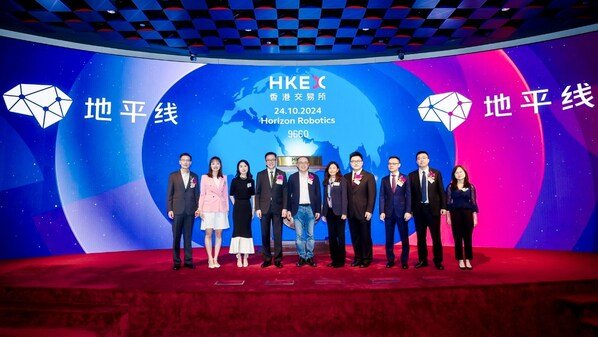
Horizon Robotics Officially Lists on the Hong Kong Stock Exchange | 主頁 – 新聞

HONG KONG, Oct. 24, 2024 /PRNewswire/ — Horizon Robotics (HKEX: 9660), a leading provider of advanced driver assistance systems (ADAS) and autonomous driving (AD) solutions for passenger vehicles, today officially listed on the Main Board of the Hong Kong Stock Exchange. Horizon Robotics is a key enabler for the smart vehicle transformation and commercialization with

France Reports First Ever Case Of Human Shamonda Virus, 1 Dead

France Reports First Ever Case Of Human Shamonda Virus, 1 Dead

The patient suffering from the virus has died. (Representational Image) Paris: French health authorities said Thursday that the Shamonda virus, which usually affects livestock, had been detected in a human for the first time, in a severely immunocompromised patient who died earlier this month. “Despite circulating in Africa and Asia for several decades, the Shamonda

Futu Q2 Earnings Call Highlights — TradingView新聞

Futu FUTU reported higher second-quarter revenue and profit as trading activity, client assets and funded accounts increased, supported by strong U.S. equity interest, Hong Kong IPO activity and growth across overseas markets. Total revenue for the second quarter rose 36% year over year to HK$7.2 billion, while net income increased 42% to HK$3.6 billion. Net

Hang Seng Tech Slides 3.4% on China Internet Tax Fears — TradingView News

Baidu Announces Results of Extraordinary General Meeting — TradingView新聞

BEIJING, Aug. 26, 2026 /PRNewswire/ — Baidu, Inc. (Nasdaq: BIDU; 9888 (HKD Counter) and 89888 (RMB Counter)) (“Baidu” or the “Company”), a leading AI company with strong Internet foundation, today announced that its extraordinary general meeting of shareholders (the “EGM”) was held in Beijing today and all the proposed resolutions set out in the notice

Video: Hong Kong Has A Train That Turns 4-Min Journey Into An Underwater Adventure

Ever thought about what it feels like to travel beneath the sea? At Ocean Park Hong Kong, travellers can experience something similar aboard the Ocean Express, a submarine-themed train that takes them through a 1.3-kilometre tunnel in just four minutes. Scroll down to learn more. Inside Hong Kong’s Underwater Ocean Express Train Connecting the Waterfront

Noah Holdings Limited Announces Changes to the Board and Board Committees — TradingView新聞

SINGAPORE, Aug. 28, 2026 /PRNewswire/ — Noah Holdings Limited (the “Company” or “Noah”) (NYSE: NOAH and 6686), a leading and pioneer wealth management service provider offering comprehensive one-stop advisory services on global investment and asset allocation primarily for global Chinese high-net-worth investors, today announced changes to its board of directors (the “Board”) and the composition of its Board

Unlocking APAC Semiconductor Bottleneck Opportunities: CSOP Solactive Asia AI Bottleneck Index ETF to List on HKEX tomorrow | 主頁 – 新聞

HONG KONG, Sept. 16, 2026 /PRNewswire/ — CSOP Solactive Asia AI Bottleneck Index ETF (3499.HK) will list on HKEX tomorrow (17th September 2026). 3499.HK seeks to provide investment results that, before deduction of fees and expenses, closely correspond to the performance of Solactive Asia AI Bottleneck Index (net total return version) (the Index). It has a

Property News Weekly Digest – Property News

〈The Standard, Sept 19, 2026 〉New World Development (0017) has proposed to set up a commercial real estate investment trust fund to spin off Shanghai Hong Kong New World Tower for a separate listing in Shanghai. The REIT’s manager, GF Fund Management, has submitted the application materials to the China Securities Regulatory Commission and the

Warren Buffett’s Successor, Greg Abel, Just Went Shopping in the Tech Sector Again!

This has been a year of historic change for the trillion-dollar conglomerate that Warren Buffett built. Following the Oracle of Omaha’s retirement as Berkshire Hathaway‘s (NYSE:BRKA)(NYSE:BRKB) CEO on Dec. 31, the oversight of the company’s day-to-day operations and its $363 billion portfolio passed to Greg Abel. It took Buffett’s understudy just one quarter to really

5 of the Best Hong Kong Hotels Now, According To An Asia Insider

Published on October 22, 2026 Drawing upon nearly a decade of local experience, Forbes Australia‘s lifestyle correspondent reveals his own black book of best-in-class luxury accom in the +852… A world-class public transport infrastructure, singular cultural experiences, and robust access to parkland/green spaces underpin the quality of Hong Kong’s luxury hospitality — and the city-at-large.

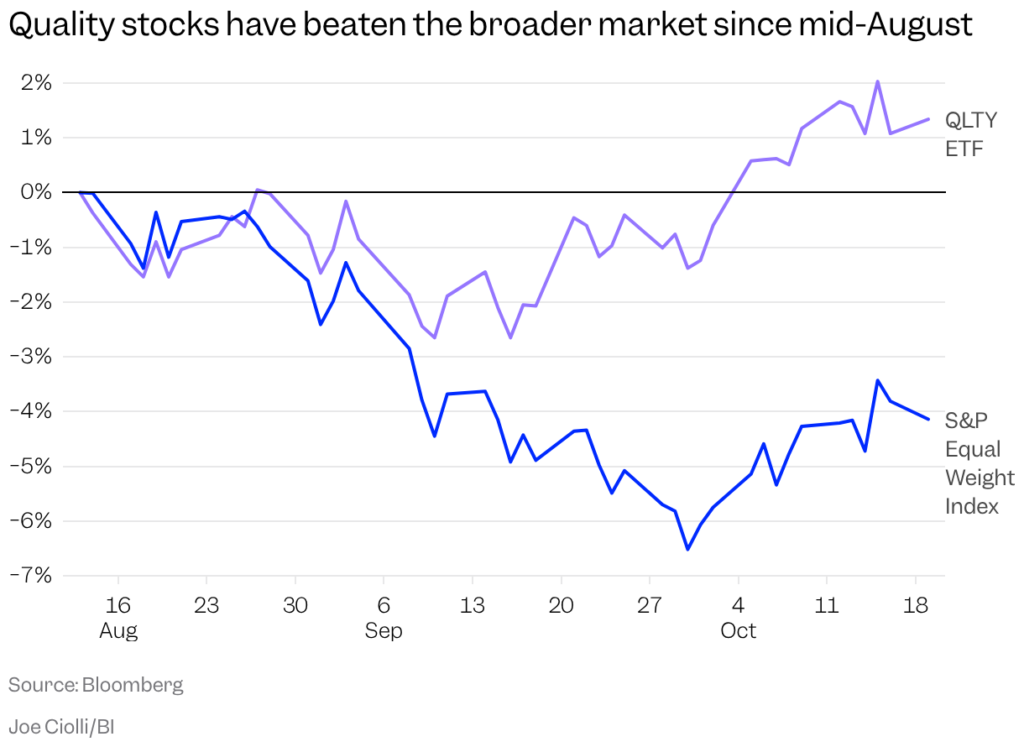
Why Wall Street Is Turning to Quality Stocks As AI Trade Jitters Grow

Wall Street always seems to have a new favorite word or phrase. When the AI trade launched in earnest, it was the “Magnificent Seven.” Then came “AI enablers,” “picks and shovels,” and, more recently, “momentum.” Now, as investors fret over rising interest rates, expensive AI ambitions, and a top-heavy market, the word du jour is

0
Would love your thoughts, please comment.x
()
x