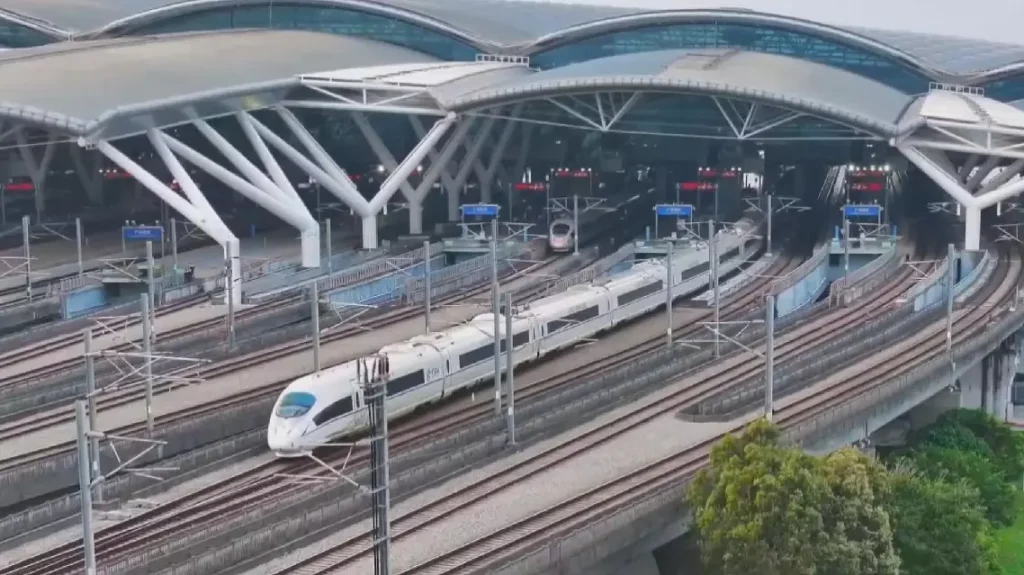
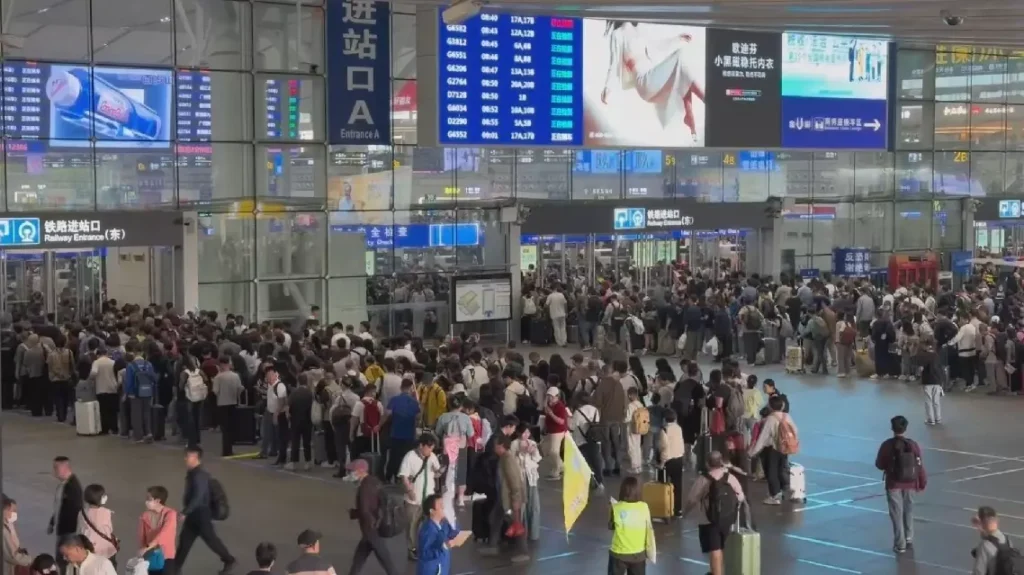
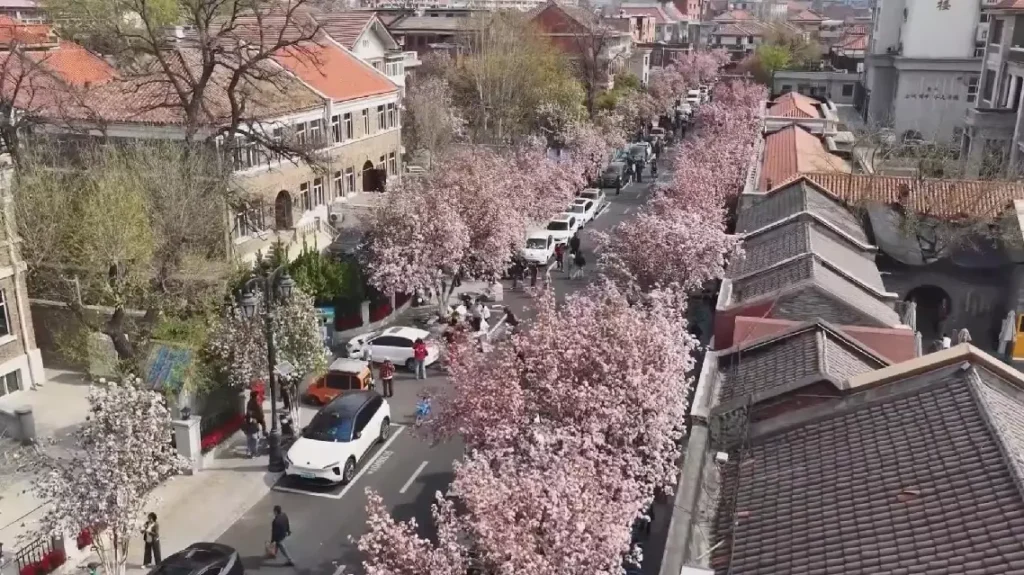
An increasing number of travelers chose new energy vehicles (NEVs) for their trips during the just-concluded Qingming Festival holiday, reassured by the expanding and improved charging network.
Qingming Festival, or Tomb-Sweeping Day, falls on April 5 this year. It is a traditional Chinese festival in which people pay tribute to the dead and worship their ancestors. The holiday also provides a short break for Chinese citizens to go in for outdoor activities and sightseeing.
Road travel remained the dominant choice during the holiday, spanning Saturday to Monday, and a rising share of these trips were powered by NEVs.
In the first two days of the holiday, charging volume reached 59.57 million kilowatt-hours nationwide, an increase of 26.98 percent from the previous year, official data showed.
“We can monitor the operating status of all charging piles in real time on the screen. If a fault or abnormality occurs, the platform will automatically dispatch a work order to the mobile app of our maintenance staff,” said Shi Shuanglong, director of the monitoring center of the smart vehicle network platform under the State Grid Corporation of China, the country’s largest state-owned utility company.
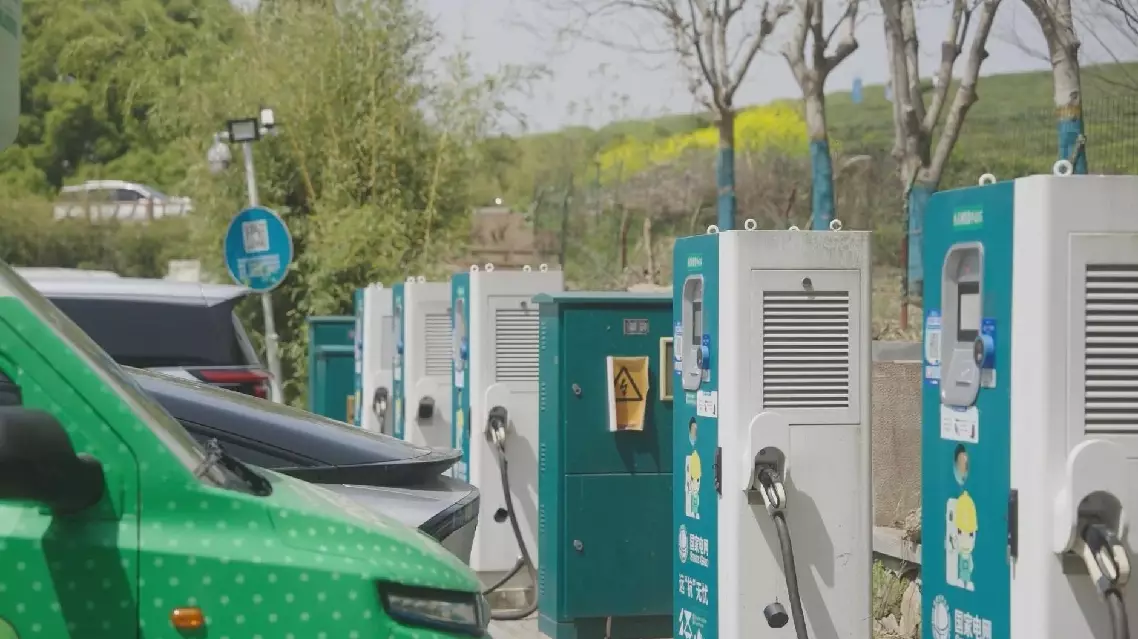
To handle the surge in charging demand during the holiday, power supply authorities across the country have enhanced charging capacity and adopted technological upgrades, boosting charging efficiency for NEV owners.
The service area in north China’s Baoding City, along the Beijing-Hong Kong-Macao expressway, has more than doubled the number of its charging piles ahead of the holiday.
“We have also arranged for technicians to conduct drone patrols across the area, so that vehicle owners don’t have to wait in line to charge their vehicles,” said Liu Hailong, manager of the charging station at the service area.
Suzhou City of east China’s Jiangsu Province has upgraded a total of 698 charging piles in high-traffic areas, boosting each pile’s power from 60 kilowatts to 160 kilowatts and raising charging efficiency by nearly 1.7 times.
“Our new charging stations also feature screens that display the vehicle battery levels, giving drivers greater peace of mind while charging,” said Zhao Meng, a staff member of State Grid Suzhou Electric Power Co., Ltd.
Baoji City of northwest China’s Shaanxi Province put into operation a photovoltaic-powered charging station during the holiday, further encouraging greener travel.
“Charging here is very convenient. The site is spacious, clean and well-kept, charging is fast, and the price is very reasonable. It’s great,” said Gan Xiaoqiang, an NEV owner.
Unlike conventional charging stations that rely on the power grid, this power station draws most of its electricity from solar panels and is equipped with a large-scale energy storage system, significantly boosting capacity during peak periods.
“Our equipment achieves green charging by combining solar power generation and energy storage system. Meanwhile, our staff are on duty around the clock to intensify inspections and maintenance, ensuring a reliable power supply,” said Li Tao, marketing director of State Grid Baoji Electric Power Co., Ltd.
As China accelerates its pace to ensure the full coverage of charging stations at the county level and the full coverage of charging points at the township level, Hangzhou City of east China’s Zhejiang Province has already achieved full township coverage, making green travel truly unimpeded.
The city has achieved full rural charging coverage, with all 191 townships now equipped with EV facilities. Installations are strategically prioritized at key transit points, including tourist hubs and bus stations.
“When I arrived, I saw plenty of charging piles, which eased my worries when traveling,” said Wang Xin, a tourist in Hangzhou.
China’s Qingming Festival holiday travel goes green as charging network improves
The Italian capital Rome, one of the world’s most famous tourism destinations, is looking to live up to its nickname of the “Eternal City” by doubling down on efforts to protect and promote its historical sites as visitor numbers rise.
The city welcomed a record number of 22.9 million tourist arrivals last year as its popularity as a premier tourism spot continued to climb. But as more and more people flock to Rome’s landmark sites, authorities are taking steps to keep things under control.
Visitors hoping to get up close to the city’s 264-year-old Trevi Fountain, a masterpiece of Roman Baroque architecture and one of the world’s most famous landmarks, must now pay a small fee after Rome Council introduced a 2-euro entry price to access the fountain’s lower basin
“During February, we had around 230,000 tickets sold. This system guarantees a much more orderly access for tourists,” said Giorgio Trabucco, vice president of the Rome Tourism Commission.
The measure was brought in to combat overcrowding, and also follows a series of incidents involving tourists sitting, eating, and even jumping into the historic waters.
“It’s clear there have been episodes of disrespect. It’s a difficult challenge, but our administration, with interventions like this – managing tourism not limiting it – is an added value for our city,” said Trabucco.
The funds raised by the entrance tickets will go towards security, cleaning and maintenance of the ancient site, and while some tourists are annoyed at having to fork out, the majority believe it’s money well spent.
“I would pay 2 euros, it’s not breaking the bank and it’s lovely to see,” said a tourist.
Meanwhile, at the newly-upgraded Colosseum Metro Station, history is very much part of the journey, with ancient artifacts which were uncovered during the subway line’s construction on display to the public for free.
It points to the fine balancing act facing city management, as it looks to preserve its cultural heritage while also keeping it open to everyone.
Paolo Aielli, head of Rome’s public transport company ATAC, said conserving the past while building for the future depends on close cooperation across different interest groups.
“(We have adopted a very co-operative model) because we have the responsibility in terms of engineering but at the same time we have a very important interaction with the archaeological authority,” he said.
The new “museum station” — which opened late last year — is part of Rome’s expanding rail network, and has quickly become an attraction in its own right. According to Aielli, the station received more than 1 million visitors in its first month.
For now, officials say there are no plans to introduce fees at other major sites, though the option remains on the table as tourism continues to rise.
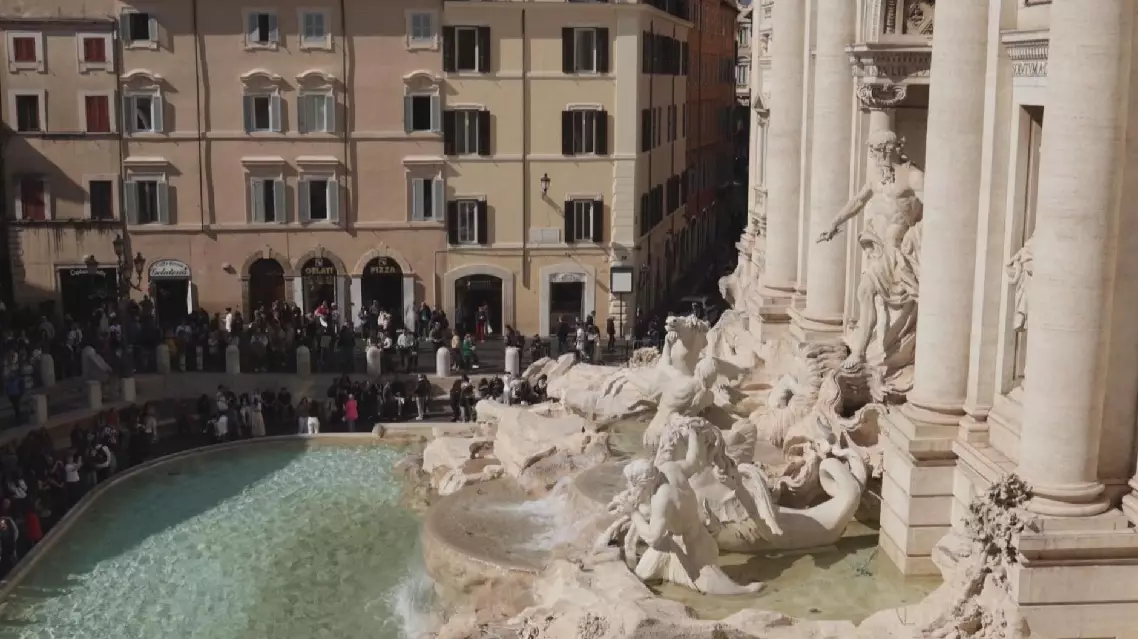
Rome steps up efforts to protect historical sites amid tourism boom