China’s one-child policy and the phenomenon of twins

A more horrifying “family planning” practice than China’s one-child policy would be difficult to imagine. In effect between 1979 and 2015, the goal of the initiative was to curb population growth and thereby boost the nation’s economic status.

In practice, to name just a few of the abominations, women were sometimes tied down and subjected to forced abortions, the heads of live babies in utero were injected with formaldehyde before the feet emerged, and babies and young children were routinely abducted and trafficked.

The effects on fertility rates, divorce, labor supply, and rural-to-urban migration were devastating. Less measurable consequences — the damage to the human soul from being forced to snitch on one’s neighbors and family members, for example, the trauma to women of bodily violation, the imposition upon an entire population of a godless plan to engineer families — will leave scars lasting for generations.

Daughters of the Bamboo Grove,” by former Los Angeles Times Beijing Bureau Chief Barbara Demick, carries the intriguing subtitle “From China to America, a True Story of Abduction, Adoption, and Separated Twins” (Random House, $32).

Partly investigative journalism, partly the story of what became Demick’s personal involvement in the reuniting of twin sisters separated by China’s one-child policy, the book explores questions of identity, history, the ethics of the international adoption system, the phenomenon of twins, and the role of genetics and environment in human formation.

One of the sisters, abducted from the family home at the age of 2, was adopted by a Texas family and thoroughly Americanized. The other, raised in rural China, by the time of the reunion had become a teacher.

The one-child policy, unthinkable almost anywhere else, was possible in China because of the lack of strong religious prohibitions against contraception and abortion, coupled with a highly authoritarian infrastructure. “Quality rather than quantity” became the catchphrase with respect to children even before the policy was put into place, as more and more women in the early 1970s began working outside the home.

But by 1979, writes Demick, “The era of gentle persuasion was over. Family Planning morphed into a monstrous organization that dwarfed the police and military in manpower,” and employed up to 83 million people.

“Enforcers” infiltrated every stratum of society, from university secretaries to village midwives and doctors. Female factory workers had to report the dates of their menstrual periods. After the birth of their first child, women were required to submit to the insertion of an IUD specially designed so as to be removable only by a medical professional.

Because male babies were favored over female, whether through abortion, abandonment, or trafficking, demographers estimate that more that 60 million girls went missing.

On Sept. 9, 2000, Yuan Zanhua, 28, gave birth in a bamboo grove deep in the mountains of Hunan Province. It was her third birth. Her first, a healthy girl, Ping, was born in 1995. Under the one-child rule, women were allowed to have a second child if the first was a girl, but only after a gap of five years.

Zanhua (the Chinese reverse the Western way of first and last names), and her husband, Zeng Youdong, had bypassed the rule and had a second daughter, Yan, only two years later. They’d been heavily fined; additionally, officials vandalized their home and stole their furniture. But they’d longed for a boy, and two years after that Zanhua was again with child. They had carefully hidden this third pregnancy for fear of the authorities.

And when the time came, Zanhua gave birth in the bamboo grove to twin girls. Mother and father were both thrilled — but also terrified. They’d been flagged by the enforcers already and to have two more children guaranteed severe punishment.

They hid, moved around, farmed the girls out to a grandmother, and at six months, separated them. Little Shuangje left the village with her parents; Fangfang — “the brilliant, beautiful girl who everyone in the family knew was so special” — moved into the home of an aunt and uncle.

When the toddler was two, a posse of officials forced their way into the home, restrained the aunt, and grabbed Fangfang, holding her aloft like a trophy as they left. Her parents, and her twin, Shuangje, would not see her again for almost 17 years.

Meanwhile, in 1991 China had enacted a law allowing foreigners to adopt Chinese children. They were quickly scooped up, especially young girls, and when the supply ran low, a black market in child trafficking opened up that thrived on abducting toddlers from their homes or the streets and bringing them to “orphanages.” In effect, and unbeknownst to them, many foreign adoptive parents actually paid a bounty to kidnappers.

The story of how Fangfang, later renamed Esther, and Shuangje were reunited, and the bureaucratic, legal, social, moral, and financial obstacles Demick had to overcome to facilitate the meeting, makes for a gripping read.

She treats all involved, including the American adoptive family, with sensitivity and compassion, thereby humanizing this complex, emotionally fraught situation.

Whether the twin raised in the West or the twin raised in the East is better off, by various measures, remains, interestingly, an open question.

One incontrovertible fact: China, suffering a drastic drop in birth rate, is now offering a $500 reward to parents for each of their children under the age of 3.


author avatar

Source link

Visited 1 times, 1 visit(s) today

Related Article

Eileen Gu

Eileen Gu responds to criticism over Team China decision at Olympics

NEWYou can now listen to Fox News articles! American-born Team China skier Eileen Gu responded to the global criticism she has received during the Milan Cortina Winter Olympics.  Her decision to compete for China despite being born in the U.S. has made her a target for Americans and others across the world, with Vice President

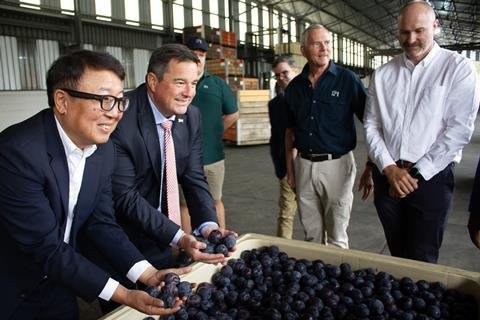
China’s ambassador Wu Peng and South African minister of agriculture, John Steenhuisen see off the first shipments

South Africa celebrates first stonefruit shipment to China | News

Official commencement follows the signing of a bilateral trade agreement granting South African produce duty-free access into the Chinese market South Africa has marked a significant milestone in agricultural trade, sending the first shipment of stonefruit to China this week, following the signing of a bilateral trade agreement that grants South African produce duty-free access into the Chinese market.  On 18 February, South African minister of agriculture, John Steenhuisen, and China’s

Japanese leader Takaichi warns of China 'coercion' and vows security overhaul

Japanese leader Takaichi warns of China ‘coercion’ and vows security overhaul

TOKYO — Japanese Prime Minister Sanae Takaichi warned of growing Chinese “coercion” in her first post-election speech to parliament on Friday, pledging to overhaul defense strategy, ease curbs on military exports and strengthen critical supply chains. Takaichi’s four-month tenure has been marked by a diplomatic dispute with China after she said Japan could use military

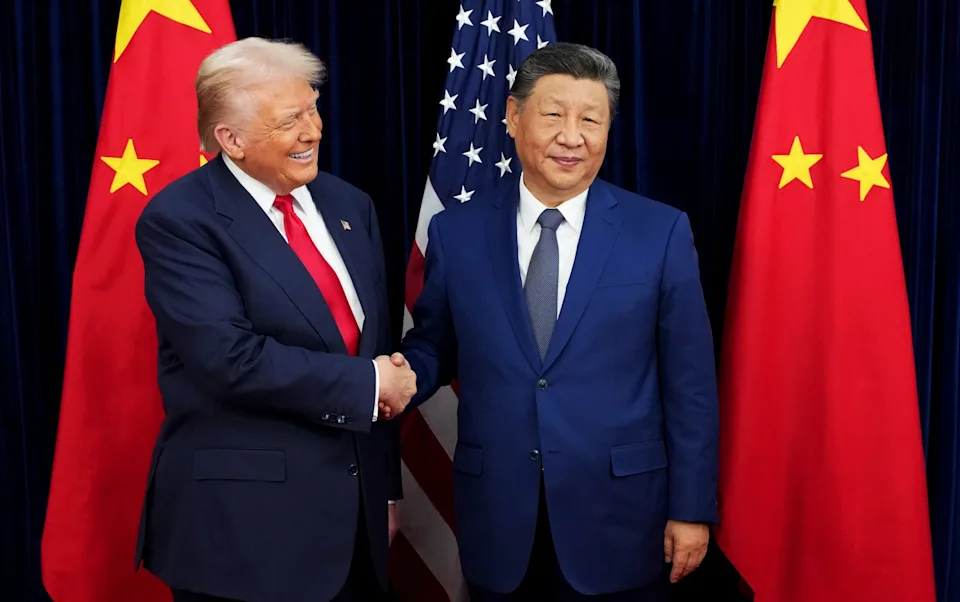
Donald Trump, the US president, and Xi Jinping, the Chinese president, Oct 30, 2025

The secret tests that expose China’s race for nuclear superiority

On the edge of a vast desert in north-west China lies a dried-up salt lake. Its remote, barren location offers little support for civilisation, but makes it the perfect site for secret nuclear testing. This area, known as Lop Nur, or Lop Lake, is where the United States government has alleged that China has been

[News] China Reportedly Ramps Up Chip Tool Push, Sets 70% Target by 2027; SMEE, NAURA at Forefront

[News] China Reportedly Ramps Up Chip Tool Push, Sets 70% Target by 2027; SMEE, NAURA at Forefront

China’s chip equipment sector is accelerating its push for greater self-reliance. According to Newsswitch, the country has been a key driver of global semiconductor investment in recent years and is now moving to localize critical technologies long dependent on overseas suppliers, including lithography systems, EDA tools, and advanced materials. The report notes that U.S. sanctions

Text to Speech Icon

China’s Ning Zhongyan skates to Olympic 1,500m gold, denying Stolz 3rd straight win in Milan

Listen to this article Estimated 3 minutes The audio version of this article is generated by AI-based technology. Mispronunciations can occur. We are working with our partners to continually review and improve the results. Follow Winter Olympic SportsPersonalize Your Feed Chinese speed skater Ning Zhongyan beat the odds, upending pre-race favourite Jordan Stolz of the

See fireworks from space in dazzling video of Lunar New Year celebration

Feb. 19, 2026, 12:59 p.m. ET The fireworks were part of the Lunar New Year festivities celebrating the Year of the Horse. Astronaut Chris Williams shared the video on social media from 260 miles above Earth. “I was fortunate to be looking out of the Cupola while we were passing over Beijing, and saw the

Poland bans Chinese cars from military bases • The Register

Poland bans Chinese cars from military bases • The Register

Poland’s Ministry of Defence has banned Chinese cars – and any others include tech to record position, images, or sound – from entering protected military facilities. A Tuesday announcement from the country’s Ministry of Defence says the decision came after risk analysis of the potential for the many gadgets built into modern cars to allow

OpenAI CEO Sam Altman: Progress of Chinese tech firms is 'remarkable'

Chinese tech companies progress remarkable

The progress of Chinese tech companies across the entire stack is “remarkable,” OpenAI’s Sam Altman told CNBC. Altman’s comments come as China races against the U.S. to develop artificial general intelligence (AGI) — where AI matches human capabilities — and roll out the technology across society. The pace of technological advance in “many fields,” including

26 China Auto1

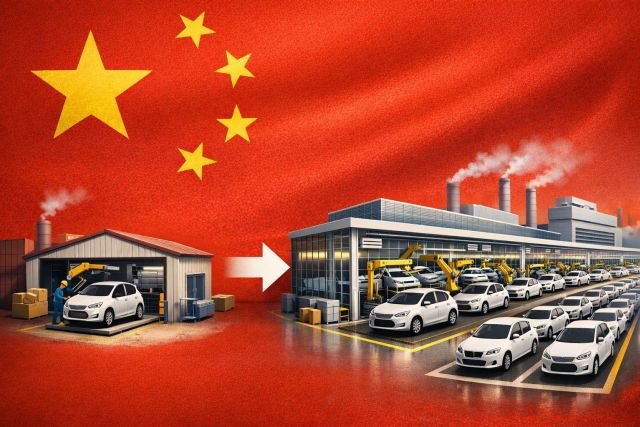
How China plays the long game in the global auto…

He is a leading expert on international competitiveness, regional economic development, and international business strategy and his article on the subject was published last year by the Hinrich Foundation. https://www.hinrichfoundation.com/research/article/fdi/china-auto-policies-playing-the-long-game “It was the subject of China’s first specific national development plan after its economic opening in the 1980s and continues to receive close attention

A Unitree Robotics humanoid robot takes part in a 400m race at the inaugural World Humanoid Robot Games at the National Speed Skating Oval in Beijing on August 15, 2025.

Inside the rise of robotics firm Unitree, glimpse into China’s tech ambitions

A Unitree Robotics humanoid robot takes part in a 400m race at the inaugural World Humanoid Robot Games at the National Speed Skating Oval in Beijing on August 15, 2025. | Photo Credit: Reuters It’s been an eventful week for the Chinese robotics firm Unitree, which has managed to find itself at the centre of

China Briefing 19 February 2026: CO2 emissions ‘flat or falling’ | First tariff lifted | Ma Jun on carbon data

China Briefing 19 February 2026: CO2 emissions ‘flat or falling’ | First tariff lifted | Ma Jun on carbon data

Welcome to Carbon Brief’s China Briefing. China Briefing handpicks and explains the most important climate and energy stories from China over the past fortnight. Subscribe for free here. Carbon emissions on the decline ‘FLAT OR FALLING’: China’s carbon dioxide (CO2) emissions have been either “flat or falling” for almost two years, reported Agence France-Presse in coverage

China Still Borrows From the West For Highest Tech

China Still Borrows From the West For Highest Tech

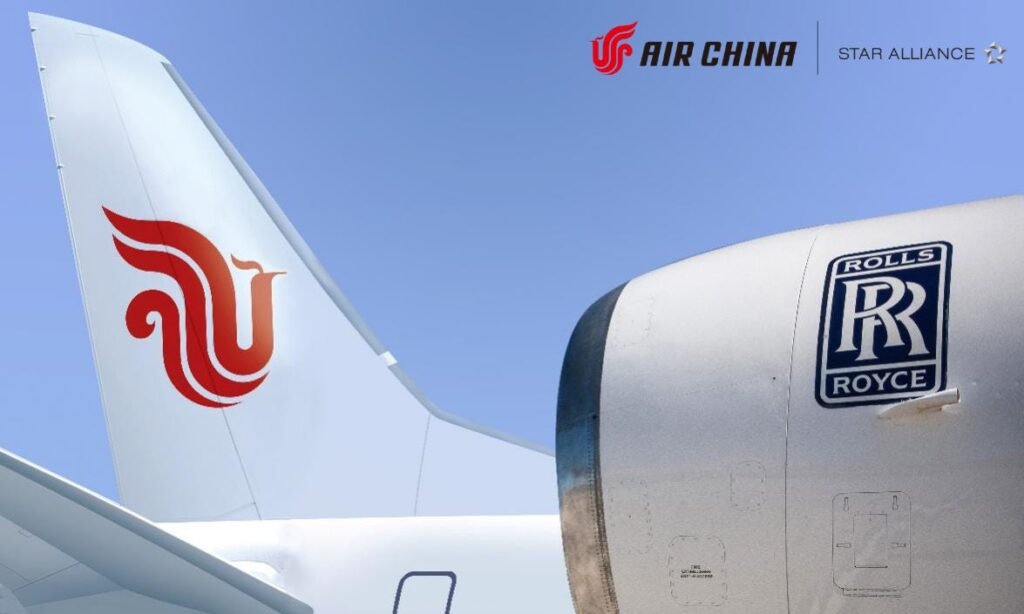
By: Andy Wong Ming Jun Although China can produce an entire host of manufactured metalwork goods from pots and pans to electric cars, it appears it is still having trouble meeting requirements for some of the most advanced articles produced by cutting-edge technology. That is showing up with the recent announcement by state-owned aerospace manufacturer

MAD Architects Lishui Airport in China

China’s Lishui Airport opens after 17 years of construction

Sign up for our newsletter and get our latest content in your inbox. Subscribe Lishui Airport (LIJ), located in Zhejiang Province, China, has officially begun operations, marking the region’s first direct link to China’s national aviation network. Initially designed in 2008, the airport has finally been completed after 17 years of construction. The “bird-like” building

Twelve killed in China fireworks shop blast during Lunar New Year | Retail News

Five children among the dead as authorities warn of ongoing holiday safety risks. Listen to this article | 2 mins info Published On 19 Feb 202619 Feb 2026 Click here to share on social media share2 Share An explosion at a fireworks shop in central China’s Hubei province has killed at least 12 people, state media reported,

A humanoid robot at a car dealership in Shanghai. (File photo.)

China’s humanoids are dazzling the world. Who will buy them?| Technology News

The Spring Festival Gala is a showcase both of China’s cultural riches and its technological might. The four-hour state television programme, staged in Beijing on the eve of each Lunar New Year, often features goose-stepping phalanxes of singing soldiers. On February 16th the centrepiece was a troupe of sword-brandishing humanoid robots performing an elaborate martial-arts

Twelve killed in China as firecracker store explosion triggers blaze

Twelve killed in China as firecracker store explosion triggers blaze

BEIJING — Twelve people were killed Wednesday when a store selling firecrackers exploded and caught fire in China’s Hubei province, state broadcaster CCTV reported. The incident occurred at an unnamed retailer in the central Chinese city of Xiangyang, according to the report. The cause of the blast was under investigation, CCTV said. Video verified by

0
Would love your thoughts, please comment.x
()
x