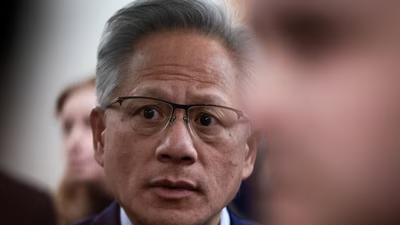
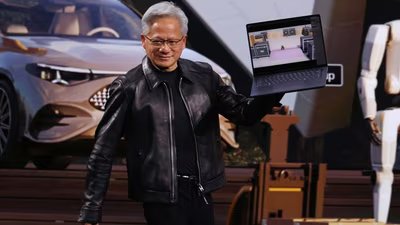
U.S. intelligence was hardly going to miss Nvidia’s founder and chief cuddling up with a woman secretly connected to Chinese intelligence. Which raises a question: Did China’s government target Jensen Huang for information—or to compromise a technologist closely connected to Donald Trump?
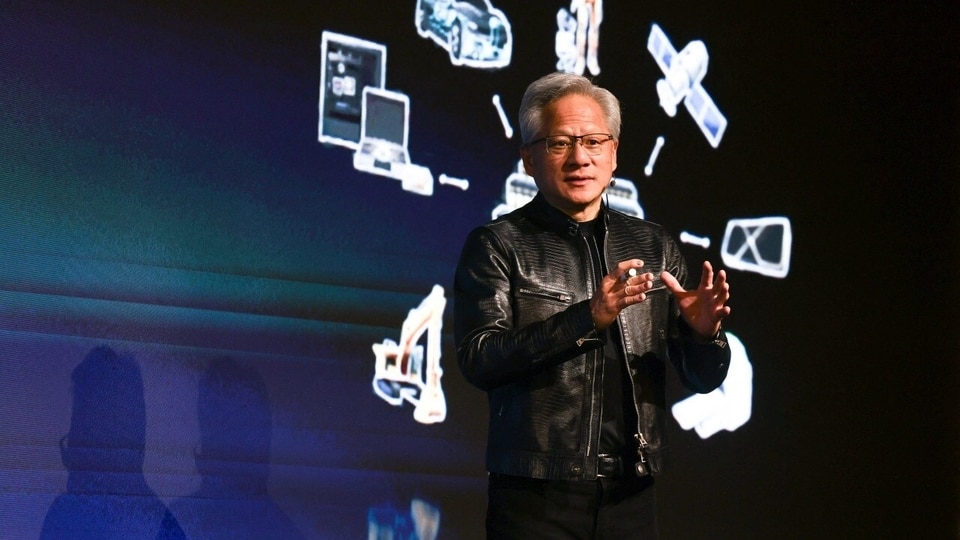
Mr. Trump was reportedly informed of the relationship months ago. He touched on bigger matters Sunday when CBS questioned him about AI leaders who say the technology threatens human survival. “It’s all between us and China,” he said.
In typical Trump fashion, he left unfleshed-out a thought the public would have benefited from having fleshed out.
A large language model tells me I didn’t coin the term “AI Chernobyl” in a May 2023 column. An AI researcher on YouTube used the phrase a few weeks earlier. Harrumph. But now the term has been universally adopted for the presumably looming catastrophic event that will drive U.S. politicians, in panicked fashion, to take a more hands-on approach to AI.
Coming together are many strains of AI paranoia. Jeremie Harris is a physicist, China hawk and national-security consultant. He’s also a doomer, believing superintelligence a near-term competitor with humans for control of our planet. In a podcast with the author Robert Wright, he invokes a Chernobyl-like event that shocks President Trump into believing the U.S. and even himself and his own family are at risk.
Mr. Trump phones China’s Xi Jinping and says, “We’ve got to find a way to stop this.” But Mr. Xi either is not pilled as to the superintelligence threat or believes China’s position to be advantageous. A “trustless” agreement must be forced on China. The U.S. must move quickly to develop a means of external monitoring to make sure China isn’t training dangerous superintelligence. Washington should be willing to threaten severe reprisals if Beijing doesn’t adhere to U.S.-advocated red lines.
You don’t have to buy the whole scenario to agree that what Mr. Xi’s government thinks, or pretends to think, about AI is a concerning variable. Even safer U.S. closed-weight models can be stolen, especially by state-level hackers. That advanced AI will be misused by bad actors is a given. But many doomers and non-doomers also worry about self-replicating agents that outstrategize human attempts to rein them in, even if originally released in pursuit of some innocent but poorly specified open-ended task by a user or experimental lab.
Happily, political scientists tell us arms-control agreements aren’t about kumbaya. Hardheaded statesmen see one more tool for securing strategic stability, in combination with the usual deterrence and intelligence gathering.
But it takes two to tango and China’s government gives off mixed signals. Encouragingly, it recently drafted rules to halt open-weight exports if necessary. Then there’s the Nvidia caper. Mr. Huang’s paramour is a Chinese executive serving with a Singapore-based tech company. U.S. allies reportedly believe she was approached by Chinese intelligence after she took up with Mr. Huang.
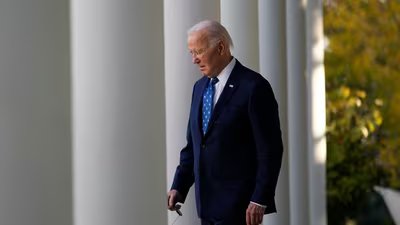
In a world overflowing with technical surveillance and information-theft opportunities, it seems a tad unrealistic that China would resort to an attention-getting, easy-to-expose honey-trap for Mr. Huang. After all, Mr. Huang was already a noisy and completely open advocate of selling China all the advanced Nvidia chips it wants, despite resistance from both the Biden and Trump administrations.
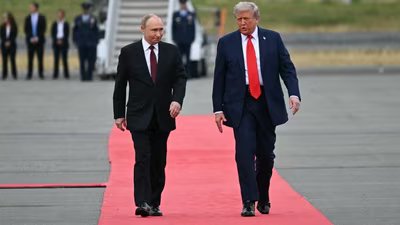
One lesson, though, maybe hasn’t been learned well enough, even despite the education that Vladimir Putin’s Russia has put us through. Much of what authoritarian states consider worthwhile intelligence activity has nothing to do with information-gathering. It has nothing to do with recruiting agents. It has everything to do with sowing social-media and news-media confusion, exploiting our algorithmically compliant publics and politicians to create turmoil in Western societies.
AI technology has exited the barn irretrievably, rendering many flavors of AI doom academic. The job of humanity is to keep stepping forward with all the care and foresight it can muster in the name of civilization, which at last report is known to exist on one planet. Mr. Trump and Nvidia’s board may well decide the next job is saving Mr. Huang’s CEOship. Unfortunately he doesn’t have an Al Gore on his board. Mr. Gore, at a crucial moment, intervened with a whitewash report in late 2006 to save Apple’s Steve Jobs from the options-backdating furor then taking down many less-protected or more-dispensable CEOs.
The U.S. press is in full-tilt hysteria. Congressional members of both parties clamor for a chance to bank TikTok-ready clips of themselves grilling Mr. Huang about his connections to China and Mr. Trump, as if this would somehow advance U.S. national interests. Don’t overlook the possibility that China’s government, whatever it intended when starting out, will consider this a useful outcome from its Jensen Huang caper.