Got story updates? Submit your updates here. ›
 China’s new drone carrier technology could shift the balance of power in the Pacific, raising concerns about regional tensions and the future of naval warfare.Today in Miami
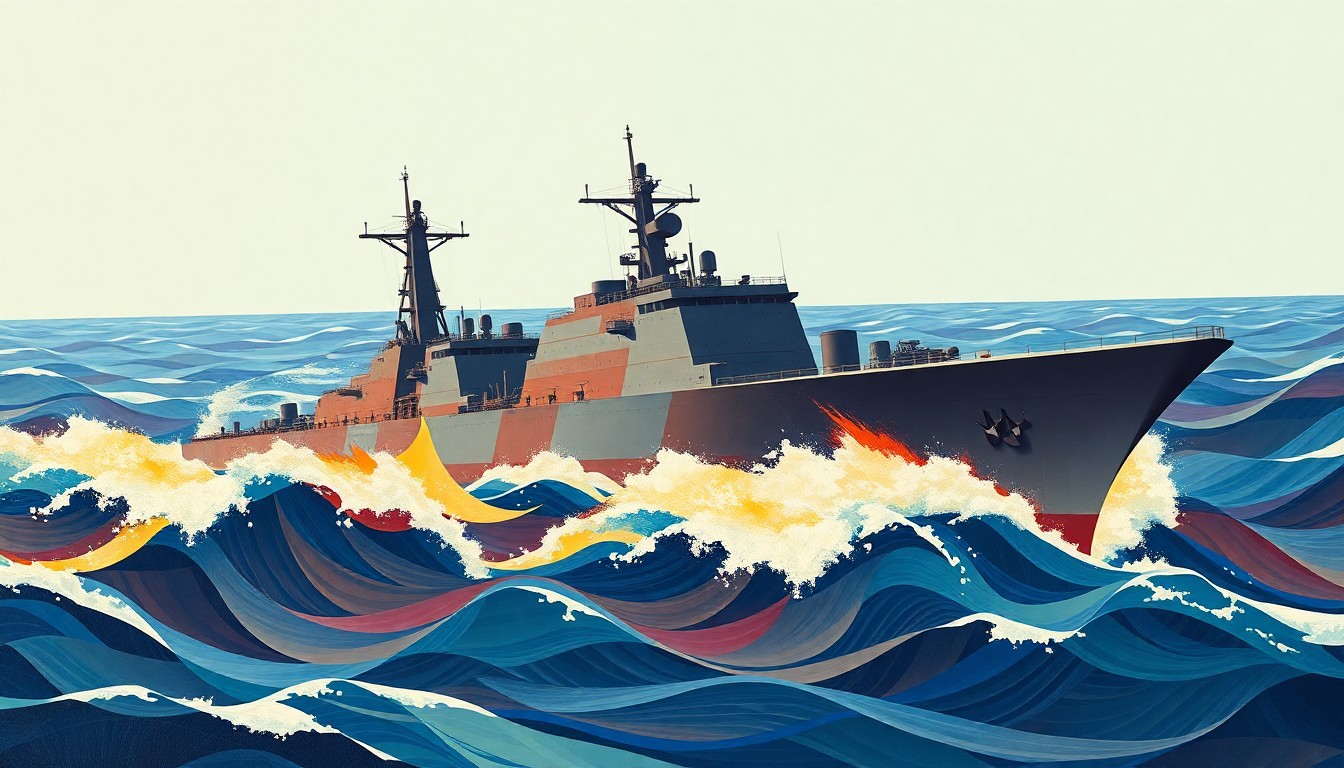
China’s new ‘drone carrier’, the Type 076, has completed its second sea trial, marking a major milestone in the development of this innovative naval vessel. Experts warn that this hybrid amphibious assault ship, capable of deploying swarms of drones, could significantly alter the balance of power in the western Pacific and heighten regional tensions.
Why it matters
The Type 076 drone carrier represents a significant technological leap that could enhance China’s force projection and surveillance capabilities in disputed waters. This has raised concerns among neighboring countries, like Japan, about potential escalations in the region’s ongoing geopolitical rivalries.
The details
The Type 076 is a unique hybrid design that combines traditional amphibious assault capabilities with the emerging technology of unmanned aerial vehicles (UAVs). Equipped with a rapid electromagnetic catapult system, the carrier can efficiently launch and recover stealth drones, extending China’s reach and situational awareness far beyond its mainland. Experts warn this could bolster the People’s Liberation Army’s (PLA) ability to conduct operations in the ‘first island chain’ that rings the Chinese coast.
- The Type 076 has just completed its second round of sea trials, signaling its accelerated development timeline.
- China’s drone carrier program is seen as a key part of the PLA’s strategic modernization efforts in the western Pacific.
The players
James Rogers
Director of Cornell University’s Brooks Tech Policy Institute, NATO’s Country Director for the Full Spectrum Drone Warfare project, and advisor to the U.N. Security Council on high-tech weapons proliferation.
China’s People’s Liberation Army (PLA)
The armed forces of the People’s Republic of China, which are developing the Type 076 drone carrier as part of their strategic modernization efforts.
What they’re saying
“A carrier that can repeatedly launch drones through a rapid electromagnetic catapult—potentially including stealth drones—would afford China a greatly enhanced force deployment, force protection, and wider regional surveillance/strike capacity.”
— James Rogers, Director, Brooks Tech Policy Institute
What’s next
Cornell University’s Brooks Tech Policy Institute has offered to provide further insights and expert analysis on the implications of China’s drone carrier development, with dedicated television and audio studios available for media interviews.
The takeaway
The emergence of China’s Type 076 drone carrier highlights the evolving nature of naval warfare, with automation and unmanned systems playing an increasingly prominent role. While some view this as a defensive modernization, others are concerned it could escalate regional tensions and trigger an arms race in the western Pacific.