China’s Biggest Tech Players Are Piling Into the OpenClaw Gold Rush

The “lobster” craze in China has quickly turned into a corporate land grab.

Within weeks of OpenClaw gaining traction among developers and hobbyists, China’s internet giants began rolling out their own versions of the AI agent and integrations.

Tencent launched QClaw last week, a tool that integrates OpenClaw into WeChat’s vast ecosystem, China’s super app. Users can send a message directly to QClaw via WeChat, and the agent will immediately execute the task, Tencent said on its website.

TikTok owner ByteDance’s cloud unit, Volcano Engine, rolled out ArkClaw, a cloud-based version of OpenClaw accessible through a web browser. Alibaba also introduced JVS Claw, a mobile app designed to help users install and deploy OpenClaw more easily.

Xiaomi, a consumer electronics company, has launched a closed beta test of MiClaw, an AI agent that lets users control Xiaomi smartphones and smart home devices with single-sentence commands.

AI startups moved just as fast. Zhipu AI, Moonshot AI, and MiniMax have released large language models or frameworks built on top of OpenClaw. Shares of Zhipu AI and MiniMax surged 13 per cent and 22 per cent respectively last Tuesday, following the announcements of their OpenClaw tools.

It’s not just Chinese companies. Nvidia on Monday announced that it has created NemoClaw, an enterprise platform built on top of OpenClaw.

“It has a network guardrail, it has a privacy router, and as a result, we could protect and keep the claws from executing inside our company, and do it safely,” CEO Jensen Huang said during Nvidia’s 2026 GTC conference in San Jose on Monday.

“Every company in the world today needs to have an OpenClaw strategy, an agentic system strategy,” he added. “This is the new computer.”

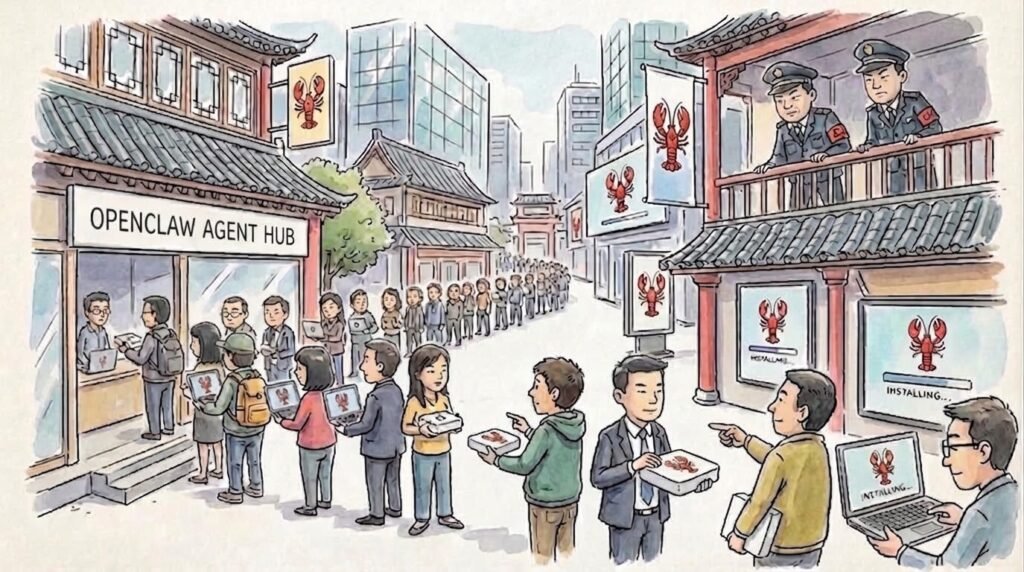
OpenClaw has taken China by storm. The trending phrase “raising the lobster” went viral, as Chinese social media users used it to describe deploying the AI agent to automate everyday tasks.

People across China also rushed to install OpenClaw on their devices, forming queues outside Tencent’s Shenzhen headquarters and Baidu’s Beijing office to seek help from engineers. Others turned to online marketplaces, paying strangers to install the tool for them.

The frenzy has since been tempered by growing security concerns. In the past week, some users have begun removing the software — in some cases, even paying others to uninstall it.

Earlier in February, China’s National Vulnerability Database, run by the Ministry of Industry and Information Technology, warned that the open-source agent could introduce security risks if not properly configured. Misconfigured deployments could leave systems exposed to cyberattacks or data breaches, it said.

Last week, Chinese government agencies and state-owned firms moved to curb the use of OpenClaw on work devices.

Do you have a story to share about tech in China? Contact this reporter at cmlee@businessinsider.com.




Source link

Visited 1 times, 1 visit(s) today

Related Article

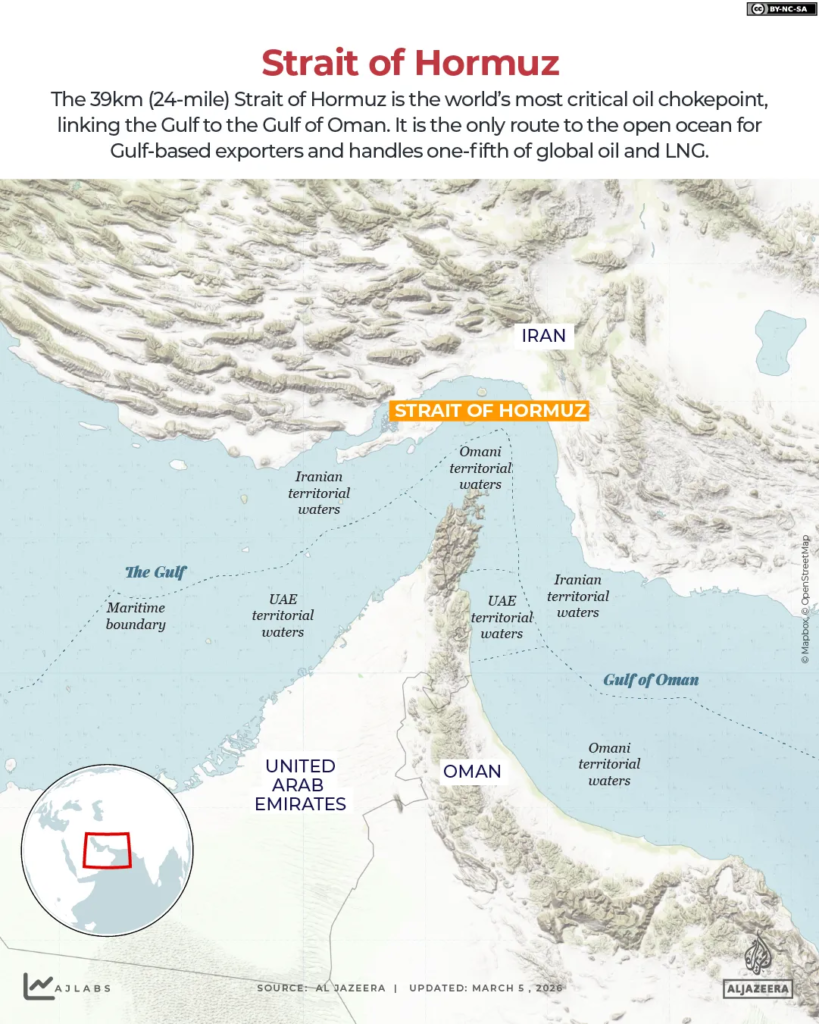
China Silent After Trump Asks Beijing for Help in Strait of Hormuz

China Silent After Trump Asks Beijing for Help in Strait of Hormuz

China has remained publicly silent after U.S. President Donald Trump on Monday urged Beijing to help reopen the Strait of Hormuz, the critical oil chokepoint that has been largely shut down during the escalating war with Iran. The standoff around the narrow waterway, through which roughly 20% of the world’s oil supply normally passes, has

China's Hua Hong advances 7nm chip technology as AI semiconductor race intensifies — TradingView News

China’s Hua Hong advances 7nm chip technology as AI semiconductor race intensifies — TradingView News

China’s semiconductor ambitions could be edging forward as Hua Hong Semiconductor (HHUSF) works to develop more advanced chip manufacturing capabilities that may support artificial intelligence processors. People familiar with the matter said the company’s contract manufacturing unit, Huali Microelectronics, is preparing a 7-nanometre chipmaking process at its Shanghai plant, a step that could make it

'China-maxxing' social media trend has mixed public reception

‘China-maxxing’ social media trend has mixed public reception

IE 11 is not supported. For an optimal experience visit our site on another browser. Now Playing ‘China-maxxing’ social media trend has mixed public reception 02:43 UP NEXT Closing arguments read in social media addiction trial 02:16 Google sued over Gemini’s alleged role in man’s suicide 04:55 Burger King releases taste test video after clip

NATO allies, China so far refuse Trump’s demand to police Hormuz : NPR

A shirt is seen hanging Sunday amid the rubble in the Beryanak District in Tehran, Iran, after it was damaged by missile attacks two days before. Altaf Qadri/AP hide caption toggle caption Altaf Qadri/AP With the Iran war entering a third week, Israel said it has war plans for another three weeks, while President Trump

NDTV Editor-in-Chief Rahul Kanwal and Fareed Zakaria

Fareed Zakaria On 2 Lessons China Took Home In Seeing US Go To War Again

New Delhi: The images from the war in the Middle East are being watched carefully in Beijing not with alarm, but with calculation. They are seeing the precision strikes, carrier groups, and the sheer scale of American firepower deployed halfway across the world. This assessment of China’s place in the world today amid the US-Iran

RoadSigns

China Warns Latest Tariff Moves Could Damage Trade Ties

Donald Trump and Xi Jinping shake hands as they leave after their talks in Busan, South Korea, on Oct. 30, 2025. (Andrew Harnik/Getty Images) March 16, 2026 12:44 PM, EDT PARIS — China warned March 16 that U.S. President Donald Trump’s latest tariff moves could harm the countries’ trade relationship, at the end of high-level talks in

Chengdu J-20 chinese stealth fighter jet

Chinese warplanes return to skies near Taiwan after rare pause

Sign up for our newsletter and get our latest content in your inbox. Subscribe Since the 27th of February, Chinese military flights near Taiwan’s air defence identification zone (ADIZ) has been unusually low. The activity may be starting to pick back up now, although the trend is still emerging. Chinese military flights near Taiwan increase

TOPSHOT - Children play around an unexploded missile that landed in an open field on the outskirts of Qamishli, eastern Syria, on March 5, 2026. Gulf countries have been targeted by repeated waves of Iranian drone and missile attacks in retaliation for the massive US-Israeli air campaign. (Photo by Delil SOULEIMAN / AFP via Getty Images)

China Warns Trump’s Latest Tariff Moves Could Damage Trade Ties

PARIS (AP) — China warned Monday that U.S. President Donald Trump’s latest tariff moves could harm the countries’ trade relationship, at the end of high-level talks in Paris. Li Chenggang, China’s international trade representative, said the Chinese side had expressed serious concern about trade investigations into manufacturing in foreign countries that the Trump administration launched

China Signals Openness to Buying More US Ag Products

China Signals Openness to Buying More US Ag Products

Reuters’ David Lawder reported that “top ​U.S. and Chinese economic officials held ‘remarkably stable’ talks in Paris on Sunday that touched on potential areas ‌of agreement in agriculture, critical minerals and managed trade for U.S. President Donald Trump and Chinese President Xi Jinping to consider in Beijing, two sources familiar with the talks said.” “The

image1.jpeg

Super Vision Technology’s i-NYS Implantable Device Approved in China, Breaking the Treatment Barrier for Congenital Nystagmus

NEW YORK, March 16, 2026 (GLOBE NEWSWIRE) — A groundbreaking advancement in ophthalmology has been achieved as Super Vision Technology announced that its i-NYS (Extraocular Neuromuscular Stimulator Implant), the world’s first implantable treatment device for congenital nystagmus, has received market approval from the National Medical Products Administration (NMPA). The device has been officially authorized for

Neuracle Technology receives China’s NMPA clearance for BCI device

Neuracle Technology receives China’s NMPA clearance for BCI device

Neuracle’s BCI device is among technologies in development by Chinese companies seeking to enable control of devices using only thought. Credit: mi_viri / Shutterstock.com. Neuracle Technology has received marketing approval from China’s National Medical Products Administration (NMPA) for its invasive brain-computer interface (BCI) device. The approval applies to an implant designed for adult patients who

“China leads the way in C-UAS technology patent applications” – Unmanned airspace

“China leads the way in C-UAS technology patent applications” – Unmanned airspace

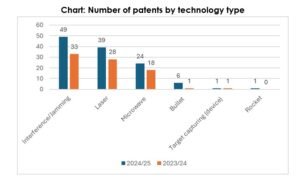
The number of patent applications for anti-drone (counter-UAV) technologies filed globally increased by 27% to 126 last year*, up from 99 the year before, according to new research from UK intellectual property (IP) law firm Mathys & Squire. “The sharp rise in patents filed reflects growing global demand for systems capable of disabling or neutralising

China is obsessed with OpenClaw

China is obsessed with OpenClaw

China is obsessed with OpenClaw, the platform for creating AI agents that can carry out tasks. Last week’s newsletter had a mention of consumers rushing to use it, but a week is a long time in technology and now we can update this to a craze. Major companies have released OpenClaw-related products, including: But OpenClaw

Trump suggests he may delay China trip as he pressures Beijing for help

Trump suggests he may delay China trip as he pressures Beijing for help

US President Donald Trump is suggesting he may delay his much-anticipated visit to China at the end of the month as he seeks to ramp up the pressure on Beijing to help reopen the Strait of Hormuz and calm oil prices that have soared during the Iran war. In an interview on Sunday with the

Latest and Breaking News on NDTV

The New AI Cold War? How US, China And Europe Are Redrawing Global Tech Power

Artificial intelligence has become the central battleground of global power. Governments are now competing not just in algorithms but across four strategic assets: Compute, chips, data and talent. The result is an emerging geopolitical map often described as the “AI Cold War” with the United States, China and Europe building competing ecosystems while middle powers

0
Would love your thoughts, please comment.x
()
x