For years, many in Washington and Silicon Valley believed the United States led in artificial intelligence, while China focused mainly on putting the technology to use rather than shaping its cutting edge. In her new book, The New Tech Titans of China, technology journalist Rebecca A. Fannin argues that this assumption no longer holds. The book tracks the rise of a new generation of Chinese entrepreneurs building competitive companies across AI, electric vehicles, robotics and advanced manufacturing—often outside the country’s best‑known tech giants. This adapted excerpt looks at the sudden emergence of DeepSeek, a startup whose rapid progress in 2025 forced U.S. executives and investors to rethink where AI innovation is coming from and how quickly the balance is shifting.

In early 2025, the sudden rise of Chinese AI startup DeepSeek rattled Silicon Valley’s high-tech sector for its efficiency and performance. DeepSeek’s breakthrough set off alarms about China’s technological sophistication and prospects that it could catch up with—or surpass—the U.S. in shaping the future of AI.
OpenAI CEO Sam Altman called DeepSeek an “impressive model.” Microsoft’s Satya Nadella admitted it was the first system he’d seen that could match up to OpenAI. Leading venture capitalist Marc Andreessen likened the launch of DeepSeek’s new model to AI’s “Sputnik moment”—the Soviet Union’s 1957 satellite launch and Earth orbit that spurred the space race. Nvidia’s CEO Jensen Huang, whose chips are central to the U.S.-China geopolitical tug-of-war, said he believes Chinese AI scientists are “not Chinese AI researchers, they’re world-class AI researchers.”
These comments framed China not as a fast follower but a peer or rival. Until DeepSeek burst on to the scene, the consensus among Western analysts was that China lagged in the AI race dominated by Microsoft, Google and Amazon. China lacked its own OpenAI.
“Chinese companies are very good at applying AI and developing models, but OpenAI and Google are the benchmarks,” said Paul Triolo, a partner and China technology lead at DGA Group in Washington, D.C. He pointed out that while China beats the U.S. in commercial applications of AI such as smart cities, facial recognition, robotaxis and automated factories, the U.S. holds the innovative edge.
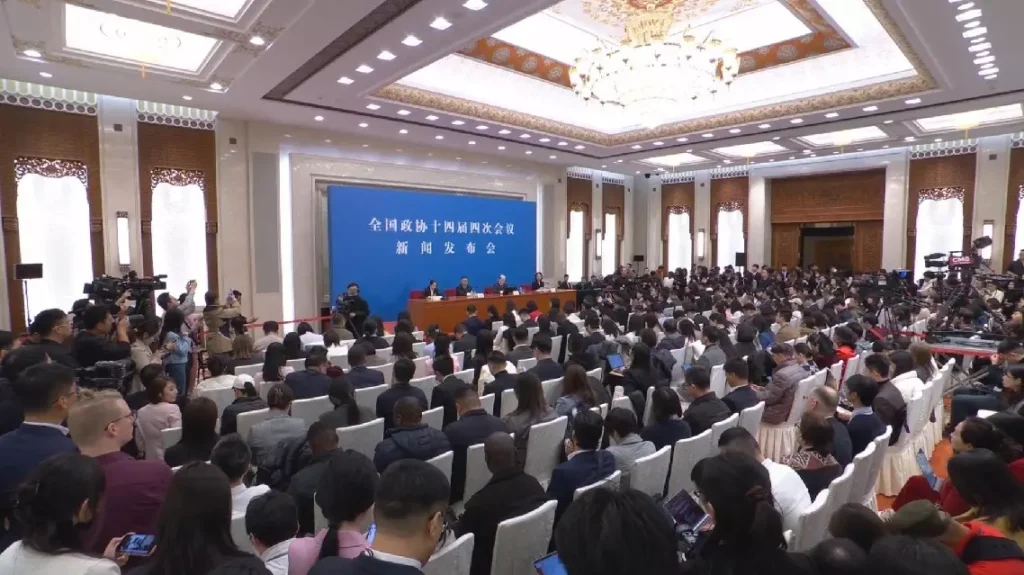
But with DeepSeek’s breakthrough, China is showing it can not only advance in AI but also lead in electric vehicles, batteries, drones, robots and more. In a telling moment that went viral, DeepSeek founder and math whiz Liang Wenfeng sat front row at the Great Hall of the People beside Jack Ma of Alibaba and Pony Ma of Tencent during President Xi Jinping’s 2025 tech summit—a striking signal that China’s next AI generation is being tapped to steer the country in the global tech race.
“Even in China, I think they were surprised that this little company—essentially a hedge fund that has GPUs [graphics processing units] and experience in quant trading—was able to build this model so quickly” and without venture capital, said Frank Yu, a former Microsoft China Research manager in Beijing who runs an agentic AI startup in New York.
The shock waves keep coming. In December, Meta snapped up Chinese-founded AI startup Manus for $2 billion, eyeing its powerful automation tech. Manus had already pulled in Benchmark, which led a $75 million investment last April along with prior investors Tencent and Chinese venture firms ZhenFund and HongShan (previously Sequoia China). Then in early January, Chinese AI startups Zhipu AI and MiniMax went public in Hong Kong, raising $560 million and $620 million respectively—though still shy of Anthropic-scale valuations.
Meta closed its $2 billion deal for Manus at the end of 2025 after the company was restructured months before to mitigate regulatory risks. Chinese ownership was cut, the company moved from Beijing to Singapore and founder/CEO Xiao Hong now leads a 100-person team reporting to Meta’s COO.
Alongside TikTok’s new U.S.-controlled joint venture, the deal hints at a thaw in U.S.–China tech tensions after nearly a decade of “splinternet” separation in AI and other sensitive sectors. Still, Washington in early 2025 tightened curbs on U.S. funding for Chinese AI, chip and quantum firms—while keeping export restrictions on advanced semiconductor chips in place.
AI Superpower Words
Few voices have been more prescient about China’s potential in AI than Kai-Fu Lee. An AI investor, former top executive at Google and Microsoft, and the author of AI Superpowers, Lee has been at the crossroads of Silicon Valley and Beijing for more than three decades. Early on, he argued that China “was the only true national counterweight to the U.S. in this important technology.”
Some in the West dismissed this notion. But DeepSeek’s rise— and more behind it—has given new weight to his long-held view.
Lee has often pointed out that, in this current age, data is today what oil was yesterday. And China, with its vast population, and ubiquitous mobile and digital systems, has an advantage with more data to fuel AI systems. He contends that China also benefits from having “a better set, a larger set of implementers or good AI engineers who get the work done, who make the algorithms run fast, and connect to business logic.” It’s a culture of pragmatism and speed. “The West,” he has said, “needs to revise its view of Chinese technology companies being copycats of Western products, and acknowledge that, in fact, in some categories, Chinese tech is best-in-class.”
Yet not even Lee, with years of experience in the global tech ecosystem, could have foreseen that a Chinese startup—not one spun out of Baidu, Alibaba or Tencent, but one from a quantitative hedge fund in Hangzhou—would so quickly shake up the AI world.
DeepSeek’s AI was faster, cheaper and cutting edge, using reinforcement learning to “think out loud” in steps toward an answer. An open-source platform let researchers explore its reasoning model and build on the startup’s cost-
efficient approach. Remarkably, DeepSeek claimed it could train models with just $5.6 million in computing power—far below the $100 million typically needed by U.S. rivals.
“DeepSeek forced everyone in the U.S. to recalculate the formula for an AI company. Now that DeepSeek has released how to duplicate it, we’re going to see a lot of other DeepSeeks not just in China, but in the U.S., Europe and Middle East,” predicted Yu, who has worked in both Beijing and New York as a tech founder and researcher.
Protecting its treasure, DeepSeek has advised employees not to travel overseas to safeguard confidential information and intellectual property, and has told headhunters not to approach staff. DeepSeek also has hired more Chinese engineers, who are choosing to stay in China rather than look to Silicon Valley for opportunities.
With China’s DeepSeek undercutting Silicon Valley on costs— and without taking VC money—U.S. investors started wondering if they’d overpaid. But the GenAI frenzy of 2023–24 had already blown the bubble sky-high: Microsoft sank $13 billion into OpenAI, Amazon dropped $8 billion on Anthropic and Elon Musk’s xAI raised $6 billion at a $50 billion valuation. In 2025 alone, Valley AI startups pulled in a record $150 billion, with OpenAI landing a $40 billion mega-round—and reports now peg Sequoia’s Anthropic deal at a staggering $350 billion valuation.
Signs of China’s catch-up are fast emerging. Of roughly 100 new tech unicorns in 2025, more than half were AI startups, according to CB Insights. The U.S. leads with about 160 of the world’s 370 AI unicorns, but China is close behind with 70 to 75, finds a Frost & Sullivan-affiliated research firm. Silicon Valley legend Mary Meeker notes that while the U.S. tops the charts with nearly 150 large-scale AI systems, China is close behind with around 100.
A lot is at stake. The global AI market is set to soar nearly 27 percent—from $376 billion in 2026 to $2.48 trillion by 2034— while GenAI is climbing even faster at 29 percent annually, jumping from $161 billion to $1.26 trillion, Fortune Business Insights predicts.
China’s AI surge is central to Xi Jinping’s push for global AI leadership by 2030, powered by state funding, university research, abundant data and rapid adoption across industry. “China will try to become as self-reliant in technology as possible,” said venture capitalist Gary Rieschel, founding managing director of Qiming Venture Partners. That includes semiconductors, manufacturing, AI and the application of AI, he added.
The U.S. is countering with a $500 billion AI investment blitz from OpenAI, SoftBank and Oracle—plus export controls on Nvidia chips and restrictions on Chinese AI firms. China, in turn, has tightened its grip on rare earths, vital for everything from smartphones to weapons.
China is racing ahead with a surge in R&D spending for scientific innovation, and may soon overtake the U.S. on that front, according to the Information Technology and Innovation Foundation in Washington, D.C. Additionally, China leads in AI research output and generative AI patent applications, with six of the top 10 GenAI patent holders based there (see tables, opposite). ITIF further notes, however, that the U.S. still edges China in AI citation impact and private-sector engagement. In the competition for talent, China accounts for nearly half of the world’s top AI researchers, up from one-third just three years ago, Paulson Institute’s think tank MacroPolo reports.

How China’s BAT Stack Up in AI
Chinese tech titans Baidu, Alibaba and Tencent are commercializing their own large language models and investing mega-billions in AI startups. Alibaba is pouring $53 billion over the next three years in artificial general intelligence, centered on its Qwen LLMs, geared for businesses with multiple languages and complex reasoning. Baidu, early in the game with its 2023 chatbot Ernie Bot, also is a pioneer in AI-driven transportation through its Apollo Go robotaxi fleet in China. Tencent’s Hunyuan targets gaming and social media, with more than $10 billion in AI investment in 2025.
ByteDance arrived on the AI scene with Doubao, its 2023 chatbot that hit 75 million users in China, and now powers apps for customer service, emotional support and text-to-video—backed by $20.6 billion in 2025 mainly for AI-related capital spending, and the bulk of that money planned for data and networking equipment.
China’s AI Hubs
Just as Silicon Valley is the tech capital of America, China has its own innovation hubs. Hangzhou, Alibaba’s base, is home to China’s “six little dragons”—fast-rising startups that span AI, robotics, brain-computer interfaces and gaming. This cluster of emerging companies leverage Alibaba’s startup culture while tapping into the talent at Zhejiang University.
In Beijing, Tsinghua University is a breeding ground for China’s leading AI startups, including four of the country’s “AI tigers.”
• Zhipu AI, formed in 2019 and a unicorn by 2024, was funded by Alibaba and Tencent, state-affiliated investors and HongShan, and became a Hong Kong public listed company in January.
• Baichuan AI, founded in Beijing by Wang Xiaochuan, the former CEO of Chinese search engine Sogou, pivoted to AI health care and has raised more than $1 billion in total funding, backed by Alibaba, Tencent and Xiaomi at unicorn levels.
• Moonshot AI, started in 2023 by leading AI researcher Yang Zhilin, builds LLMs that can process long inputs of data and text. Moonshot and its advanced chatbot Kimi have attracted approximately $2 billion, and latest funding in the Alibaba-backed chatbot valued the startup at $4.3 billion.
• MiniMax, founded in 2021, offers a text-to-video generation tool that is considered a competitor to OpenAI’s Sora. Backed by Alibaba and Tencent, the unicorn raised about $850 million by 2024, and recently went public. Its popular English-language app Talkie lets users converse with digital approximations of Elon Musk, Taylor Swift and even Trump.
Several other Chinese upstarts are worth following closely:
• Metaso, an AI startup in Shanghai funded by Lightspeed’s China affiliate, is modeled after Perplexity AI and provides conversational answers from web-based AI search.
• StepFun, founded in 2023 by a former Microsoft Research Asia scientist, is a contender thanks to its foundation models and backing from Tencent and the Shanghai government.
• ModelBest, a Tsinghua-originated AI startup, is focused on highly efficient, small language models.
• Manus AI, backed by U.S. VC Benchmark alongside Tencent and Chinese VC firms HongShan and ZhenFund, got on the map with a powerful AI agent that also caught Meta’s acquisitive eye.

The Face of China’s AI
Kai-Fu Lee, a longtime venture capitalist and tech executive, has become a leading figure in China’s AI surge. From his 200-person Beijing lab, he launched the generative AI startup 01.AI, having smartly stockpiled high-end chips before U.S. export rules blocked Chinese firms from accessing Nvidia’s most advanced hardware. Back in 2009, he founded Sinovation Ventures, betting that China could leap ahead in AI—and has since raised over $3 billion to back the country’s most promising startups. His team recently made waves with BeaGo, an AI-powered mobile search tool that pairs answers with images, redefining how users explore information.
At a recent Economic Club of New York event, Lee shared a far-out vision: he’s feeding his speeches, research and books into a generative AI robot. Modeled as a Kai-Fu Lee doppelgänger—with glasses and a full head of thick black hair—the robot could one day roam the globe, delivering his talks on cue.
Such creativity from China was once surprising. Today, it’s becoming almost expected. In this new AI era, the question is no longer if groundbreaking innovations will come—but where they will emerge next: a DeepSeek, an OpenAI or somewhere entirely unexpected.

From The New Tech Titans of China. Copyright ©2026 Rebecca A. Fannin. Reprinted by permission of John Murray Business.