That release was a fitting reminder to the world, especially during the peak of the Christmas holiday season, about Chinese AI companies’ sharpened focus on innovation to stay ahead in this fast-developing industry.
It was around this time last year when DeepSeek started to get widely noticed days after releasing its namesake large language model (LLM), DeepSeek-V3. Weeks later on January 20, reasoning model DeepSeek-R1 was released.
Do you have questions about the biggest topics and trends from around the world? Get the answers with SCMP Knowledge, our new platform of curated content with explainers, FAQs, analyses and infographics brought to you by our award-winning team.
The two models either surpassed or matched the performance of rival models across a range of industry benchmark tests. They were also built at a fraction of the cost and computing power that major US tech companies invest to build LLMs. The result: a massive sell-off on January 27 wiped out nearly US$1 trillion in tech stocks, including US$600 billion from Nvidia alone.
Analysts expected the momentum of Chinese AI companies to continue this year, thanks to Beijing’s policy support, improved funding prospects, greater adoption of AI systems across industries and a growing number of talent being recruited for innovative projects.
A domestic AI start-up’s co-founder, who declined to be identified, predicted that China would overtake the US to become “the world’s leading AI power in 2027”. China’s advantage was its deep talent pool, according to the co-founder.
In his New Year’s address, Chinese President Xi Jinping pointed out that the domestic market has “many large AI models competing in a race to the top”, while new breakthroughs were being achieved in domestic semiconductor development. All of that “has turned China into one of the economies with the fastest growing innovation capabilities”, Xi said.
DeepSeek founder and CEO Liang Wenfeng. Photo: Shutterstock alt=DeepSeek founder and CEO Liang Wenfeng. Photo: Shutterstock>
“China’s tech innovation is poised for policy-driven growth in 2026, with AI placed at the centre of the country’s economic agenda and industrial upgrading plans,” said Winston Ma, an adjunct professor at the New York University School of Law, with a focus on AI and the digital economy.
China currently has a strong AI bench of more than a dozen players developing powerful open models beyond DeepSeek, according to a report last month by Stanford University‘s DigiChina Project, which is under the school’s Centre for International Security and Cooperation, and its Institute for Human-Centered Artificial Intelligence, which compiles the annual AI Index report.
China’s open-source AI models may have already caught up or “even pulled ahead” of their US counterparts in capabilities and adoption, the report found.
Alibaba Cloud is the artificial intelligence and cloud computing services unit of Alibaba Group Holding. Photo: Shutterstock alt=Alibaba Cloud is the artificial intelligence and cloud computing services unit of Alibaba Group Holding. Photo: Shutterstock>
Facebook parent Meta Platforms, for example, was said to be using Alibaba Cloud’s open-source Qwen model as part of the training process for a new model code-named Avocado, which was expected to be released in the spring.
The report did not specify which Qwen model was being used by Meta.
Qwen is the world’s most popular series of open-source LLMs, with many US businesses using it to develop their own applications. Brian Chesky, co-founder and CEO of San Francisco-based Airbnb, said the company “relies heavily” on Alibaba’s Qwen models to power its AI-driven customer service agent.
An open secret within China’s provincial governments was that local cadres increasingly relied on AI tools to draft official documents and reports, according to the official Xinhua News Agency‘s report in September.
Zhang Yi, the founder and chief analyst at market consultancy iiMedia, said he was bullish about China’s AI prospects in 2026 as the technology’s development was “a national priority”.
China’s central economic work conference, which charts policies, and the country’s 15th five-year plan from 2026 to 2030, highlighted AI’s potential to transform and make more efficient China’s massive industrial and manufacturing industries, according to Zhang.
Meta Platforms is reportedly using Alibaba Cloud’s open-source Qwen model as part of the training process for a new model code-named Avocado. Photo: Shutterstock alt=Meta Platforms is reportedly using Alibaba Cloud’s open-source Qwen model as part of the training process for a new model code-named Avocado. Photo: Shutterstock>
Apart from chatbots, humanoid robots have become a major application for AI in China, where such implementation is called embodied AI.
Unitree Robotics founder Wang Xingxing in August predicted significant progress for these machines within three to five years because of AI, although he cautioned that it may take longer for humanoids to enter households because of ethical and safety concerns. “In the long run, the surge of humanoid robots this year could be just a small spark, akin to the birth of the internet many years ago,” he said.
In a research note published this week, analysts at China Merchants Securities projected humanoid robots to become the ultimate application for AI models.
Still, Wang reiterated his earlier assertion that the “ChatGPT moment” for China’s robotics industry had yet to arrive.
Other AI-powered devices, meanwhile, are also being promoted to consumers as Chinese innovation in this field continued to progress. On-device AI products – such as AI glasses and AI smartphones – are expected to thrive in the next few years, iiMedia’s Zhang said.
Alibaba in November launched its first AI glasses – the Quark AI Glasses, named after the company’s Quark AI assistant – in China in a bid to carve out a solid niche in the growing smart wearables market.
“AI glasses are the intelligent devices that truly usher in a revolution in human-computer interaction in the AI era,” Alibaba vice-president Wu Jia said at the product launch. “In this respect, their importance is no less than that of mobile phones.”
Alibaba Group Holding’s Quark AI Glasses are named after the company’s Quark AI assistant. Photo: Handout alt=Alibaba Group Holding’s Quark AI Glasses are named after the company’s Quark AI assistant. Photo: Handout>
ByteDance, meanwhile, triggered controversy with a test version of its agentic AI smartphone made in partnership with ZTE. The company said it had scaled back the capabilities of Doubao, the agentic AI that runs on the handset, after several of China’s most widely used apps restricted its voice-operated functions.
One challenge for a number of Chinese AI start-ups in 2026 would be generating profits as they transform their technology into usable products.
“A tipping point will emerge in 2026, as profitability becomes the key metric to measure an AI company,” iiMedia’s Zhang said.
After they complete their Hong Kong listing efforts, MiniMax and Zhipu AI are expected to show they can steadily make money to their investors, according to Zhang.
Moonshot AI, meanwhile, raised US$500 million in its recent Series C funding round, according to a report on Wednesday by the Chinese technology news outlet LatePost.
That fresh injection of capital pushed Moonshot AI’s valuation to US$4.3 billion, according to the report. With its financial war chest, Moonshot AI was “in no rush for an IPO in the short term”, founder and CEO Yang Zhilin said in an internal letter dated Wednesday.
China-founded Manus, an artificial intelligence agent specialist, now forms part of the operations of new owner Meta Platforms. Photo: Shutterstock alt=China-founded Manus, an artificial intelligence agent specialist, now forms part of the operations of new owner Meta Platforms. Photo: Shutterstock>
This week, Meta’s acquisition of China-founded AI agent specialist Manus for unspecified billions of dollars opened what some see as a “cash-out” route for AI entrepreneurs beyond the traditional IPO playbook, while continuing to push innovation under a large corporate parent.
“The overall sentiment has been positive and optimistic,” said Niu Zhangming, CEO of AI-driven biotech firm MindRank, adding that the deal could be a “significant boon for the ecosystem” by lifting confidence among entrepreneurs, investors and scientists.
Meta said in a statement that it was taking in Manus “to bring a leading agent to billions of people and unlock opportunities for businesses across our products”. It said Manus was already serving the daily needs of “millions of users and businesses worldwide”.
For Adam Tang, a 39‑year‑old software engineer in Beijing, the rapid expansion of AI capabilities has brought growing unease, as the pace of innovation has increased.
Tang’s employer, a multinational research facility in Beijing, has been encouraging the use of Cursor, an AI coding assistant popular among software developers, to improve productivity and save costs across the organisation.
He said the team he was on ranked staff monthly on the basis of who used Cursor at work more, an apparent effort to spur adoption of the AI coding tool that can turn natural language instructions into production-ready code in seconds.
Tang said his worry was that AI tools, such as Cursor, could render the role of software programmers obsolete in the not-so-remote future.
In a post on LinkedIn last month, Unitree sales manager Pedro Zheng invited people to “experience” the company’s “next-generation humanoids” at this year’s CES. Hangzhou-based Unitree showcased a variety of models, including humanoid and quadruped robots, at the show last year. These firms are poised to compete for attention at the show against other major
Tourists enjoy the lanterns at an ancient city scenic area in Huangyuan county of Xining, Northwest China’s Qinghai province on Jan 2, 2026. (PHOTO / XINHUA) China’s tourism market hit its first travel peak of the year during the three-day New Year holiday period starting Thursday, with a strong festive demand drawing both domestic and
LONDON, Jan 4 (Reuters) – The U.S. military’s ouster of Venezuelan President Nicolás Maduro is set to swiftly reroute the country’s oil exports back toward the United States – and away from China. That will give U.S. refiners an immediate boost, but President Donald Trump’s plans to revive production in the Latin American country may
China’s influence in Latin America may be significantly tested by the US revival of the Monroe Doctrine, as Washington’s attack on Venezuela is set to have a chilling effect on the region’s engagement with Beijing, analysts warn. In a surprise precision operation on Saturday, the US military struck Venezuela, captured its leader Nicolas Maduro and
MA XUEJING/CHINA DAILY Xingcheng, a relatively small coastal city in Northeast China, has made a mark for itself on the global map. Nearly one-third of the residents of this city of just over 500,000 people are engaged in the swimwear industry. In fact, the swimwear sector in Xingcheng churns out 170 million pieces of swimwear
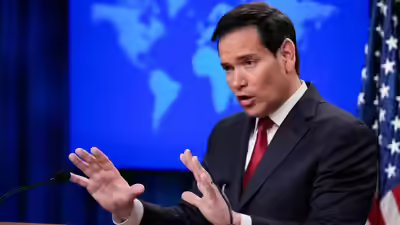
“This is western hemisphere. This is where we live” was the answer of US secretary of state Marco Rubio when asked what was the need to take over Venezuelan oil industry if the purpose of operation was to bring now deposed Venezuelan leader Nicolas Maduro to justice. Rubio in an interview to NBC news on
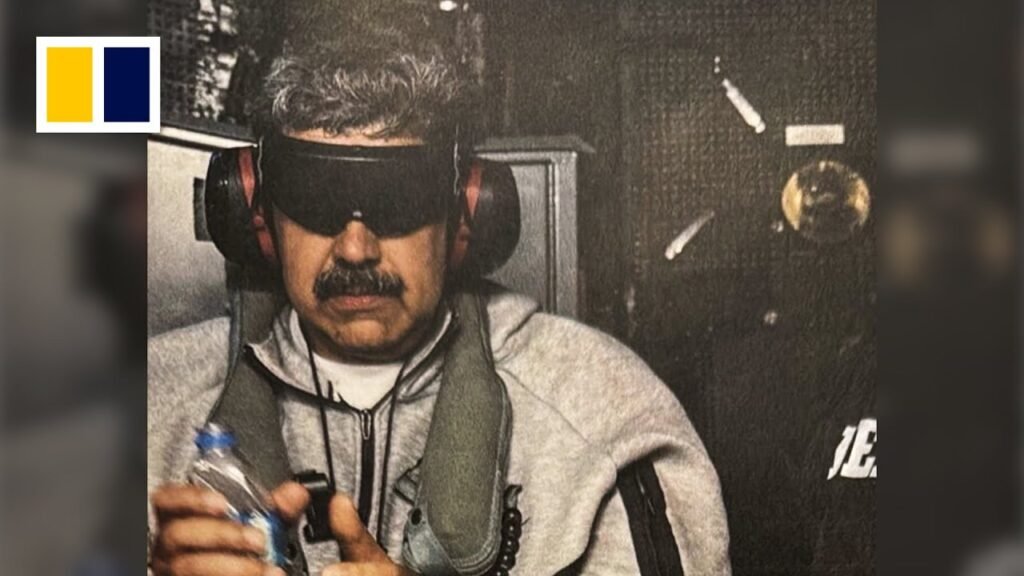
China will be patient and play the long game as it views the new geopolitical chessboard, recalibrating carefully in the wake of US President Donald Trump’s move on Saturday to decapitate Venezuela’s leadership, analysts said. In a daring predawn raid, US forces descended on ousted Venezuelan president Nicolas Maduro and airlifted him shackled and blindfolded
SHANGHAI, Jan 4 (Reuters) – South Korean President Lee Jae Myung began a state visit to China on Sunday, hoping to promote peace on the Korean Peninsula hours after rival North Korea launched ballistic missiles. The visit, Lee’s first to China since taking office in June, comes amid heightened global tensions after Pyongyang’s aggressive display,
The missile test comes as President Lee Jae Myung arrives in Beijing to meet his Chinese counterpart, Xi Jinping, their second in two months. Published On 4 Jan 20264 Jan 2026 Click here to share on social media share2 Share North Korea has launched multiple ballistic missiles off its east coast into the sea as
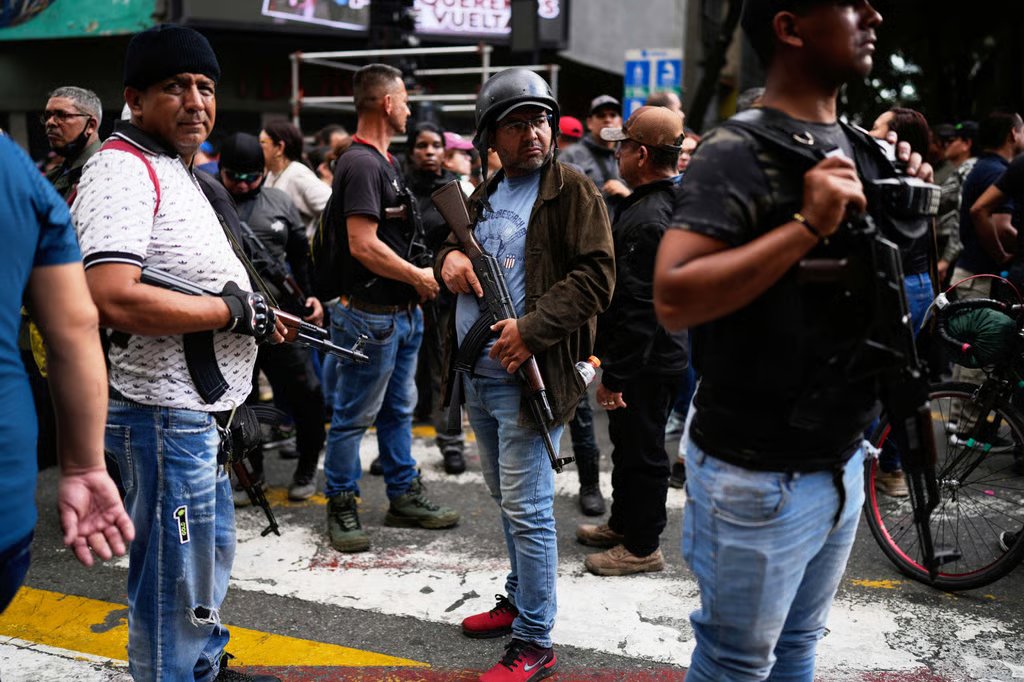
The United States launched military attacks on Venezuela on Saturday, capturing President Maduro and his wife, Cilia Flores. They were detained in New York after being flown out of Caracas. Hours after the operation, President Donald Trump said the US would run Venezuela until there was a “safe, proper and judicious” transition. 03:31 Trump pledges
Jan. 4, 2026, 4:00 a.m. ET As we head into a new week, let’s take a look at the news from this past week. A 33-year-old New Bedford woman was killed early New Year’s Day by a hit-and-run driver after exiting church on Acushnet Avenue. Bristol County District Attorney Thomas M. Quinn III announced that
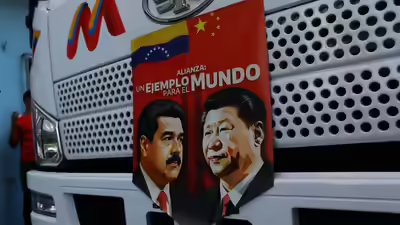
A banner on front end of a bus features images of Venezuelan President Nicolas Maduro and China’s Xi Jinping (Image credits: AP) China on Sunday demanded the release of Venezuelan President Nicolas Maduro and his wife after they were captured by US forces in a “large-scale strike.” Condemning Washington’s actions, China urged the US to
SHANGHAI/BEIJING: The U.S. attack on Venezuela will embolden China to strengthen its territorial claims over areas such as Taiwan and parts of the South China Sea but will not hasten any potential invasion of Taiwan, analysts said. Chinese President Xi Jinping‘s considerations about Taiwan and his timeline are separate from the situation in Latin America,
SEOUL South Korea‘s President Lee Jae Myung left for China on Sunday, eager to boost economic ties with Seoul’s largest trading partner while keeping a lid on potentially explosive issues such as Taiwan. Lee is the first South Korean leader to visit Beijing in six years and his four-day trip comes less than a week
North Korea launched multiple ballistic missiles toward its eastern waters Sunday, according to South Korean officials. The launches took place just hours before South Korea’s president left for China for talks expected to cover North Korea’s nuclear program. South Korea’s Joint Chiefs of Staff said in a statement it detected several ballistic missile launches from
Donald Trump said shortly after his action in Venezuela that it was “not going to be a problem” in terms of his relations with China because it would get more oil as a result. The reality is, of course, far more complicated than that. What you can be sure of is that, despite short-term costs
(Bloomberg) — China said it’s “deeply shocked” by the US’s military strikes on Venezuela and its capture of President Nicolas Maduro. China “strongly condemns the US’s blatant use of force against a sovereign state and action against its president,” a Foreign Ministry spokesperson said in a statement late Saturday. “Such hegemonic acts of the US
The more than US$2 billion acquisition of agentic AI start-up Manus by US social media giant Meta Platforms could face scrutiny from Beijing over technology export controls, experts warn. The sale of Manus, a Singapore-based but Chinese-founded AI agent developer, could raise compliance questions around Beijing’s technology export regime, and expectations that the company can
US President Donald Trump said on Saturday that the United States would maintain direct control of Venezuela to prevent “somebody else” taking it over after a military operation that captured President Nicolas Maduro, pledging to keep oil flowing to China even as Washington signalled it would manage the transition itself. Washington later confirmed that Maduro
Jan 3 (Reuters) – Following are reactions to Saturday’s U.S. strikes on Venezuela. FRENCH PRESIDENT EMMANUEL MACRON “The transition to come must be peaceful, democratic, and respectful of the will of the Venezuelan people. We hope that President Edmundo González Urrutia, elected in 2024, will be able to ensure this transition as quickly as possible,”