China reaffirms its territorial claims over Shaksgam Valley after India’s objections

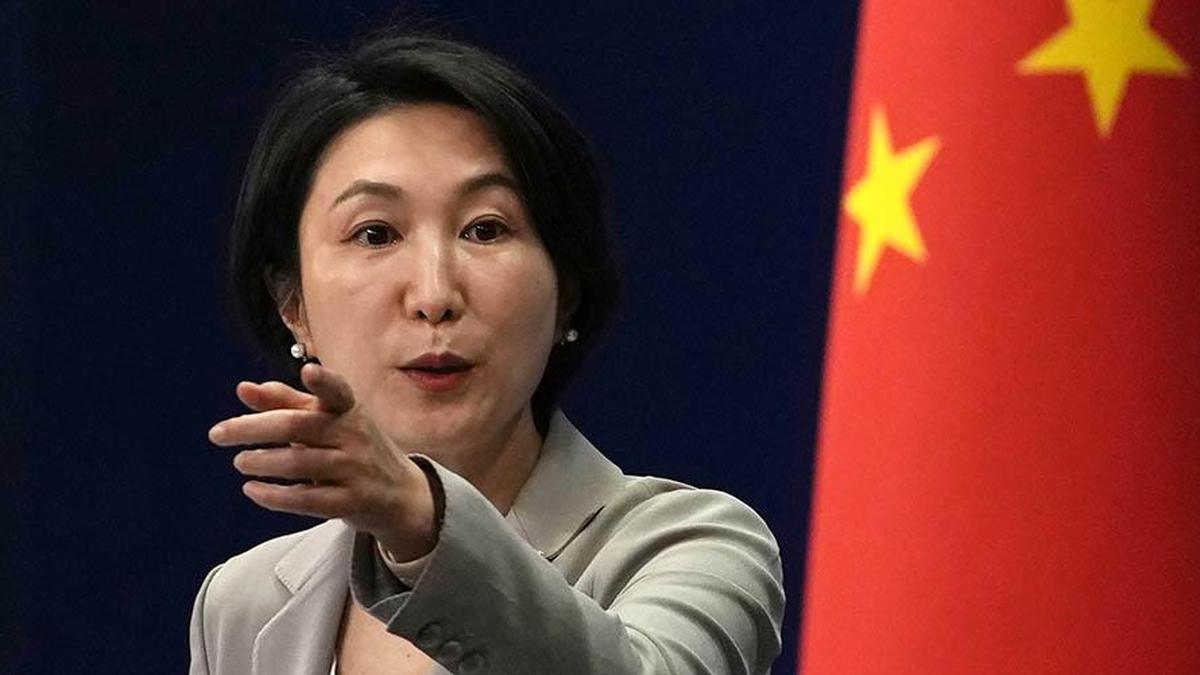
File photo of Chinese Foreign Ministry spokesperson Mao Ning

File photo of Chinese Foreign Ministry spokesperson Mao Ning
| Photo Credit: AP

China on Monday (January 12, 2026) reaffirmed its territorial claims over the Shaksgam Valley in the backdrop of India’s objections, stressing that the Chinese infrastructure projects in the area are “beyond reproach”.

India last Friday (January 9) criticised China’s infrastructure development projects in the Shaksgam Valley, saying it reserves the right to take necessary measures to safeguard its interests as it is an Indian territory.

Pakistan illegally ceded 5,180 sq km of Indian territory in the Shaksgam Valley to China in 1963 from areas illegally occupied by it.

Also read: The forgotten fact of China-Occupied Kashmir

“Shaksgam Valley is Indian territory. We have never recognised the so-called China-Pakistan ‘boundary agreement’ signed in 1963. We have consistently maintained that the agreement is illegal and invalid,” External Affairs Ministry spokesperson Randhir Jaiswal said.

“We also do not recognise the so-called China-Pakistan Economic Corridor, which passes through Indian territory that is under forcible and illegal occupation of Pakistan,” he said.

Mr. Jaiswal said that the entire Union Territories of Jammu and Kashmir and Ladakh are an integral and inalienable part of India. “This has been clearly conveyed to Pakistani and Chinese authorities several times,” he added.

Reacting to Mr. Jaiswal’s comments, Chinese Foreign Ministry spokesperson Mao Ning told a media briefing in Beijing that “the territory you mentioned belongs to China”.

“It’s fully justified for China to conduct infrastructure construction on its own territory. China and Pakistan in the 1960s signed a boundary agreement and delimited the boundary between the two countries, which is the right of China and Pakistan as sovereign countries,” she said.

On India’s criticism of the CPEC, Ms. Mao repeated Beijing’s narrative that it is an economic cooperation initiative, aimed at promoting local socioeconomic development and improving people’s livelihood.

“The China-Pakistan boundary agreement and CPEC do not affect China’s position on the Kashmir issue and the position remains unchanged,” she said.

China’s official stand on the Kashmir issue, as often reiterated by Beijing, is that “Jammu and Kashmir dispute is left over from history, and should be properly and peacefully resolved in accordance with the UN Charter, relevant U.N. Security Council resolutions and bilateral agreements”.

The 1963 agreement ceding the territory of Pakistan-occupied Kashmir (POK) was crucial for Pakistan and China as it provided a common boundary for them, which otherwise would have had no borders.

The agreement also has a clause that stipulates that after the settlement of Kashmir dispute between Pakistan and India, the sovereign authority will reopen negotiations with the government of China to sign a formal boundary treaty.

Source link

Visited 1 times, 1 visit(s) today

Related Article

Europe's door to Chinese tech investment is still ajar

Europe’s door to Chinese tech investment is still ajar

Europe has learned to block Chinese acquisitions of strategic assets. Chinese factories in Europe now pose harder economic security challenges. Europe has become more alert to the risks posed by Chinese foreign direct investment (FDI) in sensitive technologies. The 2010s were a European garage sale of high-tech firms to China, enabling Chinese investors to acquire

How Strait of Hormuz Acts as Backdrop for Chinese Support of Iran

How Strait of Hormuz Acts as Backdrop for Chinese Support of Iran

China has not been shy in decrying the actions of the United States and Israel in Iran, but its public sentiment is less about coming to Iran’s defense and more about preserving its own global stake—particularly as it relates to oil and energy resources. As Chinese President Xi Jinping is anticipated to meet with U.S.

Congo Modernizes CFCO with Satellite Technology in Partnership with China

Congo Modernizes CFCO with Satellite Technology in Partnership with China

The discussions focused on the integration of satellite communications and navigation systems, including the BeiDou Navigation Satellite System, to support the modernization of the CFCO. On February 28, 2026, in Brazzaville, Minister of Posts, Telecommunications, and the Digital Economy , Léon Juste Ibombo, received a Chinese delegation during the launch of rehabilitation works on the Congo-Ocean

Breaking News

Counter-terror police arrest three men on suspicion of spying for China

For free real time breaking news alerts sent straight to your inbox sign up to our breaking news emails Sign up to our free breaking news emails Sign up to our free breaking news emails Three men have been arrested for suspected breaches of the National Security Act, the Metropolitan Police say. The men were

China’s AI Breakthroughs Put US Tech Dominance at Risk: Book Excerpt

China’s AI Breakthroughs Put US Tech Dominance at Risk: Book Excerpt

For years, many in Washington and Silicon Valley believed the United States led in artificial intelligence, while China focused mainly on putting the technology to use rather than shaping its cutting edge. In her new book, The New Tech Titans of China, technology journalist Rebecca A. Fannin argues that this assumption no longer holds. The book tracks the rise of

Eileen Gu

Eileen Gu defends decision to compete for China over Team USA in statement

NEWYou can now listen to Fox News articles! Eileen Gu released a statement on social media Monday, reflecting on her controversial decision to compete for Team China despite being born and raised in the U.S.  Gu’s statement tied the decision back to her passion for promoting women’s sports, and encouraging young girls to pursue sports. 

share

Advance and green technology aims to power Chinese economy

China’s top leadership has unveiled a new push to turn advanced technologies into large-scale industrial priorities as part of the country’s upcoming 15th Five-Year Plan, which will guide economic and social development from 2026 to 2030. Officials say the plan is designed to move cutting-edge technologies out of laboratories and into factories, supply chains and

Experts react: How the world is responding to the US-Israeli war with Iran

Experts react: How the world is responding to the US-Israeli war with Iran

The US-Israeli war against Iran has now escalated into a regional conflict, and consequences are already extending far beyond the Middle East. After asking our Mideast experts to assess the impacts of the war for nearby countries, we’ve turned to our global network to send us dispatches on how leaders in Europe, Asia, North America,

The “Two Sessions” is a carefully choreographed annual meeting where the country’s leadership signals its priorities for the year ahead

China is about to show the world its plan to win the future

Beijing  —  China spent the last five years cultivating innovation and new technology at home. The next half decade will be dedicated to deploying the fruits of its labor to transform its economy – and its place in the world. That’s set to be an overarching message as thousands of delegates from across China gather

Macao riding tide of Greater Bay Area - Opinion

Macao riding tide of Greater Bay Area – Opinion

MA XUEJING/CHINA DAILY The 15th Five-Year Plan period (2026-30) represents a critical stage in which China will consolidate the substantial achievements of the 14th Five-Year Plan (2021-25), intensify efforts across the board, and largely realize socialist modernization. As Macao pursues its own economic diversification and actively integrates into the country”s overall development, a major challenge

ET logo

Trump’s Asian allies fear Iran war will sap defences against China

Japanese lawmakers reeling from attacks on Iran by the United States and Israel gathered on Monday at the ruling party’s offices in Tokyo to ​question bureaucrats about evacuation plans, energy stocks and the legal basis for ​U.S. action. But one query posed at the closed-door meeting, described to Reuters by a politician who attended, reflected

China’s 'ice-cold' calculus: Why Tehran can’t count on Beijing

Why China’s Support for Iran is More Rhetorical Than Real | World News

Despite Iran’s critical economic reliance on China, Beijing’s response to strikes on its leader was limited to verbal condemnation and calls for de-escalation. China prioritizes its broader economic interests and balanced regional ties over defending Tehran militarily, demonstrating a strategic calculus that favors diplomacy and deniability over direct intervention or security guarantees. When American and

0
Would love your thoughts, please comment.x
()
x