China has significantly expanded its global ocean mapping and monitoring activities, collecting data that could be used in future submarine warfare scenarios involving the United States and its allies.
We bring you stories from the ground. Your support keeps our team in the field.
According to Reuters on March 24, the large-scale effort spans the Pacific, Indian, and Arctic Oceans and involves dozens of research vessels and hundreds of deployed sensors. Experts cited by Reuters say the data being gathered—while officially described as scientific—could play a critical role in naval operations, particularly in underwater warfare.
Analysts and naval officials say the scale of China’s oceanographic research marks a shift in capability. “Frankly, the sheer scale of China’s naval research is impressive,” experts said, warning that such efforts could erode the long-standing advantage held by the US Navy in understanding the undersea battlespace.
China’s largest “silent” research vessel Dong Fang Hong 3 is leaving the Indian Ocean Region after a month long survey of the Ninety East Ridge – an underwater linear intraplate rise ideal for submarine operations pic.twitter.com/J8aEtBKY6G
— Damien Symon (@detresfa_) April 4, 2025
According to Reuters, one example of this activity is the research vessel Dong Fang Hong 3, operated by the Ocean University of China. Tracking data reviewed by Reuters shows the vessel conducted repeated missions near Taiwan, Guam, and key areas of the Indian Ocean between 2024 and 2025.
In October 2024, it tested sensors capable of identifying underwater objects near Japan, while in March 2025 it operated between Sri Lanka and Indonesia, covering approaches to the strategically important Malacca Strait.
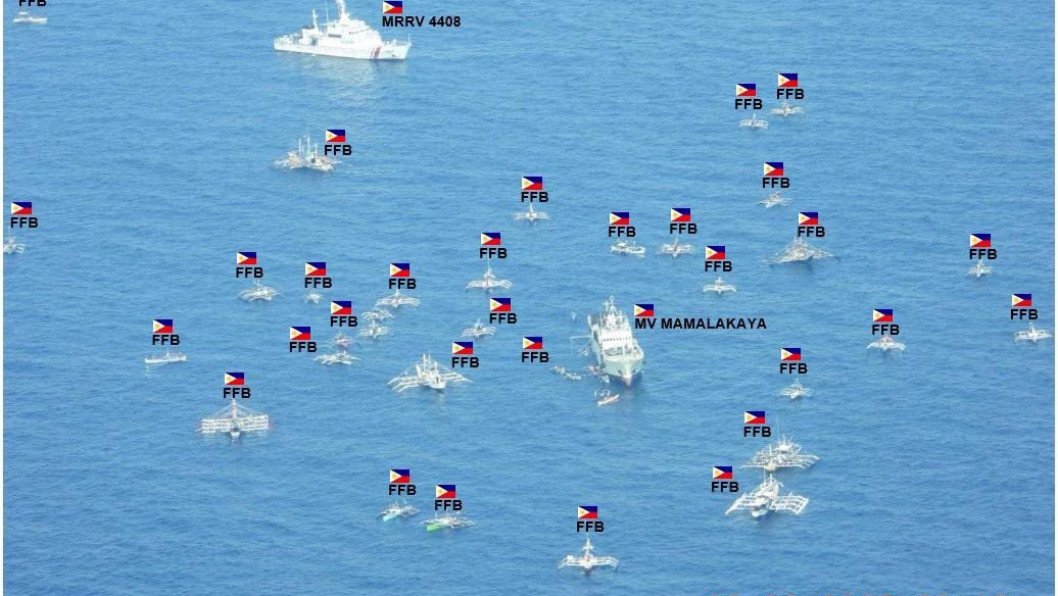
Reuters notes that at least eight Chinese vessels were directly involved in seabed mapping, while approximately ten others transported specialized equipment. Their operations have focused on areas near US military infrastructure, including waters around Guam, Hawaii, and Wake Island, as well as regions near the Philippines.
The data collected includes detailed information on seabed topography, water temperature, salinity, and ocean currents. Naval experts say such data is essential for submarine operations, enabling safer navigation, improved concealment, and more effective detection of adversary submarines.
“Any military submariner will go to great lengths to understand the environment in which they operate,” former Australian submarine commander Peter Scott told Reuters, emphasizing the operational value of such data.
Reuters further reports that China’s research program is part of a broader “civil-military fusion” strategy, where civilian scientific efforts are integrated with defense objectives. While some missions focus on resource exploration and fisheries, multiple experts cited by Reuters say the same datasets can be directly applied to military planning.
The agency also highlights China’s earlier “transparent ocean” initiative launched in the South China Sea, which involved deploying extensive sensor networks to monitor underwater conditions in real time.
Earlier, a Chinese Type 815 Dongdiao-class intelligence vessel was observed trailing joint United States and Australian naval exercises within the Philippines’ exclusive economic zone.
-7f54d6f9a1e9b10de9b3e7ee663a18d9.png)

Our reporters work on the frontlines to show what’s really happening in Ukraine. Your support helps them keep reporting.