China keeps Iranian oil moving through Hormuz as war reshapes trade

In early March, a Chinese-owned oil tanker moved through the Strait of Hormuz.

It was one of just three vessels to pass through the strait that day. Only one of them — carrying Iranian crude — is bound for China.

The transit is uneasy. The waterway, already one of the most sensitive in the world, has tightened under the pressure of the war in the Middle East.

The conflict, following US strikes under Donald Trump and involving Israel under Prime Minister Benjamin Netanyahu, has escalated, adding new pressure to already fragile global energy markets.

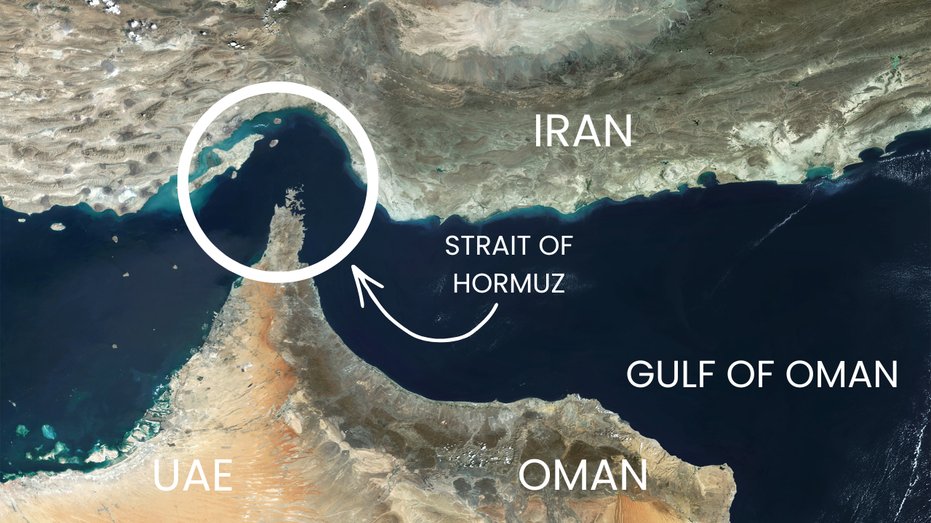
About 20 per cent of global oil supply normally passes through this narrow corridor, making any disruption immediately felt in global markets. For China, which imports the majority of its oil, much of it from the Gulf, the strait remains a critical artery.

Traffic has thinned, risks have sharpened, and each passage now carries calculation.

Since the conflict began, traffic through the strait has dropped sharply, with on average two laden tankers a day leaving the Gulf, down from around 30 before the war, according to Braemar Research, a shipping analytics firm that tracks global cargo movements.

Of the limited flows that remain, more than half originate in Iran, and a significant share is bound for China.

At that point, there is no guarantee of safety — only movement.

Then, last week, Tehran drew a line.

Iran’s Foreign Minister Abbas Araghchi said “friendly countries” — including China, India and Russia — can pass through a designated safe corridor.

It is framed as a logistical arrangement, but it does something more consequential. It names a category.

In doing so, it signals that this conflict is no longer only about military confrontation. It is beginning to sort the world by behaviour — and increasingly, by economic alignment.

Iran's Foreign Minister Abbas Araghchi

Iran’s Foreign Minister Abbas Araghchi says “friendly countries” — including China, India and Russia — can pass through a designated safe corridor. (Reuters: Pierre Albouy)

A line without alliances

The division taking shape is not formal. There are no treaties or declarations of alignment. But there is a visible separation between those enforcing pressure and those continuing to operate within its margins.

China sits at the centre of that space. It has not joined the confrontation, but neither has it stepped away from the economic relationship that sustains Iran.

That position has been consistent over time, but the war is giving it a sharper definition. Continuing to trade under heightened risk becomes a form of positioning, whether or not it is framed that way.

The language of “friendly countries” captures that shift. It reflects a move away from alliances built on ideology towards groupings shaped by conduct.

What underpins this relationship is not the war itself, but the conditions that existed before it.

Two men sit smiling in the back of a car with black leather seats

India and Russia were allowed by Iran to pass through a designated safe corridor.

  (Sputnik/Grigory Sysoev/Pool via Reuters)

Iran’s economy remains heavily dependent on oil exports. Under sanctions, the challenge has not been production, but access — finding buyers willing and able to absorb supply under constraint. Oil accounts for roughly 70 per cent of Iran’s export revenue, making continued sales critical to the state’s finances.

Beijing has filled that space. China is now the world’s largest crude oil importer, and Iran — though a discounted and often opaque supplier — remains a consistent part of that supply mix. Over time, a pattern has taken hold. As restrictions tightened, flows adapted rather than stopped.

In the weeks leading up to the conflict, Chinese buyers had been building reserves, increasing purchases and stockpiling Iranian crude ahead of sanctions pressure — a strategy that allows flows to continue even as risks rise.

Beijing has also built in buffers. Chinese buyers stockpiled Iranian crude ahead of sanctions pressure — reserves that allowed flows to continue even when shipments slowed or became politically exposed.

At the same time, China is accelerating its transition away from oil, expanding electric-vehicle production, and dominating solar manufacturing. The result is a system that reduces long-term dependence while preserving short-term supply.

By some estimates, more than 60 per cent of Iran’s seaborne crude exports now end up in China, often routed through intermediaries or relabelled as originating from other countries.

Shipments were redirected, transactions restructured, and volumes adjusted. What emerged was a system that could function under pressure, even if imperfectly.

This pattern has been visible for more than a decade, particularly after the tightening of US secondary sanctions in 2012 and again after 2018, when Iranian exports dropped sharply before gradually recovering through alternative channels.

The tanker moving through Hormuz sits within that system. Its passage is not an exception, but a continuation — now made more visible by conflict.

Loading

From transaction to signal

Iran’s announcement formalises a distinction that has largely been implicit.

It identifies countries not by what they declare, but by what they continue to do. Trade, in this context, becomes a marker. So does the decision not to enforce pressure beyond a certain point.

For China, this is consistent with its broader approach to external crises. It avoids direct confrontation, maintains access where possible, and adjusts its exposure in response to risk.

A similar pattern was visible after Russia invaded Ukraine, when China expanded trade with Moscow while avoiding actions that would trigger coordinated Western sanctions.

The difference now is clarity. In wartime, routine economic activity takes on political meaning.

Part of the alignment lies in how both countries manage constraints.

Each has developed mechanisms to withstand external pressure without altering its core political structure. Authority remains centralised, the state retains a strong role in economic coordination, and resilience is treated as an ongoing condition.

In China, this is anchored in the Communist Party’s control over political and economic systems; in Iran, it rests on a hybrid structure combining elected institutions with clerical authority under the supreme leader.

This does not produce identical systems. But it creates a shared understanding of how pressure operates and how it can be absorbed.

That understanding has allowed economic ties to persist even as the external environment has narrowed.

A point of divergence

That alignment in how both systems operate has its limits.

Iran’s system is grounded in religion. Political authority is tied to Shia Islamic doctrine, and that shapes both governance and identity.

China operates on a different basis. Its system is secular, and often cautious of religious authority when it intersects with political control.

This has been evident in Beijing’s policies toward Muslim minorities, which have drawn criticism from parts of the Islamic world, including at times from within Iran.

The gap is structural, but it has not proved decisive. Neither side treats it as a barrier to cooperation. Strategic considerations continue to take precedence over ideological differences.

There is, however, a constraint that shapes China’s position.

Its economic relationships extend far beyond Iran, and its integration into global markets remains central. That limits how far it can move, even when interests align.

China remains deeply tied to Western markets for trade, finance and technology, and has been careful to avoid becoming a direct target of coordinated sanctions.

The result is a calibrated posture. Engagement continues, but within boundaries that reduce exposure to wider retaliation.

This balance is not fixed. It is adjusted as risks shift, and the current conflict is one such moment.

The tankers passing through Hormuz carry more than oil. They reflect a relationship shaped by necessity, maintained through adaptation, and now tested under strain.

The corridor it moves through is not only physical, but political — a narrowing space in which certain countries continue to operate.

For now, the passage holds. What follows will depend on how long that balance can hold.

Loading…


Source link

Visited 1 times, 1 visit(s) today

Related Article

Thousands Of Travellers Stranded Around China Today As Beijing, Chengdu, Shenzhen, Shanghai, Guangzhou, And More Cancel 462 And Delay 5413 Flights, Grounding China Southern, China Eastern, Air China, Shenzhen Airlines, And Others

Thousands Of Travellers Stranded Around China Today As Beijing, Chengdu, Shenzhen, Shanghai, Guangzhou, And More Cancel 462 And Delay 5413 Flights, Grounding China Southern, China Eastern, Air China, Shenzhen Airlines, And Others

Home » Latest Travel News » Thousands Of Travellers Stranded Around China Today As Beijing, Chengdu, Shenzhen, Shanghai, Guangzhou, And More Cancel 462 And Delay 5413 Flights, Grounding China Southern, China Eastern, Air China, Shenzhen Airlines, And Others Published on March 31, 2026 Image generated with Ai Thousands of passengers were grounded in China today

Thousands Of Passengers Trapped Around Asia Today As Thailand, Japan, China, Hong Kong, South Korea, And Malaysia Cancel 470 And Delay 6,712 Flights, Disrupting AirAsia, Japan Airlines, Cathay Pacific, China Southern, And Other Airlines In Shenzhen, Shanghai, Tokyo, Bangkok, And More

Thousands Of Passengers Trapped Around Asia Today As Thailand, Japan, China, Hong Kong, South Korea, And Malaysia Cancel 470 And Delay 6,712 Flights, Disrupting AirAsia, Japan Airlines, Cathay Pacific, China Southern, And Other Airlines In Shenzhen, Shanghai, Tokyo, Bangkok, And More

Home » Latest Travel News » Thousands Of Passengers Trapped Around Asia Today As Thailand, Japan, China, Hong Kong, South Korea, And Malaysia Cancel 470 And Delay 6,712 Flights, Disrupting AirAsia, Japan Airlines, Cathay Pacific, China Southern, And Other Airlines In Shenzhen, Shanghai, Tokyo, Bangkok, And More Published on March 31, 2026 Image generated with

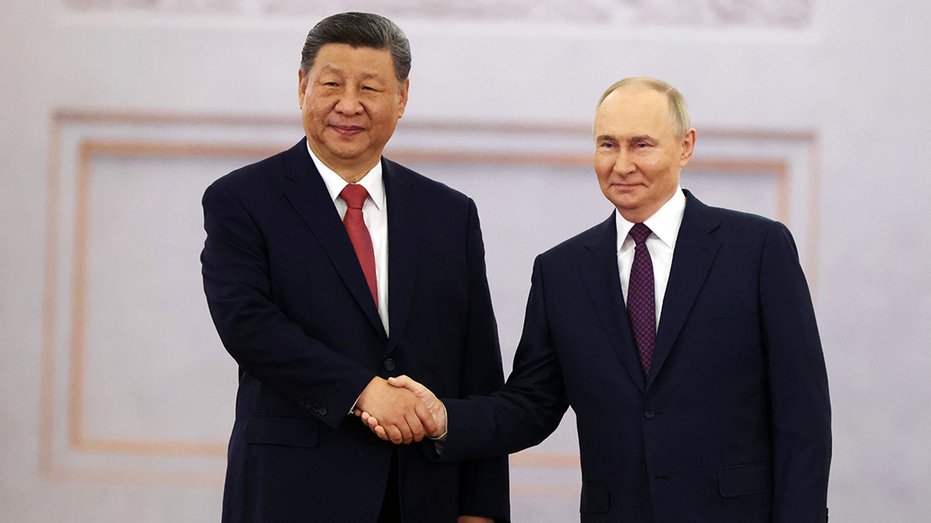
Xi Jinping and Vladimir Putin shaking hands

Analyst warns US could lose conflict if China’s Iran support goes unchecked

Gatestone Institute senior fellow Gordon Chang joins ‘Mornings with Maria’ to warn China’s support for Iran could escalate the conflict and raise risks of a broader global war ahead of President Donald Trump’s Beijing trip. The growing alignment between China, Russia, and Iran raises new concerns about the trajectory of the conflict in the Middle

Wondering where China’s cyber effort will go next? Just read the five-year plan

Wondering where China’s cyber effort will go next? Just read the five-year plan

Most cyber analysis begins with incidents. It should begin with intent. Adversaries sometimes declare strategic priorities, yet cyber incidents that align with them are not assessed accordingly. We should in fact be guarding against intrusions before they happen by taking note of foreign and industrial policies that indicate where they’re likely to concentrate. This methodology

China Sends Fuel to Struggling Southeast Asia Despite Export Ban

China Sends Fuel to Struggling Southeast Asia Despite Export Ban

Despite a ban on fuel exports from early this month, China has delivered cargoes of diesel and other fuels to Southeast Asia in recent days in a sign that Beijing seeks to alleviate the regional crisis and retain diplomatic leverage. Two weeks after the war in the Middle East began and after it became clear

A Mercedes Benz car showroom from the outside with large logo

German Firms Trapped Between US And China, Study Finds

Germany’s largest companies are deeply entangled with rival businesses in China and the US, and unable to escape either superpower, according to new research published today [30 March 2026] by the University of Sussex and King’s College London. While it is widely known that Germany is caught between the US and China, this new research

Toyota's China Problem Is Getting Harder To Ignore — TradingView News

Toyota Reports 2.3% Sales Drop as China Weakness Deepens — TradingView News

Toyota Motor Corp. TM is starting to show early signs of strain as February data points to softening demand in key markets, particularly China, where competition in electric vehicles continues to intensify. The company reported a 2.3% year-over-year decline in global sales to 806,905 units, with Toyota and Lexus brand sales in China falling 13.9%

Russia Sends Nuclear-Capable Tu-95 Bombers Toward Japan in Regional Power Play

China Reportedly Goes Submarine Hunting Near Okinawa, Japanese Fighters Scrambled — UNITED24 Media

Japan scrambled fighter jets after detecting a Chinese military aircraft operating over the East China Sea, with early assessments suggesting the platform may be a new or modified submarine-hunting variant. Japan’s Ministry of Defense reported on March 30 that an Air Self-Defense Force response was triggered after a Chinese patrol aircraft was spotted flying southwest of Okinawa on March 28. We bring you stories from the ground.

Toyota's China Problem Is Getting Harder To Ignore — TradingView News

Toyota’s China Problem Is Getting Harder To Ignore — TradingView News

Toyota Motor TM is starting to feel the heat, with February sales slipping 2.3% year over year to 806,905 units as pressure builds in China and demand softens at home. The biggest drag came from China, where Toyota and Lexus sales dropped 13.9%, while production fell 11.5%. The company partly blamed the shifting timing of

China Strategic Technology Group posts loss for year rmb463.4 million

USPACE Technology Group Ltd, formerly Hong Kong Aerospace Technology Group Ltd is an investment holding company mainly engaged in electronic manufacturing services (EMS) business. The Company operates its business through three segments. The EMS Business-Smart Home Device segment is principally engaged in the production of printed circuit board assemblies (PCBAs) and fully assembled electronic products,

China's expanding role in Central Asia: Economic dominance and geopolitical risks

China and Kyrgyzstan – stages of interaction

Editor’s note: Moses Becker is a special political commentator for News.Az. He holds a PhD in political science and specializes in interethnic and interreligious relations. The views expressed in this article are the author’s own and do not necessarily reflect the position of News.Az. As part of the former Soviet Union, the Kyrgyz SSR was

China launches Dongbi Index to challenge impact factor dominance

China launches Dongbi Index to challenge impact factor dominance

Image: Shutterstock.com/Ikkiae001 Chinese researchers have introduced a new methodology for evaluating medical and life science journals that moves beyond the traditional reliance on journal impact factors, in a development seen as part of wider efforts to strengthen the country’s “academic discourse power”. According to the South China Morning Post two new Dongbi Index journal lists

Pak offers to mediate between Iran and US after Gulf FMs meet, gets China’s support

Pak offers to mediate between Iran and US after Gulf FMs meet, gets China’s support

Pakistan said on Sunday (March 29, 2026) that it is ready to “host and facilitate meaningful talks” between the United States and Iran to bring an end to the month-long war that has destabilise the region. Outlining growing support for its peace efforts, including from the United Nations and China, Pakistan issued a statement after

Avatar of Adrian Leung

solid-state batteries may need 5–10 years to reach 1% market share

Ouyang Minggao said solid-state batteries may require 5 to 10 years to reach a 1% market share, adding a longer-term adoption estimate to his earlier comments on the technology’s rollout, according to China News Weekly. The estimate adds a market adoption timeline to earlier disclosures from the same event, which focused on vehicle-level deployment and

Hundreds of Travellers Abandoned across China as Airports of Shanghai, Beijing, Guangzhou, Shenzhen, Changsha and more Face 223 Flight Delays and 45 Cancellations, Impacting China Eastern, China Southern, Hainan Airlines, Air China and Several other Carriers, New Update

Hundreds of Travellers Abandoned across China as Airports of Shanghai, Beijing, Guangzhou, Shenzhen, Changsha and more Face 223 Flight Delays and 45 Cancellations, Impacting China Eastern, China Southern, Hainan Airlines, Air China and Several other Carriers, New Update

Home » Airlines News of China » Hundreds of Travellers Abandoned across China as Airports of Shanghai, Beijing, Guangzhou, Shenzhen, Changsha and more Face 223 Flight Delays and 45 Cancellations, Impacting China Eastern, China Southern, Hainan Airlines, Air China and Several other Carriers, New Update Published on March 30, 2026 Image generated with Ai The

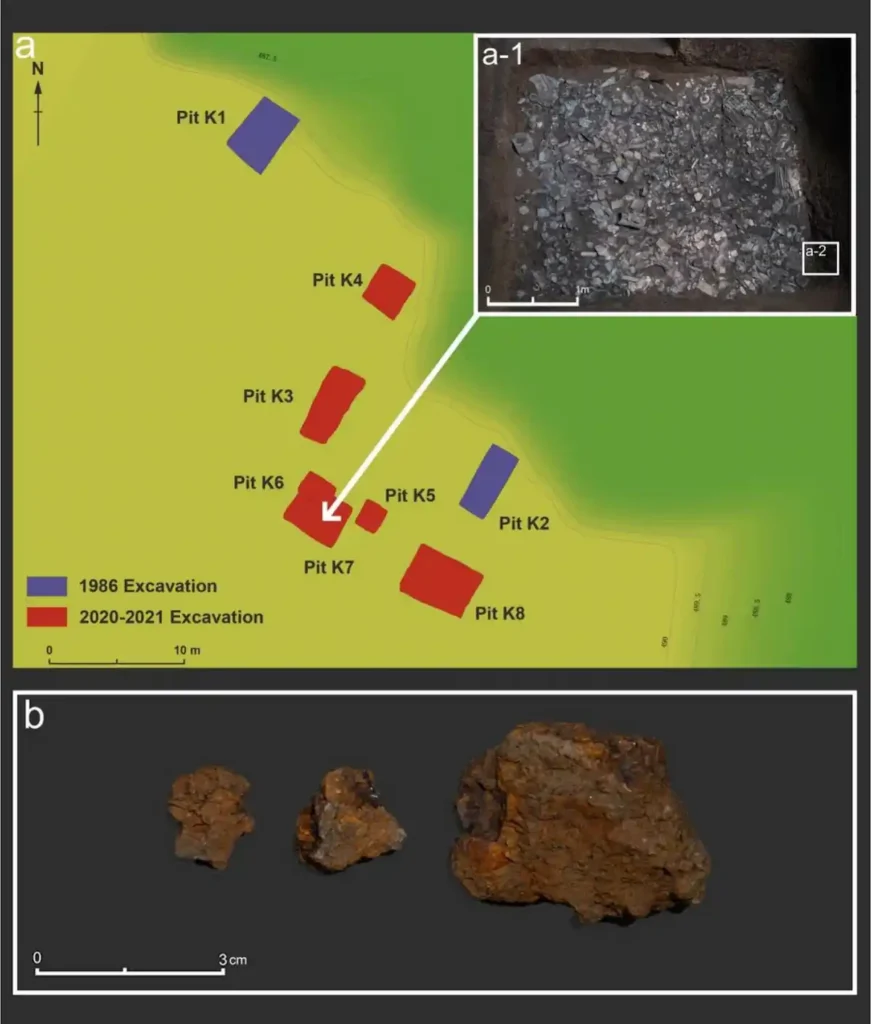
Provenance of the K7QW-TIE-1 artefact and associated fragments from Pit 7 at Sanxingdui. a-1. Top-down view of the artefact-bearing deposit in Pit 7; a-2. Relative location of K7QW-TIE-1 within the pit; b. The three detached fragments from K7QW-TIE-1, arranged from left to right as Fragment 1–3.  Credit: H. Li et al. 2026, Archaeological Research in Asia

A Discovery That Defies the Bronze Age: Unusual Metal Artifact Found in China May Have Extraterrestrial Origins

A groundbreaking archaeological discovery in southwestern China is reigniting global curiosity about ancient technologies—and even the possibility of materials originating beyond Earth. At the center of this debate is a mysterious metal object uncovered at the renowned Sanxingdui archaeological site, a location already famous for rewriting what historians know about early Chinese civilization. Now, this

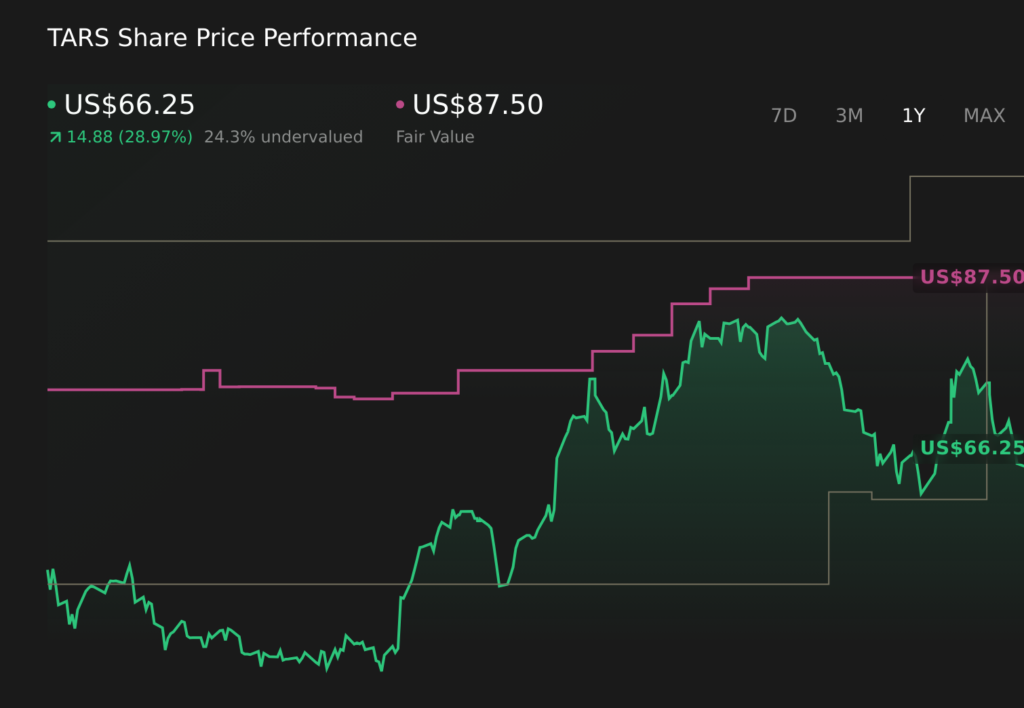
TARS 1-Year Stock Price Chart

How China TP-03 Approval and US$15 Million Milestone Could Shape Tarsus Pharmaceuticals (TARS) Investors

In March 2026, Tarsus Pharmaceuticals announced that its partner Grand Pharmaceutical Group secured National Medical Products Administration approval in China for TP-03 (XDEMVY) to treat Demodex blepharitis, triggering a US$15,000,000 milestone payment to Tarsus and confirming TP-03 as the first approved therapy addressing the disease’s root cause in Greater China. This approval not only validates

map of strait of hormuz

Chinese-linked ships turned back at Strait of Hormuz after IRGC Navy warning

Sen. Tommy Tuberville, R-Ala., discusses Iran allowing non-hostile ships to transit the Strait of Hormuz and Democrats’ continued opposition to I.C.E. funding on ‘The Evening Edit.’ At least three Chinese-linked vessels reportedly turned back abruptly after attempting to cross the Strait of Hormuz last Friday, signaling an unusual move in typically friendly Tehran‑Beijing relations amid

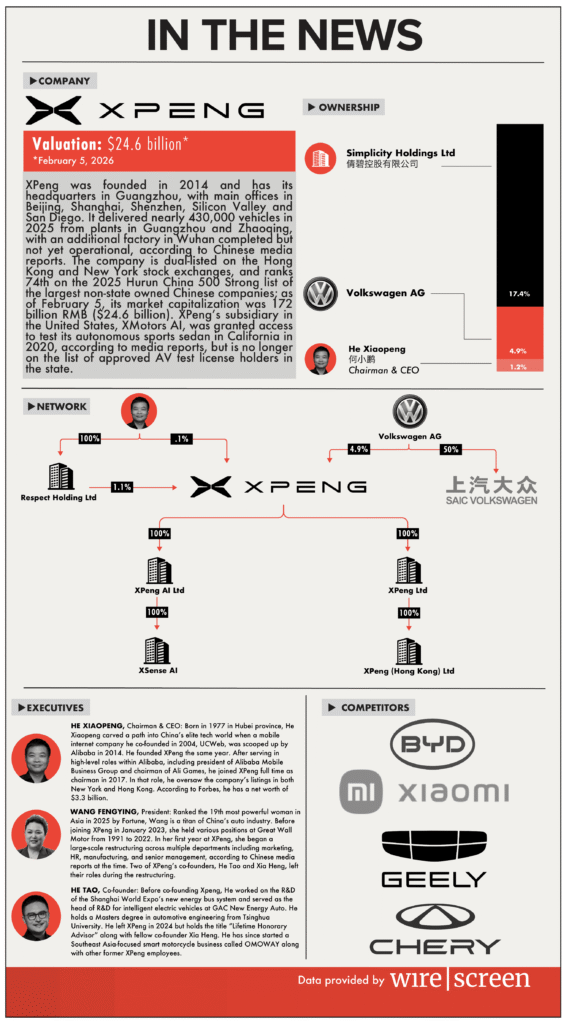
Company in the News: XPeng

Company in the News: XPeng

By Savannah Billman — March 29, 2026 Like the rest of China’s auto industry, XPeng, one of the country’s largest EV manufacturers, has struggled with falling sales prices amid stiff domestic competition. In response, it is seeking to boost earnings by expanding into AI systems in hardware such as robots and cars, known as physical

GAC Toyota launches bZ7 electric sedan with Huawei tech to boost China sales

GAC Toyota launches bZ7 electric sedan with Huawei tech to boost China sales

The Toyota bZ7, the second model developed primarily by a local Chinese team, starts at 147,800 yuan ($21,380) after limited-time incentives. The sedan features Huawei’s smart cockpit and Momenta’s autonomous driving assistance technology. (Toyota bZ7. Image credit: GAC Toyota) A Toyota joint venture in China has launched the new bZ7 pure electric sedan, seeking to

0
Would love your thoughts, please comment.x
()
x