China has expanded its fleet of air-cushion landing craft, including vessels derived from a design Ukraine once built for Beijing, according to Defense Express on April 5.
Defense Express, citing Naval News, reported that China’s known number of domestically built Type 728 variants has risen from two to at least five and possibly more.
The outlet noted that the buildup could be an indirect indicator of greater Chinese readiness for a possible amphibious operation against Taiwan.
We bring you stories from the ground. Your support keeps our team in the field.
The report recalled that one of Ukraine’s largest naval export deals involved four upgraded Zubr hovercraft for China under the Project 958 Bizon program.
The roughly $320 million contract, launched in 2008, called for two vessels to be built in Ukraine and two more to be assembled in China, with the first delivered in 2013 and the contract reportedly completed in 2021.
Naval News assessed that China could plausibly field 10 to 12 of the craft and still retain the capacity to build more, though Defense Express noted the publication did not disclose the sources behind that estimate.
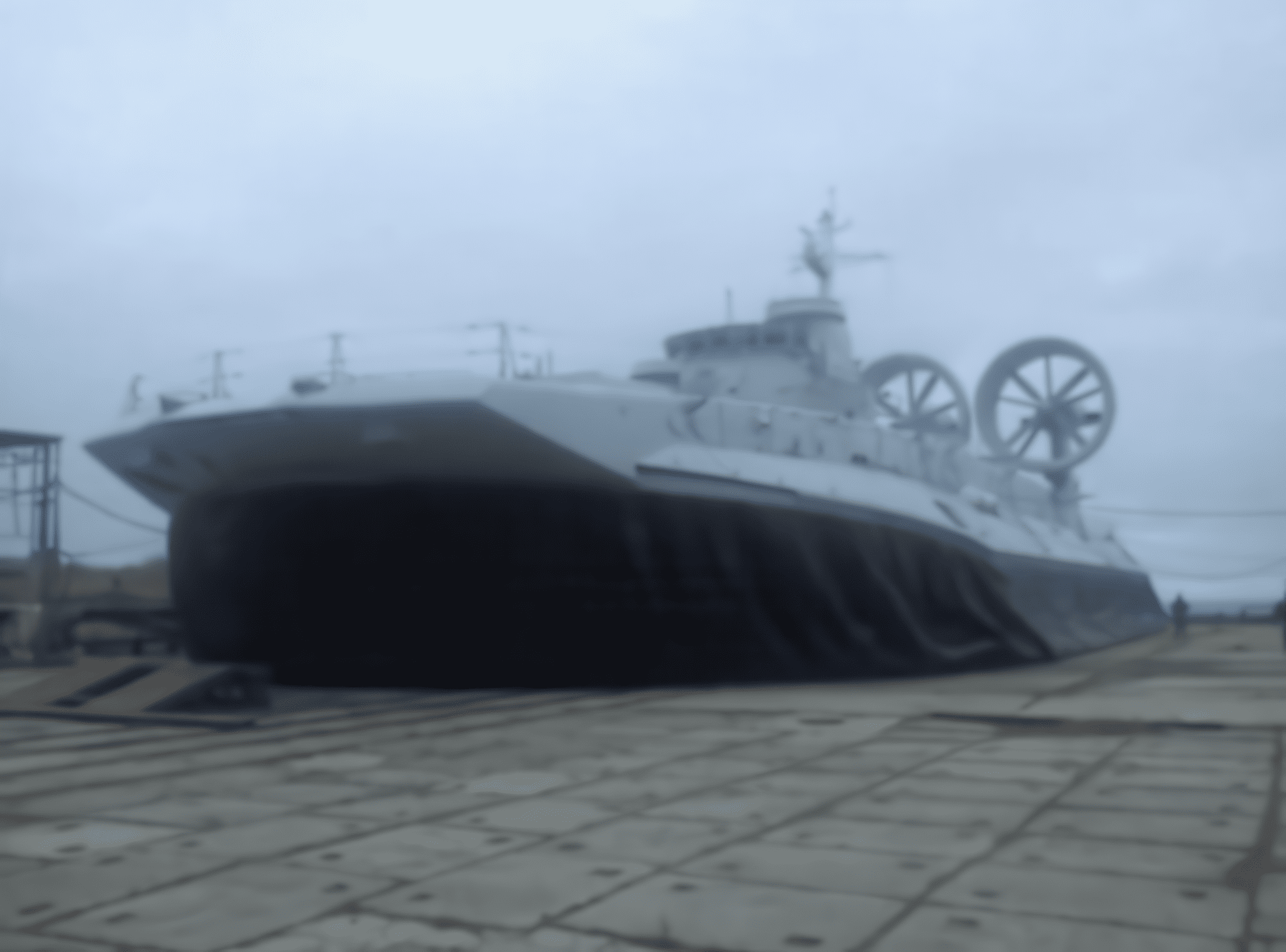
The piece also reported that China’s locally built version includes a radar station, an improved mast for communications equipment, and additional rescue gear.
The Zubr, originally developed as a heavy amphibious assault hovercraft, is designed to move troops, armored vehicles, and equipment directly onto poorly prepared coastlines at high speed.
The platform’s ability to operate over water, sand, marshland, ice, and undeveloped shorelines made it one of the most notable heavy hovercraft programs tied to Ukraine’s defense industry before Russia occupied Crimea in 2014.

That seizure cut Ukraine off from the More shipyard in Feodosia, the industrial base most closely linked to the Project 958 program, sharply reducing Kyiv’s ability to continue the line.
As a result, the Ukrainian Zubr’s legacy now rests less in active naval service than in its export value, technology transfer, and the role it played in helping China establish its own production capacity.
The development also reflects a wider Chinese push to shape the maritime environment for potential conflict.
China has expanded ocean-floor mapping and monitoring across the Pacific, Indian, and Arctic Oceans, in a campaign Reuters reported could support future submarine warfare involving the US and its allies. The effort has involved dozens of research vessels and hundreds of sensors gathering data officially described as scientific but seen by experts as militarily valuable.
Earlier missions highlighted the scope of the activity, including repeated operations by the research vessel Dong Fang Hong 3 near Taiwan, Guam, and the Indian Ocean between 2024 and 2025.
-9a7b3a98ed5c506e0b77a6663f5727c5.png)