Korea is being forced to rethink how it competes, cooperates and survives as China shifts from catching up to setting the rules
China Factor examines how China’s rise is redrawing the competitive map for Korea’s key industries, and what that means for the global supply chain order. This is the first installment. — Ed.
For decades, high-tech excellence has been the bedrock of South Korea’s export-reliant economy, with its semiconductors, smartphones and electronics recognized for their competitiveness.
But recent industry data reveals that dominance has been challenged.
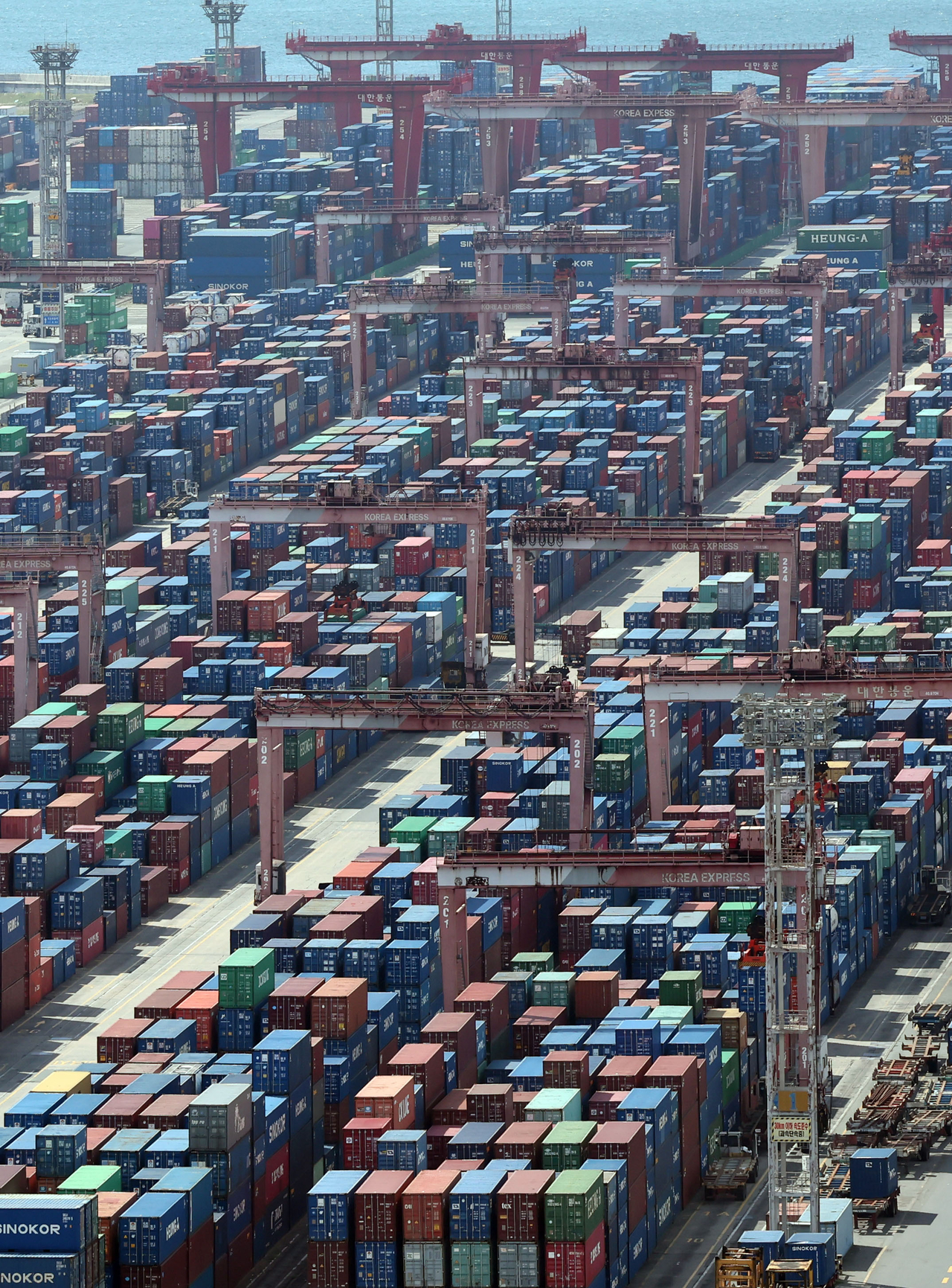
According to the Federation of Korean Industries in November, South Korean companies projected that China is on track to not only close the gap but potentially overtake Korea across 10 major export industries.
As of 2025, China is ahead of Korea in sectors such as steel, general machinery, secondary batteries, displays, automobiles and parts, achieving both price and scale dominance.
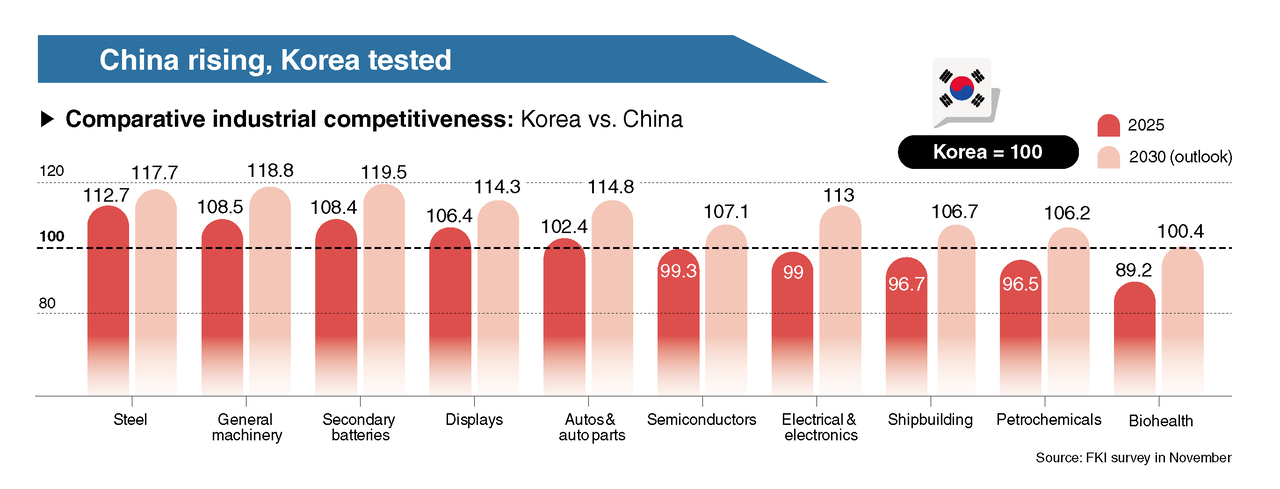
Though Korea remained slightly ahead in semiconductor, electronics, shipbuilding, petrochemicals, and petroleum products and bio-health in 2025, all sectors are expected to lag behind their Chinese rivals by 2030.
A separate report from the Korea International Trade Association in December found that between 2019 and 2024, China surpassed both Korea and Japan in four major sectors — machinery, chemicals, automobiles and steel.
Even semiconductors, long viewed as Korea’s impenetrable fortress, are no longer immune, observers say.
“China has been catching up in legacy products, and it is performing well in general-purpose and fabless products,” said Jin Furong, professor at Incheon National University with expertise in the Chinese economy.
“The only area where Korea maintains a clear edge is in memory chips, particularly HBM,” she said, adding that this explains why semiconductors account for most of Korea’s remaining trade surplus with China.
Catch-up to rule-setter: Beijing’s strategic shift
When China unveiled its “Made in China 2025” initiative in 2015, Beijing’s goal was largely about catching up, closing the gap with rivals and transforming the country’s manufacturing system from low-cost goods into a global technology powerhouse.
That ambitious industrial transformation intensified sharply after 2020. Escalating US-China trade tensions and technology restrictions spurred Beijing to pursue technological self-sufficiency and internalize the full value chain, from research and design to manufacturing and distribution.
Backed by unparalleled state support, including subsidies, tax breaks and investments, and a tightly guarded domestic ecosystem, Chinese companies used the country’s vast 1.4 billion-strong market as both a testing ground and a scaling engine. This allowed them to cut costs, refine products and iterate faster than foreign rivals.
As a result, Chinese companies are dominating key high-tech sectors. China’s BYD has passed Tesla as the largest electric vehicle maker by sales. CATL tops global market share for batteries, supplying major automakers. DJI commands roughly 70 percent of the global drone market. Huawei continues to dominate 5G network equipment despite US sanctions, while Baidu, Alibaba and Tencent remain formidable forces in China’s technology landscape.
What makes the current moment more consequential, experts say, is that China is no longer focused on self-sufficiency and catching up — as it has largely done that. Beijing has increasingly pivoted toward setting the rules of the game through initiatives described as “China Standards 2035.”
Chinese enterprises are now not only competing in 5G, AI and Internet of Things through competitive pricing and production volume, but by seeking to establish the technical frameworks and global norms themselves.
“The premise has already changed; it is no longer about whether China can catch up,” said Kim Heung-kyu, director of the US-China Policy Institute at Ajou University. “China is now seeking to define global standards in future industries.”
This change poses a fundamentally different threat to Korea: not simply losing market share, but risking marginalization in the supply chain and competitiveness in industries where whoever controls the standards wields lasting power.
Another key challenge lies in human resources.
In addition to capital and policy support, China’s technological advance has been fueled by its vast pool of-skilled engineers and scientists. China produces around 3.5 million to 4 million STEM graduates annually, far exceeding any other country, compared with about 140,000 in South Korea. Beijing has also actively encouraged the return of overseas researchers through state-backed incentives.
Contrastingly, Korea’s talent shortage in advanced industries is compounded by demographic challenges such as the lowest fertility rate among OECD countries and a rapidly aging workforce. Furthermore, Korea’s top students are increasingly opting for medical careers over science and engineering, drawn by higher income security and social status.
According to a December report by the Korea Chamber of Commerce and Industry, Korea is expected to face a shortage of at least 580,000 talented professionals in advanced technology, such as AI and big data, by 2029.
“The shortage of science and engineering talent stems not only from a shrinking school-age population caused by low birth rates, but also from a sharp decline in the inflow of highly skilled STEM professionals,” the report said.
“It is urgent to ease the concentration of students in medical schools, expand STEM talents, and also attract more overseas professionals.”
State investment a given, strategy is real test
The Lee Jae Myung administration has announced plans to pour billions of dollars into advanced industries, including semiconductor, battery and bio-technology, with a particular focus in artificial intelligence. Aiming to secure Korea’s place as a distant third in the global AI race led by the US and China, the government plans to develop AI infrastructure, sovereign AI models and national AI computing centers. It is also moving to relax regulations and expand tax incentives for advanced industries.
State investment is crucial, and given the scale of the challenge, effectively a given. The more difficult question lies in how those resources are used and how Seoul manages the strategic dilemma between Washington and Beijing.
In high-tech sectors, such as advanced semiconductors, batteries and next-generation vehicles, Korea has in recent years aligned itself with the US, becoming more deeply integrated in US-led supply chains as Washington tightens restrictions on China. Yet even as it draws closer to the US, Korea must carefully maintain its partnership with China, observers say.
“Cooperation with China remains indispensable. Korean companies need to penetrate more deeply into China’s domestic market,” said Jin.
She added that there is no alternative production base or market that can replace China’s well-established industrial ecosystem, price competitiveness and massive domestic demand.
“Even though China is rapidly catching up in technology, cooperation with China is still essential for Korea,” Jin said. “Collaboration with China can be expanded in areas such as consumer goods, services, tourism and health care.”
Kim believes Korea has little choice but to integrate more deeply into the US-led supply chains, where Korea’s manufacturing capabilities remain vital, amid heated competition with China. But he noted that this advantage may prove short- to medium-term.
“In the longer run, Korea must learn how to compete and cooperate within the Chinese market itself,” said Kim.
“The strategy should not just be about staying ahead of China, but about understanding China deeply enough to win within its hypercompetitive market, and collaborate with Chinese partners. That requires far deeper intelligence and understanding of China than Korea currently has.”
Kim added that upcoming summit between President Lee Jae Myung and Chinese President Xi Jinping should center on designing economic cooperation that gives Korea and other neighboring countries space to develop high-value industries alongside China.
sahn@heraldcorp.com