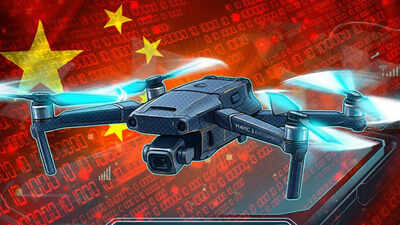
Beijing has passed sweeping new drone regulations that ban the sale, lease, and import of unmanned aerial vehicles and 17 designated “core components” to any individual or organisation without prior public security approval—part of a national crackdown that is fast making China one of the hardest places in the world to fly a drone.The rules, approved by Beijing’s municipal legislative body and reported by Chinese state news agency Xinhua via South China Morning Post, take effect May 1. Bringing new drones or components into Beijing will also be prohibited, with an exception only for verified owners carrying already-registered equipment.
Beijing’s drone rules are stricter than anywhere else in the country
The capital’s airspace was declared a full “restricted zone” in August last year, requiring pre-approval for all flights. The new regulation goes further—capping storage at three drones or ten core components per address within Beijing’s sixth ring road, an area roughly three times the size of Singapore. Sellers must flag suspicious transactions. Logistics providers face tighter inspection protocols. And anyone travelling into Beijing by any means will go through at least two baggage checks—one at departure, one on arrival.Existing drone owners have until April 30 to complete real-name registration and notify police of any change in their drone’s location, possession, or operational status. Violators get referred to police.
China wants a booming drone economy—but first, it’s clearing the skies
Officials frame the crackdown as necessary groundwork for China’s “low-altitude economy”—the government’s term for its commercial drone ambitions spanning food delivery, power line maintenance, and farming, all highlighted in the latest five-year plan. “Much like tidying the living room before hosting guests, we need to first put the airspace in order,” Li Mo, director of the Low-Altitude Economy Research Center at HKUST, told the New York Times.But the contradictions are hard to miss. China had over three million registered drones by end-2025, a 50 percent jump from 2024—and the industry is already feeling the squeeze. Drone dealers have reported sharp sales drops, and secondhand listings have surged online.
DJI, the world’s largest drone maker, is under pressure on two fronts
The global ripple effects are real. DJI, the Shenzhen-based company that dominates the world drone market, is simultaneously navigating a US ban on its new products—enacted in December on national security grounds—and a domestic market now hemmed in by regulation. DJI filed a lawsuit in February to challenge the American ban.Exceptions under the Beijing rules cover counterterrorism, emergency rescue, agriculture, education, and research—but each requires prior safety approval from public security authorities.