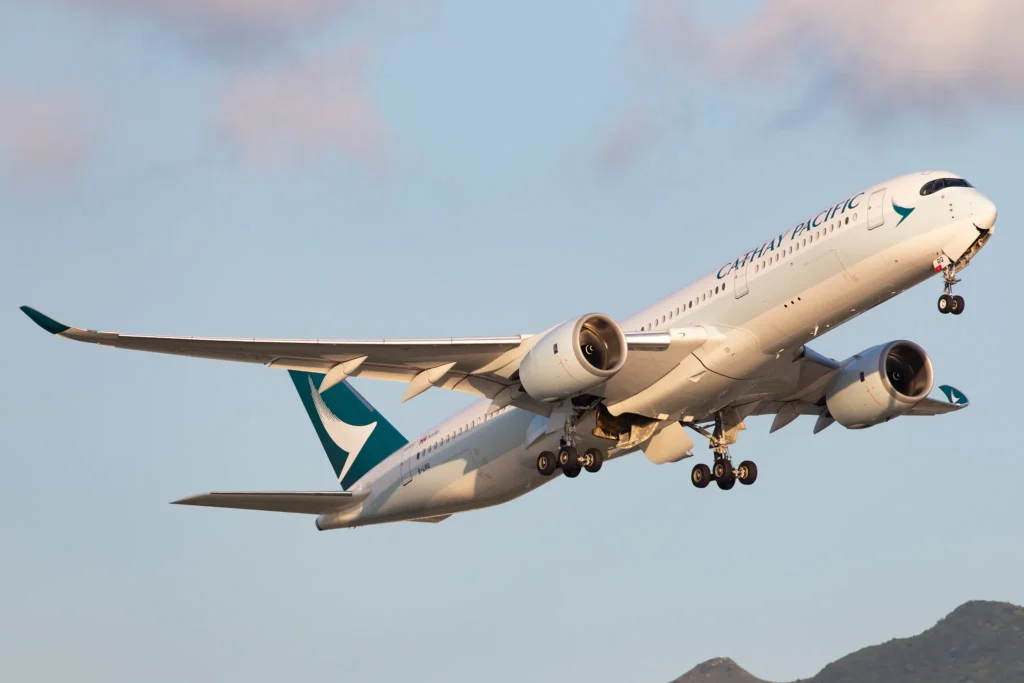
HONG KONG- Cathay Pacific (CX) grounded an Airbus A350-1000 after a tail strike occurred during a missed approach at Hong Kong International Airport (HKG). The aircraft, arriving from Ho Chi Minh City (SGN), entered a go-around after an unstable landing attempt and later landed safely on its second approach without injuries.
The jet has remained grounded for four days pending engineering inspection and repairs before it can return to commercial service. The event prompted operational review and renewed focus on tail-strike prevention technology and pilot training.
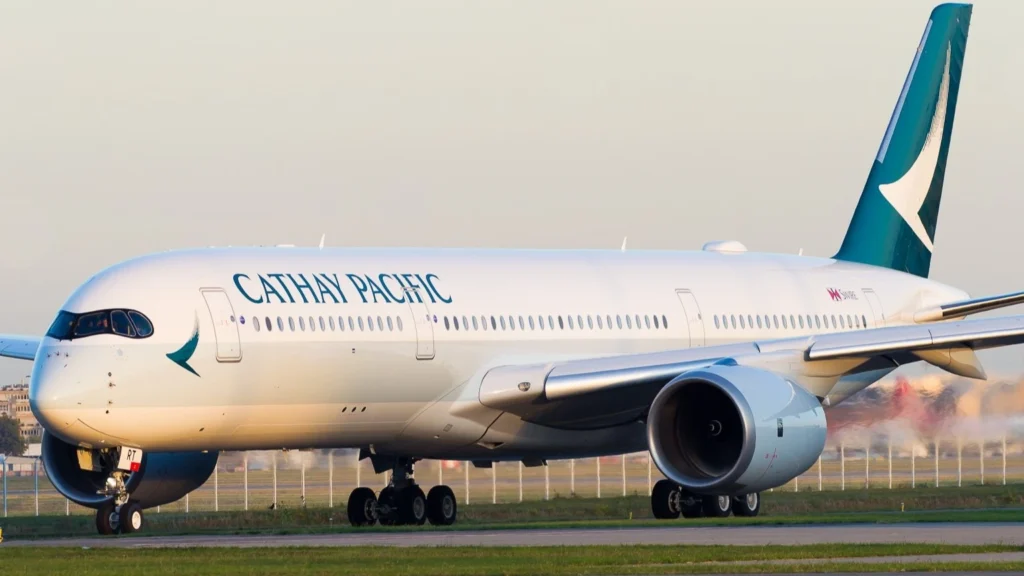
Cathay Pacific A350 Tail Strike
A tail strike occurs when the aft underside of an aircraft contacts the runway due to excessive nose-up pitch during takeoff or landing.
In this case, the Airbus A350-1000 approached Runway 07C at Hong Kong International Airport and began veering left during the final phase of the approach.
The flight crew initiated a go-around to stabilize the aircraft, and the impact occurred during the maneuver, not during touchdown.
Despite the tail strike, the aircraft climbed normally to 6,000 feet before circling for a second approach on the same runway.
FlightRadar24 data shows the landing was completed safely 34 minutes behind schedule at 11 minutes before midnight local time.
The grounded aircraft, which is only four years old, has not operated any commercial flights since.
Reported by Simple Flying, the airline is conducting structural inspection and repairs and will update the incident details once Cathay Pacific releases further information.
Preventive Technology to Reduce Tail-Strike Risk
Tail strikes are more common on landing than takeoff, with Airbus data indicating 65 percent occurring during landing and 25 percent during takeoff.
To reduce risk, Airbus integrates pitch-limit cues on the Primary Flight Display below 400 feet and audible “PITCH PITCH” warnings when pitch values exceed thresholds.
Boeing introduced its Tail-Strike Protection system on the 777-300ER in 2003, enabling automatic elevator adjustments when excessive rotation rates are detected during takeoff.
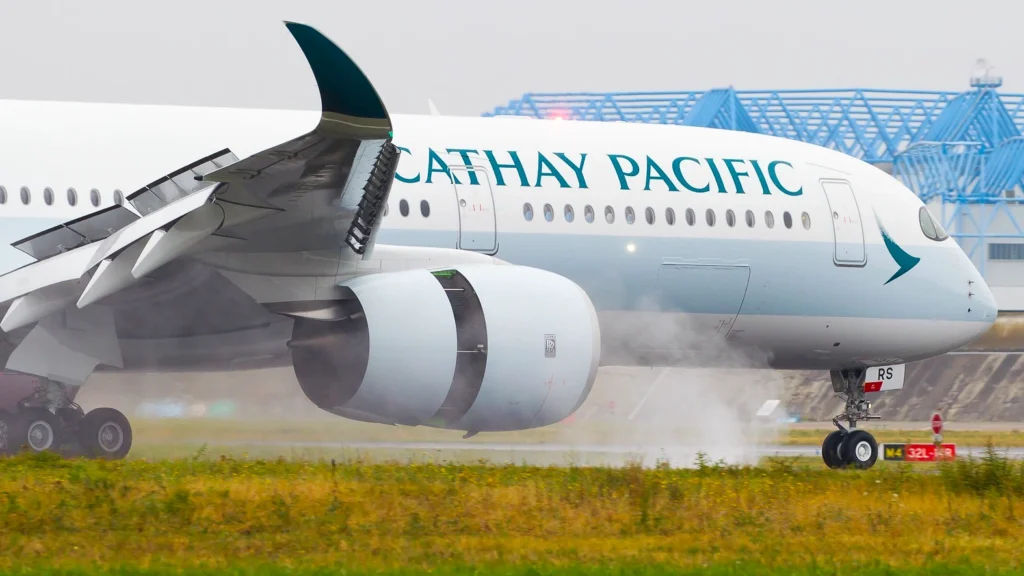
Go-arounds demand precise aircraft handling because pilots apply TOGA thrust and pitch-up input simultaneously.
Autopilot and autothrust systems then work together to provide a burst of power for safe climb performance, but the resulting pitch-up moment requires careful modulation of power and control input to prevent over-rotation and structural damage.
Pilot Preparedness for Abnormal Scenarios
Commercial pilots undergo simulator assessments every six months to practice manual aircraft handling and response to non-routine situations.
Simulated sessions include engine failures, rejected takeoffs, unstable approaches, and go-around execution to reinforce skills beyond automated flight management.
During aircraft certification, manufacturers intentionally conduct controlled tail-strike tests using a protective tail-skid to determine the Minimum Unstick Speed (Vmu).
Vmu defines the lowest possible takeoff speed at which the aircraft can lift off safely with maximum pitch-up attitude and serves as an important flight-performance reference.
Stay tuned with us. Further, follow us on social media for the latest updates.
Join us on Telegram Group for the Latest Aviation Updates. Subsequently, follow us on Google News