This story is a collaboration with Biography.com.
Fifty years ago, a routine well-digging operation on the outskirts of Xi’an, China, led to the unexpected discovery of a single clay soldier. When government authorities continued to excavate the well, they found the soldier was just one in a massive terracotta army standing guard over a vast necropolis. It turns out they had discovered the Mausoleum of the First Qin Emperor, a funerary site over 2,000 years old.
Half a century later, the legendary mausoleum continues to reveal its secrets, with the latest excavation uncovering a mysterious treasure that may confirm an ancient Chinese legend: A 16-ton casket filled with treasures—including armor, weapons, 6,000 bronze coins, jade, and gold and silver camels—was just unearthed from a tomb within the vast funerary complex, according to The Daily Express.
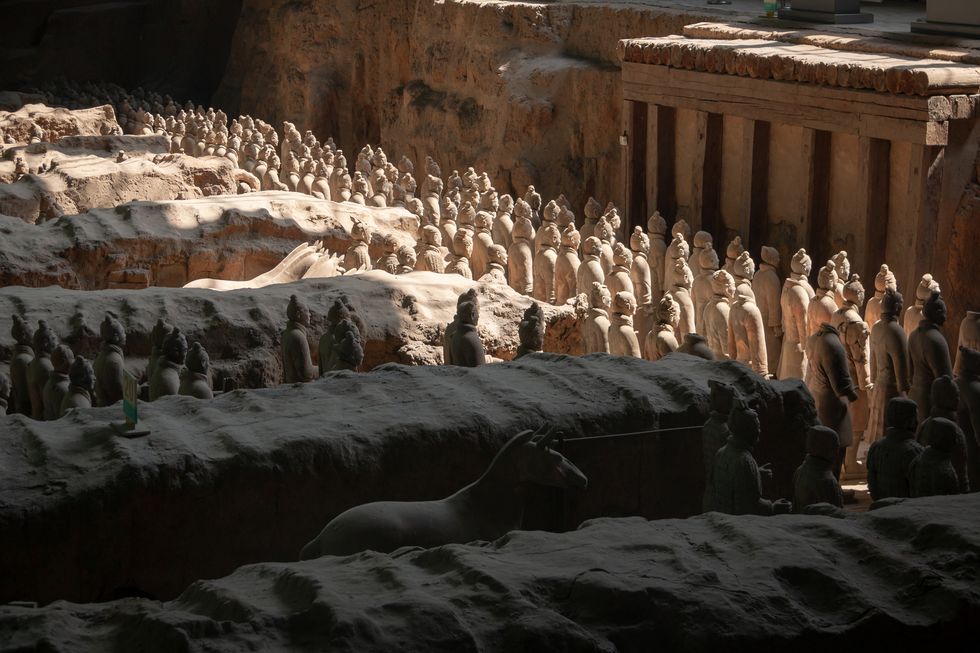
The Terracotta Warriors and Horses of Qin Shihuang, located in the pit of Terracotta Warriors and Horses 1.5 kilometers east of the Mausoleum of Qin Shihuang in Lintong District, Xi’an City, Shaanxi Province.
This type of untouched tomb is rare; neither the coffin, nor its treasures, appear to have been plundered by grave robbers across the past two millennia. “Most ancient tombs have been robbed so we didn’t have much hope for the coffin chamber,” excavation leader Jiang Wenxiao told the Express. “But it turned out it hadn’t been robbed. We were amazed.”
The tomb, however, was “considerably decayed,” Wenxiao said, and the fear of further degradation finally led archaeologists to excavate and examine it more than a decade after its initial discovery in 2011.
Now, the archaeologists want to determine just who is buried inside. “The grand manner of his burial suggests he was a notable warrior,” the experts observed, per the Express. That may be an understatement.
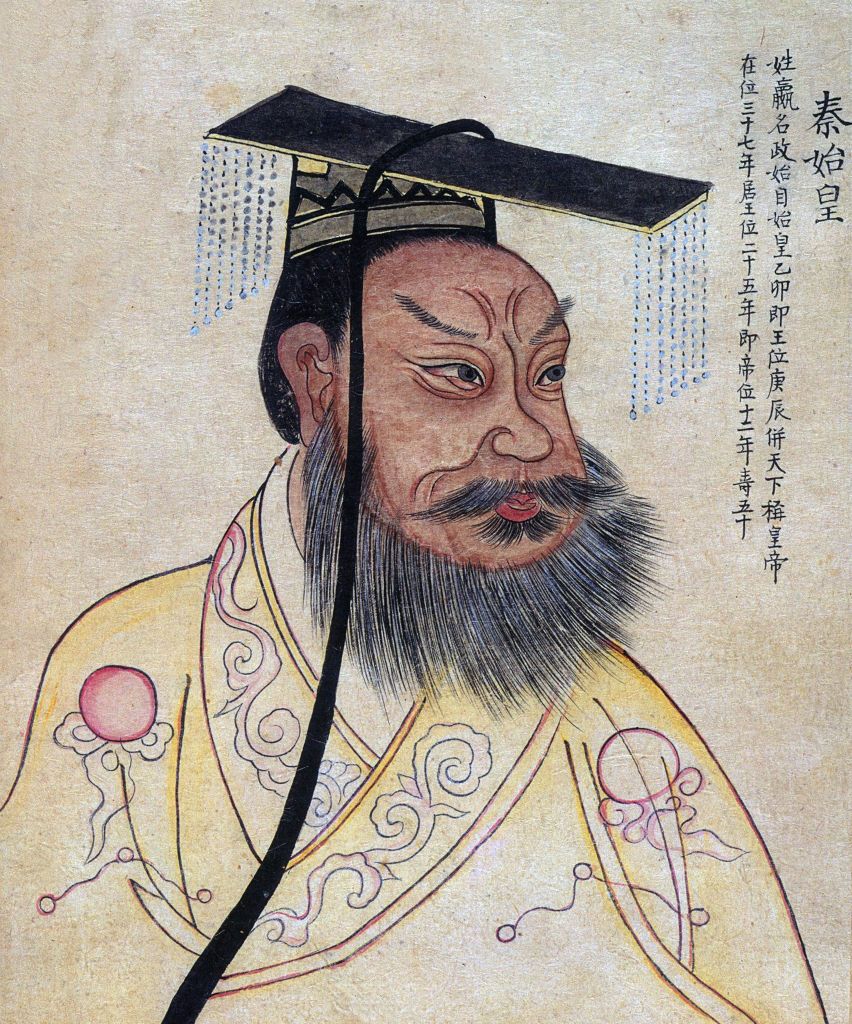
Qin Shi Huang was king of the Chinese State of Qin from 246 to 221 BCE during the Warring States Period. The Mausoleum of the First Qin Emperor was built for his remains, and may contain those of his son as well.
The recently excavated tomb is just one of many within the necropolis, built to honor Qin Shi Huang (秦始皇), the First Emperor of Qin. As noted by National Geographic, Qin himself called for the construction of this mausoleum shortly after he had ascended to the throne in 246 B.C., at only 13 years old.
Qin’s titanic actions as emperor would ultimately merit the lavish burial place he had ordered. In addition to unifying the warring states that formed China, Qin “standardized coins, weights, and measures; interlinked the states with canals and roads; and is credited for building the first version of the Great Wall,” NatGeo notes.
Much of what we know about Qin, the construction of his tomb, and the secrets of the yet-to-be-excavated areas stems from a 2,000-year-old document called the Shiji (史記), also known as the Records of the Grand Historian.
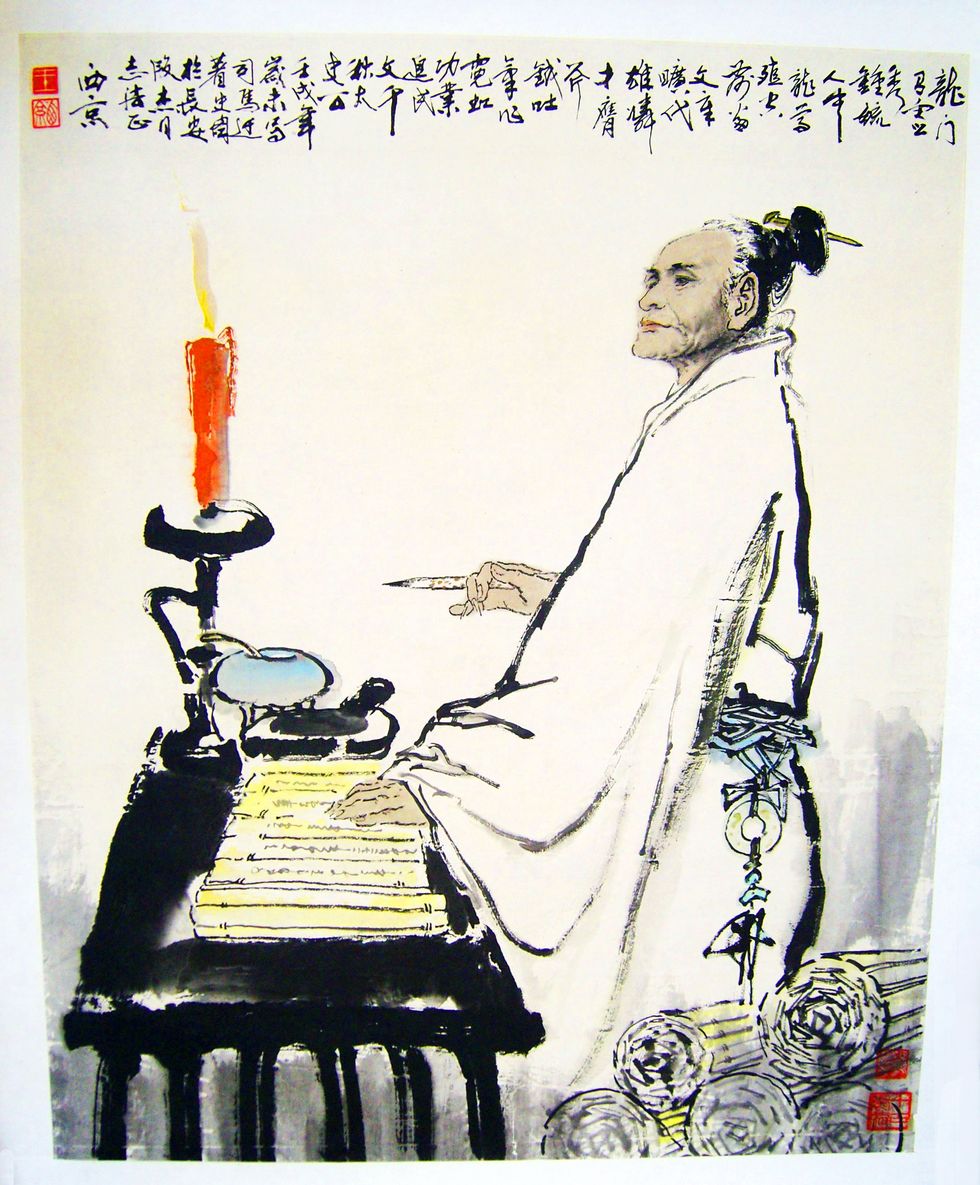
Sima Qian (司馬遷), Prefect of the Grand Scribes of the Han Dynasty, wrote Shiji (史記), which has been described as a “foundational text in Chinese civilization.”
The Shiji, a sprawling and hugely significant work by Prefect of the Grand Scribes Sima Qian (司馬遷) that contained everything from genaological tables and biographies to the history of rituals and waterways, is a “foundational text in Chinese civilization,” according to Grant Hardy, author of Worlds of Bronze and Bamboo: Sima Qian’s Conquest of History.
“Sima wrote a universal history,” Hardy writes, “…and in doing so, he defined what it meant to be Chinese.”
The Shiji recounts the tale of Qin Shi Huang’s son, Prince Gao, who suffered a tragic fate. After Qin Shi Huang’s death, his eldest son, Fusu, was expected to take the throne. But due to acts of deception by certain members of the dynasty, Huhai, Qin’s 18th son, ascended to power instead.
As the story goes, another of the Qin descendants, Prince Gao, saw his brothers and sisters all either being killed or dying by suicide, and considered fleeing the country. “But Prince Gao realised that his family would be hounded as a result,” the Express summarizes, “…and confronted Hu Hai, telling him that he had let their father down by not joining him in death.”
According to the Shiji, Prince Gao requested that upon his own death at their hands, he should be laid to rest in the Mausoleum of the First Qin Emperor. And with this recent excavation, archaeologists are wondering if the tomb they’ve stumbled upon ultimately contains the remains of Prince Gao.
“For the first time in 2,000 years,” said Hui Ming Tak Ted, a historian of the Qin dynasty and associate professor at Oxford University, “…we have a chance to figure out if what Sima Qian wrote is correct.”
Michael Natale is the news editor for Best Products, covering a wide range of topics like gifting, lifestyle, pop culture, and more. He has covered pop culture and commerce professionally for over a decade. His past journalistic writing can be found on sites such as Yahoo! and Comic Book Resources, his podcast appearances can be found wherever you get your podcasts, and his fiction can’t be found anywhere, because it’s not particularly good.