Bridging the last mile so that farm technology reaches field and table – Opinion

LIU TINGYU/FOR CHINA DAILY

In agriculture, the “last mile” often refers to whether a new technology actually reaches the field and is used by farmers. At first glance, this seems purely technical: Is the seed variety suited to local conditions? Is the machinery easy to operate? Are supporting inputs available? But a closer look reveals the real challenge lies not in the technology itself but in the people and systems behind it. The development process, the objectives pursued, and the accountability mechanisms all shape whether an innovation can be effectively used. Ultimately, a technology”s usability and scalability depend on whether individuals and institutions can organize the entire chain from research to implementation and take responsibility at every stage.

In practice, these links are often fragmented. Research institutions are evaluated on publications, patents, standards and awards, not whether their findings are truly practical or transferable. Many agricultural enterprises, mostly private and relatively small or weak, lack the resources and foundation to effectively support long-term responsibilities for demonstration, scaling, and industrial support, and are often unable or unwilling to sustain research teams. Grassroots extension systems are recovering but face shortages of personnel, funding and incentives, making sustained follow-up nearly impossible. Farmers, as the ultimate users, are left reactive and powerless — problems only become apparent once seeds are in the ground: inconvenient technologies, inadequate support, and unprofitable costs. Each actor manages only a segment, leaving the “ground-level adoption” problem with no clear owner.

Shanxi province offers a good example. The moisture-probing seeder developed by Shanxi Agricultural University (Shanxi Academy of Agricultural Sciences) Organic Dryland Farming Innovation Team demonstrates what it means for a technology to be truly adopted by farmers. Its success lies not in flashy features but in solving a real production bottleneck: drought. With recurrent droughts becoming almost the norm — six major episodes occurred between 2009 and 2025 — Shanxi has become a natural testing ground, where agricultural innovations are rigorously vetted. Under such pressure, technology must be grounded in reality and tackle real pain points.

The seeder exemplifies “agronomy–machinery co-design”. Agronomic techniques are developed with mechanized implementation in mind, while machinery is engineered to meet agronomic requirements; it is both technology and equipment, combined into one. The machine penetrates the dry soil layer to place seeds into moisture-rich zones (12-16 centimeters deep), ensuring timely sowing, uniform emergence and high germination rates (over 90 percent). In wetter conditions, the probing function can be turned off, allowing the machine to function as a standard seeder. Crucially, the design considers farmers’ budgets: it is flexible, easy to operate, and affordable enough to recover costs within a single season, with the core components priced at only 1,200 yuan. The key to its success can be summed up in three words: grounded, robust, operable — thinking like farmers and solving their challenges.

Viewed nationally, China’s gap with advanced agricultural nations lies less in technology and more in institutions and organization. Responsibility for innovation and transfer is unclear: universities and research institutes, driven by academic metrics, often prioritize publications over implementation; private enterprises are too small to effectively lead the R&D–demonstration–industrialization chain; and smallholder farmers constrain the adoption and scaling of modern innovations. Current multi-stakeholder models — including government, research, enterprises, socialized services and cooperatives — are still forming, with responsibilities unclear and coordination loose.

Agricultural universities must make a fundamental shift. Unlike comprehensive universities whose missions are broader, agricultural universities must “remain mindful of national and agricultural realities”, focusing on China’s critical agricultural challenges rather than chasing global trends or citation metrics. They need to break disciplinary silos and institutional barriers, creating innovation ecosystems guided by industry demand and collaboration. Only then can research be rooted, dynamic and impactful.

Shanxi’s dryland organic farming offers another development pathway. Unlike the Western dichotomy of industrial versus pure organic agriculture, farming in Shanxi is treated as a living ecological system. It maximizes the system’s internal energy, returning crop residues, fruit branches, tail vegetables and manure to the fields in multi-level cycles, enhancing organic energy while reducing reliance on fertilizers, pesticides and plastic mulches. At the same time, essential chemicals are applied judiciously, achieving win-win results between yield and quality, production and ecology — a balance of modern technology and traditional wisdom.

Bridging the last mile requires shifting focus from chasing advanced technology to building an ecosystem where people are accountable, mechanisms function and innovation produces tangible results. Policy priorities should include: incorporating field-level impact into research evaluations; clarifying responsible actors and empowering them with incentives; strengthening enterprises’ role in vertical technology transfer; enhancing grassroots extension systems with funding and long-term incentives; repositioning agricultural universities to lead localized and replicable innovation; and highlighting the national team’s leading role in research on major foundational and overall issues, so that numerous regional challenges can be solved at the grassroots level and establish an efficient innovation system with layered responsibilities.

The practices in Shanxi show that technologies tested under real pressure, universities with local roots, responsible actors and clear mechanisms are far more effective in securing food security and advancing agricultural modernization than disconnected “high-tech” indicators. In an era of global food insecurity and climate uncertainty, scaling such models is not just a local matter — it is a national and global imperative. Bridging the last mile demands not only technology but human and institutional connectivity, aligning research, enterprises, extension and farmers so that innovations truly reach the field, the harvest and the table.

The author is the deputy to the 14th National People’s Congress and director of Key Laboratory of Dryland Agriculture at Ministry of Agriculture and Rural Affairs, Shanxi Agricultural University (Shanxi Academy of Agricultural Sciences).

The views don’t necessarily reflect those of China Daily.

If you have a specific expertise, or would like to share your thought about our stories, then send us your writings at opinion@chinadaily.com.cn, and comment@chinadaily.com.cn.

Source link

Visited 1 times, 1 visit(s) today

Related Article

Labor Trends and Risk Management in China 2026

Labor Trends and Risk Management in China 2026

The latest issue of China Briefing Magazine, “Labor Trends and Risk Management in China 2026”, is now available as a complimentary download on the Asia Briefing Publication Store. In this issue: China’s Labor Market in 2026: Wage, Mobility Shifts, and the New Talent Map AI Technology in China’s Hiring and Workforce Management Labor Compliance in China:

ET logo

Iran attack could buoy Trump in talks with China’s Xi

WASHINGTON/BEIJING: The U.S. military campaign against Iran has put Chinese leader Xi Jinping on the back foot ahead of an expected summit with U.S. President Donald Trump, who for the second time in as many months has turned America’s military against one of Beijing’s close partners. Trump is set to arrive in Beijing at the

Oil tanker in Strait of Hormuz

Gordon Chang warns China could see “real problems” from Iran oil halt

Gatestone Institute senior fellow Gordon Chang joins ‘Mornings with Maria’ to break down the impact of escalating US-Iran tensions on global oil markets and China’s reliance on Middle East energy. With Strait of Hormuz traffic nearly halted, China’s reliance on Iranian oil could trigger “real problems” within two months if the crisis continues, one expert

Party for Socialism and Liberation poster

Pro-China funded groups plan Palantir Technologies protest in Miami

NEWYou can now listen to Fox News articles! EXCLUSIVE: As communist leaders in China oppose U.S.-Israeli military action against Iran, a pro-China network funded by Neville Roy Singham, a Marxist American tech tycoon based in Shanghai, is moving to sabotage America’s war footing against the Islamic Republic. A coalition of far-left organizations, including the Party

Visa-Free Boom: China Logged 30 Million Waiver Entries in 2025, Statistics Show

China Logged 30 Million Waiver Entries in 2025, Statistics Show

New data released on 1 March by Malaysia’s Business Today, citing China’s National Bureau of Statistics, reveals just how quickly recent visa-free initiatives are reshaping inbound travel. Foreign nationals entered China 30.08 million times without a visa in 2025—a 49.5 percent year-on-year jump. The count aggregates travellers using three channels: the 30-day unilateral visa-waiver (now

Iranian President Masoud Pezeshkian and his Chinese counterpart, Xi Jinping, in Beijing, September 2, 2025.

Middle East turmoil constrains China, a crucial backer of Iran and major buyer of its oil

Iranian President Masoud Pezeshkian and his Chinese counterpart, Xi Jinping, in Beijing, September 2, 2025. SITE DE LA PRESIDENCE IRANIENNE/WANA VIA REUTERS Beijing has voiced its anger following the US and Israeli strikes against Iran and their impact, reaching the very top of the Iranian regime. Chinese Foreign Minister Wang Yi deemed it “unacceptable” on

Yili Raises 45 Billion Yuan in China's Tech Bond Program — TradingView News

Yili Raises 45 Billion Yuan in China’s Tech Bond Program — TradingView News

China’s technology financing drive is starting to produce outcomes that may not have been the original policy intent. Under the onshore technology and innovation bond program, Inner Mongolia Yili Industrial Group Co. has emerged as the largest issuer this year, raising 45 billion yuan, or about $6.5 billion, according to Bloomberg-compiled data. That total exceeds

China's Foreign Minister Wang Yi speaks during the Munich Security Conference (MSC) in Munich, Germany, February 14, 2026.

China condemns Iran strikes, urges Gulf to oppose foreign influence

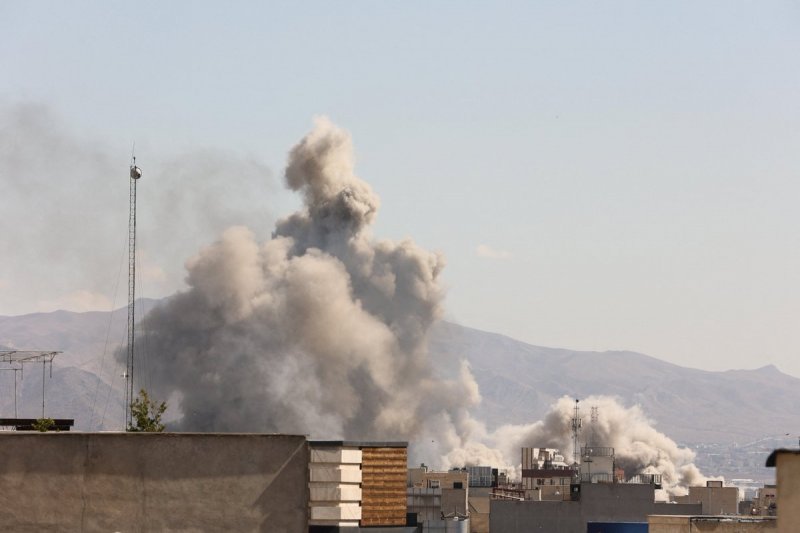
China’s government has condemned the joint U.S.-Israeli military strikes on Iran and urged Gulf states to work together to oppose foreign influence, as the Middle East erupts into a wider conflict. In the country’s initial comments Sunday, March 1, after the killing of Iranian leader Ali Khamenei, China’s foreign ministry called the attacks “a grave

A big Chinese flag in front of a crowd

After Iran’s shock, Beijing confronts its succession question

When Iran’s Supreme Leader was reported killed in a bombing attack, one question surfaced quickly: what happens when a political system built around one man suddenly loses him? For decades, Iran projected durability. Authority was centralised. Institutions revolved around a dominant leader. Stability appeared fixed. Yet in a moment, succession — long managed behind closed

China not told of US-Israeli strikes beforehand, spokesperson says

March 2, 2026, 1:07 p.m. ET China’s foreign ministry said it was not alerted ahead of time of Israel and United States’ plan to strike parts of Iran over the weekend. The attack has killed over 500 people in Iran, including supreme leader Ayatollah Ali Khamenei, dozens of top officials and a Chinese citizen as tensions

China's cheap AI designed to hook the world on its tech

China’s cheap AI designed to hook the world on its tech

Artificial intelligence (AI) is at a very Chinese time in its life. Recent moves from Chinese AI labs are throwing the dominance of American “frontier labs” such as Google and OpenAI into question. Last week ByteDance, the company behind TikTok, released an AI video-generating tool called Seedance 2.0 which produces high-quality film-like clips from text

Aircraft attached to Carrier Air Wing (CVW) 9 on the flight deck of Nimitz-class aircraft carrier USS Abraham Lincoln (CVN 72) in support of Operation Epic Fury, at an undisclosed location on February 28, 2026. (Photo: US Navy/AFP)

Is Iran using Chinese missiles against US, Israel? Beijing reacts to reports

After reports in Chinese official media claimed on Monday that US planes crashed and some naval vessels were damaged “after being hit by Iranian missiles”, questions came up again about the origin of such advanced missiles. But China has now denied that it had finalised a deal with Tehran to sell CM-302 supersonic anti-ship missiles

China reports death of its citizen in Iran

China reports death of its citizen in Iran

Source: Getty Images + ↺ − 16px China has called for an immediate ceasefire and renewed diplomatic efforts to end the escalating conflict in the Middle East, after confirming that at least one Chinese citizen was killed in Tehran, News.Az reports, citing Al Jazeera. Speaking at a press briefing, Foreign Ministry spokeswoman Mao

China Set to Reveal Tech Strategy as Competition with US Intensifies

China Set to Reveal Tech Strategy as Competition with US Intensifies

China’s parliament will unveil its five-year technology blueprint this week, focusing on artificial intelligence, robotics, and space programs. The plan comes as Beijing seeks to transform recent tech breakthroughs into large-scale industrial advantages in its ongoing competition with the United States. China’s leadership will reveal their strategy for the next phase of technological competition with

China travel disruptions

Hundreds of Passengers Isolated in China Amid US-Iran Conflicts as Air China, Emirates, Qatar, China Southern, Etihad, Hainan and More Airlines Face 71 Cancellations and 1,697 Delays Across Beijing, Shanghai, Guangzhou, Chengdu, Zhengzhou and Beyond

Home » Airlines News of China » Hundreds of Passengers Isolated in China Amid US-Iran Conflicts as Air China, Emirates, Qatar, China Southern, Etihad, Hainan and More Airlines Face 71 Cancellations and 1,697 Delays Across Beijing, Shanghai, Guangzhou, Chengdu, Zhengzhou and Beyond Published on March 2, 2026 Image generated with Ai The ongoing US-Iran conflict

Space mouse

Mouse that lived on Chinese space station gives birth to 28 pups


A brave little mouse that spent two weeks floating aboard China’s Tiangong Space Station has given birth to a whopping 28 pups across three healthy litters since returning to Earth, leaving scientists buzzing about what short space trips might do for mammalian families. The adventure started with the Shenzhou-21 mission on October 31, 2025, when

image.png

China Auto Dealer Inventory Warning Index at 56.2% in February

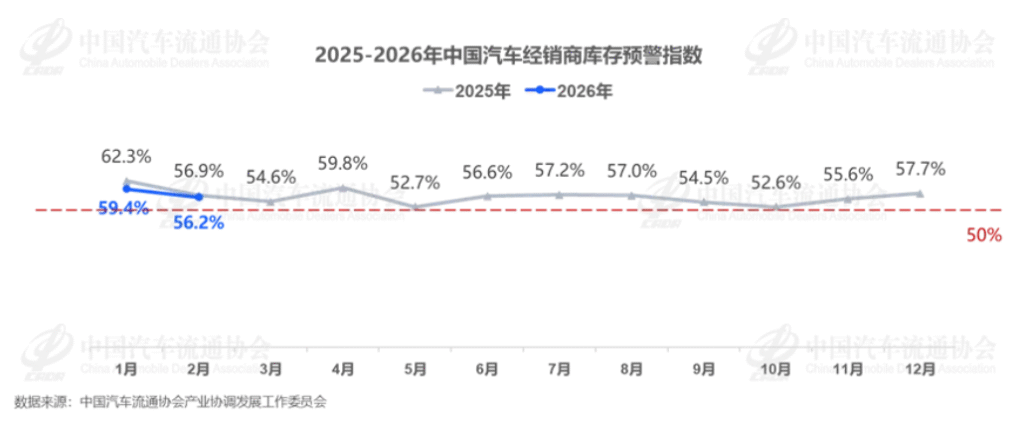
Gasgoo Munich- The China Automobile Dealers Association (CADA) released data on February 28 showing the inventory warning index for China’s auto dealers stood at 56.2% in February 2026. While that represents a decline of 0.7 percentage points year-on-year and 3.2 points from the previous month, the figure remains above the critical 50% threshold—signaling that operational

China’s Advanced Nuclear Efforts Are Pushing Frontiers

China’s Advanced Nuclear Efforts Are Pushing Frontiers

From the world’s first in-reactor thorium breeding confirmation to a dual PWR-HTGR plant and commercial supercritical CO₂ generation, China is assembling a vertically integrated advanced nuclear ecosystem. The breadth of activity signals a coordinated push toward fuel independence and industrial deployment. While the bulk of focus on advanced nuclear technology has honed in tightly on

Chinese carriers offer free changes as Middle-East conflict disrupts flights

Chinese carriers offer free changes as Middle-East conflict disrupts flights

Escalating hostilities between Iran, Israel and the United States have triggered sweeping air-space closures across the Gulf, forcing mainland airlines to scrap services to Dubai, Abu Dhabi and Riyadh. TVB News reports that Air China, China Eastern and China Southern introduced special refund and re-booking policies late on 1 March (news.tvb.com). Passengers holding tickets purchased

0
Would love your thoughts, please comment.x
()
x