The United Kingdom is compact enough to cross in a day yet diverse enough that how you choose to travel can shape your entire experience. From Victorian-era railways and scenic coastal roads to budget-friendly coaches and brisk domestic flights, each option comes with its own trade-offs in cost, comfort, carbon footprint and time. Understanding those differences is the key to planning a smooth, stress-free trip across England, Scotland, Wales and Northern Ireland.
Understanding the UK’s Transport Landscape Today
Travel across the United Kingdom is in a period of change. Rail use has rebounded strongly in recent years, with passenger numbers approaching pre-pandemic levels and new timetables adding capacity on key intercity routes. At the same time, the government is bringing most major rail operators back into public ownership under a long term plan to simplify the system and improve reliability and value for money. For travellers, that translates into a network that is busy, evolving and sometimes unpredictable, but generally comprehensive.
Coach travel remains an important and often underappreciated part of the mix. After years of expansion, some low cost operators have scaled back services in parts of England and Wales, while others have stepped in to fill gaps and expand long distance links. For price conscious travellers, especially students and solo backpackers, coaches are still one of the cheapest ways to cross the country, albeit usually the slowest.
On the roads, driving in the UK can be a joy or a chore depending on where you go. Motorways and major A roads tie together the main cities efficiently, but congestion around urban centres is common, and parking in historic cores can be expensive or limited. In rural areas, narrow lanes and changing weather demand patience and confidence, yet they also reveal landscapes that trains and coaches can only skirt.
Domestic air travel continues to play a role, particularly for connecting London and the south east with Scotland, Northern Ireland and some of the more remote corners of England. However, high speed rail links, climate concerns and the volatility of small regional airlines mean that flights are best reserved for specific situations rather than as a default way to hop between nearby cities.
Rail: The Backbone of Long Distance Travel
For most journeys between major cities, rail remains the most convenient way to travel across the United Kingdom. Intercity services link London with Edinburgh, Glasgow, Cardiff, Manchester, Birmingham, Leeds and other hubs at relatively high speed, often city centre to city centre in just a few hours. Frequent services on many main lines mean you can be flexible, especially on off peak tickets that allow you to board any train within a time band.
The network is dense in England and parts of Scotland and Wales, with routes that loosely mirror the country’s industrial history. Ageing infrastructure and busy timetables can sometimes lead to delays, so it pays to build in a cushion if you are making a time sensitive connection, such as catching a flight or theatre performance. New timetables introduced in recent years have added capacity and shaved journey times on some flagship routes, but they have also pushed operations close to the limits of what the infrastructure can handle.
Ticketing can be complex for visitors, but learning a few basics helps. Fares are usually highest for fully flexible “anytime” tickets and lowest for advance fares tied to a specific train. Off peak tickets that restrict travel to quieter periods sit in the middle. Railcards, which are discount cards available to many age groups and traveller types, offer significant savings on most fares and quickly pay for themselves if you plan multiple journeys. Buying in advance, travelling outside the peak commuter windows and being open to slower routes are the most reliable ways to cut costs.
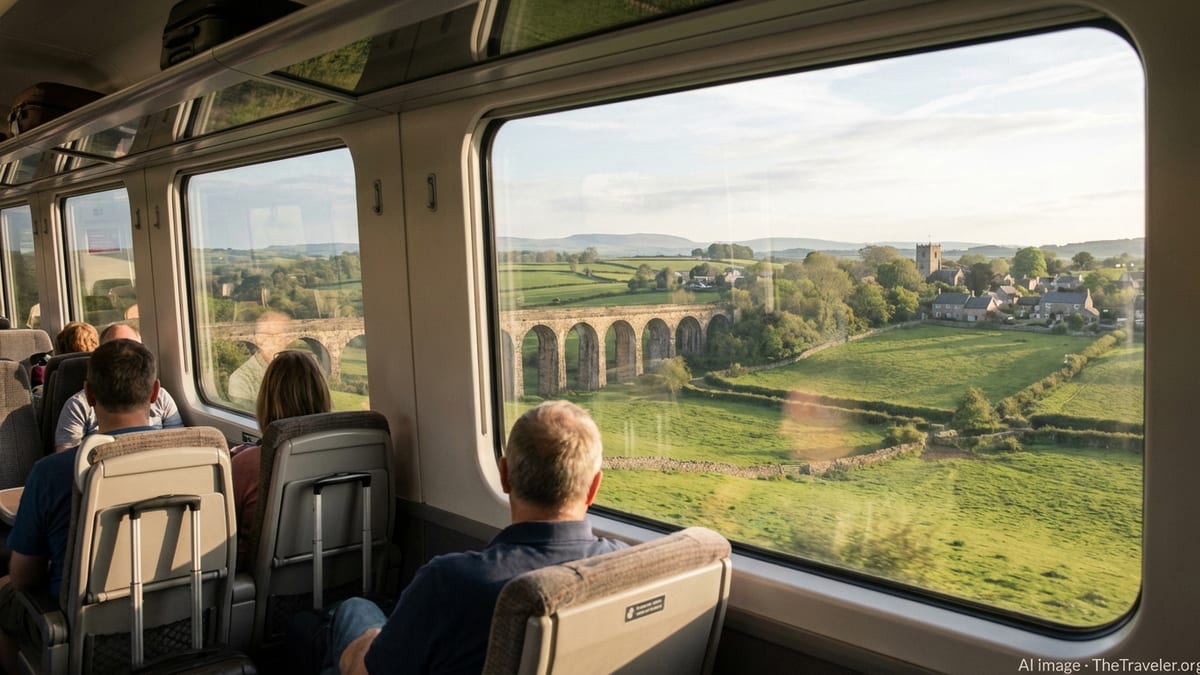
Comfort on UK trains varies by operator and route, but most long distance services offer Wi Fi, power sockets and at seat refreshments or a buffet car. Standard class is usually perfectly adequate, while first class buys you more space, quieter carriages and complimentary snacks on some lines. If you value the journey as part of the experience, daytime train travel across the Scottish Highlands, the Welsh borders or the English south west can be as memorable as the destination itself.
Coaches: Budget Friendly Travel Across the UK
Coaches are the workhorses of budget travel in the UK. National and international operators connect major cities, airports and many towns at prices that often undercut rail by a wide margin, particularly when booked early or during promotions. For travellers on tight budgets, overnight coach services between cities can effectively combine transport and accommodation, freeing up funds for experiences on the ground.
Travel times by coach are generally longer than by train, especially on busy motorway corridors where traffic can cause unpredictable delays. However, modern coaches are typically comfortable, with reclining seats, air conditioning, onboard toilets and Wi Fi on many routes. For journeys between cities that are not well served by direct rail links, such as some cross country routes that would otherwise require multiple train changes, coaches can actually be more straightforward.
The coach market has shifted in recent years, with one major low cost operator reducing many domestic routes in England and Wales and concentrating on services in Scotland and a handful of strategic corridors. Other companies have stepped in, expanding or adjusting their own networks to meet demand. The overall result is that coach options remain strong on the busiest routes, while some secondary corridors now have fewer departures than they did a few years ago.
For planning purposes, it is wise to check timetables and prices a few weeks before you travel rather than assuming that a particular route still exists or runs as frequently as it once did. Booking in advance usually secures the lowest fares, although last minute deals can sometimes be found on less busy services. If your priority is cost over speed and you do not mind arriving slightly later than planned, coaches are a reliable and economical way to move around the UK.
Driving and Car Hire: Freedom to Explore
Renting a car offers the greatest freedom to explore parts of the United Kingdom that are hard to reach by public transport. Regions such as the Lake District, the Scottish Highlands, the Yorkshire Dales, Snowdonia in Wales and the rural corners of Northern Ireland reward slow, meandering journeys along minor roads, with the flexibility to stop for viewpoints, village pubs and trailheads that buses and trains simply pass by.
However, driving in the UK has its own learning curve, especially for visitors from countries where traffic flows on the right. The UK drives on the left, with many city centres organised around one way systems, bus lanes and congestion or clean air zones that may charge certain vehicles. Rural roads can be narrow, winding and bordered by hedges or stone walls, which leaves little margin for error. In poor weather or at night, it is important to plan conservatively and avoid overambitious distances.
Hiring a car is straightforward at major airports and train stations, though automatic vehicles often cost more and can sell out in busy seasons. Insurance policies deserve careful reading; opting for higher cover can reduce the stress of squeezing through tight lanes or parking in crowded towns. Fuel costs in the UK are relatively high compared with some other regions, so factor petrol or diesel into your budget, especially for long itineraries that cross multiple countries within the UK.
In cities, a car can quickly feel like a liability. Parking is often expensive and restricted, many central streets are closed or limited to buses and taxis, and public transport is usually more efficient. A popular strategy is to rely on trains or coaches between major cities, then hire a car locally for a few days of rural exploration before dropping it off and returning to rail. This hybrid approach keeps costs and stress manageable while still opening up remote landscapes.
Domestic Flights and Ferries: When They Make Sense
Domestic flights in the UK are most useful when crossing long distances or bodies of water where rail and road connections are slow or indirect. Routes between London and major Scottish cities, flights linking regional English airports and services to and from Northern Ireland and the islands can save hours compared with overland travel. For short hops between cities that are already connected by fast trains, flying rarely makes sense once you factor in airport transfers and security queues.
The regional aviation market has been volatile, with some smaller carriers scaling back or ceasing operations altogether after prolonged financial pressure. As a result, certain domestic routes that once had multiple daily flights now operate less frequently or have disappeared. When planning, it is important to check the current status of any route and to build in contingency time in case of cancellations or schedule changes.
Ferries are a vital part of travel to and within the UK’s islands. Services link Great Britain with Northern Ireland and the Republic of Ireland, and connect the Scottish mainland with island groups such as the Hebrides and Orkney, as well as numerous smaller islands around the coasts of England and Wales. For many of these routes there is no realistic alternative, so ferry schedules often dictate how itineraries unfold.
For travellers, ferries can be a relaxing change of pace, with fresh air, sea views and the option to bring a vehicle or travel as a foot passenger. In high season and around public holidays, sailings can sell out, especially those that carry cars and campervans. Booking in advance is strongly recommended if you plan to travel with a vehicle or if your schedule is tight. Weather can occasionally disrupt sailings, particularly in winter, so it is wise to keep plans flexible around exposed routes.
Regional and Urban Transport: Getting Around Once You Arrive
Once you reach your destination, regional and local transport networks take over. Larger UK cities generally have integrated systems of buses, suburban rail and in some cases trams or underground lines. London is the most extensive example, with its Underground, Overground, buses and commuter rail operating under a unified fare structure that can be accessed using contactless bank cards or smart cards. Other cities, including Glasgow, Newcastle, Manchester and Sheffield, also have local rail or light rail systems that complement buses.
In smaller cities and towns, buses are usually the backbone of local public transport. Frequencies can drop sharply in the evenings and on Sundays, and rural routes may operate only a few times a day. If you are planning to stay outside a major urban centre without a car, it is worth studying local bus timetables in advance to avoid being surprised by limited services.
Taxis and app based ride services are widely available in larger cities and around airports, though coverage thins out in smaller communities and remote regions. Traditional black cabs in cities like London and Edinburgh are licensed and metered, and can be hailed on the street or found at ranks. In more rural areas, pre booking a local taxi is common practice, particularly for early morning departures or late night returns when buses have stopped running.
Cycling is an increasingly popular way to get around, with expanding networks of dedicated cycle lanes and traffic calmed streets in many cities. Bike hire schemes operate in London and some other urban areas, and a growing number of regional trains offer clearly marked spaces for bicycles, subject to restrictions on busy services. For confident cyclists, combining rail and bike can unlock scenic routes that remain out of reach of motor traffic.
Choosing the Right Mode: Cost, Time and Sustainability
The best way to travel across the United Kingdom depends on your priorities. If speed and comfort are paramount and your route follows a main corridor, intercity trains usually offer the best balance of time and convenience. Coaches win on price, especially for flexible travellers with the patience for longer journeys. Cars deliver freedom and access to remote areas, while flights and ferries fill specific gaps and connect islands and distant regions.
Cost comparisons are not always straightforward. A last minute train ticket bought at the station can cost several times more than an advance fare for the same route. Budget coach tickets can be very cheap when booked early, but prices may climb closer to departure. Domestic flights sometimes appear inexpensive at first glance, yet additional charges for baggage, seat selection and airport transfers quickly erode the savings. When planning, consider the full “door to door” cost rather than just the headline fare.
Sustainability is another factor that increasingly shapes travel choices. Rail travel generally has a lower carbon footprint per passenger than flying or driving, particularly on electrified routes, and is often the most environmentally conscious way to cover long distances within the UK. Coaches, with many passengers sharing a single vehicle, also compare favourably with private cars. If you choose to drive, travelling with a full car and combining multiple stops into a single route can help reduce your impact.
Time of day and day of the week can dramatically affect both experience and expense. Peak weekday periods, roughly aligned with commuter rush hours, command the highest rail fares and the busiest trains and roads. Travelling midweek, outside peak hours, can transform a cramped or stressful journey into a calmer one, often at a lower price. Planning with these rhythms in mind gives you more control over both budget and comfort.
The Takeaway
Travelling across the United Kingdom today means navigating a rich but sometimes intricate web of transport options. Rail remains the backbone for long distance journeys, backed by a government that is reshaping the system with an eye on reliability and affordability. Coaches offer a lifeline for budget travellers and those connecting cities that rail does not easily link. Cars open up wild landscapes and quiet corners, while ferries and aircraft knit together islands and distant regions.
The smartest itineraries often mix modes. You might take a fast train between major cities, switch to a hired car for a few days in the countryside, then board a ferry to an island before flying or training back to your starting point. Building in time buffers, checking the latest timetables and being flexible about routes all help you adapt to an evolving system.
Most importantly, think about what matters most for your trip: whether it is cost, comfort, sustainability, scenery or sheer speed. With a clear sense of priorities and a basic understanding of how each mode of transport works in the current UK context, you can design journeys that feel less like logistics and more like an integral part of your travel experience.
FAQ
Q1. What is generally the best way to travel between major UK cities?
For most travellers, intercity trains are the best option between major cities because they combine speed, comfort and central locations, especially when tickets are booked in advance.
Q2. Are trains in the UK reliable enough for tight connections?
Trains are reasonably reliable overall, but delays do occur, so it is safer to allow extra time if you are connecting to flights, international trains or ticketed events.
Q3. When do coaches make more sense than trains?
Coaches are usually better when cost is your top priority, when you book far in advance, or when your route is awkward by rail and would require several train changes.
Q4. Is it worth renting a car for a UK trip?
Renting a car is worthwhile if you plan to explore rural regions, national parks or islands with limited public transport, but it is often unnecessary and expensive in big cities.
Q5. Are domestic flights still common within the UK?
Domestic flights remain important for longer routes and island connections, but for short hops between well connected cities, trains are usually more practical and comparable in total journey time.
Q6. How far in advance should I book UK train tickets?
Advance fares typically appear a few weeks to a few months before travel and offer the best prices, so booking as early as your plans allow is advisable.
Q7. Do I need a Railcard and who can get one?
Railcards are not mandatory but can save eligible travellers a significant amount; several types are available based on age, disability, travel patterns or travelling with companions.
Q8. Is public transport in UK cities easy to use for visitors?
Most large UK cities have straightforward public transport, and many accept contactless bank cards, which makes paying fares simple even if you are visiting for the first time.
Q9. How environmentally friendly is travel across the UK?
Rail and coach travel are generally more environmentally friendly than flying or driving alone, especially on busy routes and where rail lines are electrified.
Q10. Can I rely on buses in rural areas without a car?
Some rural areas are well served by buses, but others have very limited services, so you should always check local timetables carefully before committing to a car free itinerary.