President Donald Trump has pitched NATO into what could become its worst-ever crisis by threatening new tariffs against US allies that oppose his grab for Greenland against the will of its people.
Whether the world’s relative peace is endangered by the fracturing of its most powerful military alliance will partly depend on whether Republicans in Congress show rare resolve in challenging their incorrigible president.
Another key factor is whether European leaders, who responded to the latest escalation with steely unity, will threaten consequences for Trump and the US. The European Union is a huge trade bloc, and retaliation could hammer US stock markets that Trump touts as a barometer of economic well-being. But trade reprisals or limiting military cooperation could end up damaging America’s allies more than their protector.
European Union ambassadors held emergency consultations in Brussels on Sunday, and several leaders of NATO allies who are friendly with Trump called to express resolve over Greenland, a semiautonomous Danish territory.
There is palpable alarm on both sides of the Atlantic that NATO could collapse. Such a previously unthinkable scenario would represent a historic win for Russia and China and represent perhaps the most destabilizing outcome of Trump’s two White House terms.
There is also concern in Congress about Trump’s antics. But are there sufficient senior Republicans so protective of NATO, a bedrock of US global power, that they’d gamble on an exceedingly rare breach with him? Cracks have emerged in Trump’s power base in Congress — notably over the Jeffrey Epstein files — but he remains feared by many GOP lawmakers.
Ultimately, however, the parlous fate of the alliance rests on a president who sees US military power as his to wield without legal or constitutional constraints and who disdains NATO as a protection racket. Acquiring Greenland would be a legacy item greater than putting his name on the Kennedy Center or building a new White House ballroom; it would place him alongside Thomas Jefferson and William McKinley as presidents who expanded the territory of the United States.

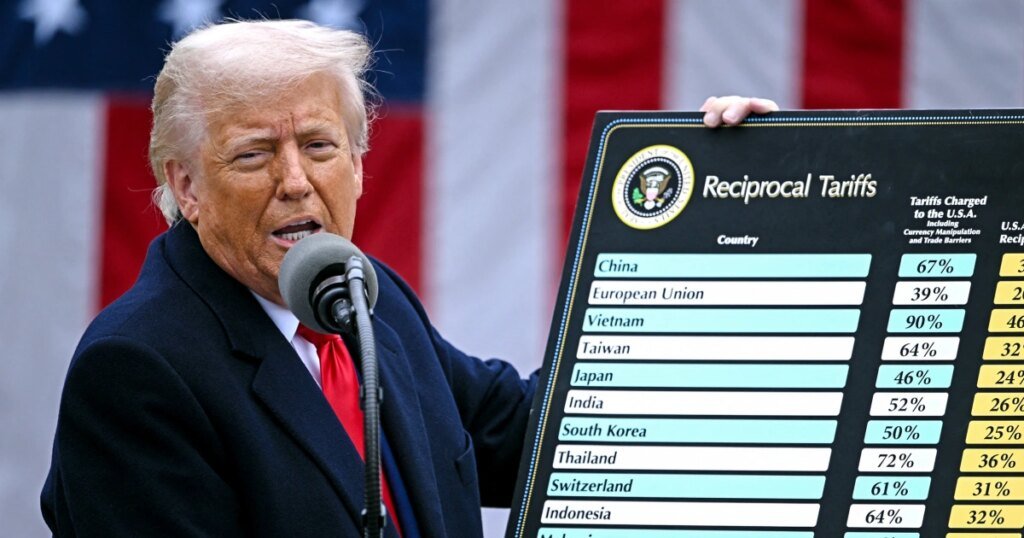
Trump sent shockwaves across the Atlantic on Saturday by intensifying his aggressive demands for Greenland as he pushes his “Art of the Deal” foreign policy to extremes. He said Saturday he’d impose a 10% tariff on “any and all goods” from Denmark, Norway, Sweden, France, Germany, the United Kingdom, the Netherlands and Finland starting February 1, increasing to 25% on June 1, until an agreement is reached.
Trump has correctly pointed out that many NATO nations took the US security umbrella for granted by running down their armed forces in recent decades. His anger, as well as the threat highlighted by Russia’s invasion of Ukraine, has prompted many member states to promise to substantially increase defense spending.
But by failing to rule out military force to take Greenland, he risks destroying NATO and its Article 5 mutual defense clause over a personal obsession. This is despite no tangible desire among American voters to own the island or to pay for it. They’re more worried about high prices a year into Trump’s second presidency.
“The president has full military access to Greenland to protect us from any threat. So, if he wants to purchase Greenland, that’s one thing. But for him to militarily invade would turn Article 5 of NATO on its very head, and in essence, put us at war with NATO itself,” Rep. Michael McCaul, a Texas Republican and chair emeritus of the House Foreign Affairs and Homeland Security committees, told ABC’s “This Week” on Sunday.
“It would end up abolishing NATO as we know it, an organization that has … protected us from world wars,” McCaul said.
Trump’s first-term vice president, Mike Pence, told CNN’s Jake Tapper on “State of the Union” that while the US has an interest in controlling and ultimately owning Greenland, Trump’s methods were counterproductive. “I do think that the current posture, which I hope will change and abate, does threaten to fracture that strong relationship, not just with Denmark, but with all of our NATO allies,” Pence said Sunday.

Ohio Rep. Mike Turner, who heads the US delegation to NATO’s parliamentary assembly, agreed that Trump had legitimate national security concerns in Greenland. But he told CBS’ “Face the Nation” on Sunday that “there certainly is no authority that the president has to use military force to seize territory from a NATO country.”
But will Congress do anything to stop Trump?
Kentucky GOP Sen. Rand Paul and Virginia Democratic Sen. Tim Kaine are planning to impose speed bumps. They said in a joint appearance on NBC’s “Meet the Press” that they are discussing a new war powers resolution on Greenland. They also plan to challenge the new tariffs and highlight a law that stipulates a president can’t withdraw from NATO without congressional approval.
Paul said Trump was “rattling the cage” by refusing ruling out taking Greenland by force. But he added: “I’ve heard of no Republican support for that, even though most hawkish members of our caucus have said they won’t support that.”
Some Republicans hope Trump is merely playing real estate shark. “I think it’s just the way Trump deals with things. I mean, look, he’s gotten good deals done by taking an aggressive position,” Florida Sen. Rick Scott told Fox News.
But an administration empowered by topping Venezuelan President Nicolás Maduro seems to have moved on from master dealmaker mode. Days after Trump said he wanted Greenland because it was “psychologically important for me,” Treasury Secretary Scott Bessent on Sunday appeared to confirm perceptions that the administration thinks the US is so strong it can take what it wants.
“The United States right now, we are the hottest country in the world. We are the strongest country in the world. Europeans project weakness. The US projects strength,” Bessent said on “Meet the Press.”

NATO has faced many tensions in its nearly 77 years. In the Suez Crisis in 1956, the US opposed a British-French invasion of parts of Egypt. In the 1990s, some European nations were frustrated about Washington’s initial reluctance to involve NATO to stop the war in the former Yugoslavia. In the early 2000s, after a period of soul-searching over its post-Cold War role, NATO invoked Article 5 for the first time in defense of the US after the 9/11 attacks. It later led the Afghan campaign. But angry divides flared over Iraq.
Trump’s pressure on NATO follows a banner period for the alliance after Sweden and Finland joined during the Biden administration following Russia’s invasion of Ukraine. The current split is unprecedented because none of the leaders who nurtured it for seven decades could fathom the scenario of one member threatening another. That the belligerent party is the United States — the most important member state — makes the situation even more unbelievable.
Trump’s fixation on Greenland, which is becoming more important as a race for control of the Arctic speeds up, makes strategic sense. But his rationale for why the United States must have it for itself is more opaque.
The US has treaties with Denmark that allow it to send troops there. Trump says the island is vital for his Golden Dome missile defense project. But a US Space Force base there already focuses on missile early warning systems. Greenland and Denmark are also open to commercial deals with the US to exploit rare earth minerals. And Trump’s claim that China and Russia might invade is disingenuous because the island is already NATO territory the alliance would defend.
But Bessent advanced a stunning rationale that implies Trump could act unilaterally on any global issue. “The national emergency is avoiding a national emergency. It is a strategic decision by the president,” he told NBC. Trump’s invoking of emergency powers to impose tariffs as part of his trade wars is the key point at issue as the Supreme Court deliberates on whether the president’s tariffs usurped Congress’ trade prerogatives.

Why Greenland matters so much to Europe
In the wake of Trump’s demands for Greenland, European leaders who’ve spent the last year trying to appease and flatter the president hardened their tone.
The issue is not just about territory. It cuts to the core of the European ideal, forged through centuries of continental bloodshed, that nations and peoples have the right to self-determination and are not mere vassals of all-powerful states.
President Emmanuel Macron drew a striking parallel between Trump and Russian President Vladimir Putin’s territorial gangsterism when he wrote on X that France favored the independence and sovereignty of all nations. “No intimidation or threat will influence us—neither in Ukraine, nor in Greenland, nor anywhere else in the world when we are confronted with such situations,” he said.
British Prime Minister Keir Starmer and Italian Prime Minister Giorgia Meloni — each of whom has tried to befriend Trump — both spoke to him by phone. Meloni, a populist conservative, said she “doesn’t agree” with Greenland-related tariffs.
But it will take more than words to appease Trump. Can Republicans on Capitol Hill or NATO allies show him that there will be personal and political consequences for making the annexation of Greenland a top priority?
There are signs Trump’s threats could scupper the ratification of an EU-US trade accord that offered the US advantageous conditions — partly because Europe knew it could not risk the withdrawal of US defense support. The collapse of the deal or retaliatory tariffs could hurt Trump by spiking prices of imports in a midterm election year in which voters have soured on his economic performance.
A splintering of the NATO alliance could ultimately cause problems for the United States if it involved the closure of military bases in Britain, Germany or elsewhere that the US uses to project force in the Middle East and Africa. And it could saddle the stretched US military with sole responsibility for defending the Arctic.
A severing of transatlantic ties would also complicate some of Trump’s other priorities, such as his desire for European support and funding for his initiative to stabilize and rebuild Gaza. And if he really is serious about ending the Ukraine war, it can’t be done fairly without Europe. NATO alliance members might also turn away from US arms purchases and investment.
Yet NATO states remain deeply vulnerable to Trump. Decades of underspending on defense have left them reliant on America’s military might 80 years after World War II and nearly 35 after the Cold War ended.
There is a genuine will in Europe to be more independent. But it will take decades to build scale and all-around resilience, assuming weak governments can convince disgruntled voters to make sacrifices for defense spending.
Ultimately, this unbalanced dynamic in the Western alliance has as much to do with the current impasse as the off-the-rails American president.