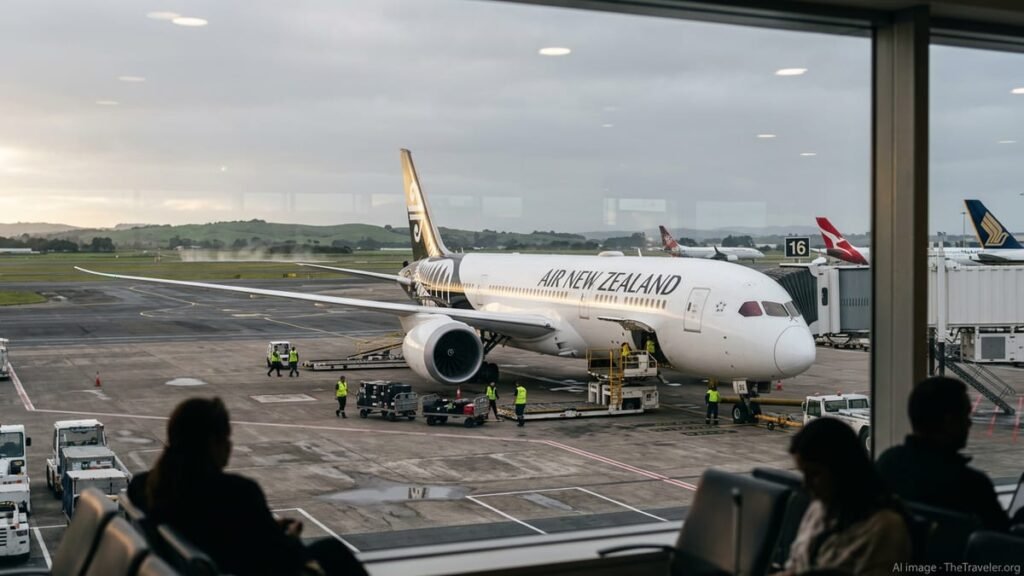
Air New Zealand has completed a trial of a new digital identity system on the Auckland–Hong Kong route, in a move that aims to streamline airport formalities through contactless, biometric-supported processing and could signal a wider shift in how passengers move through terminals.
Get the latest news straight to your inbox!
A New Kind of Travel Document Takes Shape
According to information published by Air New Zealand in April 2026, the airline’s digital ID trial allowed participating passengers to add passport details into the Air NZ app and share that verified identity during online check in. The encrypted data was then used to support biometric verification at designated points in the journey, reducing the need for repeated manual document checks.
The pilot ran on return services between Auckland and Hong Kong in March, positioning New Zealand within a broader wave of trials that are testing how digital wallets and biometrics can replace paper-based processes at airports. Publicly available material from the International Air Transport Association indicates that this route formed part of a wider proof of concept program exploring contactless, biometric enabled international travel in the Asia Pacific region.
While travel still required a physical passport, the digital ID acted as a reusable, verified credential that could be shared ahead of time. The approach is designed to shift identity checks from crowded airport counters to secure digital channels, with the aim of making arrival at the terminal a faster and more predictable experience.
Air New Zealand has described the technology as a way to support fewer document checks and shorter queues, presenting the trial as an early step rather than a full operational rollout. The airline is now assessing how the system performed in real conditions and where it could be extended next.
How the Digital ID Journey Worked
Based on the airline’s description of the pilot, customers who opted in created a digital identity by loading passport information into the Air NZ app and completing verification steps at home. At online check in, they could consent to sharing that digital ID with Air New Zealand and connected systems, avoiding the need to manually re enter data for each leg of the trip.
Once enrolled, passengers could then be recognized at selected touchpoints by facial biometrics. Cameras captured a live facial image and compared it against the passport photo linked to the digital ID, enabling what reports describe as a “look and go” experience at certain points, rather than presenting a document to an agent.
The trial integrated multiple systems, including the New Zealand Traveller Declaration, the IATA Travel Directory, Hong Kong International Airport’s Flight Token framework and Air New Zealand’s own check in platform. This kind of interoperability is considered central to making digital identity work across borders and different aviation stakeholders, rather than remaining limited to a single airline or airport.
Industry coverage suggests that the trial also explored compatibility with Apple’s mobile wallet, allowing some participants to use a digital ID stored in Apple Wallet alongside the airline’s own app based solution. This multi wallet approach reflects a wider shift toward letting travellers choose where to store and manage their credentials, provided they meet common technical and security standards.
The Air New Zealand trial coincides with renewed momentum around digital identity in aviation. IATA recently highlighted several successful proofs of concept in Europe and Asia Pacific where passengers shared identity data in advance and then moved through airports using biometrics at key checkpoints, with minimal reliance on physical documents.
In these initiatives, including the Auckland–Hong Kong test, digital IDs were linked to airline booking and check in systems, border control applications and airport infrastructure. The resulting data flows allowed passengers to be identified consistently from curb to gate without repeatedly presenting passports and boarding passes.
Industry analyses indicate that this model could cut minimum connection times, reduce the need for duplicated terminal infrastructure and lower operating costs, while also supporting more targeted security screening. For travellers, the most visible benefits are expected to be shorter lines, fewer bottlenecks and the ability to complete more formalities before arriving at the airport.
New Zealand’s broader digital identity landscape is also evolving. Government initiatives such as the Digital Identity Services Trust Framework and work on digital credentials and verification apps are laying down standards for how verified attributes are issued, stored and checked. Observers note that this policy and technology foundation may help airlines and airports scale digital ID solutions beyond limited trials.
Opportunities and Questions for Travellers
Supporters of the Air New Zealand trial point to convenience as a major benefit. By reusing a single verified digital ID across the journey, passengers may avoid retyping data, reduce the risk of errors and spend less time at traditional check in counters or boarding queues. For frequent flyers, a consistent biometric experience across multiple flights and partner airlines could make tight connections less stressful.
There are also potential advantages for accessibility. Pre completing formalities from home could help travellers who find it difficult to stand in long lines or manage paper documents. With identity checks handled by cameras and automated systems, staff can be redeployed to assist passengers who need more personalised support.
At the same time, privacy and data protection remain central considerations. Public information from New Zealand’s Department of Internal Affairs and other agencies underscores that biometric systems must comply with strict rules around consent, storage, sharing and deletion of personal data. Transparency about how digital IDs are used, and the ability for passengers to opt out and use traditional processes, are seen as critical to building trust.
Early feedback shared in online travel forums suggests a mix of curiosity and caution among passengers. Many are eager to see shorter queues and a more seamless airport journey, while others are watching closely to see how secure and reliable the technology proves in practice, particularly in edge cases such as system outages or mismatched biometric readings.
What Comes Next for Air New Zealand’s Digital ID
Following the completion of the Auckland–Hong Kong pilot, Air New Zealand has indicated it will explore a broader trial and assess options for extending digital ID to additional routes. Publicly available statements highlight Australia as a likely focus market for further testing, reflecting the high volume of trans Tasman travel and the presence of partner airports that are also investing in biometrics.
The airline is sharing insights from the trial with global industry bodies, including IATA, and engaging with government agencies and airport partners to refine technical standards and operating procedures. The goal, according to industry commentary, is to ensure that future deployments can interoperate not only across multiple airports but also with other airlines and national digital identity schemes.
Any wider rollout is expected to be gradual. Stakeholders note that digital ID journeys depend on a complex chain of technology, regulation and infrastructure, from secure mobile apps and identity proofing to biometric hardware at gates and border control points. Aligning these elements across countries and organisations takes time, even when early trials show promising results.
For now, the digital ID trial positions Air New Zealand among carriers experimenting with how travel documents can evolve from paper and plastic to secure digital credentials. As more pilots are completed in different regions, travellers may begin to see a patchwork of contactless, biometric supported experiences emerge, gradually reshaping expectations of what it means to check in, clear border controls and board an international flight.