
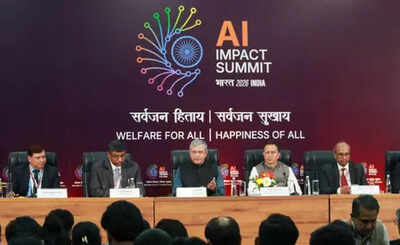
The AI Impact Summit 2026 wrapped up in New Delhi on December 20 with 88 countries and international organisations signing the New Delhi Declaration on AI Impact—a sweeping, albeit non-binding, agreement that lays out a shared roadmap for making AI work for everyone, not just a handful of tech superpowers.The two-day summit, held on February 18-19, was built around seven pillars—or “Chakras” as the government called them—covering everything from democratising AI resources and workforce reskilling to energy-efficient AI systems and using AI to accelerate scientific research. India, which hosted the event, pushed hard for its “AI for All” vision, rooted in the Sanskrit principle of “Sarvajan Hitaya, Sarvajan Sukhaya” (welfare for all, happiness for all).
What the New Delhi AI Impact Declaration promises
Among the concrete deliverables: a Charter for Democratic Diffusion of AI aimed at making foundational AI resources more affordable, a Global AI Impact Commons platform for countries to share and replicate successful AI use cases, and a Trusted AI Commons—essentially a shared repository of tools, benchmarks, and best practices for building secure AI systems. There’s also an International Network of AI for Science Institutions to pool research capabilities across borders and an AI Workforce Development Playbook to help nations prepare their citizens for an AI-driven economy.The signatory list reads like a UN General Assembly roll call—from the US, China, and the EU to smaller nations like Bhutan, Fiji, and Suriname. Russia, Iran, and Cuba also signed on, making this one of the more geopolitically diverse AI agreements to date.
India positions itself as a bridge between AI haves and have-nots
A recurring theme was the gap between countries that build AI and those that merely consume it. The declaration calls for affordable connectivity, open-source AI ecosystems, and locally relevant innovation. The message is clear: developing nations shouldn’t just consume AI—they should build it too. Energy efficiency also got a spotlight, with the summit acknowledging AI’s growing appetite for power and resources.With 88 signatories—including the US, China, Russia, and the EU—the New Delhi Declaration is one of the most geopolitically diverse AI agreements to date. And a clear signal that India wants to lead the global AI governance conversation, not just sit at the table.














![[News] China Reportedly Ramps Up Chip Tool Push, Sets 70% Target by 2027; SMEE, NAURA at Forefront](https://charm-retirement.com/wp-content/uploads/2026/02/China-chip-FREEPIK-20251030-624x416.jpg)
