For much of 2026, a rough stretch in the stock market has been a double whammy.
Investors have had to contend not only with stock losses, but bonds selling off, too. The dynamic upended the safety trade of rotating out of stocks and into Treasurys. It’s hard to diversify when there’s nowhere to hide.
Why the break from tradition? Because inflation, federal deficits, oil, and the enormous financing needs of the AI buildout have all given bond investors reason to demand higher yields. At the same time, strong profit-growth projections for the stock market’s top AI leaders have kept major indexes near record highs.
But Thursday’s decline in chipmakers — perhaps the most sensitive area of the AI trade — didn’t follow the risk-off playbook that’s defined 2026 so far. With chipmakers on pace for their worst week in three months, a 1% decline came alongside a 10-basis-point drop in the 10-year Treasury yield.
At least for one day, investors rekindled the Treasury safety trade.
That raises a potentially consequential question: Is the market finally getting its old shock absorber back? One day does not make a trend. But it’s enough to make bond investors dream.
Fear finally outran inflation
Thursday presented investors with two competing reasons to move yields: hot producer-price inflation data on one side, and a rout in AI-spending-exposed stocks on the other.
For much of the year, inflation and fiscal worries have won that tug-of-war. But this time, the flight to safety did.
One notable driver of weakness in chipmakers was the latest financial release from AI giant Anthropic. Social media was immediately ablaze on Wednesday evening with naysayers repeating a common refrain: “It’s over.”
Their case is that Anthropic’s financials, while objectively strong, still suggest a growth slowdown that could ripple through the global AI buildout. Chipmakers, ever the lightning rod of the AI trade, were of course hit hardest.
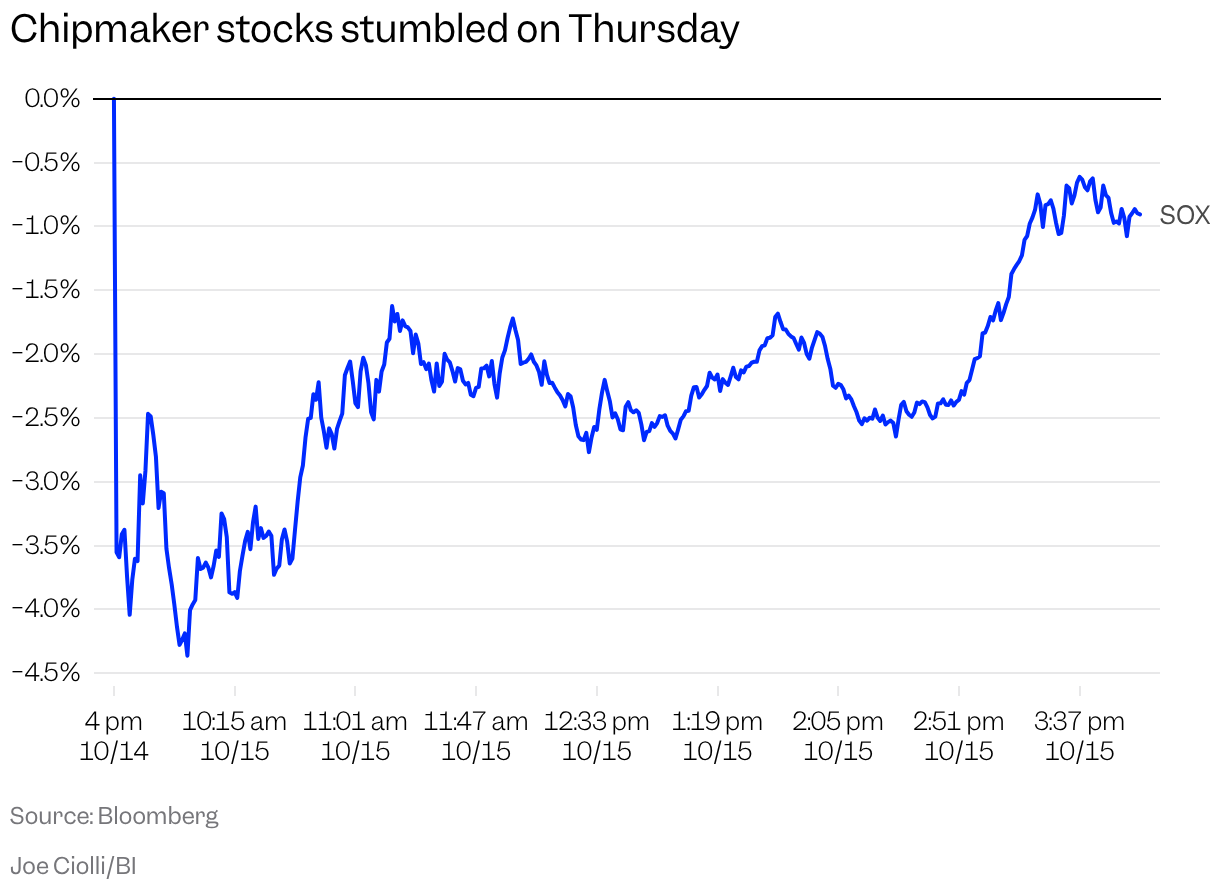
The trade has been spooked by similar events many times before, and most have been mere blips on the radar. But if these Anthropic nerves spread, investors would be well served to use Treasurys as an escape valve.
An important distinction
Just to be clear, I’m talking about Treasury bonds, not their corporate counterparts. A Treasury rally is not a universal bailout for corporate borrowers pressured by surging yields.
We got a prime example this week with data-center giant CoreWeave, which faced sudden concerns about its ability to service its mountain of debt. The company’s bonds turned distressed, and its stock plummeted. Credit spreads across the broader market have blown out, showing that concerns about AI-linked debt are far from settled.
In investors’ endless pursuit of winners and losers within the AI trade, the next chapter will be figuring out which companies have the balance sheets to survive a less euphoric phase of the buildout. CoreWeave is just one example of how high expectations and too much debt can come back to bite.
The next test of any possible Treasury-hedging revival will come the next time US stocks sell off. Which bond traders will show up: the ones tearing their hair out about inflation, or the ones simply looking for a place to rest while stocks go nuts?
Your guide to what’s moving markets