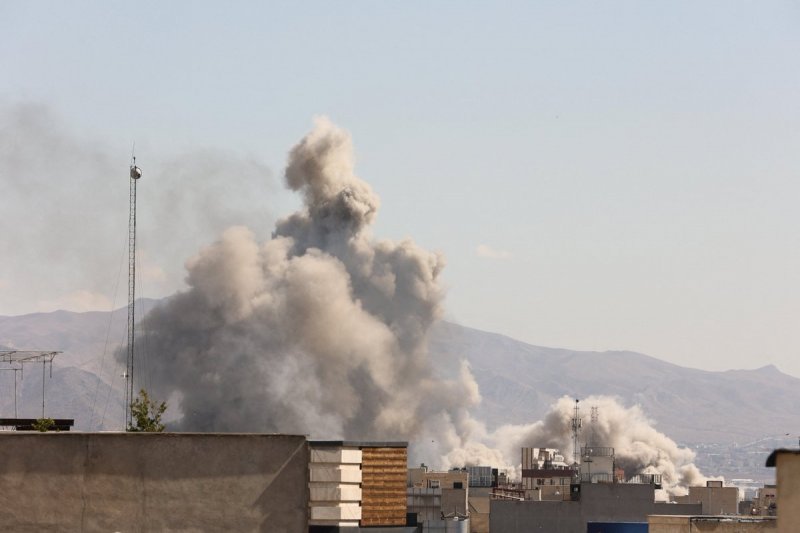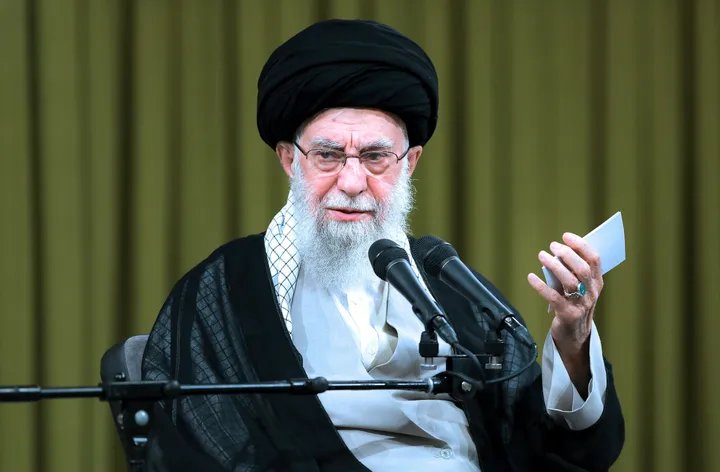
When Iran’s Supreme Leader was reported killed in a bombing attack, one question surfaced quickly: what happens when a political system built around one man suddenly loses him?
For decades, Iran projected durability. Authority was centralised. Institutions revolved around a dominant leader. Stability appeared fixed. Yet in a moment, succession — long managed behind closed doors — became urgent and destabilising.
Authoritarian systems are designed to look permanent. Applause is synchronised. Outcomes are predetermined. Power is personalised. But when power becomes too personalised, the future becomes fragile.
Succession is no longer procedural. It becomes the regime’s most dangerous moment.
That reality now hangs quietly over Beijing.
This week, China opens its annual Two Sessions, the country’s most choreographed political gathering.
Delegates will approve economic targets, signal policy priorities and showcase unity under President Xi Jinping.
What they will not address is the most sensitive question in Chinese politics: if Xi does not rule indefinitely, who comes next?
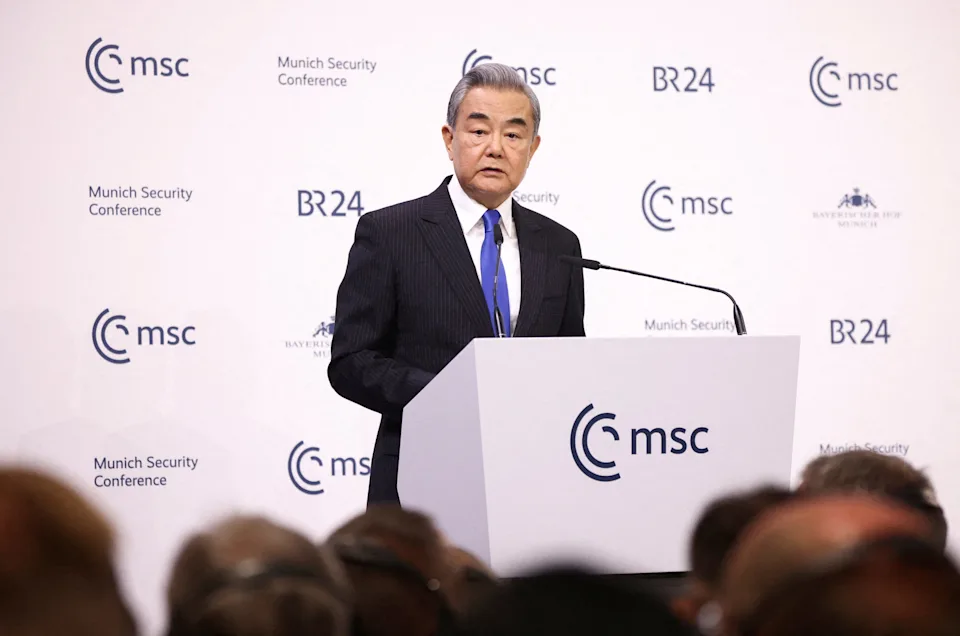
Events in Tehran have made one question stand out in China: in a system built around one man, what happens when he is gone? (Reuters: Tingshu Wang)
China once built a system
After Chairman Mao Zedong’s death, Beijing’s leadership understood that succession was the Achilles’ heel of one-party rule.
Mao had cycled through designated heirs who were later purged or sidelined. Power struggles had shaken the system.
To prevent that from happening again, the party gradually constructed a framework to manage transitions.
It was not democratic. But it was predictable.
Retirement ages were enforced. Informal term limits were observed. Younger leaders were elevated to senior roles years before taking the top job. Successors were groomed in stages, gaining experience in party management, government administration and the military.
By the 2000s, China appeared to have developed a repeatable pattern of leadership turnover. Jiang Zemin stepped aside. Hu Jintao transferred power to Xi in 2012 without visible rupture. Succession seemed institutionalised.
Xi has reversed that trajectory.
In 2018, presidential term limits were removed. In 2022, Xi secured a third term as party leader and filled the top leadership ranks with loyalists. No younger figure was elevated as a clear successor. The old age conventions weakened. Collective leadership faded.
The country is no longer governed primarily by a framework of rules designed to manage leadership change. It is governed by the authority of a single dominant figure.
That shift has strengthened Xi’s control in the present. It has made the future harder to read.
Loading
How successors were chosen
China’s constitution suggests that party institutions elect the top leader. In practice, the process has always been political.
In the post-Mao era, a typical succession followed a recognisable pattern.
First, age and timing. The likely heir was usually promoted to the top leadership tier while still in their late 50s or early 60s. That gave them time to consolidate authority before taking the highest post.
Second, national credentialing. The successor would typically rotate through key positions that demonstrated competence and built legitimacy: senior party management, high-level government roles, and eventually exposure to military leadership through the Central Military Commission.
Third, military credibility. Even though China is not ruled by generals, control over the armed forces is decisive in elite politics. A credible successor needs the confidence of the military establishment. That does not require battlefield experience. It requires trust, proximity and institutional familiarity.
In short, succession was signalled early and reinforced gradually.
Under Xi, that signalling has largely disappeared.
There is no obvious understudy. No figure has been publicly positioned through the traditional ladder of party, state and military credentials in a way that clearly marks them as next in line.
That ambiguity may be deliberate. Naming a successor too early weakens a strongman. But leaving the question unresolved increases long-term uncertainty.
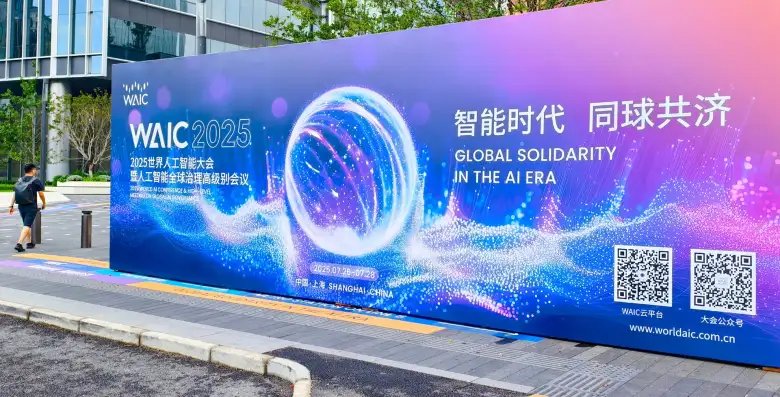
Beijing is wagering that embedding AI across manufacturing, energy, data infrastructure and scientific research will raise productivity and cushion demographic pressure. (Reuters: Ludovic Marin)
What to watch this week
The Two Sessions will not formally determine succession. But personnel signals still matter.
The clearest indicator is whether any leader under 65 is elevated to a genuinely powerful national role.
If a relatively younger official is promoted to executive vice premier, entrusted with a heavyweight cross-sector portfolio, or placed consistently at the centre of national policy execution, it would suggest that Xi is at least allowing space for future leadership preparation.
If no such figure appears, it strengthens the impression that succession will remain deliberately ambiguous and tightly managed.
It is also important to examine the age profile of those who are promoted. If appointments largely favour officials already in their late 60s and close to Xi’s own generation, that points to consolidation rather than transition planning.
Such a pattern would reflect a structure built around loyalty and control, not the grooming of a next generation.
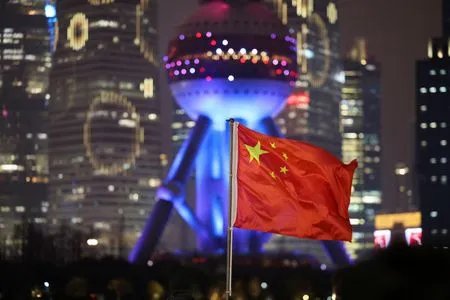
There is no visible succession crisis in China today. (Reuters: Vincent Thian/Pool)
Another question is whether anyone gains meaningful exposure to the party’s internal machinery or to military structures.
Even if formal party posts are not reshuffled this week, new state roles can foreshadow future authority within the party itself.
A younger leader positioned to work closely with the party secretariat or to acquire visible links to the armed forces would stand out. Without that, the system remains firmly centred on Xi.
Finally, the tone of the policy messaging matters. This year’s planning cycle places heavy emphasis on artificial intelligence, industrial upgrading and technological self-reliance.
Beijing is wagering that embedding AI across manufacturing, energy, data infrastructure and scientific research will raise productivity and cushion demographic pressure.
The plan reflects confidence in central direction and mobilisation. It also reveals a governance style that relies on scale, discipline and state coordination.
That matters for succession because it underscores a broader shift: policy is being framed less around institutional evolution and more around central leadership executing a grand strategy.
Stability and risk
There is no visible succession crisis in China today. The Communist Party remains disciplined. The security apparatus is expansive. Xi faces no public challengers.
China is not Iran. Its bureaucracy is larger.
Its governance structures are more developed. Its economic system is deeply integrated into global markets. But the structural lesson is universal.
When authority rests overwhelmingly with one individual, uncertainty about his exit becomes a strategic vulnerability. Investors notice. Military planners notice. Foreign governments notice. Domestic elites notice.
The system China constructed after Mao was designed to reduce that risk. It relied on norms, sequencing and preparation.
Xi has prioritised control over predictability. That has strengthened his authority now. It has left the path after him less defined.
The Two Sessions will project confidence and continuity. Growth targets will be announced. Industrial plans will be detailed. Unity will be displayed.
What will remain unspoken is the question made stark by events in Tehran: in a system built around one man, what happens when he is gone?
That question does not need to be answered today to shape China’s tomorrow.