“A TRULY HISTORIC paradigm shift”. “A game-changer”. “One big milestone”. If officials are cautious about overselling Europe’s new asylum deal with Rwanda, no one told the politicians from the five European governments who unveiled it in Vienna on November 16th. “This is the first real answer anyone has put on the table to solve the deep problems with the current system,” said Mette Frederiksen, Denmark’s prime minister and a prime mover behind the scheme.
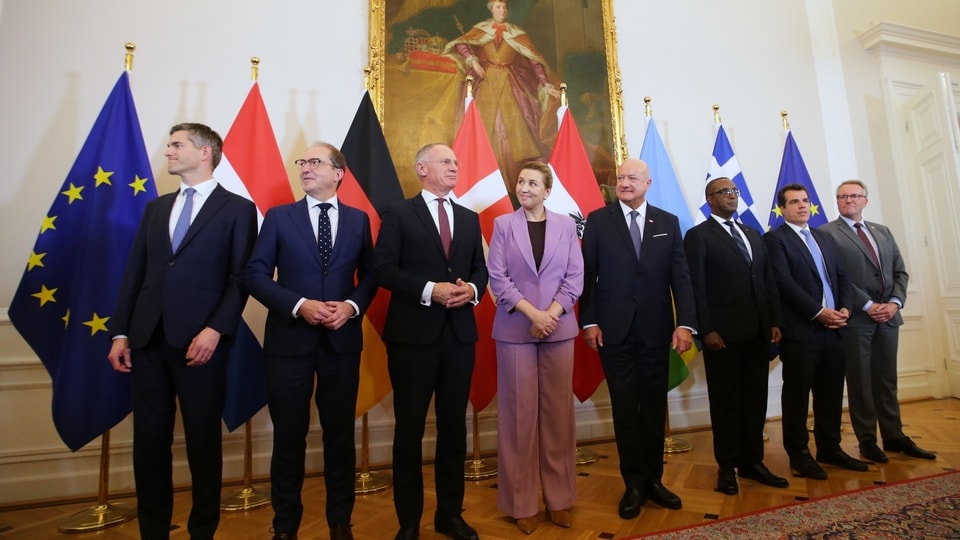
Under the plan, which the governments promise will take effect next year, migrants in the five countries—Austria, Denmark, Germany, Greece and the Netherlands—whose asylum bids have been rejected will be eligible for transfer to a “return hub” in Rwanda. There they will be able to integrate into local communities, return home or move to any other country that will accept them, said Vincent Biruta, Rwanda’s interior minister, speaking alongside the European ministers whom his government had assiduously courted. Officials say Rwanda will sign bilateral agreements with all five governments to put the deal into action.
The Rwanda plan is a second element of Europe’s migration “turnaround”. Thanks partly to slightly calmer conditions near its borders, irregular arrivals have plummeted (see chart 1). Last month saw the fewest asylum claims in Germany since October 2011. An “asylum pact” that took effect in June may help further. But it is still proving difficult to deport asylum-seekers whose bids have failed. Lacking documentation, or coming from countries that refuse to co-operate, many fall into the shadows. The EU issues far more return orders than it carries out (see chart 2).
Politicians want to show they can do things previously seen as impossible, says Raphael Bossong from the German Institute for International and Security Affairs in Berlin. But where populist-right ones demand “remigration”, the mainstream seeks a more orderly approach. In October the EU passed a law allowing the creation of return hubs, with human-rights and monitoring safeguards. That, say officials, puts the scheme on a sounder legal footing than previous such efforts. Britain’s ill-fated 2022 deal, which unlike the European scheme would have sent migrants to Rwanda to have their asylum claims processed, cost taxpayers £715m ($910m) before being abandoned.
Details are scant, and many questions remain. The first is on effectiveness. The few hundred migrants at most who could be sent to Rwanda next year will not make a dent in the stock of failed asylum-seekers in Europe. Germany alone has over 250,000 migrants who have been served with return orders. The “bigger number”, Ms Frederiksen said, would be migrants who, hearing of the Rwanda scheme, might decide not to travel to Europe in the first place. But would minds really be changed by the remote possibility of being sent to Rwanda? “Evidence of a deterrent effect is highly uncertain,” said a British official of his country’s scheme, which had a more credible claim to deterrence since it would have applied to more immigrants.
Second, what would happen to those sent to Rwanda, one of Africa’s poorest and most densely populated countries? Human-rights groups say that once migrants are beyond Europe’s gaze they could face mistreatment or even further deportation, including refoulement into danger. “This is a hugely repressive regime,” says Tineke Strik, a Dutch Green member of the European Parliament. But such concerns rarely trouble European officials who have been attacked for years by critics they see as naive do-gooders. “Unless you put a hub in Liechtenstein you’ll run out of options,” sniffs one. The new deal has a role for United Nations agencies in executing transfers, offering advice, monitoring conditions and aiding integration in Rwanda. The country already hosts EU-funded centres for vulnerable refugees evacuated from Libya. Even so, legal challenges to the new plan are certain.
Others worry what the deal may mean for relations with Rwanda, which has supported a murderous militia in the Democratic Republic of Congo and persecutes dissidents (one was recently found beheaded in Uganda). “It is deeply troubling that European governments are considering sending rejected asylum-seekers to Rwanda,” says Rémy Amahirwa, a Sweden-based Rwandan whose mother, a prominent opposition figure, has been imprisoned by Paul Kagame’s government. Last year the German government cancelled talks with Rwanda because of its actions in Congo. Europeans want to distinguish Rwanda’s treatment of migrants from its broader human-rights record. Yet some envoys in the region say they already detect signs of diplomatic reticence from Europeans.
Beyond diplomatic cover, what is in it for Mr Kagame? Mr Biruta said Rwanda was merely doing its bit to manage the global problem of irregular immigration. In reality it hopes for cash, aid projects and a burnished reputation as a reliable partner. It is also hoping to select who comes, with a preference for professionals who could integrate into labour markets and boost local economies. “They feel bruised from the UK arrangements, so there is a real interest to make this work,” says one European official.
Not everyone in Europe is on board. In Germany doubts among Social Democrats, the junior coalition partner, extend into the cabinet. France and Spain, among others, remain sceptical. Yet both countries may elect right-wing governments during the next six months. Europe’s rightward march on migration policy is likely to continue.
Other EU countries, notably Italy, are clamouring to join the return-hub plan—even Britain may be interested—and European governments are reportedly negotiating with other potential return-hub hosts. Meanwhile, plans are being drawn up to avoid a repeat of the scenes earlier this year, when tens of thousands of Moroccans swarmed into the Spanish exclave of Ceuta. Frontex, Europe’s border-guard agency, may have its mandate expanded; it may also help with deportations to Rwanda. Ultimately some governments aspire to externalise the entire asylum process. One official says it is vital for centrist politicians to take action now to see off something nastier from right-wing populists: “It’s important we get this right, otherwise we’ll be in deep shit in a few years.”
Correction (November 17th): In earlier version of this story, chart 1 was inaccurately labelled as showing “monthly arrivals”, rather than “annual arrivals”.
To stay on top of the biggest European stories, sign up to Café Europa, our weekly subscriber-only newsletter.