Climate change is making some African deserts greener

For decades Lake Chad seemed to be a terrifying portent of climate collapse. It had been among the world’s largest lakes, on which tens of millions depended in Chad, Cameroon, Niger, and Nigeria, the four countries that share it. Yet years of punishing droughts, compounded by diversion for irrigation, between the 1960s and 1990s helped to shrink it by as much as 90%. With the planet warming and the Sahara desert apparently advancing, Lake Chad seemed destined to disappear. The famines that ravaged the surrounding Sahel in the 1980s looked like a grim preview of Africa’s hotter, drier future.
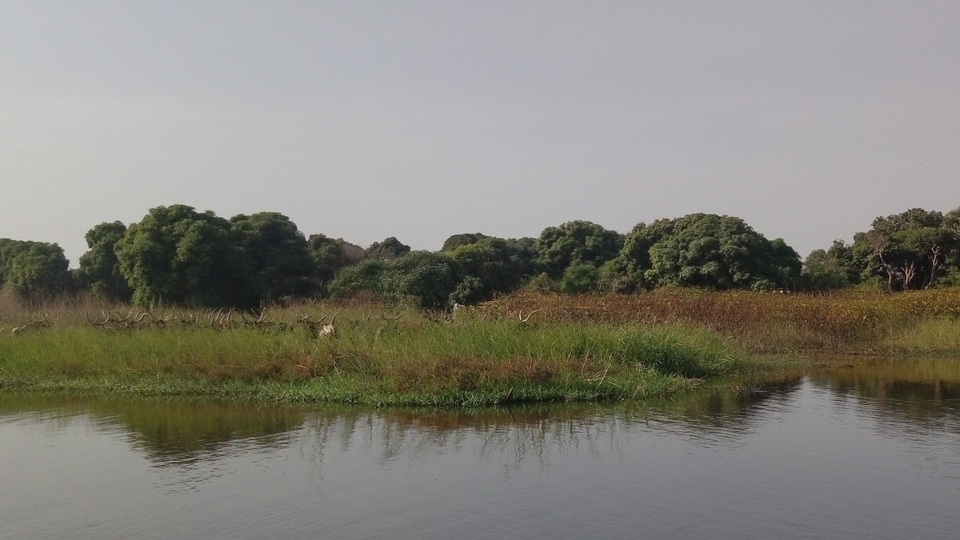
FILE PHOTO/Coolthoom1, CC BY-SA 4.0, via Wikimedia Commons

Instead the opposite happened. Today Lake Chad (pictured below) has more water than it has had for decades. A new study by the World Bank and the International Water Management Institute finds that its open-water area more than doubled in little more than a decade after 2012, reaching over 8,300 square kilometres in 2025. Elsewhere, too, waters are rising. Four of Africa’s biggest water bodies—Victoria, Malawi, Tanganyika and Turkana, the world’s largest permanent desert lake—have risen sharply in recent years. So has Africa’s biggest wetland, the Sudd marshes, which have swollen so much since 2020 that South Sudan’s landscape may have been altered for good.

Each case, like Africa’s 54 countries, is different. Yet rising waters in seemingly unlikely places such as Lake Chad hint at two important aspects of the continent’s climatic future. First, much of Africa may turn out to be wetter than many expect, especially those who recall the Sahelian droughts of the 1970s and 1980s. Second, exactly how climate change will play out across much of the continent is deeply uncertain, arguably more so than elsewhere. Helping Africans adapt to shifts that will be severe but hard to predict is a priority for the continent’s delegates at COP31, the UN’s annual climate summit that ends in Turkey on November 20th.

Plenty about Africa’s changing climate is clear-cut. Its few glaciers are vanishing. The seas along its coasts are rising. Heatwaves are growing longer, more frequent and more intense. A new study by the African Climate & Development Initiative at the University of Cape Town finds that since 2010 hot spells in South Africa have been nearly three times as “extreme”—a measure that combines duration, temperature and the area affected—as in the previous three decades. The World Meteorological Organisation says every African sub-region has grown hotter since 1961.

Parts of eastern and southern Africa appear to be drying. But in the Sahel, a vast semi-arid belt stretching from Senegal to Sudan, rainfall has for years been increasing (see map). The clearest sign is Lake Chad, which acts like a “giant rain gauge,” says Richard Washington of Oxford University. Another is the Sahel’s storms, which bring most of its rain. Extreme ones have become roughly three times as frequent since the early 1980s. Many climate scientists expect these trends to continue, as warming in the Sahara and the North Atlantic fuels the west African monsoon and draws more moisture into the Sahel.

In some places, that change brings the promise of better harvests. Satellite imagery shows that much of the Sahel is turning greener as once-parched lands revive. Richard Taylor of the University of Toronto says that a recent expansion in groundwater storage could, in theory, expand access to drinking water and one day even feed irrigated farms.

But more rain also means more floods. Rainfall in the Sahel in mid-2024 was between 120% to 600% above the seasonal average for the previous three decades, sweeping away villages, forcing hundreds of thousands from their homes and leaving parts of Niamey, Niger’s capital, underwater. In 2025, more than 230 people were killed in flash floods in Nigeria.

All this challenges a long and widely held belief in Africa’s relentless “desertification”. The idea of the Sahara, the world’s largest hot desert, pushing southwards into the Sahelian savannah dates back to the colonial era. A study commissioned by the UN in the 1970s claimed it was expanding in Sudan by as many as six kilometres each year. “At that stage it did indeed look as though the Sahel and west Africa as a whole was getting drier and drier in some kind of inexorable process,” says Camilla Toulmin, a British drylands expert. Based on that premise, the African Union launched the “Great Green Wall”, an initiative involving at least 22 countries in tackling soil degradation and desertification, in part by planting trees.

In future, successful adaptation may have to look very different. It will require closer attention to what Stella Shumba, a Zimbabwean climate scientist at the United Nations University Institute for Environment and Human Security, calls the “local expressions” of climate change in Africa. By some estimates the continent will need $30bn-50bn a year for adaptation by 2030. Preparing for a future that is at once wetter and drier raises both the cost and the difficulty.

In the first place, adapting means gathering more and better data, so that “we understand what is changing, how it is changing, where and when,” says Joyce Kimutai of Imperial College London and Kenya’s meteorological agency. Rainfall projections are especially tricky. In east Africa the “long rains” of March to May dwindled from the mid-1980s to around 2010, even as climate models predicted a wetter region in the future—a mismatch scientists dubbed the “eastern African paradox”.

More recently the rains have recovered somewhat, and the short rains between October and December have increased, which helps explain the dramatic rise of Lake Victoria and the lakes of Kenya’s Rift Valley. But projections for the region remain unusually unsettled, particularly for the long rains, says Caroline Wainwright of the University of Leeds. “It’s not just that we don’t know the magnitude of the future change; the direction of change is also uncertain.”

Tropical weather, especially rain, is generally much harder to simulate than the mid-latitude kind. A dearth of observations makes it harder still to test existing climate models and build better ones. Africa covers about a fifth of the world’s land, yet is estimated to host only about a tenth of its weather-monitoring stations, and perhaps half of those fail to record reliable data. The networks have thinned in recent decades. Cuts to Western aid budgets, which have long helped pay for African climate research, could hasten their decline.

The perils and promise can be seen on the shores of Lake Baringo in Kenya’s Rift Valley. The lake’s waters (pictured above) have been rising since 2010, engulfing schools, churches, homes and hotels. Nearby, some farmers are growing tomatoes on newly irrigated fields. The last rains failed. But in the coming weeks El Niño, a recurring climatic pattern that disrupts global weather, is expected to bring floods. Nobody knows for sure if the lake will continue to rise. But locals are preparing as though it will.
Source link

Visited 1 times, 1 visit(s) today

Related Article

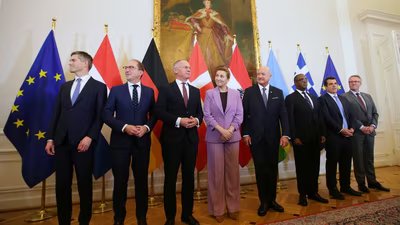
Rwanda's Interior Minister Vincent Biruta, Denmark's Prime Minister Mette Frederiksen, Austria's Chancellor Christian Stocker, Austrian Interior Minister Gerhard Karner, Netherland's Foreign Minister Tom Berendsen, Denmark's Integration Minister Morten Bodskov, German Interior Minister Alexander Dobrindt and Greek Minister of Integration Athanasios Plevris pose for a family photo after migration talks in Vienna, Austria, Monday, Nov. 16, 2026. (AP)

The next stop for Europe’s failed asylum-seekers: Rwanda

“A TRULY HISTORIC paradigm shift”. “A game-changer”. “One big milestone”. If officials are cautious about overselling Europe’s new asylum deal with Rwanda, no one told the politicians from the five European governments who unveiled it in Vienna on November 16th. “This is the first real answer anyone has put on the table to solve the

The latest Ebola outbreak has killed thousands of people in the Democratic Republic of Congo.

A Hunger Crisis Is Making Ebola Even Deadlier

KAMPALA, Uganda—The Ebola outbreak sweeping Central and East Africa is fueling a hunger crisis that is increasing the risk of death for people who catch the virus. The latest Ebola outbreak has killed thousands of people in the Democratic Republic of Congo. The fastest-growing Ebola outbreak in history has already killed more than 5,500 people,

Jensen Huang

Jensen Huang’s Offense Wasn’t Infidelity

Jensen Huang says he’ll return to the helm of Nvidia if the board will have him, and President Trump endorses the idea. Mr. Huang says he made a “serious mistake” in his personal life, and Mr. Trump says the former CEO has learned “a big lesson.” Jensen Huang They both seem to think the mistake

Unsplash

Why startups still go public, eventually

AN AWKWARD fact about America’s stock markets is that two of the companies dictating their fortunes are not traded on them. OpenAI has raised bundles of money without bothering to list. (Doing so now would be “ill-advised”, said its boss, Sam Altman, in September.) The other leading artificial-intelligence lab, Anthropic, makes its debut on November

CCTV footage shows a Russian An-12 military aircraft crashing near Yagunovo in Siberia, killing all 19 people on board. (Unsplash Representational image)

CCTV captures Russian military plane crash in Siberia that killed all 19 onboard

CCTV footage has captured the moment a Russian military transport aircraft crashed near the village of Yagunovo in the Kemerovo region of southwestern Siberia on November 17. All 19 people aboard the aircraft died, according to Russia’s Defence Ministry. CCTV footage shows a Russian An-12 military aircraft crashing near Yagunovo in Siberia, killing all 19

The IIHF's website went offline on Tuesday following a reported cyberattack. (X @IIHFHockey)

Ice Hockey Federation website targeted in cyberattack after Russia barred from competing at World Juniors

The International Ice Hockey Federation’s website went offline on Tuesday following a reported cyberattack, which came amid controversy over its decision to exclude Russia from the world junior championship. The IIHF’s website went offline on Tuesday following a reported cyberattack. (X @IIHFHockey) According to the Canadian Press, an image featuring Russian players briefly appeared on

A military An-12 transport aircraft crashed in Russia's Kemerovo region in southwestern Siberia on Tuesday, killing all 17 people on board, Russian media outlet Izvestia reported. (Representative)

17 killed as Russian military plane crashes in Siberia

A military An-12 transport aircraft crashed in Russia’s Kemerovo region in southwestern Siberia on Tuesday, killing all 17 people on board, Russian media outlet Izvestia reported. A military An-12 transport aircraft crashed in Russia’s Kemerovo region in southwestern Siberia on Tuesday, killing all 17 people on board, Russian media outlet Izvestia reported. (Representative) The circumstances

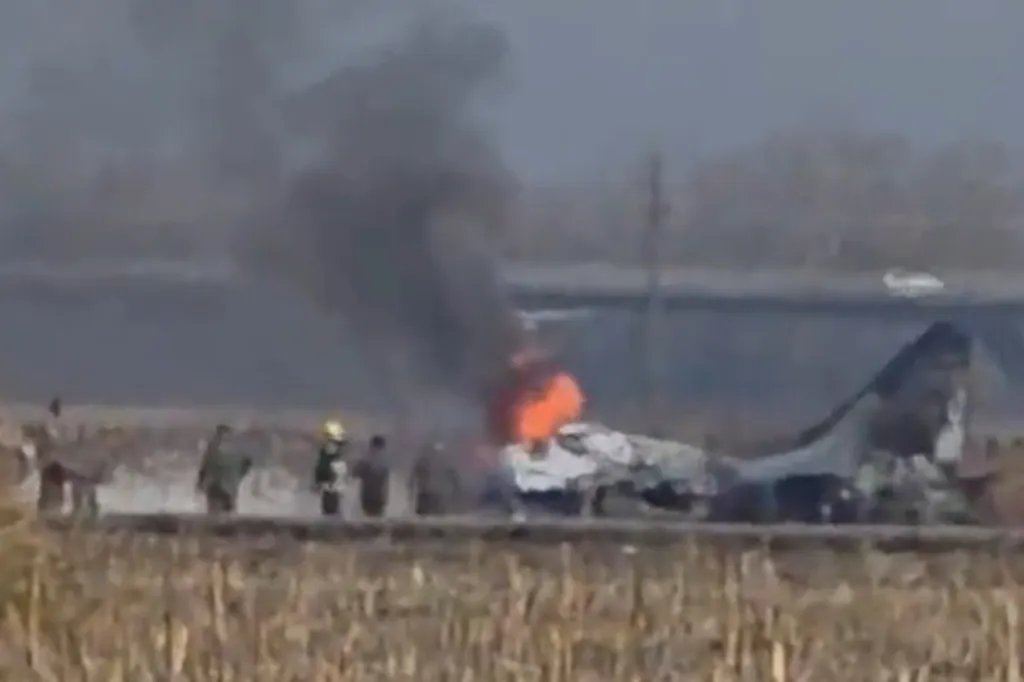
A Serbian military jet crashed on Tuesday northwest of Belgrade, killing the pilot, the defense ministry said.

Serbian military jet crashes, killing pilot: report

A Serbian military jet crashed on Tuesday northwest of Belgrade, killing the pilot, the defense ministry said. The ministry did not immediately give a reason for the crash. The MIG-29 jet crashed around 8:45 a.m. into a field near the town of Stara Pazova, some 30 miles from the Serbian capital, a statement said. A

A poster of Taliban Supreme Leader Hibatullah Akhundzada is seen along a road in Kabul (AFP)

Taliban supreme leader makes rare visit to Afghan capital

The Taliban’s reclusive Supreme Leader Hibatullah Akhundzada made a rare visit to the Afghan capital Kabul on Tuesday, heralding the “extraordinary turn of events” that brought him to power. A poster of Taliban Supreme Leader Hibatullah Akhundzada is seen along a road in Kabul (AFP) Based in Kandahar, the southern heartland of the Taliban movement,

The chipmaker said for now it would not sell chips to customers who rent over 50% of the graphics processing units. (Reuters/ Representational)

Nvidia warns chip buyers of legal risks tied to China AI access, says report

Nvidia said in recent months a proposed US legislation on Chinese companies remotely accessing its artificial intelligence chips could expose it and them to US “legal action,” CNBC reported on Tuesday, citing sources. The chipmaker said for now it would not sell chips to customers who rent over 50% of the graphics processing units. (Reuters/

Palestinians comprise one-fifth of Israel's citizens but share deep religious, cultural and familial ties with Palestinians in the occupied West Bank, Gaza and beyond. (AFP/Representational)

Where Israel’s Palestinian citizens and their political clout stand after Arab parties record win in the elections

As complex negotiations take place to form a new coalition government, a major question is what role Arab-led parties will have after Israel’s Palestinian citizens turned out in high numbers to give them historic gains in national elections. Palestinians comprise one-fifth of Israel’s citizens but share deep religious, cultural and familial ties with Palestinians in

Defense Minister Shinjiro Koizumi told reporters the suspected Russian aircraft early Tuesday violated Japanese airspace for about five minutes near Fukuoka. (File Photo/AFP)

Tokyo protests after two suspected Russian aircraft violate Japanese airspace

Japan said it strongly protested to Moscow on Tuesday after two suspected Russian aircraft entered its airspace off its southwestern coast, the latest incident fueling escalating tensions between the neighbors. Defense Minister Shinjiro Koizumi told reporters the suspected Russian aircraft early Tuesday violated Japanese airspace for about five minutes near Fukuoka. (File Photo/AFP) Defense Minister

A Skydance billboard is displayed outside Paramount Global office in Times Square, Tuesday, Oct. 6, 2026, in New York. (AP Photo)

America does not produce world-beating statistics. Who does?

When King Ariantas wanted to find out how many people lived in ancient Scythia, his approach to people not answering surveys was brutally simple. According to Herodotus, a Greek historian, Ariantas ordered each Scythian to bring him an arrowhead on pain of death. As the king totted up his arrowheads, he could not be sure

Cyberattack targets 178 websites; CNN, BBC, Fox News hit | World News

Cyberattack targets 178 websites; CNN, BBC, Fox News hit | World News

Over a hundred websites, including Zoom, HSBC, CNN, and Ikea were the target of cyberattack after a malware tried to steal cryptocurrency and infect iPhones, a security firm said on Monday. The malware, that originated through a website optimization ​platform, Optimizely, targeted 178 websites across various sectors, Reuters cited researcher Scott Helme as saying. The

New York City police officers are on duty outside the Lotte Palace Hotel during a United Nations General Assembly leaders reception, late Tuesday, Sept. 22, 2026, in New York. (AP Photo/Julia Demaree Nikhinson)

Turkey Appoints Trustee to Pro-Opposition TV Channel Sozcu, Outlet Says

ANKARA, Nov 17 (Reuters) – Turkish authorities raided the offices of ⁠pro-opposition Sozcu ⁠TV early on Tuesday and appointed ⁠a trustee to run its television and online platforms, the channel said, extending ​a crackdown on the opposition and renewing concerns about media freedom. In a statement on its website, Sozcu TV said ‌some of its executives

0
Would love your thoughts, please comment.x
()
x