MILFORD, Beaver County — Some dozens of miles west of I-15, in a remote area of Beaver County, sits a sprawling corridor of clean energy.
There are wind and solar farms, along with several geothermal power projects, like Fervo’s Cape station, which currently generates about 33 megawatts of power for customers in California.
The operation drew the attention of U.S. Secretary of the Interior Doug Burgum, leading to a visit by him and some of his staffers Wednesday.
“This is a great example of President Trump’s energy dominance agenda,” Burgum explained. “Which really is about energy abundance. It’s about reliable, affordable, secure energy. And the geothermal that’s being produced here is absolutely that.”
Fervo has plans to expand its energy production up to around 500 megawatts by 2028, but even that could be just the beginning, as the company is in talks with Google to supply power for a hyperscale data center that could be built in the area. If the project moves forward, Fervo could eventually scale up to producing some 8 gigawatts of power, in part to run the center.
“This is a great reliable source of energy,” Burgum said. “It’s exciting that Utah and the local community has been so supportive.”
In response to widespread backlash from communities against similar proposed data centers, Burgum added, “There is foreign influence that’s gone into trying to influence communities and states in America to not build data centers.”
Burgum believes the expansion of AI infrastructure will play a key role in the nation’s future.
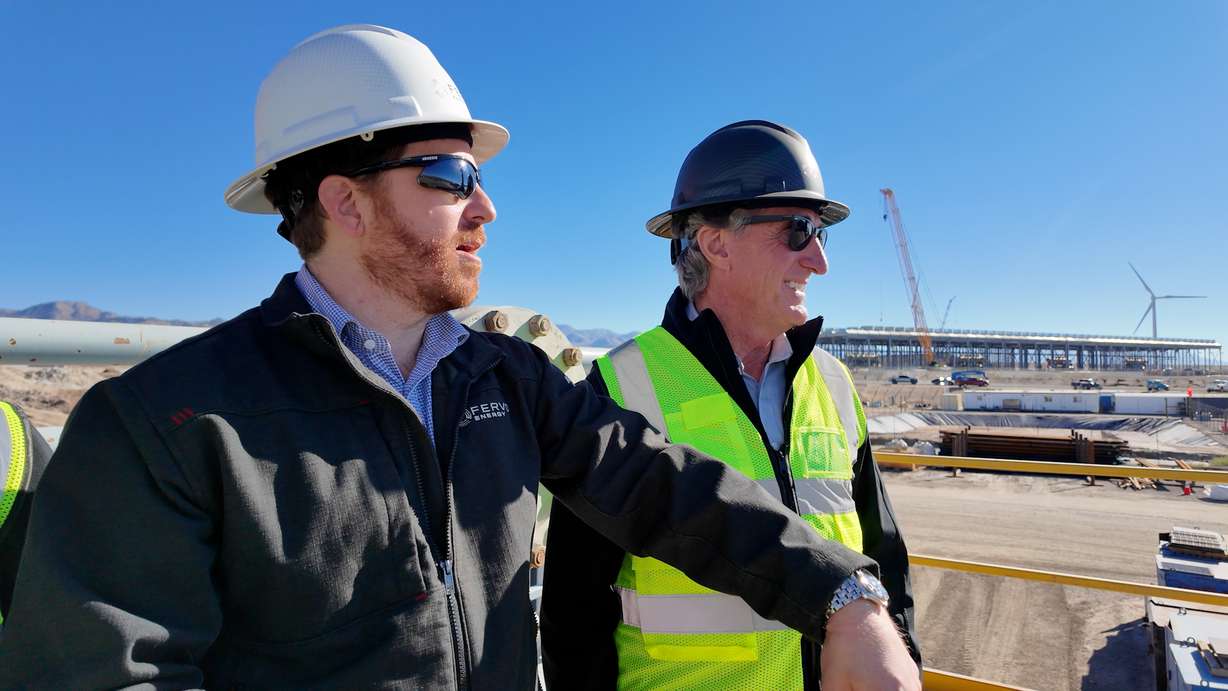
“There are places like rural Utah that could really be the winners in something like this,” Burgum said. “That demand is going to come. It’s going to come from education. It’s going to come from health care. It’s not coming from an AI company. It’s coming from the end customers that benefit from having access to this capability.”
Responding to a recent Propublica report that Burgum stands to benefit from an AI boom, as a result of tech companies he’s invested in, he said, “It’s a complete false statement.”
Burgum added that the companies in question were at risk of turning very little profit.
“None of them are building data centers. None of them are, you know, hyperscalers,” he said. “These are small, privately held, entrepreneurial startup companies.”
The Key Takeaways for this article were generated with the assistance of large language models and reviewed by our editorial team. The article, itself, is solely human-written.