Spain’s deadly train crashes have damaged public confidence in the system | World news

A week ago today, for the second time in nine months, I got in my car and drove south from Madrid to cover a deadly train crash.

At 8.53am last Wednesday, a high-speed train operated by Spain’s state-owned rail company, Renfe, smashed into the back of a stationary train run by the private rail company Iryo, on the outskirts of the small town of Urda in Castilla-La Mancha. Sixty-nine people died in the accident, more than 100 were injured, and Spain’s already depleted confidence in its treasured rail network plummeted.

As I drove to Urda, I – along with much of Spain – was feeling a grim sense of deja vu. On 18 January, an Iryo train on the same line from Madrid to Seville had derailed near the Andalucían town of Adamuz before being struck by a Renfe train coming from the opposite direction. Forty-six people died, scores were injured and public trust in Spain’s trains was badly shaken.

The things I saw and heard in Urda mirrored those I’d seen and heard in Adamuz: local people rushing to the train tracks to help the injured; the rapid repurposing of municipal halls into emergency triage centres; and all manner of spontaneous acts of selflessness, bravery, practicality and compassion.

Some of the passengers whose journey south had come to a violent and premature end near Urda stood in line, many still with their wheelie cases and rucksacks, waiting for the coaches that had been chartered to take them onward. The queues looked almost normal until you noticed the odd bandaged head, torn trouser leg, or bloodstained top.

Josimar Medina, a young Peruvian who was travelling with his Brazilian girlfriend, Vitoria Maia, told me the blood on his brown T-shirt belonged to an American called Austin. Medina had helped free Austin from the wreckage and had managed to get him out of the train.

Although the young American was badly hurt, Medina had seen far worse injuries as he clambered off the train. “I saw … people missing limbs, and I saw one person who had nothing left below the chest,” he said. “I saw people with their heads crushed and people with mutilated arms.”

The shock and sorrow has echoed around Spain as the country tries to come to terms with what has happened, and to accept that its extensive and modern speed rail system – long a source of national pride – may not be the safe and reliable network it once seemed.

As the prime minister, Pedro Sánchez, put it last week, “public trust in the high-speed system has been broken”.

Sánchez and his socialist-led coalition government are now racing to rebuild that trust, but the task they face is immense – especially given the current circumstances.


How will this play out in the elections?

Pedro Sánchez is leading a country in mourning. Photograph: GSLV/GTRES/Shutterstock

The anger and grief are still raw and, with a snap general election now less than a month away, the political atmosphere is explosive. The prime minister’s critics point out that 115 people died at Adamuz and Urda, and Sánchez and his ministers have had eight years to focus on, and invest in, rail safety. On Tuesday evening, the transport minister, Óscar Puente, accepted the inevitable, announcing his resignation, with the acknowledgment that “neither the country, nor I, can bear 100 deaths in less than a year”.

With the election drawing closer, the language from opposition parties is becoming more strident.

Alberto Núñez Feijóo, the leader of the conservative People’s party (PP), which is expected to finish first in next month’s vote, has accused the Sánchez administration of failing to keep Spaniards safe and of trying to use the latest tragedy to political ends.

skip past newsletter promotion


“It’s not just obvious that they’re not good at being in charge,” Feijóo said on Monday. “It’s that I’m also not sure that they’re good people, either.”

The far-right Vox party, with whom the PP could form a national coalition government, has been even more scathing, accusing the government of “killing” the train crash victims and of “incompetence, corruption, cronyism, and a lack of investment in maintenance and infrastructure improvements”. It is also urging the supreme court to investigate Puente on suspicion of manslaughter and causing bodily harm through gross negligence. Puente has rejected allegations of mismanagement, and has insisted that Spain’s railway system is “safe and reliable”.

Despite signs of a modest resurgence in support just before the latest crash, Sánchez always faced a tough road to re-election. Corruption scandals have bedevilled his inner circle and his government was much criticised for its response to the mass crossing into Spain’s north African territory of Ceuta over the summer. That road now looks even more impassable.

But with disasters, emergencies and deaths so frequently politicised, especially in Spain, the worry now is that solutions to the failings at Adamuz and Urda may be missed amid all the campaigning and point-scoring.

As the politicians bicker and Spain prepares for its fifth general election in 10 years, the long process of recovery is just beginning for some of those who survived last week’s crash.

On Saturday afternoon, I got an email from the family of Austin Hartman, the young American pulled out of the train by Josimar Medina. They told me that Austin, a Cal Poly State University student who had been studying in Madrid, was being treated in a Spanish hospital for multiple fractures to his pelvis, hip, femur, humerus and rib, and was unlikely to be well enough to return home for at least two months. GoFundMe pages have been set up for Austin and his friend Leah Silver-Fajardo, who was also badly hurt in the accident.

His family had seen the photo I took of Josimar and Vitoria in Urda and wanted to know if there was any way of contacting them so that Austin could say thank you. By the following day, Austin and his family had video called the couple.

“It was so helpful for us to … thank Josimar for treating Austin with such loving care when he needed it more than anything,” Austin’s stepmother, Sandi, told me in an email on Tuesday. “Austin credits him with saving his life. As we know, beautiful things are born of tragedy and it’s usually in the relationships that are formed out of it.”

To receive the complete version of This Is Europe in your inbox every Wednesday, please subscribe here.
Source link

Visited 1 times, 1 visit(s) today

Related Article

Protester holding signs

Why the Local Democracy Service is more important than ever before

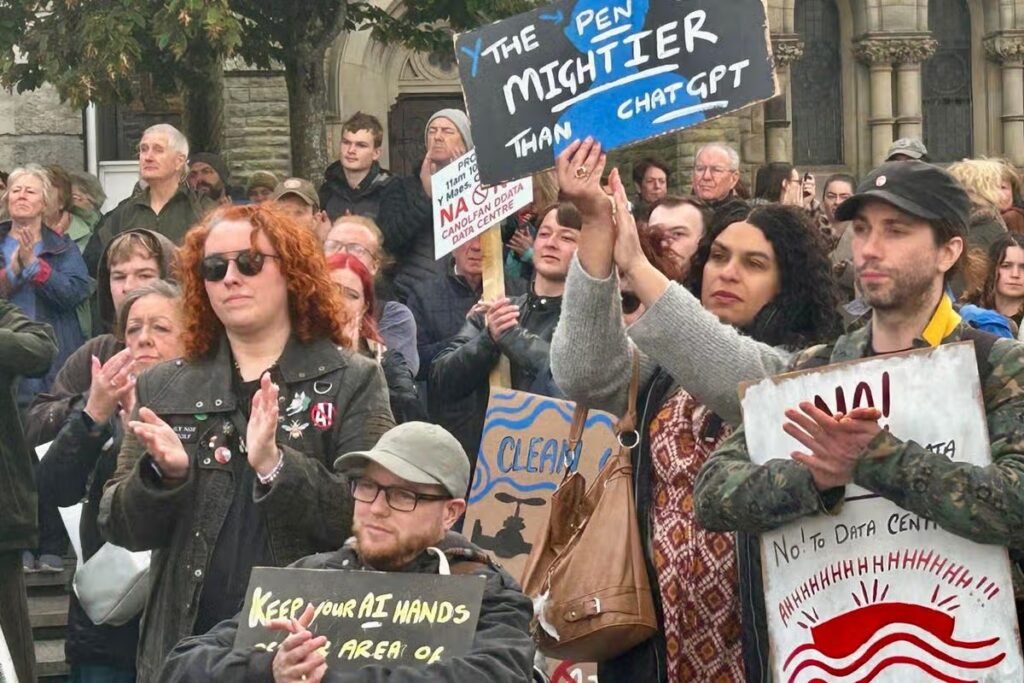
From Menai Bridge closures, AI data centre protests and the pressures on the region’s A&E departments, our reporters Dale Spridgeon and Richard Evans hold the region’s authorities to account Hundreds gather in Caernarfon to protest a bid to build a giant AI data centre on the banks of the Menai Strait From crowded A&Es to

Photo of the city council's offices at City Hall, in Charles Street, Leicester.

This is why local journalism still matters in Leicestershire

As Westminster kickstarts plans to shift more money, responsibility, and power away from London and into new regional mayors, scrutinising the local bodies which we trust to deliver our services has never been more important. This week, writers across the country are reminding readers why journalism matters, and today we have the chance to shout

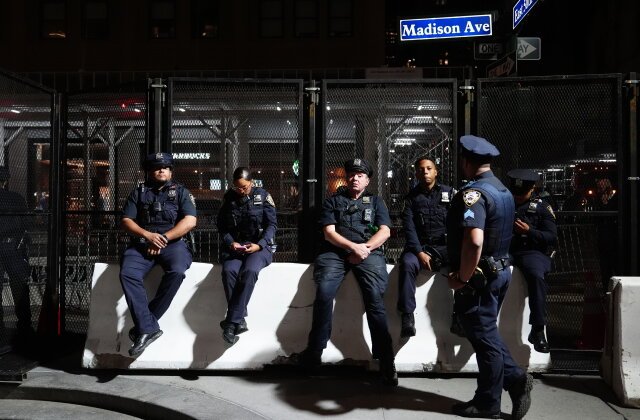
New York City police officers are on duty outside the Lotte Palace Hotel during a United Nations General Assembly leaders reception, late Tuesday, Sept. 22, 2026, in New York. (AP Photo/Julia Demaree Nikhinson)

International Politicians React to Democrats Winning US Midterms

Nov 4 (Reuters) – Governments and politicians around the world reacted to the Democrats winning the US midterm elections, a result that could have major implications for global ⁠trade, ⁠security and energy prices.  Here is a selection of the reactions: SPANISH PRIME MINISTER PEDRO SANCHEZ ON ⁠X “Yesterday, the American people voted against policies that

“Iran was a piece of it,” the president said in a WSJ interview, adding that he didn’t regret launching the war.

Trump acknowledges Iran war is partly to blame for Republican losses

WASHINGTON—President Trump said on Tuesday night that the war in Iran was partially to blame for widespread Republican losses in the midterm elections. But he maintained that he didn’t regret launching the war earlier this year. “Iran was a piece of it,” the president said in a WSJ interview, adding that he didn’t regret launching

‘We are a threat to Putin’: the small Norwegian news outlet with half its staff on Russia’s wanted list | Norway

‘We are a threat to Putin’: the small Norwegian news outlet with half its staff on Russia’s wanted list | Norway

The official newspaper of the Russian government is an unlikely source of recognition for a European news outlet critical of Vladimir Putin and providing sanctuary to exiled Russian journalists. But in May, two days after Russia tested its new intercontinental ballistic missile system nicknamed “Satan II” by Nato, an article in Rossiyskaya Gazeta prompted celebrations

An analysis by The Economist suggests that tenants are increasingly missing payments and turning to costly short-term credit, even as homeowners’ finances remain resilient.

America’s renters are in serious trouble

Jacob ramirez, a 31-year-old operations manager for a café chain, has long struggled to make ends meet. In college he used a credit card to buy textbooks; after graduating, he occasionally did so to pay rent and utility bills. By 2022 he, his wife and their dog were in a one-bedroom flat in Pomona, east

Democratic supporters cheer as midterm voting results are announced at a phone bank and watch party Tuesday.

Five takeaways from democrats’ stunning midterm blowout

WASHINGTON—Voters delivered an astonishing rebuke to President Trump and his party on Tuesday, stripping Republicans of congressional control amid widespread frustrations with the economy and elevating a new class of Democratic lawmakers to power. Democratic supporters cheer as midterm voting results are announced at a phone bank and watch party Tuesday. The backlash was more

Last month Aramco pushed around 7m barrels of oil a day to the market, up from 4.5m in July and roughly equal to the figure in February, before the war (AFP)

Besieged by war, Saudi Aramco continues to gush profits

SAUDI ARAMCO, the world’s biggest oil company, has proved remarkably resilient this year. Since war broke out with Iran it has faced attacks on its facilities and disruption to the Strait of Hormuz, through which most of its barrels were shipped. Yet its cash gushers continue to flow. On November 3rd it reported an adjusted

Local councillor Jo Bird (right) with residents and business owners in New Ferry

Why the Local Democracy Reporting Service is more important than ever

At the Liverpool ECHO, three reporters cover four of the six local authority areas across Merseyside, holding leaders to account and making a difference to communities Local councillor Jo Bird (right) with residents and business owners in New Ferry(Image: LDRS) Local Democracy Reporters (LDRs) are highlighting their work holding power to account in communities in

Flights across Europe face disruption after false bomb threats.. (Photo by Caroline Brehman / AFP) (AFP)

Several flights across Europe disrupted after receiving hoax bomb threats

BERLIN (AP) — Several flights across Europe received alleged bomb threats on Tuesday that ultimately turned out to be hoaxes but prompted searches, diversions and, in one case, an escort by the Italian Air Force until landing, officials said. Flights across Europe face disruption after false bomb threats.. (Photo by Caroline Brehman / AFP) (AFP)

Man Sends Letters Containing White Powder To US Officials Ahead Of Midterms

Man Sends Letters Containing White Powder To US Officials Ahead Of Midterms

Robin Martin is charged with conveying a hoax and mailing threatening communications. (Representational Image) Oklahoma City: Federal authorities have charged an Oklahoma man with sending hundreds of letters containing nonhazardous white powder to public officials ahead of the 2024 and 2026 elections. The powders turned out to be yeast or flour, though not all letters

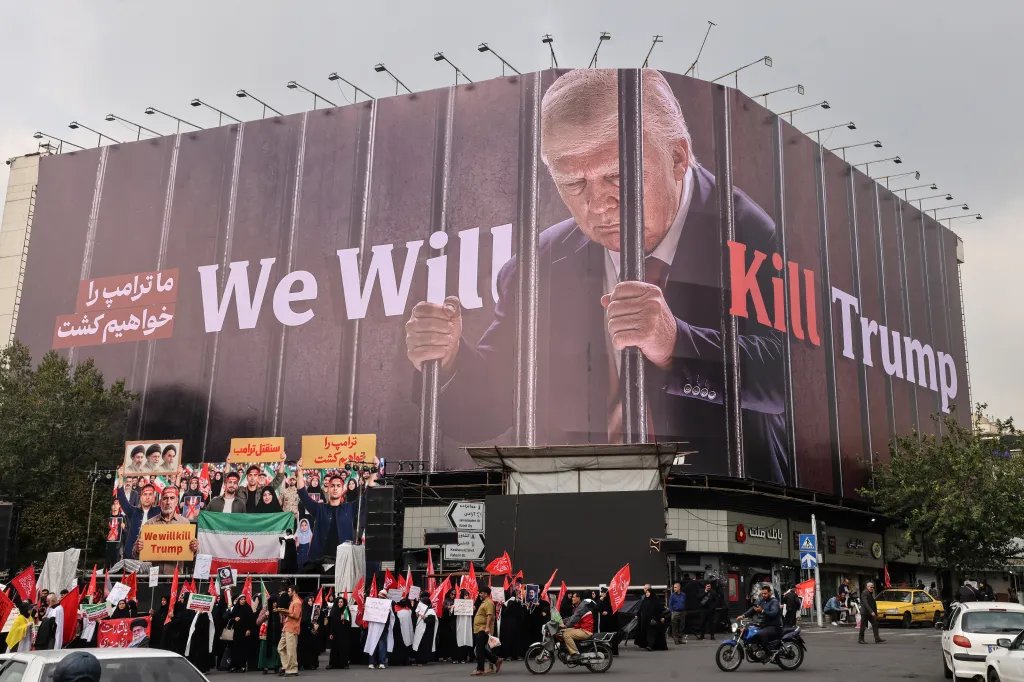
Iranians wave flags and hold placards during a gathering in front of a large anti-US billboard depicting US President Donald Trump behind prison bars.

Iran slams US response to negotiations, demands America ‘fully and explicitly’ address its 7 outlandish conditions

Iran slammed America’s response to its latest peace proposal despite making the same seven outlandish demands President Trump rejected last month. “America’s response to Iran’s rights and demands was not convincing, and they must fully and explicitly address Iran’s seven conditions and act upon them,” Iranian Security Chief Mohsen Rezaei wrote on X. Iranians wave

Trump Says US Will Stop $4 Billion Annual Aid To Israel From Year End

Trump Says US Will Stop $4 Billion Annual Aid To Israel From Year End

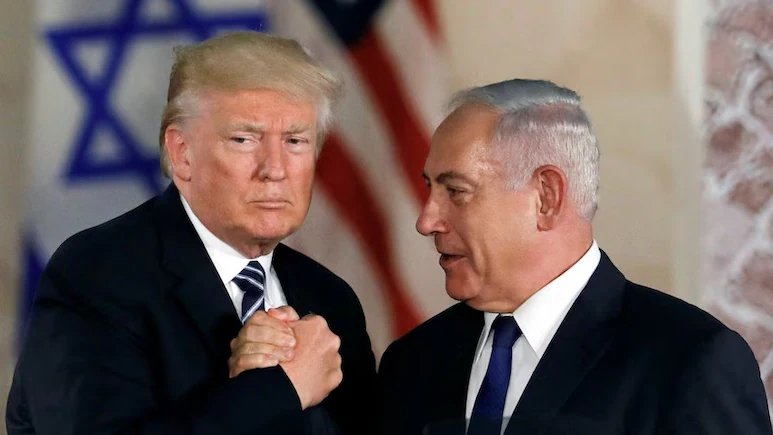
Trump said he made such a deal with benjamin Netanyahu. NDTV file photo Washington: US President Donald Trump on Tuesday said he made a deal with Israeli Prime Minister Benjamin Netanyahu and that Washington would no longer be providing military aid to Israel after the end of this year. Speaking to Fox News’ Fox and

0
Would love your thoughts, please comment.x
()
x