Billions of dollars are being spent on research to find a molecule that will cure Alzheimer’s disease. Yet, as Dr. Louis Bherer explains, adopting certain lifestyle habits could significantly reduce the risk of developing symptoms, in some cases by up to half.
Dr. Bherer is a professor in the Department of Medicine at the Université de Montréal and researcher and director at the EPIC Centre, the preventive medicine and physical activity centre at the Institut de Cardiologie de Montréal (Montreal Heart Institute). His work focuses on the impact of lifestyle, physical exercise and cognitive stimulation on the brain health of older adults and patients with cardiovascular disease.
At his Montréal laboratory, Bherer and his team develop both physical and cognitive exercise programs. The results of their studies corroborate what other research has found on the importance of lifestyle in the prevention of dementia. This factor has been neglected by public health authorities, explains Dr. Bherer, who is also laboratory director at the l’Institut universitaire de gériatrie de Montréal (Montreal University Institute of Geriatrics). We recently spoke to Dr. Bherer:
The Conversation Canada: A new Statistics Canada study indicates a substantial decline in healthy life expectancy in Canada. In 2023, it was 66.9 years, a decrease of 3.5 years from the peak of 70.4 years between 2010 and 2012. Are you surprised?
Dr. Louis Bherer: Yes and no. But what we do know is that the healthspan-lifespan gap — the gap between life expectancy and healthy life expectancy — is widening. For example, nine out of 10 people have at least one risk factor for cardiovascular disease after the age of 65: being overweight, poor sleep, inactivity, high blood pressure, etc. As life expectancy increases, this means more years in poor health.
Our lifestyle is not optimal. Stress and anxiety are on the rise. It’s a scourge. What’s more, people are inactive, they have sleep problems, they are neglecting their diet. We eat quickly, and eat fast food or ultra-processed foods. Although the information is there, and available, we don’t always apply it. Nor do we teach our children to. Physical education should be part of the daily school curriculum, and the basics of nutrition should also be taught.

This article is part of our ongoing series The Grey Revolution. The Conversation Canada and La Conversation are exploring the impact of the aging boomer generation on Canadian society, including housing, working, culture, nutrition, travelling and health care. The series explores the upheavals already underway and those looming ahead.
For that matter, people are quick to turn to pharmaceutical solutions. The popularity of Ozempic is one example. We want to lose weight, but we aren’t addressing the causes of being overweight. We don’t do much to encourage people to change their lifestyle. It is estimated that nearly half of all dementia cases (45 per cent) could be prevented with a healthy lifestyle. Fourteen modifiable risk factors (FRM) have been identified.
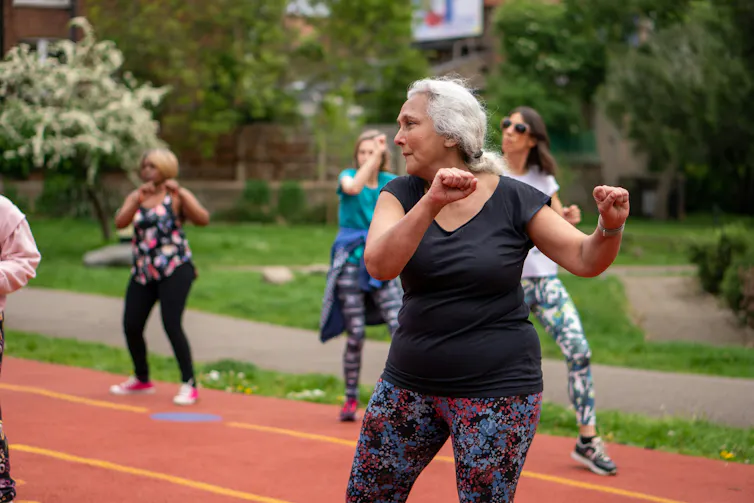
(Centre for aging better/Unsplash)
TCC: Many people tell themselves: I’m 65 or 70, so it’s too late for me to change my habits. I should have started earlier.
L.B.: It’s never too late, even though we know that education (a mitigating factor for dementia) is generally acquired at a young age. This is in contrast to hearing loss, which occurs later in life. Many people do not take it seriously or hide it, yet it’s a factor associated with an increased risk of major cognitive impairment or dementia. And, of course, psychological health plays a major role: a person may be inactive because they feel a little depressed or less motivated, but this increases the risks. We don’t realize that overall health factors are all interrelated. Heart and brain health go hand in hand. What’s good for the heart is good for the brain.
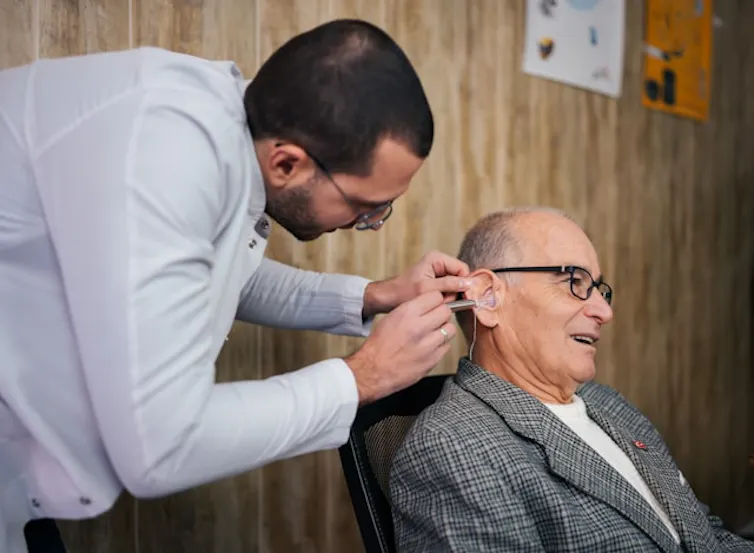
(Unsplash)
TCC: Your laboratory, which focuses on cognitive health, is located at the Institut de cardiologie de Montréal. What exactly are you doing there?
L.B.: We use stimulation programs to assess the impact of exercise on physical and cognitive health. Our participants range in age from 50 to 95, with an average age of between 68 and 70. We follow them for periods ranging from three months to a year. They may have mild cognitive deficits that people around them have noticed, and sometimes they suffer from anxiety, a condition that can impact memory and be a predictor of dementia. Other participants have no cognitive issues, but they are at risk due to high blood pressure, diabetes, etc. Our programs include memory games on phones, for example, which improve cognitive function, particularly psycho-motor speed, as well as physical exercises: stationary bikes, treadmills, muscle strengthening, etc. The best approach is a combination of both.
TCC: What have you observed?
L.B.: We are seeing clinically significant improvements. Participants with mild cognitive impairment may see improvements after six months of training, with differences in their attention, alertness and response speed. They are more alert after just a few weeks. We are also seeing an impact on memory, although this takes longer. Using biomarkers, our research attempts to link the parameters that change, both physically and cognitively, to the effects on the brain. With brain imaging, we can measure improvements in blood flow and brain structures, such as the hippocampus, which plays a key role in memory.
Physical training, which participants do three times a week, stimulates the production of proteins that promote neuroplasticity. When muscles work, they produce and release myokines and other exerkines. These molecules play an important role in metabolism, inflammation, bone health and even mood. As we often say, exercise is the miracle pill for overall health.
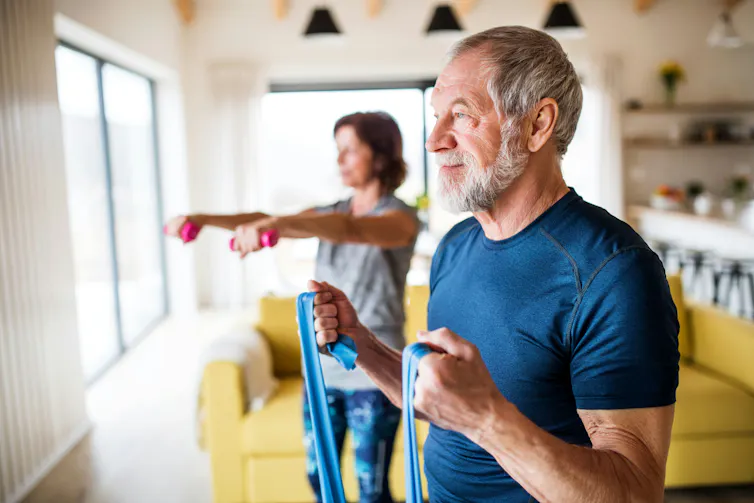
(Unsplash)
TCC: Many people make profound changes in their lifestyle, but good intentions don’t always last.
L.B.: Yes, and that’s a shame, because the positive effects of training disappear within a month or a month and a half. And the older we get, the faster it happens. Ideally, you should choose activities that can be easily integrated into your daily routine. I’m thinking of running, for example, which is a very complete exercise, very easy to do, and inexpensive. Brisk walking is also good, but the idea is to work up a bit of a sweat. And supplement that with some exercises to increase muscle strength and others to improve posture and mobility. This is an important factor in maintaining independence as we age. The fear of falling is a concern for many older people. Balance and posture control exercises, such as yoga, can really make a huge difference to the health and lifestyle of older people.