Three American servicemembers were killed in a July 17 Iranian strike on Muwaffaq Salti Air Base in the Jordanian desert. Satellite imagery shows the nighttime attack damaged at least 19 buildings where troops sleep.
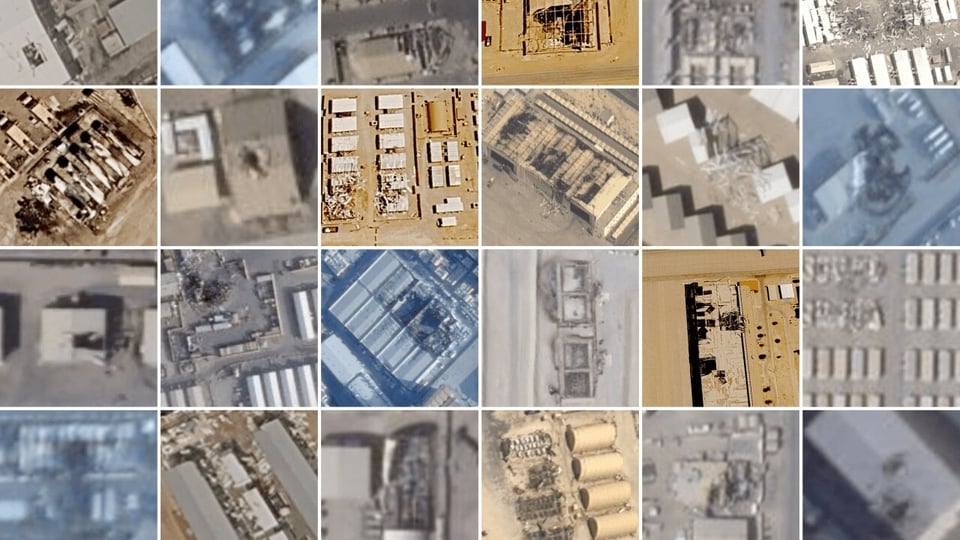
It was one of the deadliest nights of the war for U.S. forces. But it wasn’t the only attack targeting American troops where they live and sleep. That same week, Iran hit multiple housing units at other U.S. military installations across the region.
The July strikes marked an alarming shift in Iran’s tactics and revealed an improvement in the regime’s ability to sequence attacks and hit targets with precision. Iran was taking more direct aim at the buildings that house American troops, according to a Wall Street Journal analysis of satellite data, Iranian military statements and interviews with U.S. officials.
The Journal’s analysis offers the most comprehensive public accounting of the war’s damage to American facilities to date.
Iran has hit America’s installations hard. Now, with President Trump considering a new wave of attacks on Iran, the U.S. military pulled some personnel off several of those locations ahead of possible retaliation, the Journal has reported. This comes as Pentagon officials worry that the regime has conserved some of its most sophisticated missiles and could improve its attacks in the next round of fighting.
More than 20 U.S. servicemembers have died in activity related to the Iran war since it began on Feb. 28, according to Defense Department data. More than 400 were wounded before the temporary ceasefire fell apart in July, after which the government stopped publishing casualty figures specific to the war.
The latest cost estimate of the Iran war stands at $47.1 billion as of Oct. 16, according to a document viewed by the Journal. That doesn’t include damage to bases, which the Pentagon separately priced at a minimum of $5 billion, according to U.S. officials familiar with the matter. That number could potentially be as high as $15 billion, according to a separate person briefed on the cost.
The Journal shared its findings on damaged buildings with the Center for Strategic and International Studies, which estimated that the cost of reconstruction alone—without replacing the equipment and systems inside those buildings—would be more than $4 billion.
The U.S. is in talks with allied nations to pay for some repairs, which could help keep costs to the U.S. down, officials have said. Many of the installations are shared with, or owned by, allies, so the damaged buildings aren’t necessarily American or used only by U.S. forces.
Still, some infrastructure may never be rebuilt. The Pentagon has weighed moving bases farther from Iran’s reach and pulling back from its installations in Kuwait and Saudi Arabia, the Journal has reported. Pulling out could leave its allies more exposed.
The Defense Department and U.S. Central Command, which oversees military operations in the Middle East, declined to comment.
The Journal’s analysis of public satellite images from the European Space Agency—one of the few consistent public sources of imagery throughout the war—shows how the strikes unfolded. (Read more about how the Journal conducted its investigation.)
After the war began on Feb. 28, Iranian missiles and drones pounded bases across the Persian Gulf. In the first two weeks, at least 119 buildings at 13 installations, mostly in nearby Kuwait, showed damage—more than in any other stretch of the war.
Naval Support Activity Bahrain, home of the Navy’s Fifth Fleet, took heavy fire in those two weeks. Central Command evacuated most personnel from the base.
On March 13, Defense Secretary Pete Hegseth declared Iran’s missile program all but finished. “Iran’s entire ballistic missile production capacity, every company that builds every component of those missiles, has been functionally defeated, destroyed,” he said at a Pentagon press briefing.
But Iran kept striking. Over the rest of the month, damage appeared at six more installations, the Journal’s analysis found.
On April 1, Trump told the nation that Iran’s military was nearly spent. “Their navy is gone. Their air force is gone. Their missiles are just about used up or beaten,” he said during a prime-time address.
By then, more than 15 components of the infrastructure that protect the bases—radar, missile-defense and communications systems—appeared damaged, the Journal’s analysis found.
After an uneasy ceasefire took hold in early April, satellite imagery showed little new damage to bases.
Administration officials touted the damage the U.S. had inflicted on Iran. “You can dig out for now, but you can’t reconstitute,” Hegseth said, addressing Iran’s leaders at an April 16 press briefing. In early June, Secretary of State Marco Rubio told senators, “Well, the war is over now.”
Behind the public confidence, the military was moving troops off bases. Even before the campaign started, the Pentagon had already shifted troops out of harm’s way. Hegseth told Congress on April 29 that the U.S. had moved 7,500 troops “off of the X”—away from known bases—at the start of the campaign.
Iranian attacks forced the U.S. to move even more troops out of the danger zone, including largely evacuating from Camp Buehring and Camp Arifjan in Kuwait, U.S. officials said.
When the ceasefire collapsed on July 7, Iran focused its fire west, to bases hundreds of miles farther from its borders. Through the war’s six-month mark, the Journal found damage from at least 11 separate attacks, five of them in Jordan. The Gulf installations neighboring Iran that had borne the brunt of earlier strikes now only saw sporadic damage.
Within days of the deadly July 17 strike at Muwaffaq Salti, the Journal found damage at three other installations to buildings that current and former U.S. servicemembers said resembled base housing. That same week, U.S. officials privately expressed worry about Iran targeting troops where they sleep.
Iran was also hitting smaller buildings, one sign of the precision that has increasingly alarmed U.S. officials. Structures damaged after the ceasefire collapsed were less than half of the size of the ones hit earlier, the Journal found. Base housing—often converted shipping containers or even tents—tends to be small, some of the current and former servicemembers said.
Iran’s own public statements reflected this shift. From July 7 to Aug. 28, Iran claimed more than 40 strikes on U.S. installations, according to a Journal analysis of four Iranian state-affiliated media outlets. More than three-quarters of those claims described specific types of buildings at named installations, compared with less than half earlier in the war—and claims of strikes targeting housing doubled.
“There’s definitely been an effort by the Iranians to inflict casualties on U.S. forces,” said Brian Carter, an Iran-focused defense analyst at the American Enterprise Institute, a conservative-leaning think tank.
Days after the strike that killed three servicemembers at Muwaffaq Salti, Hegseth continued to call the war a success. Iran had been “completely overmatched and crushed” and was “combat ineffective,” he said on July 21.
‘They still have some capabilities’
The Pentagon has disclosed little publicly about the damage. Earlier this month, five Democrats on the Senate Armed Services Committee urged the Defense Department to publicly disclose the estimated cost of damage to U.S. facilities, which was shared in a classified briefing.
On a trip to the Middle East this month, Sen. Chris Murphy (D., Conn.), a member of the Foreign Relations Committee and the Senate Appropriations Subcommittee on Defense, was barred from visiting Al Udeid Air Base in Qatar. At least a dozen buildings at the base showed signs of damage, the Journal’s analysis found. U.S. military leaders in the region also refused to brief Murphy, he said.
The Department of Defense has said that Murphy was told before the trip that he would not have access to the base due to travel restrictions in the region.
The administration was “withholding information about damages” to “mask the true cost of the war,” Murphy told the Journal.
Iran’s strike patterns could help the Pentagon decide what to keep in the region and where, said Elaine McCusker, a senior fellow at the American Enterprise Institute and former acting Pentagon comptroller in the first Trump administration. They reveal how many missiles and drones Iran has left and how quickly it can make more. “The type and number of strikes over time also contains signals about magazine depth,” she said.
Iran has been quickly rebuilding its damaged infrastructure, including missile bases and production facilities, and digging out its buried missile arsenal, while the U.S. has drained its supply of interceptor missiles.
In public, the Pentagon has remained dismissive. “They still have some capabilities, but it’s nowhere near what it was at all,” Hegseth said on Aug. 24.
One week later—just over six months into the war—Iran hit Camp Titin in Jordan for the first time, the Journal found.
Write to Anika Arora Seth at anika.seth@wsj.com, John West at john.west@wsj.com, Shelby Holliday at shelby.holliday@wsj.com, Lara Seligman at lara.seligman@wsj.com, Carl Churchill at carl.churchill@wsj.com and Katherine Chui at katherine.chui@wsj.com
Satellite and other images: European Space Agency, Planet Labs, Airbus, Google Earth. Ground footage obtained and verified by The Wall Street Journal. John Millsap contributed to this report.