The update confirms what many pet owners worry about when travelling

The update follows a viral petition(Image: Getty Images)
Following a viral petition that garnered over 14,000 signatures, the Department for Environment, Food and Rural Affairs has issued a statement concerning cabin regulations for British Airways, easyJet, Jet2, Ryanair, and TUI flights. According to government rules, a response is required for petitions that reach 10,000 signatures.
The petition seeks to allow airline passengers to bring small pets on board flights arriving in the UK. The petition, which is available to view here, states: “Allow airlines, under DEFRA guidance, to offer an in-cabin travel option for small, fully documented pets on flights entering the UK, in line with international standards for other countries.”
It continues: “Many countries, including within the EU, USA, Canada, and Ireland, generally allow small, vaccinated, and microchipped pets to travel safely in the cabin, though requirements vary between different countries and airlines. The UK requires cargo travel even for very small animals, which can be stressful for the pets and costly for their owners.
“I believe allowing an in-cabin option would improve welfare and align the UK more closely with widely used global practices while maintaining biosecurity.”
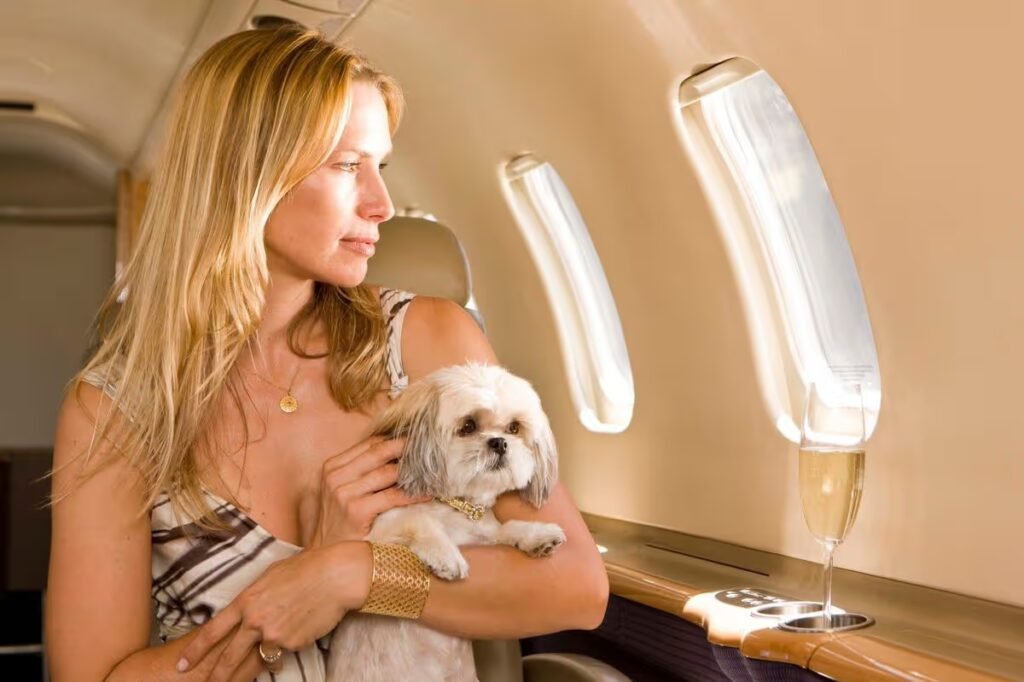
Currently, UK regulations do not allow pets to travel in aircraft cabins on commercial flights. Instead, animals must be transported as manifest cargo in the hold or through specific approved routes, with exemptions only provided for recognised service or assistance dogs.
The Department for Environment, Food and Rural Affairs explained: “All pets entering GB must be checked for compliance with our biosecurity requirements. Complex operational arrangements at airports mean that most pets must travel in the hold to facilitate this.”
A Government spokesperson stated: “The Government takes the importation of pets seriously and is committed to preserving high standards of biosecurity and animal welfare. We understand that many pet owners would like to travel with their pets in the aircraft cabin to Great Britain (GB).
“However, this needs to be balanced against our biosecurity requirements and the operational complexities of conducting various border controls at airports.”
DEFRA officials clarified that disease prevention underpins the restriction: “All pets travelling into GB must be checked for compliance with the necessary health and documentary requirements prior to entry. This includes checking that the relevant rabies vaccination and tapeworm treatment requirements have been met.
“Rabies is a lethal disease in unvaccinated people and animals. GB is rabies-free due to our high standards of biosecurity, and it is very much in the interests of humans and animals here that we protect our disease-free status and therefore the population.
“Current operational arrangements at GB airports mean that most pets must travel in the hold to ensure that these checks are carried out. To facilitate these checks, all pets entering airports in GB must be transported safely and securely to the pet checking facility, which is separate from the passenger terminals.
“Operations at airports are sensitive and complex, and other vital border controls must be considered as part of their operational processes. The Government is content that the existing pet travel arrangement ensures the necessary import checks have been conducted to safeguard our domestic biosecurity and maintain animal welfare standards whilst working within the complex operational arrangements of an airport.”
The statistics are favourable towards pets when it comes to travelling in the hold. While air travel may be stressful for the owner, there is a less than 1% chance of anything untoward happening to your animal companion while in transit.
As DEFRA’s stance is unchanged, it may be that passengers wanting to be closer to their pets while travelling would need to look for staycations instead.