April 28, 2026, 11:06 a.m. ET

Washington — U.S. Rep. Debbie Dingell is leading a letter from 73 House Democrats urging President Donald Trump not to allow Chinese automakers access to the United States market.
The letter, announced Tuesday, comes some two weeks ahead of Trump’s anticipated meeting with Chinese President Xi Jinping in Beijing.
“As you prepare for your upcoming summit with the President of the People’s Republic of China, any effort to lower barriers for Chinese automobiles or otherwise facilitate their entry into the U.S. market would pose a direct threat to American manufacturing, workers, and national security,” the letter states. “This must remain a firm and non-negotiable priority.”
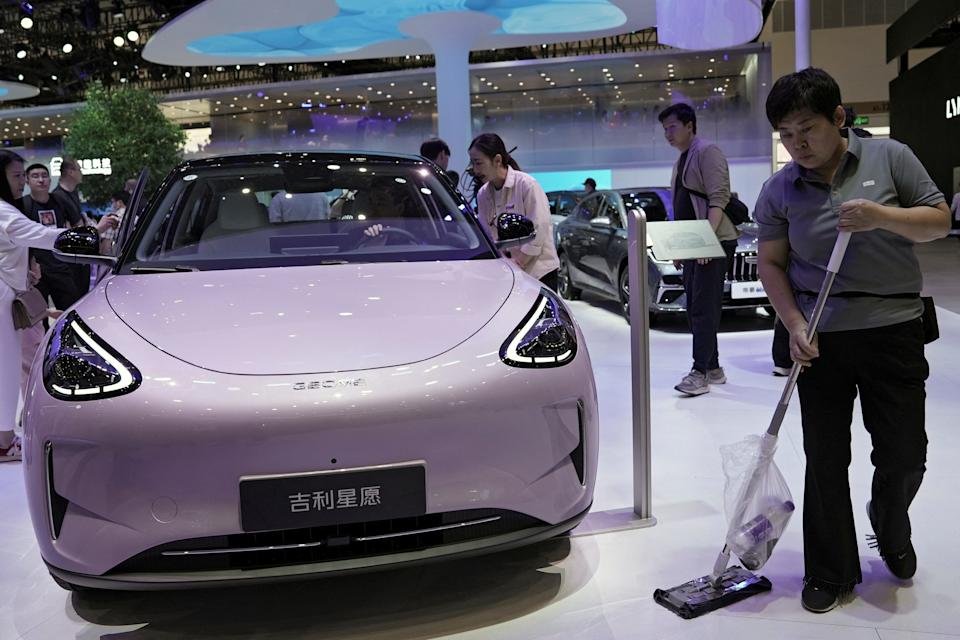
Concerns have deepened in Washington, Detroit and elsewhere in the U.S. automotive heartland over the growing global power of China’s auto industry, especially after Canada reached a new trade deal allowing the import and sale of a set number of Chinese electric vehicles.

“China, which subsidizes its manufacturing, manipulates its currency, and uses slave labor, among other things, cannot be allowed in. We have to play on a level playing field,” Dingell told The Detroit News in a Capitol Hill interview. The Ann Arbor Democrat is a longtime voice for the auto industry in Washington.
“We owe our workers that level playing field. And China being allowed to manufacture in this country is not a level playing field,” she added.
No Republicans signed on to the Democratic congresswoman’s letter, though there is bipartisan worry from lawmakers over Chinese autos.
U.S. Sen. Bernie Moreno, R-Ohio, is expected to introduce a bill in the coming days seeking to ban Chinese automakers from selling in the U.S. market, though details of the proposal remain unclear.
That goal from Moreno and other Republicans may be complicated by Trump’s past statements on the prospects of letting Chinese car and truckmakers set up shop stateside.
The president has repeatedly signalled an openness to allowing Chinese automakers to sell vehicles in the United States, so long as they build U.S. factories and employ American workers.
“If they want to come in, and build the plant, and hire you and hire your friends and your neighbors, that’s great,” Trump told the Detroit Economic Club in January. “I love that. Let China come in. Let Japan come in. They are, and they’ll be building plants, but they’re using our labor.”
Leaders in the U.S. auto industry, like Ford Motor Co. CEO Jim Farley, have warned of such an outcome.
“Allowing Chinese automakers into the rich U.S. market would be “devastating,” he told Fox & Friends in April. “We should not let them into our country. Manufacturing is the heart and soul of our country and for us to lose that to those exports would be devastating to our country.”
Other signatories on the Tuesday letter to Trump included California Rep. Ro Kanna, who is the top Democrat on the House Select Committee on the Chinese Communist Party; Ohio Rep. Marcy Kaptur, who represents the heavily automotive Toledo area; and four additional Michigan representatives.
Those representatives are Haley Stevens of Birmingham, Kristen McDonald Rivet of Bay City, Hillary Scholten of Grand Rapids and Shri Thanedar of Detroit.
The letter states that the Chinese auto industry “does not compete on a level playing field” with the rest of the world and is “driven by a state-directed strategy to dominate global markets through government subsidies, below-market financing, and non-market behavior across the supply chain.”
It continues: “In 2025, China exported more than 8 million vehicles. Chinese brands now account for roughly 62 percent of the global electric vehicle market. Their vehicles, which are heavily subsidized and often priced far below market rates, are rapidly expanding across South America, the Middle East, Europe, and other emerging markets, capturing market share and reshaping the global auto industry.”
The letter also suggests that China is “actively positioning itself to bypass U.S. trade protections” by building its presence in Canada and Mexico and recommends a suite of actions to keep Chinese automakers out of the United States, including tariffs, bans and cooperation with U.S. allies.
“We must not cede the American auto industry to a strategic competitor intent on global dominance,” the letter concludes. “The consequences for American workers, our supply chains, our national security, and our communities would be profound and irreversible.”
The full text of the letter is available below.
@GrantSchwab